




Oval Leather Top Table
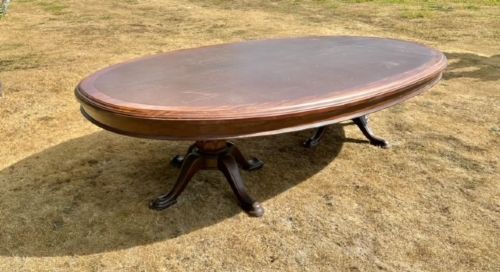
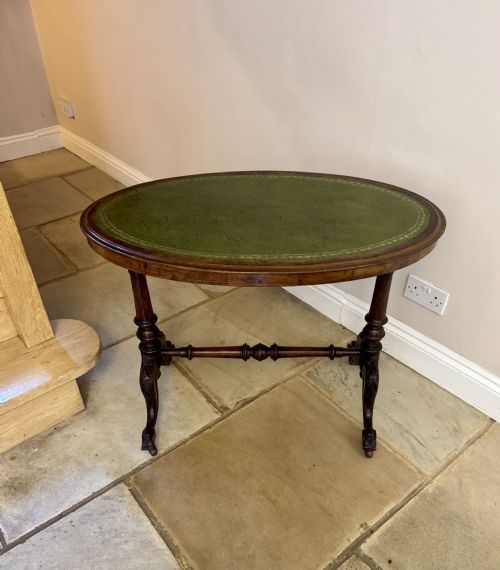
An oval leather top table brings a soft outline and a functional hide surface to a study or library, prized for its generous proportions and classic timber framing.
Oval Leather Top Table
When you search for an oval leather top table, you find a range of writing tables, library tables, and boardroom tables spanning the Georgian, Victorian, and Edwardian periods. These pieces serve primarily as desks or central library furnishings, combining a curved wooden perimeter with an inset leather writing surface.
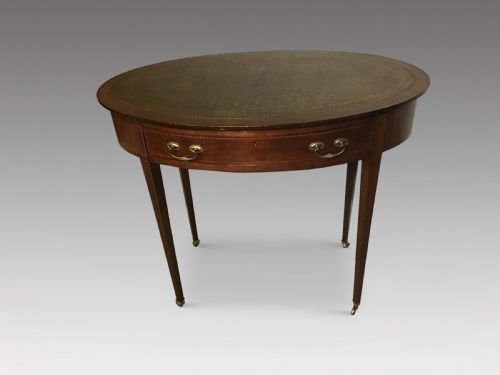
The versions you meet most frequently on this page date from the Edwardian era and the nineteenth century, executed in mahogany, walnut, or burr walnut. Some examples incorporate satinwood or delicate inlay work, reflecting the stylistic preferences of Sheraton revivalism or late Victorian craftsmanship.
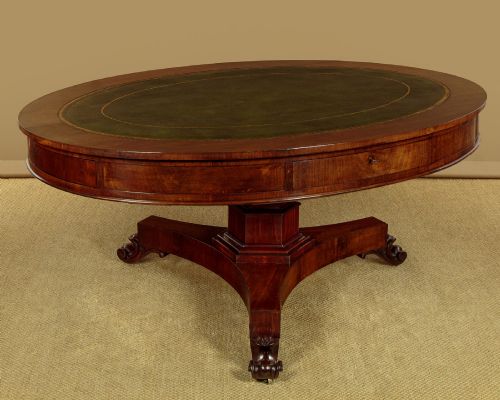
Form follows function across these pieces, with many functioning as freestanding writing desks or drum tables with rotating surfaces or drawers. The combination of seasoned timber and coloured leather creates a focal point suited to traditional working interiors and domestic studies.
How they were made
Makers constructed the primary frames of these tables using solid hardwoods such as mahogany, oak, and walnut, frequently applying fine veneers like burr walnut or satinwood to the top surfaces. The curved oval shape required precise carpentry to shape the timber rails and secure the edge mouldings around the inset hide.
Writing surfaces were typically inset with genuine leather, often finished with blind tooling or gilt decoration along the perimeter. Brass fittings, including castors, handles, and drawer pulls, were integrated into library and writing tables to assist with mobility and daily utility.
Some Edwardian makers ensured you could write from any angle by placing secret drawers behind dummy book spines.
What varies in quality
The distinction between standard examples and top-tier pieces rests on the selection of timbers and the finesse of the cabinetwork. Fine quality items display figured mahogany, carefully matched burr walnut, or crisp satinwood inlay, whereas simpler pieces rely on plain grain and minimal decoration.
Hardware and secondary detailing further separate the grades, with superior library and writing tables featuring heavier brass castors, well-fitted drawers, and finely tooled leather surfaces. The overall structural integrity and the crispness of the turned or inlaid legs dictate the standing of each piece.
The Oval Leather Top Table Glossary
- Drum table
- A circular or oval library table with a deep top containing drawers, often standing on a central pillar with tripod or quadruped feet.
- Inlay
- A decorative technique where pieces of contrasting timber, such as satinwood, are inserted into depressions in the primary wood of the table top or frame.
- Satinwood
- A durable, lustrous timber native to India and Ceylon, utilised extensively during the Georgian and Edwardian periods for pale, figured veneers.
- Burr walnut
- Walnut timber taken from a tree growth or burl, prized by cabinetmakers for its swirling, highly decorative grain patterns on table tops.
- Blind tooling
- An impression pressed into leather using heated brass tools without gold leaf, creating a subtle, matte decorative border.
Oval Leather Top Table: Frequently Asked Questions
How do I use an oval table in a room?
These pieces function well as freestanding desks in the centre of a study or library where the finished back allows 360-degree access. They also serve as central hall tables or occasional dining surfaces depending on their height and scale.
Positioning the table away from direct sunlight protects the leather insert and the polished timber from fading over time.
What is the difference between a writing table and a library table?
Writing tables usually feature shallow drawers beneath the top specifically designed for stationery and writing implements. Library tables often have a larger scale and deeper proportions, historically intended for consulting heavy volumes.
Both types share the inset leather top, but the internal construction of the rails and drawers reflects their intended daily use.
How do I date an antique oval table?
Dating relies on observing the timber species, construction methods, and stylistic cues present in the legs and edge mouldings. Georgian pieces often show restrained mahogany framing, while Edwardian examples frequently feature lighter satinwood inlay and Sheraton revival motifs.
Secondary woods inside the drawer boxes and the style of the brass fixings provide further clues to the decade of manufacture.
Are these tables suitable for daily computer work?
Many of these pieces offer a generous surface area that accommodates modern laptops and desk accessories comfortably. The sturdy timber frames and solid legs provide a stable working platform for daily tasks.
Care should be taken to protect the antique leather surface from scratches or heat using appropriate desk mats.