

Oval Gemstone Diamond Ring
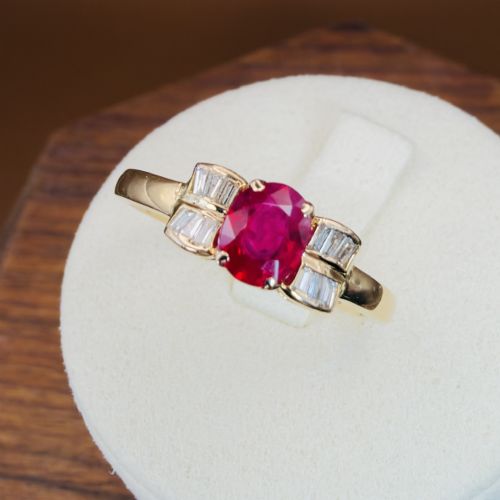
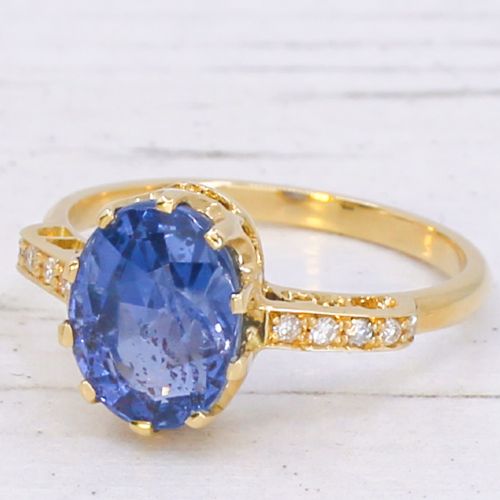
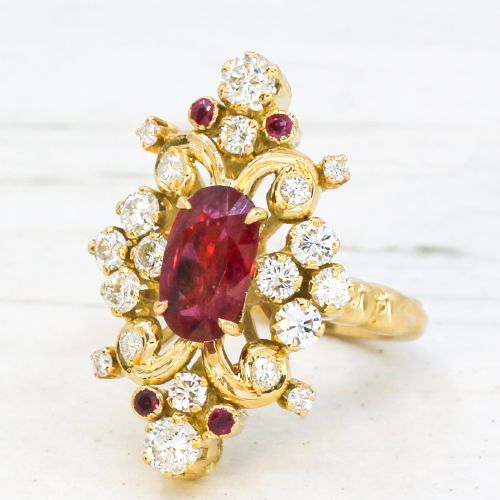
An oval gemstone diamond ring combines a central oval stone with surrounding diamonds, offering a finger-elongating shape that collectors choose for its striking hand presence.
Oval Gemstone Diamond Ring
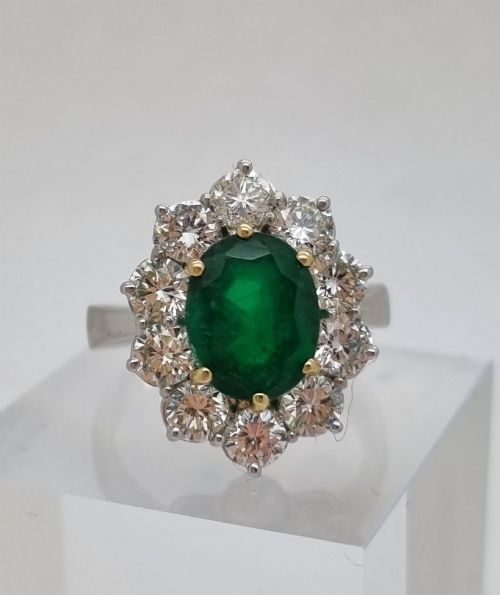
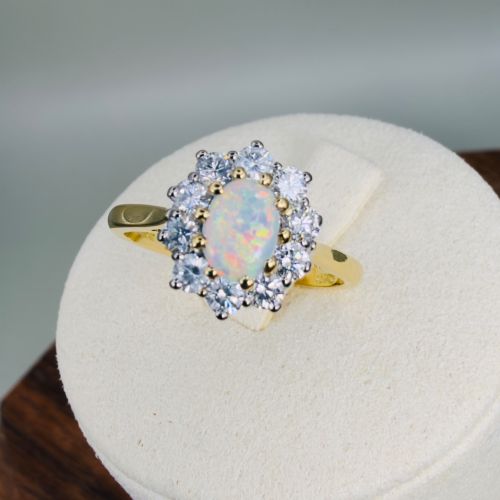
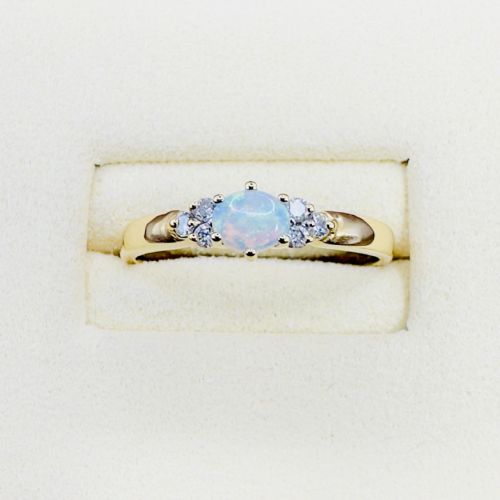
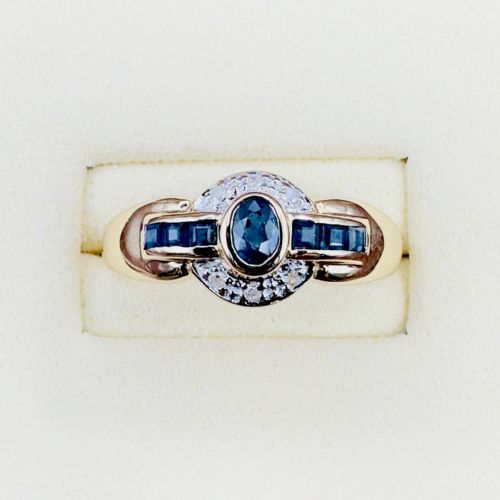
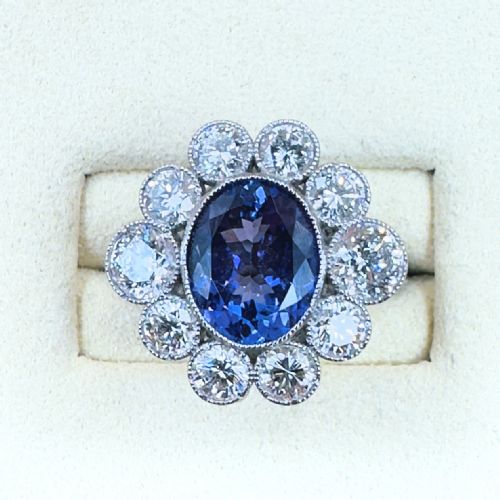
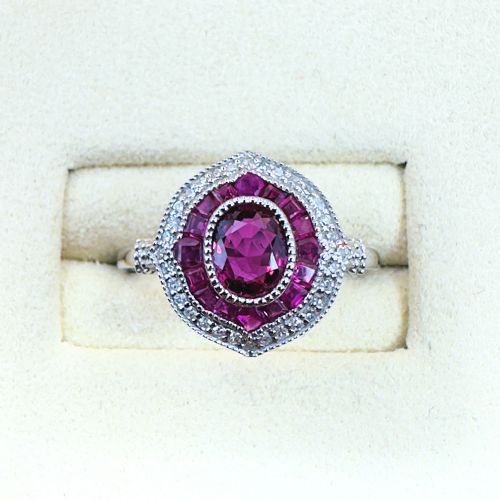
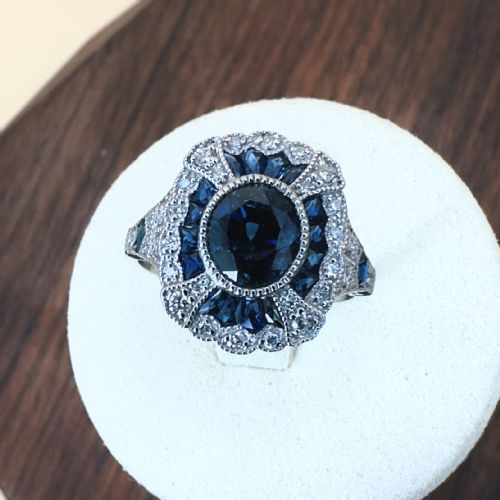
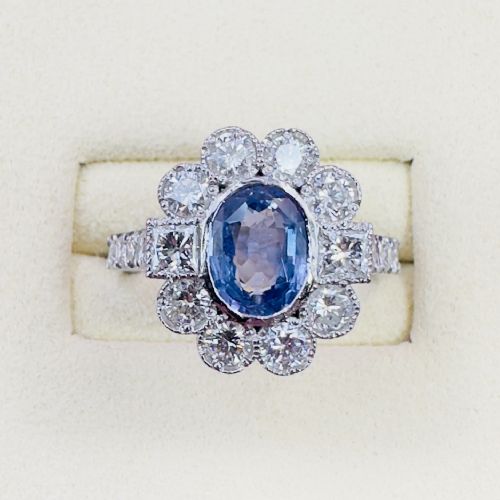
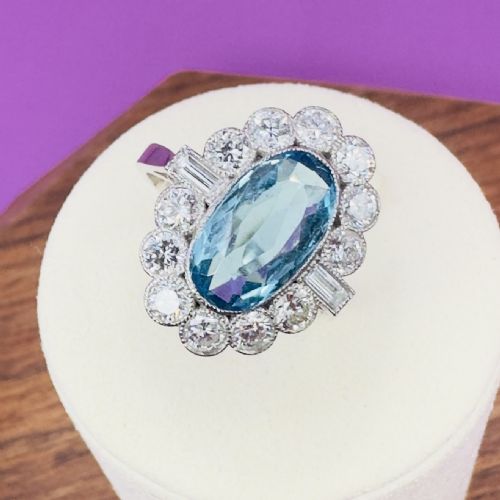
An oval gemstone diamond ring centres on an oval-cut or cabochon-cut coloured stone, often framed by a halo or cluster of smaller diamonds. These pieces appear in styles ranging from Victorian and Edwardian periods to Art Deco, mid-century, and vintage productions.
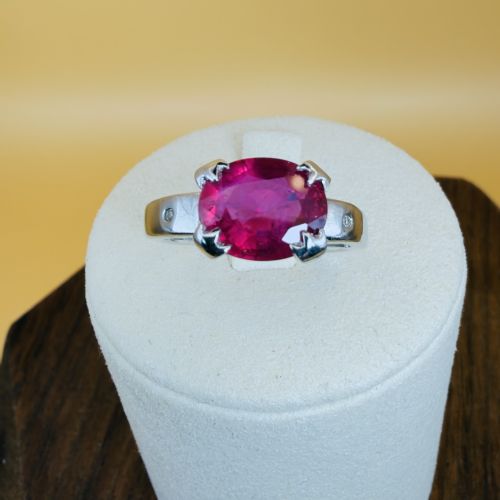
The most common formats on this page are cluster rings pairing sapphires, rubies, emeralds, opals, or tanzanites with diamond borders, mounted in yellow gold, white gold, or platinum. Gemstones may also be set horizontally in east-to-west orientations or accompanied by baguette and old-cut diamonds.
Dating spans from the early twentieth century through the 1960s, encompassing traditional dress rings and engagement styles. The combination of an elongated central stone and contrasting diamond work defines the visual rhythm of these jewels across all represented eras.
Materials and construction
Metals span platinum, 18ct yellow gold, 18ct white gold, 14ct gold, and 9ct gold, providing varying weights and tonal backdrops for the stones. Platinum and white gold frequently support diamond-heavy clusters, while yellow gold anchors deep rubies, sapphires, and opals.
Central gems include unheated sapphires, rubies, emeralds, and aquamarines, shaped in oval, cabochon, or princess cuts. Surrounding diamonds utilise old cuts, baguette cuts, and standard brilliant facets, secured in claw settings or integrated bezels.
Listings span platinum and gold settings housing sapphires, rubies, emeralds, opals, and tanzanites across Victorian to mid-century periods.
Quality factors in gemstone rings
Stone origin and treatment status influence the standing of a ring, particularly with unheated sapphires and rubies carrying gemmological certification. The saturation, clarity, and internal characteristics of the central gemstone dictate much of the piece's authority.
Metal work precision, claw integrity, and the matching of secondary diamond cuts separate fine examples from standard production. Heavier platinum and 18ct gold mounts with balanced proportions reflect higher tiers of period craftsmanship.
The Oval Gemstone Diamond Ring Glossary
- Cluster ring
- A ring featuring a prominent central stone encircled by a group of smaller surrounding stones, typically diamonds. This arrangement maximises light reflection and visual impact.
- Cabochon
- A gemstone shaped and polished with a smooth, rounded convex surface rather than faceted edges. This cut is common for opals, star stones, and certain rubies or sapphires.
- Old cut
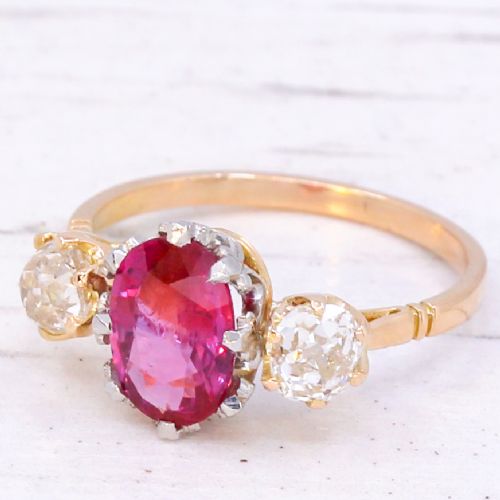
- A diamond facet style originating in the late nineteenth and early twentieth centuries, characterised by a high crown, small table, and deep pavilion. These cuts produce distinctive warm light play under low illumination.
- East to West
- A setting orientation where a horizontally elongated stone lies across the finger band rather than along it. This layout offers a distinct profile compared to traditional vertical alignments.
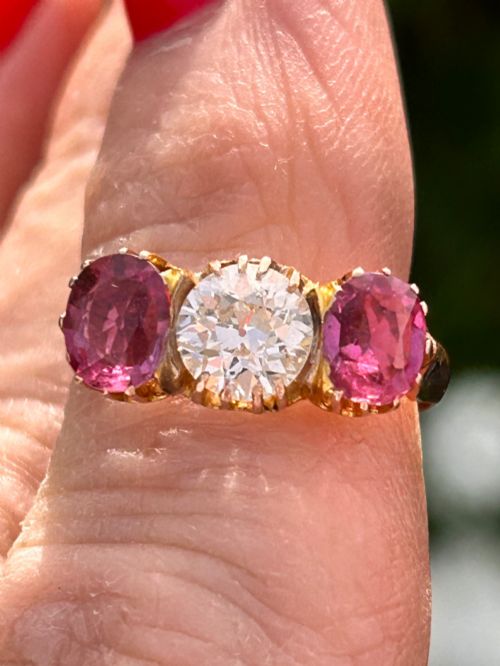
- Trilogy
- A ring design set with three stones representing past, present, and future. In these selections, the central oval gemstone is typically flanked by matching diamonds.
Oval Gemstone Diamond Ring: Frequently Asked Questions
How do I care for an opal ring?
Opals contain natural water content and require gentle cleaning with a soft cloth rather than chemical dips or ultrasonic machines. Store them away from extreme temperature changes to maintain their internal play of colour.
Prong settings should be checked regularly by a professional to ensure the cabochon stone remains secure within its gold or platinum mount.
What is an unheated sapphire?
An unheated sapphire is a natural gemstone that has not undergone thermal enhancement to improve its colour or clarity. These stones occur less frequently and are documented with gemmological reports.
Collectors prize unheated stones for their natural origin, which contributes to their desirability within mid-century and antique cluster rings.
How can I tell a Victorian ring from a 1960s ring?
Victorian rings often utilise lower-carat or yellow gold settings with hand-forged details, whilst 1960s pieces frequently employ white gold or platinum with streamlined cluster geometry. Examining the shank construction and metal purity stamps helps reveal the manufacturing era.
Gemstone cut styles also assist with dating, as old-cut diamonds appear predominantly in pieces from the early decades of the twentieth century.
Can these rings be resized?
Most gold and platinum rings can be altered by a skilled jeweller, though the presence of delicate side stones or intricate gallery work requires careful handling. Adjustable shanks occasionally appear on older pieces to accommodate sizing.
Consulting a professional jeweller before any alteration ensures the structural integrity of the claw settings and band remains intact.