





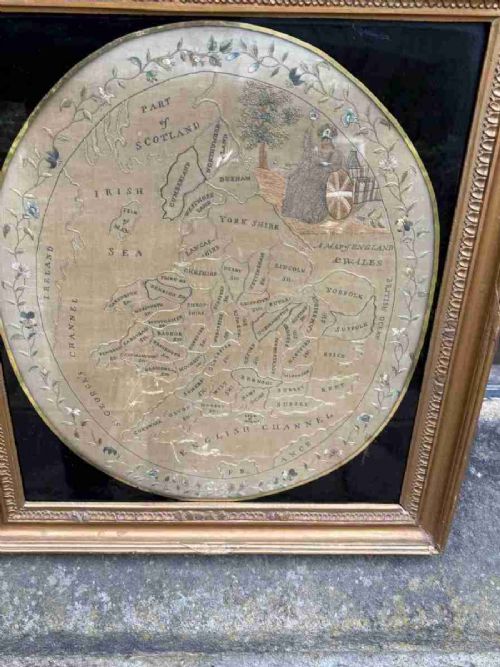


Oval Framed Embroidery
These oval framed embroidery pieces combine needlework and giltwood or glass surrounds, offering a glimpse into domestic textile art from the eighteenth and nineteenth centuries.
Oval Framed Embroidery
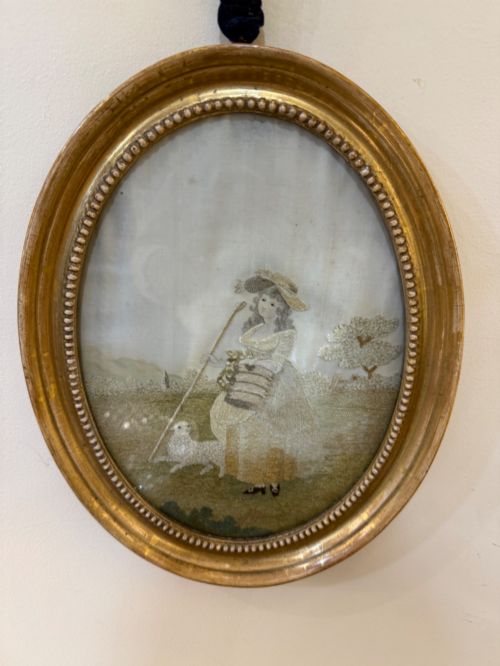
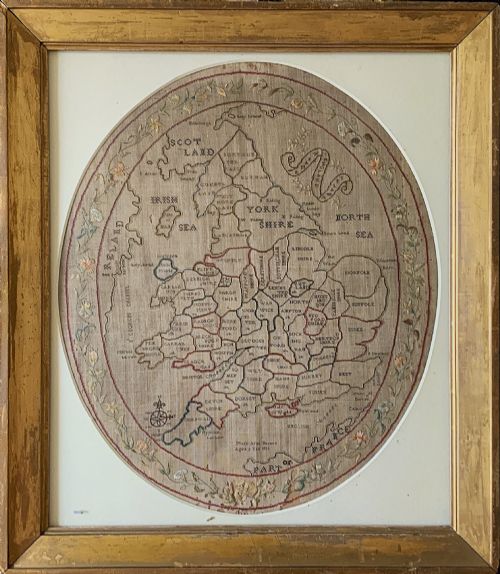
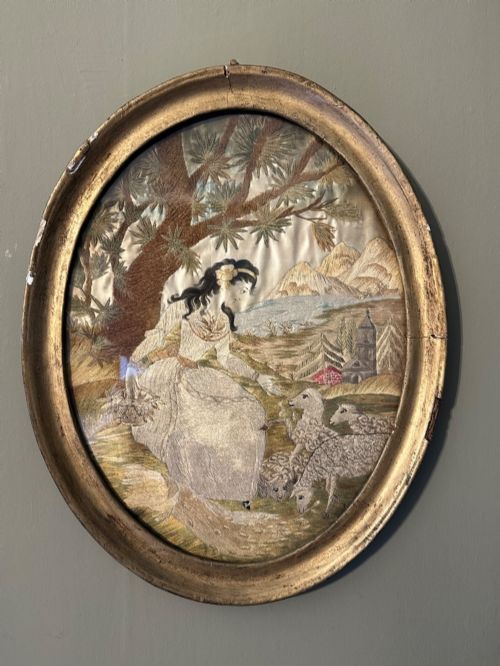
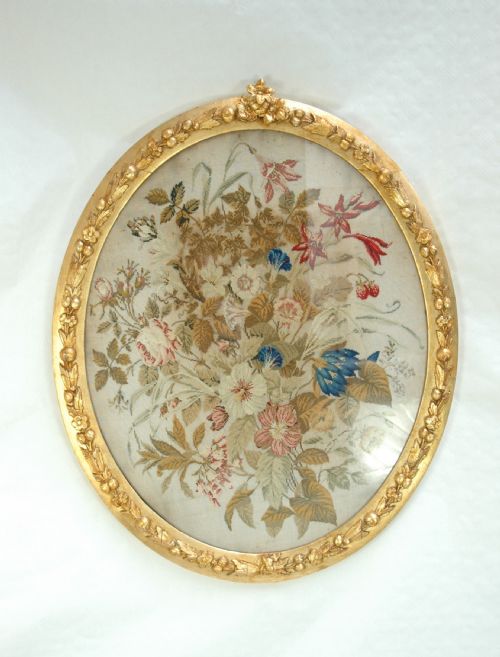
Oval framed embroidery pieces encompass needlework pictures, map samplers, and textile art created across the Georgian, Regency, and Victorian periods. You are most likely to encounter silk works, woolwork pictures, and felt or wool compositions housed within curved borders.
The subjects range from religious scenes and domestic figures in gardens to detailed cartographic works such as maps of England and Wales. These textile artworks typically function as wall art, preserved behind glass within original gilt wood or verre églomisé frames.
Materials and Techniques
Maker execution relies on silk thread, wool, and felt stitched onto linen or silk grounds, often accompanied by watercolour highlights. Skilled hands worked these threads into pictorial scenes and intricate map samplers.
Framing involved specialist techniques including water gilded wood and verre églomisé glass panels with black glass borders. These protective surrounds safeguard the delicate textiles beneath.
Oval Framed Embroidery Retail Price Guide 2026
Typical asking prices for oval framed embroidery among the pieces listed under this phrase on Sellingantiques today, from the lower quarter to the upper quarter. They describe what is for sale here now, not the wider market.
Object forms span textile art, map samplers, wall art, and woolwork pictures.
Factors of Quality
Quality rests upon the precision of the needlework and the survival of the original materials, such as untouched giltwood frames and mezzotint black glass. Finer examples display meticulous stitch control and complex pictorial detail, whether depicting a garden scene or a cartographic map.
The presence of maker inscriptions, such as youth attribution or dates, adds documentary depth to the textile. Condition of the silk or wool threadwork dictates the visual strength of the piece.
The Oval Framed Embroidery Glossary
- Verre Églomisé
- A method of applying gold or metal leaf to glass along with engraving and painting, used to create decorative borders on frames. This technique provides a dark, reflective border that sets off the central textile.
- Sampler
- A piece of needlework demonstrating various stitches and patterns, historically used by young makers to practice skill. Map samplers combine geography education with needlepoint proficiency.
- Giltwood
- Wood that has been coated with a thin layer of gold leaf or gesso and gold paint. Original gilt wood frames provide period authenticity to antique textiles.
- Silkwork
- Embroidery executed primarily with silk threads on a fine ground fabric. This technique yields a smooth surface texture with a natural sheen.
Oval Framed Embroidery: Frequently Asked Questions
What periods do these embroideries come from?
The available pieces primarily originate from the Georgian, Regency, and Victorian eras, spanning the eighteenth and nineteenth centuries.
Some examples also extend into the early twentieth century, reflecting enduring domestic needlework traditions.
How were these textile pictures displayed?
These works were designed specifically as wall art, housed within protective wooden and glass frames.
Original mountings often incorporate water gilded wood or verre églomisé surrounds to complement the stitched imagery.
What subjects appear in the needlework?
Common subjects include figurative scenes like girls in gardens, religious narratives, and oyster sellers.
Cartographic subjects, such as embroidered maps of England and Wales, also appear alongside floral and decorative compositions.
Are the frames original to the pieces?
Many examples retain their original gilt wood or specialised glass frames, which contribute significantly to the character of the object.
Evaluating the framing alongside the textile helps determine the overall period integrity.