
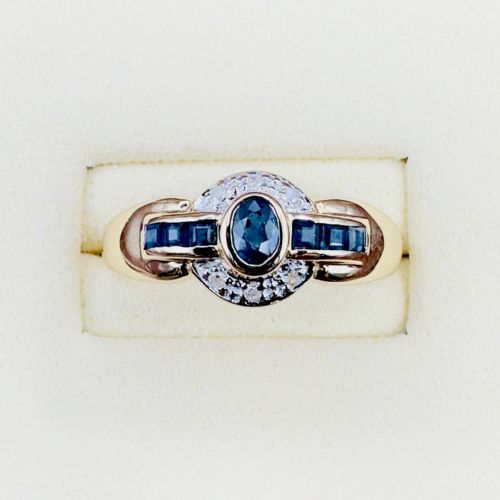
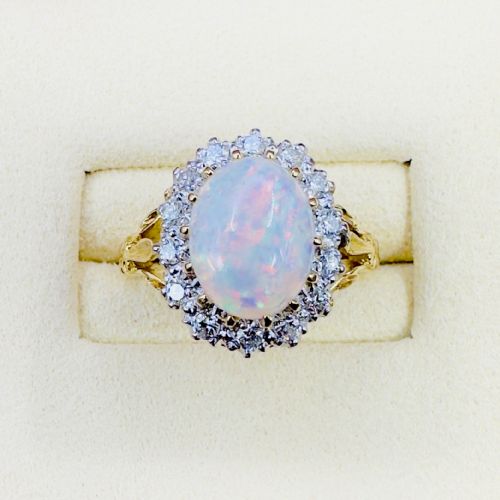

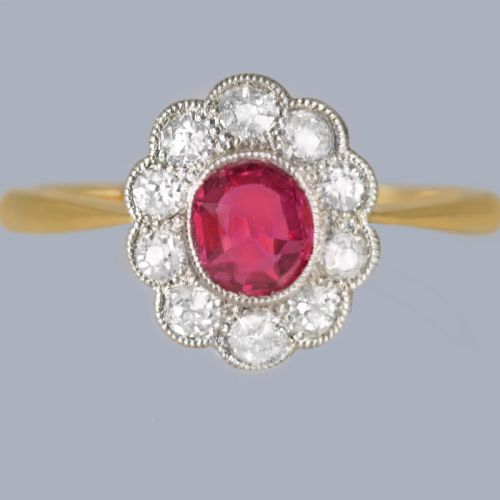

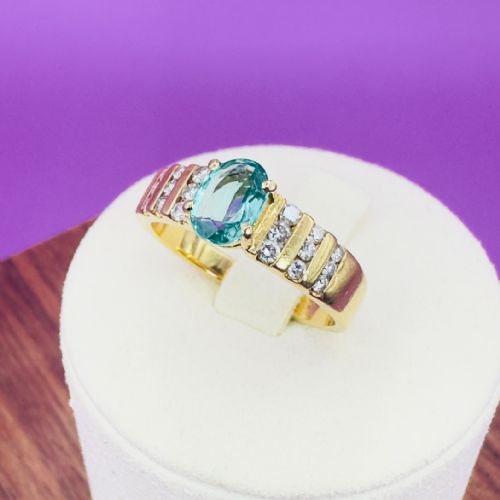
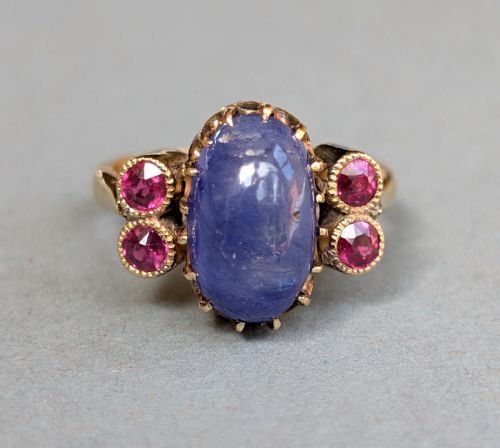

Oval Cluster Gold Ring
An oval cluster gold ring places a central gemstone surrounded by smaller stones on the finger, offering immediate visual impact and rich historical variety.
Oval Cluster Gold Ring
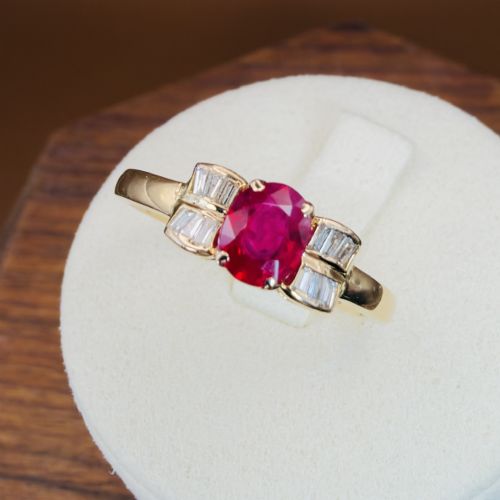
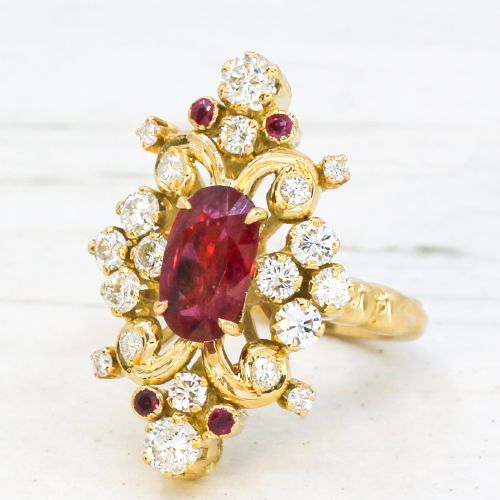
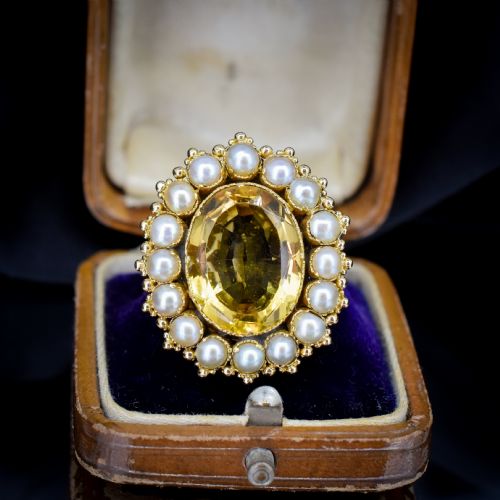
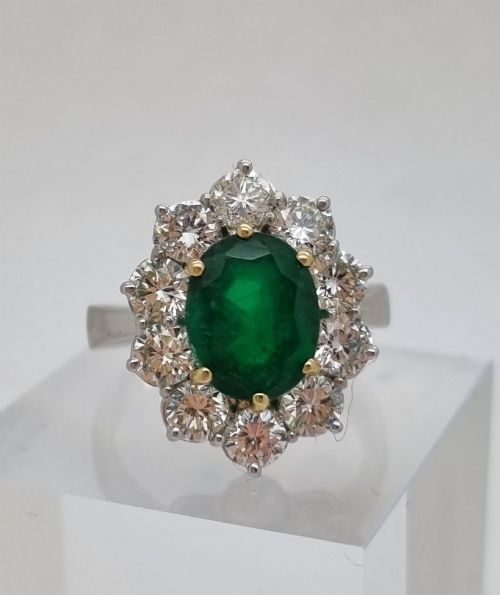
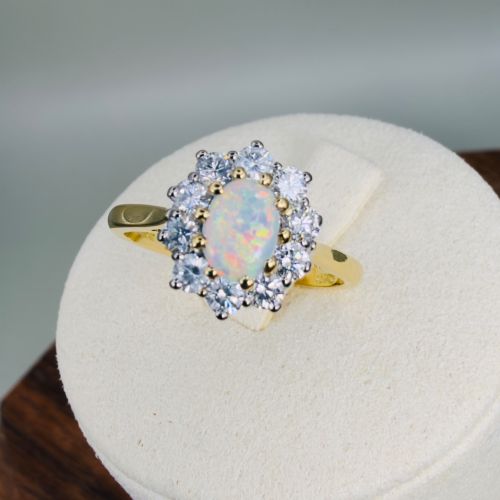
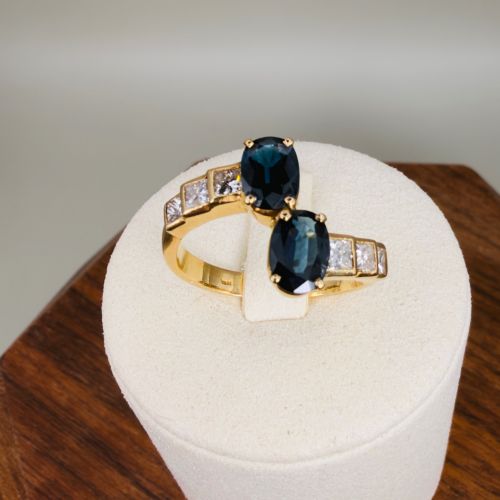
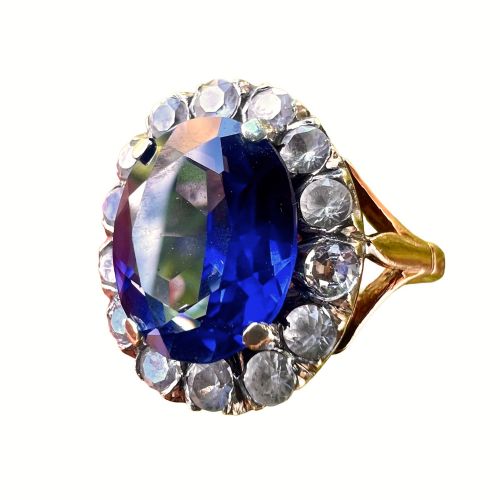
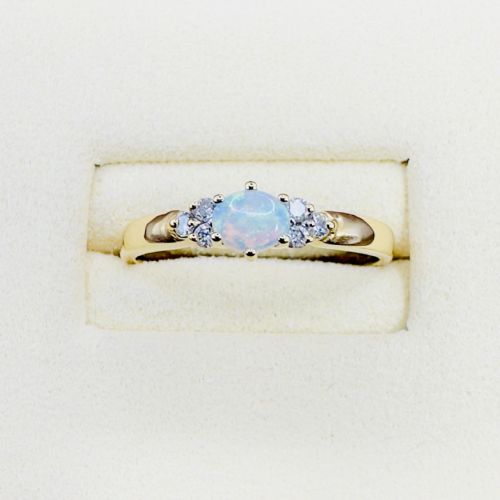
An oval cluster gold ring centres on a prominent oval-cut stone, most frequently sapphire, ruby, emerald, or opal, encircled by diamonds or pearls. This page presents specimens spanning from the nineteenth century through the Edwardian, Art Deco, and mid-twentieth-century periods.
The layout draws the eye directly to the central colour, while the surrounding border magnifies the overall presence on the hand. Buyers encounter traditional yellow gold settings alongside white gold and platinum interpretations from later decades.
Materials and Construction
Goldsmiths constructed these pieces primarily in eighteen-carat yellow or white gold, occasionally incorporating platinum for secure claw settings around diamonds. Central gemstones are typically secured with delicate claws, while surrounding stones utilise close-set or halo arrangements.
Makers integrated various diamond cuts, including brilliant, old cut, and rose cut, to frame the central oval sapphire, ruby, emerald, or opal. Shanks range from simple polished bands to structured shoulders, sometimes featuring adjustable designs.
Some past pieces carried extra weight up to ten grams, ensuring the ring makes its presence felt on the finger.
Factors Distinguishing Quality
Quality rests significantly on the saturation, clarity, and origin of the central gemstone, alongside the matching and brilliance of the surrounding diamonds. Untreated stones and substantial carat weights elevate the standing of a piece considerably.
The precision of the metalwork, the symmetry of the cluster arrangement, and the preservation of the original setting details dictate the desirability among collectors. Heavier gold weight and crisp proportions distinguish finer examples from standard production.
The Oval Cluster Gold Ring Glossary
- Cluster ring
- A ring design featuring a central gemstone surrounded by a border of smaller stones. This arrangement maximises the optical presence of the jewellery.
- Cabochon
- A gemstone shaped and polished with a smooth, convex surface rather than faceted. This cut is particularly common for opals and certain sapphires.
- Halo
- A ring setting where a central stone is entirely encircled by a collection of smaller pavé or claw-set diamonds. It creates a distinctive floral or geometric outline.
- Old cut
- An early style of diamond cutting characterised by a smaller table, higher crown, and large culet. These stones display a softer, candlelit sparkle compared to modern brilliants.
Oval Cluster Gold Ring: Frequently Asked Questions
What is an oval cluster gold ring?
It is a piece of finger jewellery featuring a central oval-shaped gemstone framed by a border of smaller stones, mounted in a gold band.
These designs have been produced across multiple eras, incorporating materials like sapphires, rubies, opals, and diamonds set in yellow or white gold.
How do I identify an Art Deco cluster ring?
Art Deco examples often showcase geometric symmetry, white gold or platinum usage, and specific cuts such as princess, baguette, or transitional diamond cuts.
They reflect the design sensibilities of the nineteen-twenties and nineteen-thirties, distinguishing them from softer Victorian or later mid-century styles.
Are these rings suitable for daily wear?
Many buyers wear these pieces regularly, though older settings require mindful care depending on the hardness of the central gemstone.
Harder stones like sapphires and rubies tolerate daily use well, while softer gems such as opals demand greater protection against impact.
What periods do these rings come from?
The available selection spans from the nineteenth century through Edwardian, Art Deco, and nineteen-fifties and nineteen-sixties mid-century eras.
Each period introduces distinct gold purities, mounting techniques, and gemstone combinations that define its aesthetic character.