



Oval Brass Clock
An oval brass clock is a portable timepiece housed in a curved metal case, prized for its combination of engineering and decorative presence.
Oval Brass Clock
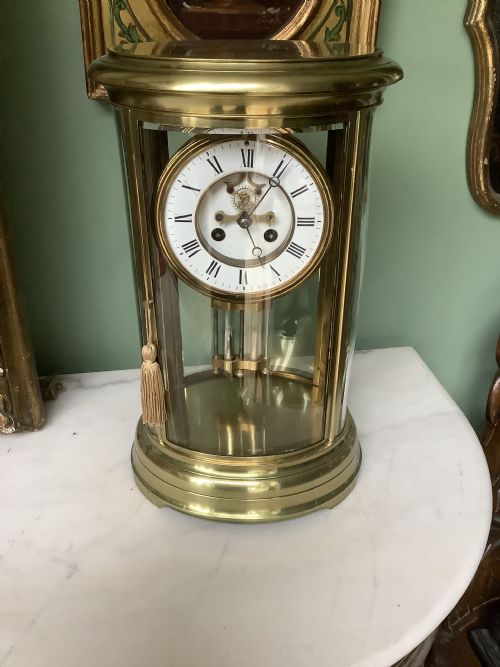
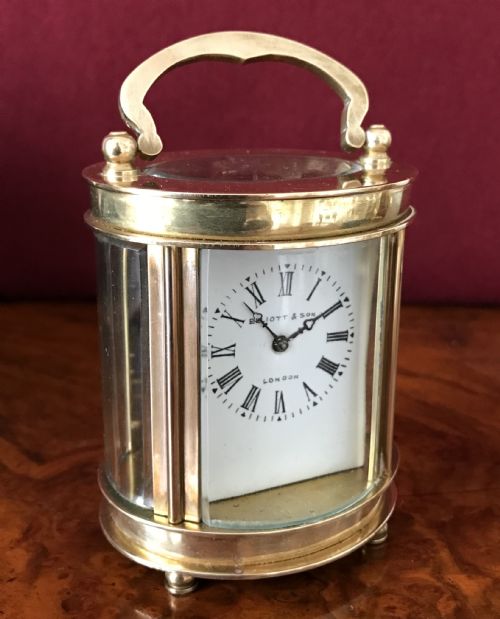
An oval brass clock takes several distinct forms across the Victorian and Edwardian periods, appearing most frequently as carriage clocks, mantel clocks, and four-glass bracket clocks. These pieces range from miniature travel timepieces to large architectural mantel clocks.
French workshops produced the majority of these examples during the nineteenth century, utilising polished frames and crystal panels to display the movement within. The curved perimeter distinguishes them from standard rectangular or square models.
Buyers encountering this search phrase will find both simple desk timepieces and complex striking models equipped with repeaters, alarms, and enamelled dials. The diversity spans from diminutive travel companions to substantial domestic ornaments.
What varies in quality
The sophistication of the internal movement separates standard timekeepers from complex repeating and striking mechanisms. Maker attribution also influences standing, with pieces bearing signatures from established houses commanding greater attention.
The execution of the exterior metalwork, the clarity of the glass crystals, and the intricacy of enamel dial decoration determine the overall refinement of an individual piece.
Materials across these listings include brass, gilt brass, glass, cloisonne enamel, silvered metal, and leather.
Howell & James London·AD Mougin·Richard & Co Paris
The Oval Brass Clock Glossary
- Carriage clock
- A small, portable spring-driven timepiece designed for travel during the nineteenth century. These items typically feature a glass-panelled brass case and a swinging handle on top.
- Four-glass clock
- A mantel clock housed within a brass frame featuring glass panels on all four sides and the top. This design allows an unobstructed view of the internal mechanical movement.
- Repeater
- A mechanism in a clock that chimes the hours and quarters upon the activation of a push-button. It was originally devised to check the time in darkness before electric lighting.
- Cloisonne enamel
- A decorative technique involving soldered metal wires that form cells filled with coloured vitreous paste. This material appears on select Victorian clock faces and frames.
Oval Brass Clock: Frequently Asked Questions
How do I wind an oval brass clock?
Most of these clocks utilise a dedicated key inserted into winding squares located on the rear or base plate of the movement. Care must be taken not to over-wind the mainspring.
Striking and repeating models may require separate winding arbours for the time and chime trains to function correctly together.
Where should I place a four-glass clock?
These mantel clocks require a stable, level surface away from direct sunlight, excessive moisture, and heavy vibrations. Placing them on a solid mantelpiece or desk ensures the pendulum or escapement beats evenly.
The glass panels on all four sides benefit from a position where ambient light can illuminate the internal brass movement.
How do I distinguish a carriage clock from a desk clock?
Carriage clocks traditionally feature a folding carrying handle attached to the top plate and often include a fitted leather travel case. Desk clocks typically lack the handle and are built for stationary placement.
Both forms utilise brass oval frames, but the heritage of travel dictates the sturdier, enclosed construction of the carriage variant.
What period do most oval brass clocks come from?
The majority of these pieces originate from the Victorian and Edwardian eras, spanning the mid-nineteenth through to the early twentieth century. French makers dominated production during the height of the Belle Epoque.
Dates can sometimes be deduced from stylistic details, dial signatures, and the complexity of the mechanical escapement.