


Ornithological Illustration Artwork
Ornithological illustration artwork brings the precision of natural history study into domestic spaces through detailed studies of birds.
Ornithological Illustration Artwork
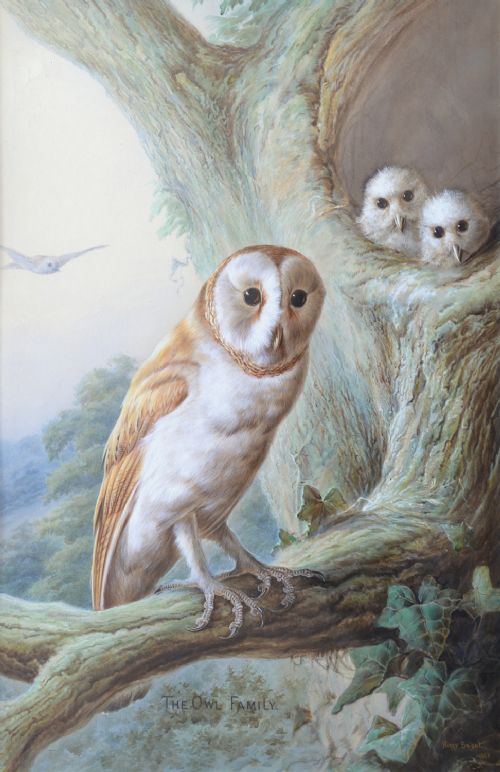
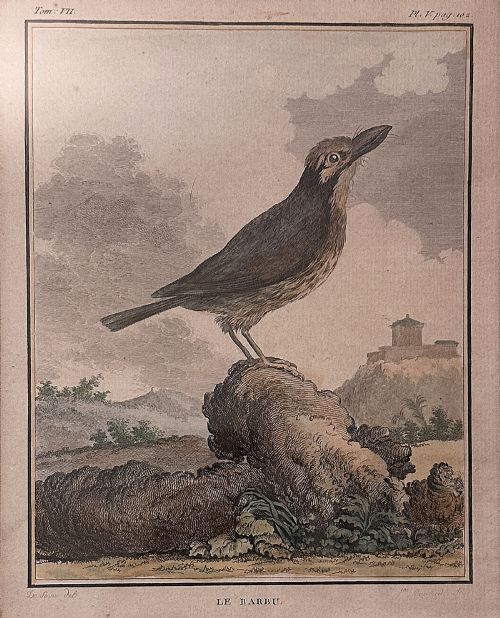
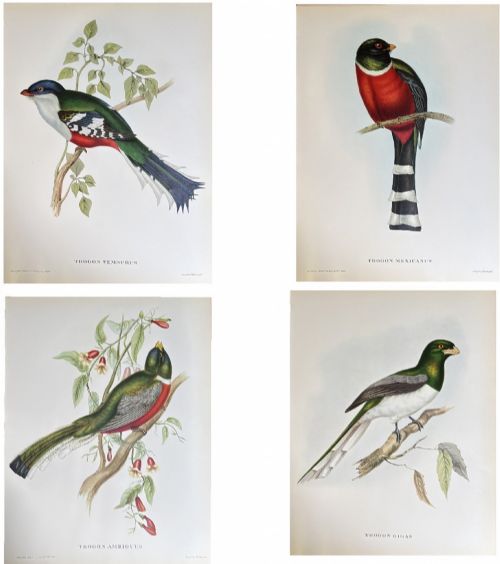
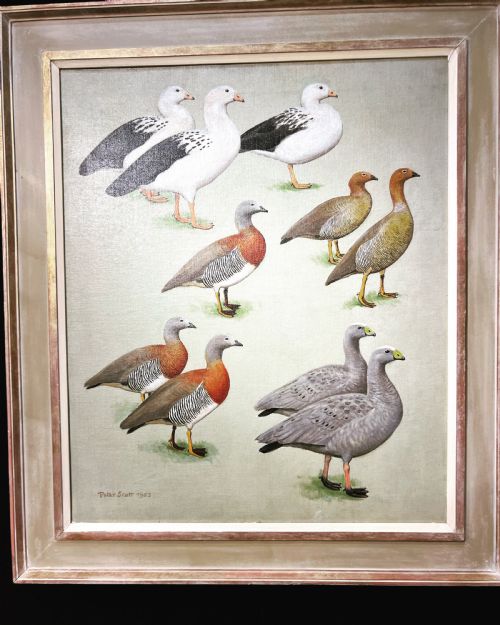
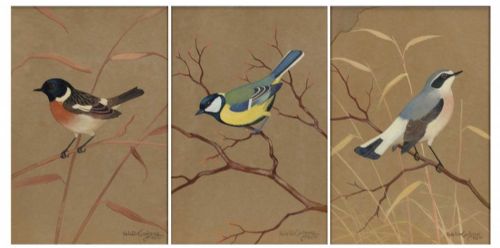
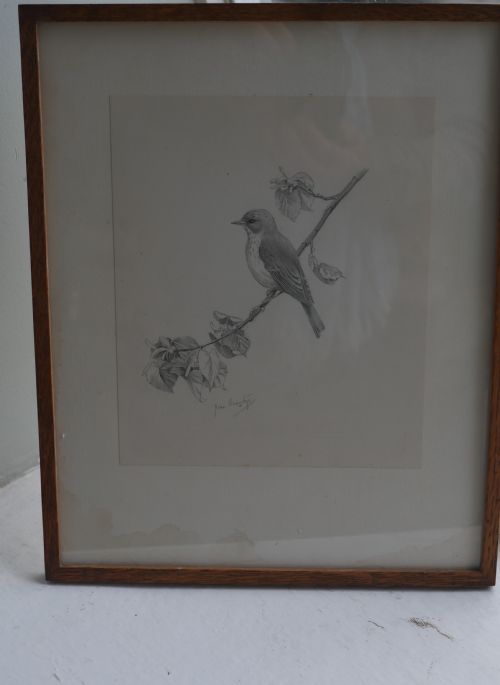
Ornithological illustration artwork comprises framed art, wall art, prints, engravings, and watercolour paintings capturing birds. These pieces range from 19th Century plates to mid-century British art and 1950s works.
Buyers encounter everything from Regency watercolours and Edwardian framed pairs to 1930s realisms and modern pencil drawings. Natural history illustration and Victorian natural history form the backbone of these selections.
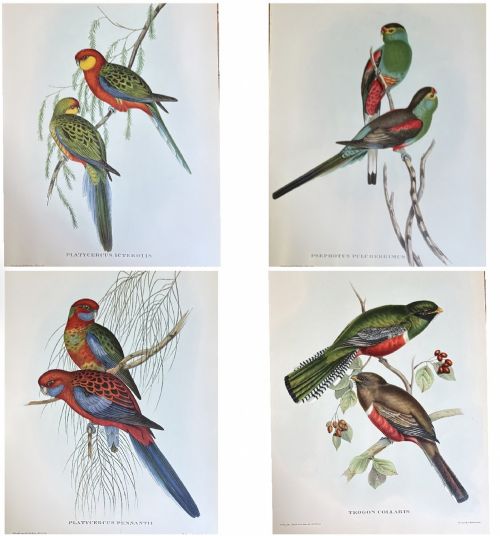
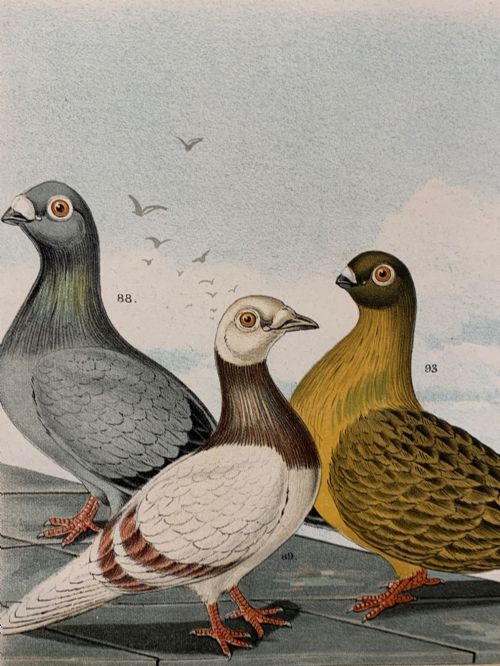
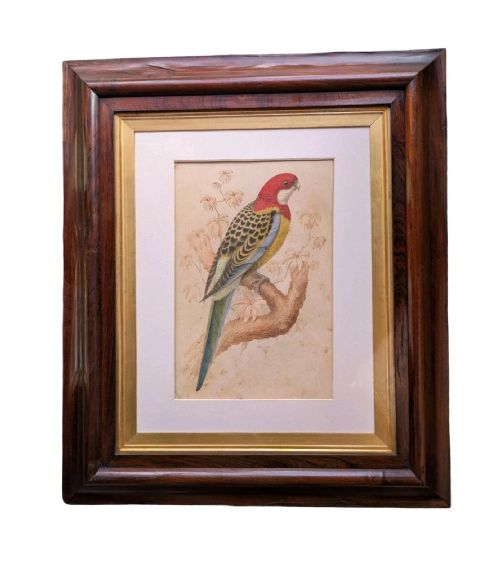
The subjects stretch from domestic pigeons and garden birds to exotic parrots, macaws, and falcons. Works appear singly or in sets, often framed in wood and glass.
Materials and Techniques
Artists relied primarily on paper supports, applying watercolour paint, gouache, ink, and pencil to render feathers and posture with exactitude. Hand-coloured lithographs and engravings introduced broader distribution while retaining fine detail.
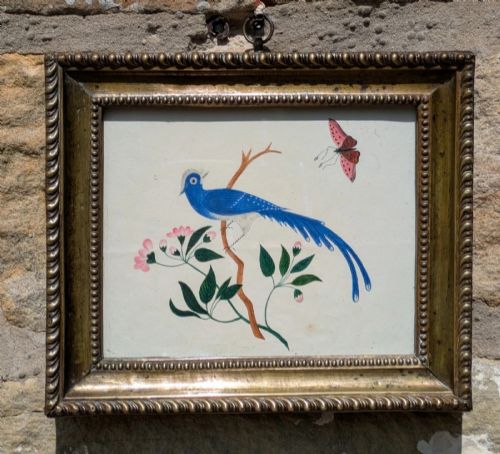
Gilt framing frequently accompanies these pieces, complementing the delicate pigments of the paper. Wood and glass structures protect the watercolours and prints from environmental wear.
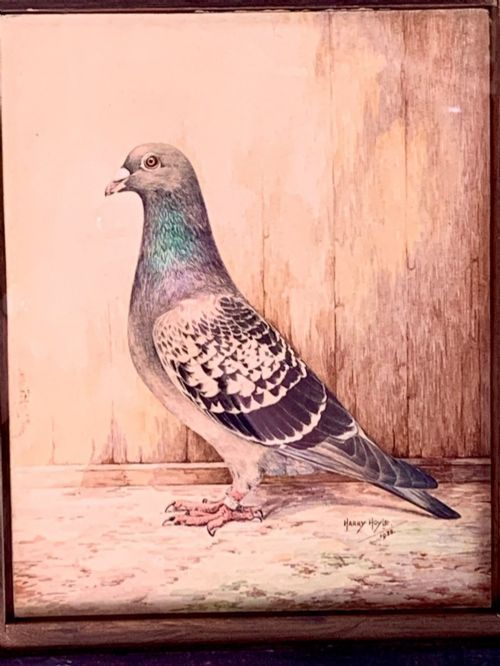
One recorded watercolour celebrates a royal messenger pigeon that won the King George V Silver Jubilee in 1935.
Assessing Quality and Execution
Quality rests upon the precision of the draughtsmanship and the fidelity of the bird's anatomy. Skilled artists capture feather texture and posture with immediate conviction.
The preservation of the paper and the vibrancy of the watercolour pigments dictate the lasting strength of the piece. Hand-coloured prints with crisp lines and stable ink show superior execution.
Edward Lear·Harry Bright·Charles F. Tunnicliffe·Paul-Louis Barruel·Donald Watson
The Ornithological Illustration Artwork Glossary
- Lithograph
- A print made from a stone or metal plate on which an image has been drawn with an oily substance. This technique allows for faithful reproduction of fine lines.
- Gouache
- An opaque watercolour paint that dries to a matte finish. It provides heavier coverage than traditional watercolour.
- Engraving
- An intaglio printmaking process where an image is cut into a metal plate with a burin. It produces sharp, precise lines ideal for scientific detail.
- Regency
- A period of British design lasting from the early 19th century to the 1820s. Works from this era often display refined classical proportions.
- Edwardian
- The period spanning the reign of King Edward VII up to the First World War. Artwork from this time often reflects traditional natural history interests.
Ornithological Illustration Artwork: Frequently Asked Questions
What subjects appear in these works?
Artists depicted a wide range of avian life, from British garden birds and pigeons to exotic parrots, macaws, and falcons. Studies often focus on single species or grouped pairs.
Compositions vary from scientific documentation to expressive mid-century studies of birds in natural habitats.
How should these pieces be framed?
Most works are preserved under glass with wooden frames to protect fragile paper supports from light and moisture. Original or period-appropriate frames help maintain the historical context of the piece.
Keep framed artworks away from direct sunlight to prevent watercolour pigments and hand-coloured inks from fading.
How do I identify a lithograph?
Lithographs feature smooth surface ink transfer without the plate marks typically found on engravings or etchings. Examination under magnification reveals the fine dot or line pattern characteristic of stone printing.
Hand-coloured lithographs show subtle brushwork applied over the printed monochromatic base.
What defines 1930s British realism?
This style emphasises direct observation of the natural world with honest, unidealised rendering. Artists focused on capturing the true posture and environment of British wildlife.
Works from this movement often employ muted palettes and precise pencil or watercolour techniques.