


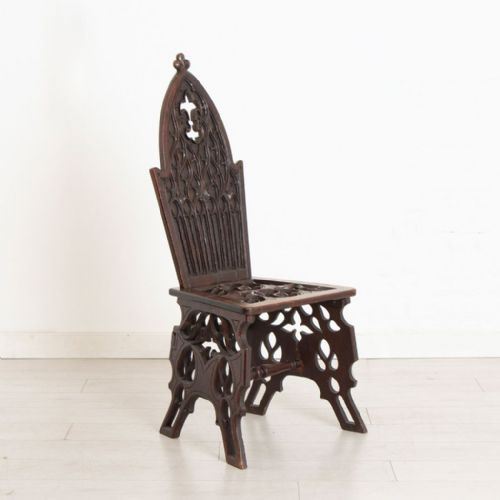


Ornate Wooden Hall Chair
An ornate wooden hall chair brings bold carved detail and distinct period character directly into an entranceway.
Ornate Wooden Hall Chair
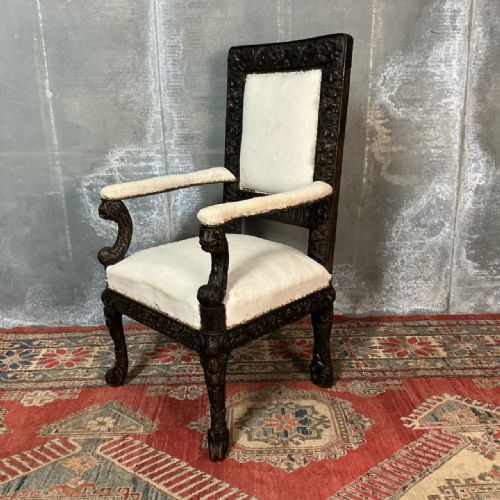
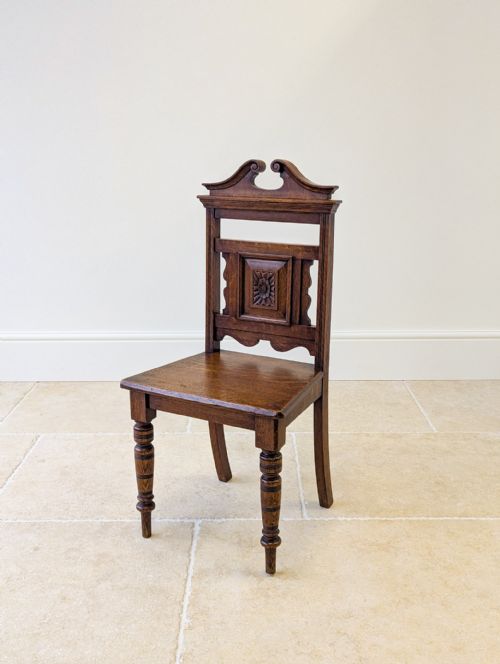
An ornate wooden hall chair is a striking seating option designed for entrance halls and reception spaces, drawing on nineteenth-century revival styles. These pieces often arrive as pairs or individual statements, functioning primarily as decorative furniture rather than for long periods of lounging.
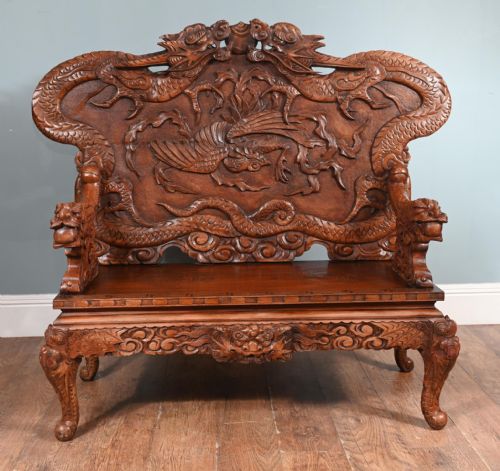
The selections span the Victorian era and the broader nineteenth century, frequently incorporating styles such as Renaissance Revival, Baroque Revival, and Gothic Revival. Alongside standard hall chairs, related forms like side chairs, sgabellos, and carved benches appear within the broader category.
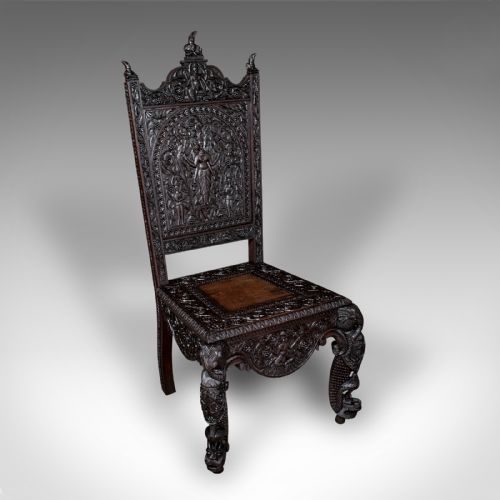
Origin points stretch across various European and global workshops, including Continental, Italian, French, and Chinese examples. Buyers encounter heavy carving, high backs, and inlaid details that reflect the eclectic tastes of the period.
How they were made
Cabinet makers utilised dense hardwoods including oak, walnut, mahogany, teak, and rosewood to support deep hand-carving and structural integrity. These timbers provided the strength needed for elaborate pierced backs, gargoyle motifs, and high relief panels.
Surface decoration frequently involved marquetry inlay using contrasting woods, bone elements, or cinnabar lacquer. Additional upholstery in leather, textile, or fabric appears on select seats, complementing the carved wooden frames.
Styles represented include Italian Renaissance Revival, Baroque Revival, Gothic Revival, and Chinese Qing Dynasty.
What varies in quality
Depth and crispness of the hand-carving separate standard production from exceptional examples, as skilled carvers achieved sharper relief and greater anatomical detail in figures and foliage. The complexity of the design, such as intricate marquetry or bone inlay, also dictates the distinction of a piece.
The choice of primary timber influences the overall caliber, with select figured walnut, dense oak, and heavy hardwoods holding up better to age while providing a richer grain structure. Construction methods, including the joinery of high backs and heavy seats, determine the durability of the frame.
The Ornate Wooden Hall Chair Glossary
- Sgabello
- A Renaissance style wooden chair featuring a tall back and solid trestle supports instead of traditional legs. These pieces were historically placed in hallways for brief seating.
- Marquetry
- A decorative technique where thin slices of wood or bone are fitted into a veneer to form geometric or pictorial patterns. This method appears on tabletops and chair backs.
- Gargoyle
- A grotesque carved stone or wooden figure integrated into architecture and furniture decoration. In these chairs, they provide menacing or ornamental focal points.
- Renaissance Revival
- An architectural and decorative style drawing inspiration from fifteenth and sixteenth-century Italian and French design. It relies heavily on symmetry, classical motifs, and deep relief carving.
- Cinnabar lacquer
- A technique involving multiple layers of coloured resin applied to a wooden base and carved when dry. This finish appears on specific imported bench forms.
Ornate Wooden Hall Chair: Frequently Asked Questions
Where should I place an ornate wooden hall chair?
These chairs fit naturally in entrance halls, corridors, or landings where their carved backs create an immediate visual impact.
Because many feature upright wooden seats designed for formal use, they work best as accent pieces rather than primary lounge seating.
How do I care for the carved wood?
Dust the intricate carvings regularly with a soft brush to prevent grime from settling into the recesses of the wood.
Apply a quality beeswax occasionally to nourish the oak, walnut, or mahogany surfaces without building up heavy residues.
Are these chairs comfortable for daily sitting?
Most nineteenth-century examples feature stiff wooden seats or minimal upholstery intended for short intervals rather than extended relaxation.
Their primary historical function in a hallway was for brief waiting rather than lounging.
How can I identify a Renaissance Revival piece?
Look for heavy symmetrical carved panels, classical strapwork, and motifs that mirror sixteenth-century European architecture.
Walnut and oak are the common timbers used to support these heavier, dramatic proportions.