



Ornate Wooden Cupboard
An ornate wooden cupboard brings rich carving and dense grain to a room, offering practical storage disguised as sculpture.
Ornate Wooden Cupboard
An ornate wooden cupboard encompasses heavy carved sideboards, tabletop cabinets, and cocktail furniture spanning the eighteenth, nineteenth, and early twentieth centuries. These pieces emerge from diverse traditions, ranging from European revival styles to Indian folk art and Dutch colonial craftsmanship.
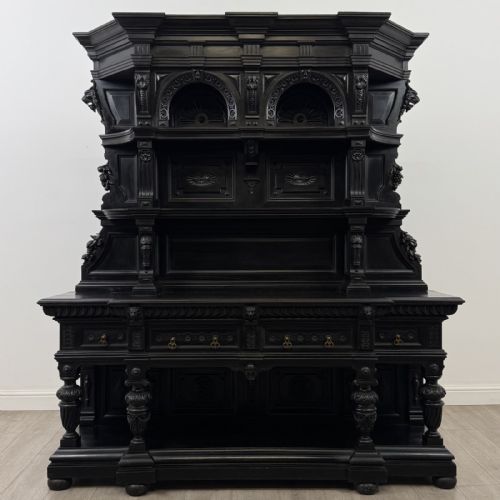
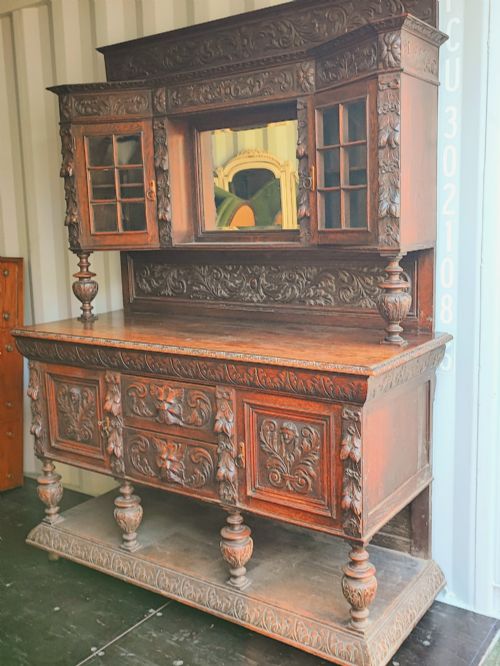
The version most commonly met on this page is the nineteenth century carved walnut or oak cabinet, often bearing Renaissance, Gothic, or Jacobean revival motifs. These forms prioritise display and storage, using substantial timbers like oak, walnut, and ebonised hardwood to create commanding focal points.
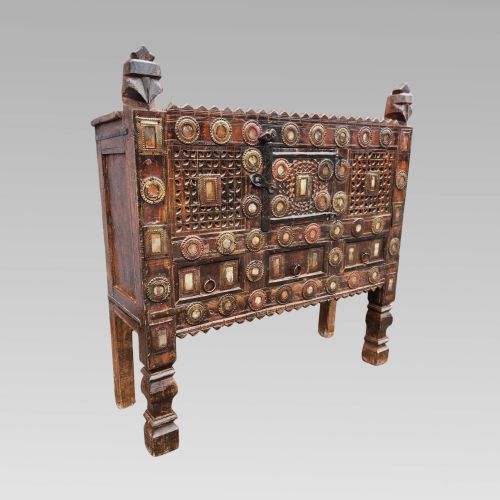
Beyond standard sideboards, the selection includes specialised storage such as drinks cabinets, jewellery caskets, and dowry chests. Each piece employs surface decoration like marquetry inlay, lion mask carvings, or serpentine shaping to elevate simple storage into decorative art.
How these pieces were made
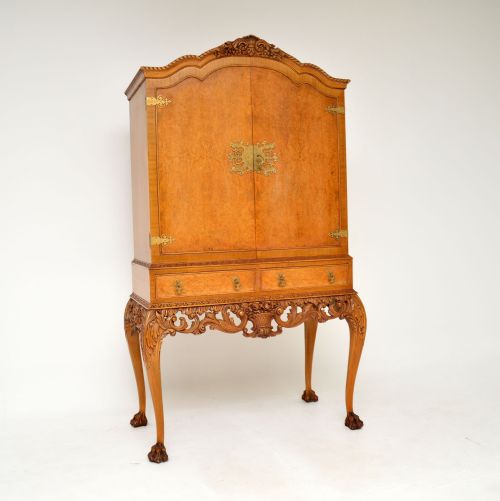
Makers shaped these cabinets using solid hardwoods including oak, walnut, teak, and satinwood, frequently applying burr walnut veneers for dramatic grain patterns. Ebonised hardwood provided a dense, black surface finish popular in Victorian design.
Carving formed the primary decorative technique, executed by hand to render deep relief motifs such as lion masks and intricate foliage. Inlaid marquetry added geometric and pictorial patterns using contrasting timber veneers.
Metal hardware in brass and other alloys provided structural reinforcement and decorative hinges, locks, and handles. Glass panels and mirrored sections were integrated into doors and backplates for display cabinets and cocktail units.
Ornate Wooden Cupboard Retail Price Guide 2026
Typical asking prices for ornate wooden cupboard among the pieces listed under this phrase on Sellingantiques today, from the lower quarter to the upper quarter. They describe what is for sale here now, not the wider market.
Listings feature walnut, oak, satinwood, and ebonised hardwood across periods spanning the eighteenth, nineteenth, and early twentieth centuries.
What varies in quality
The depth and precision of the hand carving dictate the aesthetic standing of a piece, distinguishing mechanically stamped decoration from skilfully executed sculptural relief. Wood selection also divides the range, with figured burr walnut and dense satinwood representing greater material ambition than standard utility timbers.
Complexity of form governs the architectural success of a cabinet, seen in the transition from plain rectangular boxes to serpentine shapes, cabinets on stands, and multi-tiered sideboards. The integration of contrasting inlay, glass, and brass hardware further separates standard production from ambitious craftsmanship.
The Ornate Wooden Cupboard Glossary
- Marquetry
- The art of applying decorative pieces of veneer to a structure to form intricate patterns and pictures. This technique often employs contrasting timber colours to create depth on cabinet doors.
- Ebonised
- Wood finished to resemble ebony through staining and polishing. This dark, uniform surface was frequently utilised in Victorian design to achieve a dramatic contrast with gilt or brass mounts.
- Serpentine
- A curved shape consisting of a convex centre flanked by concave ends. This contour adds fluidity and visual movement to the front profile of a sideboard or cabinet.
- Burr walnut
- Timber taken from a tree growth where the grain has grown in a deformed, swirling manner. It produces highly prized, decorative veneer patterns used on high-status cabinet facades.
- Damchiya
- A traditional Indian dowry chest designed for storage. These pieces frequently feature heavy relief carving and integrated compartments for textiles and valuables.
Ornate Wooden Cupboard: Frequently Asked Questions
What is a damchiya?
A damchiya is a traditional Indian dowry chest adapted for storage, often featuring dense hand-carved teak and integrated compartments.
These pieces served as functional household furniture while displaying the craftsmanship and status of the family through elaborate wood relief.
How do I identify a revival style?
Revival styles draw heavily on historical motifs from specific architectural periods, such as Renaissance, Gothic, or Jacobean eras.
Cabinet makers in the nineteenth century reinterpreted these older forms using contemporary tools, resulting in heavily carved oak and walnut furniture.
Where should I place a tabletop cabinet?
Tabletop cabinets sit securely upon larger sideboards, desks, or dedicated stands rather than standing directly on the floor.
They provide contained storage for smaller items like documents, cutlery, or jewellery while adding height and decorative detail to a room.
What is ebonised hardwood?
Ebonised hardwood is timber treated with stain and polish to imitate the dark, heavy appearance of natural ebony.
This finish became popular during the Victorian period to create stark contrast and a formal appearance on display cabinets and sideboards.