





Ornate Trinket Box
An ornate trinket box serves as a small repository for keepsakes, combining decorative metalwork and rich timber to hold personal treasures.
Ornate Trinket Box
An ornate trinket box encompasses various forms such as jewellery caskets, table boxes, and decorative containers designed to hold small valuables. These items emerge primarily from the Victorian and Edwardian eras, alongside pieces dating to the eighteenth and nineteenth centuries.
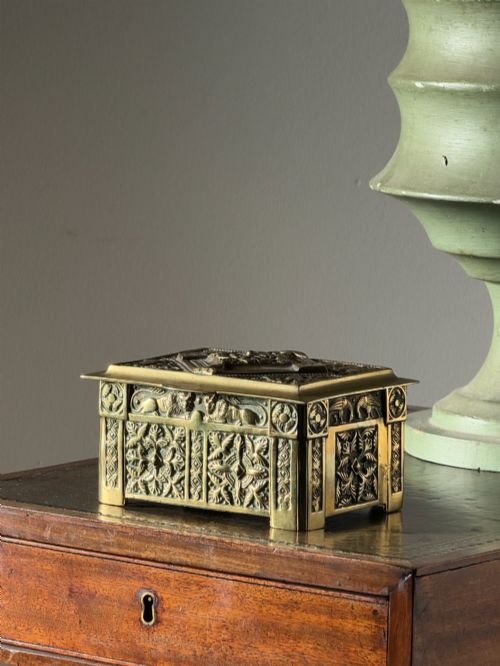
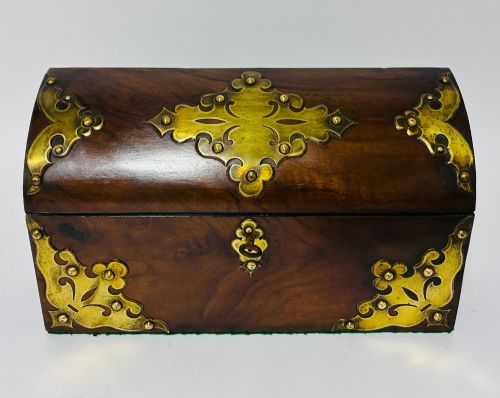
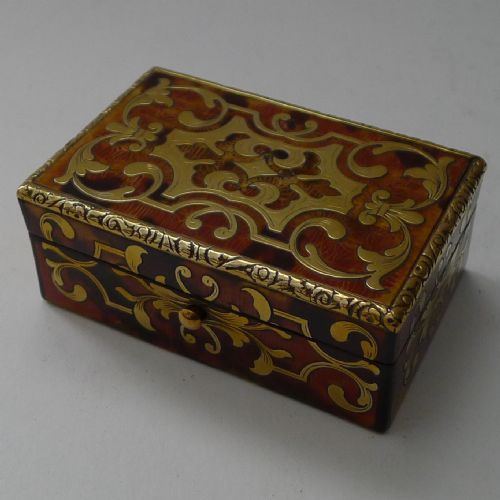
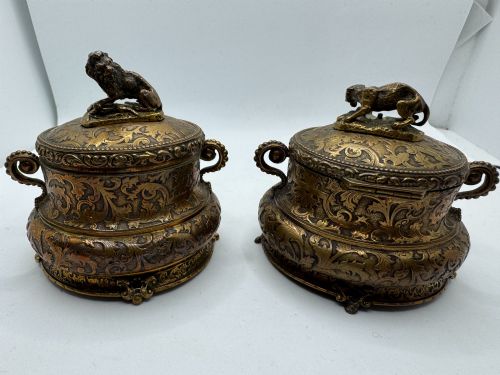
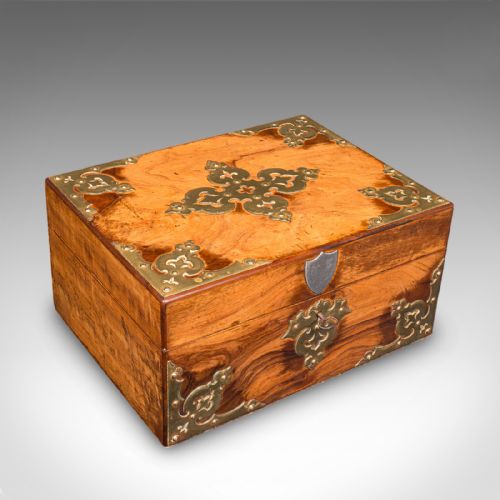
The objects take diverse shapes, ranging from rectangular wooden caskets bound in brass to French ormolu designs mounted on marble or onyx. Buyers frequently encounter nineteenth-century European and continental styles, including Gothic Revival, Napoleon III, and Rococo Revival examples.
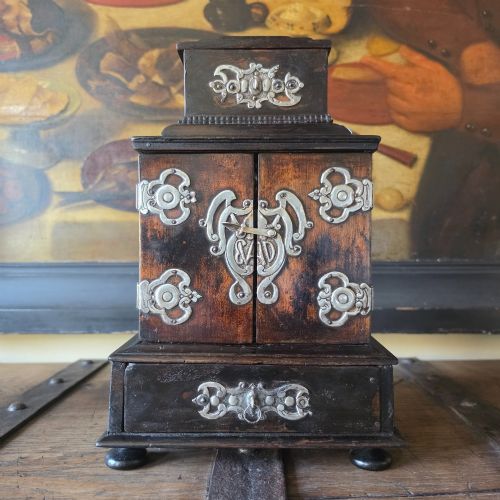
Regional variations appear across the selection, featuring carved hardwood and sandalwood pieces originating from India, Ceylon, Burma, and the Middle East. European workshops contribute items finished with marquetry inlay, silver plating, or cast brass decoration.
Materials and construction
Maker utilise dense timbers like walnut, burr walnut, rosewood, and hardwood as the primary structural bodies for these caskets. These wooden elements frequently receive brass mounts, stringing, or intricate marquetry inlay.
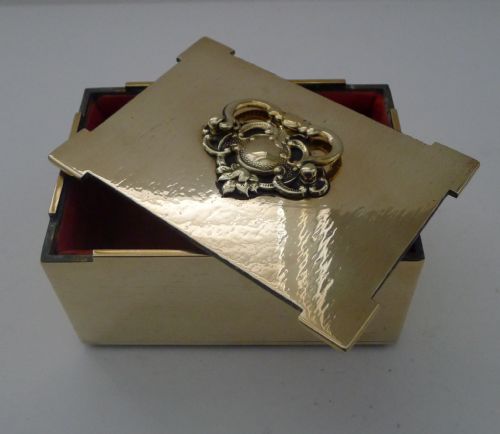
Metal components form a central part of the construction, utilising cast brass, ormolu, gilt metal, and silvered metal. Artisans combine these metals with stone insets such as marble, onyx, and pietra dura to create highly decorated surfaces.
Ornate Trinket Box Retail Price Guide 2026
Typical asking prices for ornate trinket box among the pieces listed under this phrase on Sellingantiques today, from the lower quarter to the upper quarter. They describe what is for sale here now, not the wider market.
Canine companions watch over the contents of select nineteenth-century gilt-metal caskets from their perch as tiny dog finials.
Evaluating craftsmanship
Quality rests upon the precision of the metal casting and the complexity of the surface ornamentation. Finer examples display crisp detail in cast ormolu, well-fitted hinges, and tightly secured stone or enamel appliques.
The selection of timber and the execution of inlay dictate the standing of wooden pieces. Superior items utilise burr veneers or detailed marquetry, demonstrating careful alignment and stable construction across the box joints.
Walker and Hall·AB Paris
The Ornate Trinket Box Glossary
- Ormolu
- A technique of applying finely ground, high-carat gold to an object of bronze or brass. This process creates a rich, golden finish commonly found on nineteenth-century French caskets.
- Pietra dura
- An artistic technique using cut and fitted polished coloured stones to create geometric or pictorial images. It appears as a decorative panel inset into the lids of fine jewellery caskets.
- Marquetry
- The art of applying pieces of veneer to a structure to form decorative patterns. Craftsmen utilise various coloured woods to create pictorial or geometric designs on box lids.
- Casket
- A box or chest designed for holding valuables, jewellery, or keepsakes. These vessels typically feature more elaborate decoration and heavier construction than standard utility boxes.
- Gothic Revival
- An architectural and decorative style drawing inspiration from medieval forms. Pieces in this style often incorporate pointed arches, tracery, and heavy brass mounts.
Ornate Trinket Box: Frequently Asked Questions
What were ornate trinket boxes used for?
These boxes served to safeguard precious personal belongings, including rings, necklaces, keepsakes, and correspondence. Wealthy households placed them on dressing tables, writing desks, and parlour side tables.
Beyond simple storage, the pieces acted as decorative objects in their own right, showcasing the owner's taste and the maker's skill. Their presence added a touch of refinement to Victorian and Edwardian interiors.
How do I care for a wooden box?
Keep wooden caskets away from direct sunlight and extreme fluctuations in temperature to prevent the timber from warping or splitting. Gentle dusting with a dry, soft cloth maintains the finish.
Avoid applying modern furniture polishes or abrasive cleaners, which can damage delicate veneers, brass mounts, and marquetry. Natural wax, applied sparingly, helps preserve antique wood surfaces.
How do I date an antique box?
Examine the construction methods, the materials, and the style of decoration to determine the period of origin. Victorian pieces often feature heavy brass mounts, Gothic Revival elements, or elaborate marquetry.
Inspect the hinges, locks, and interior linings, as manufacturing techniques evolved significantly between the eighteenth and twentieth centuries. Maker marks or hallmarks on silver components provide precise dates of manufacture.
Are these boxes suitable for daily use?
These boxes function well for holding modern jewellery and small keepsakes, provided they are handled with care. The internal compartments and velvet linings remain practical for organising personal items.
Owners should check the condition of original locks and hinges before relying on them for secure storage. Gentle daily use preserves the structural integrity of antique brass work and delicate veneers.