



Ornate Tabletop Mirror
An ornate tabletop mirror brings reflection and decorative presence to a room, offering intricate frames of brass, gilt bronze, and porcelain.
Ornate Tabletop Mirror
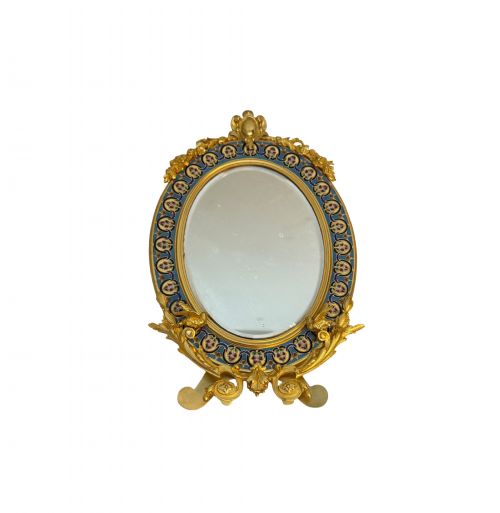
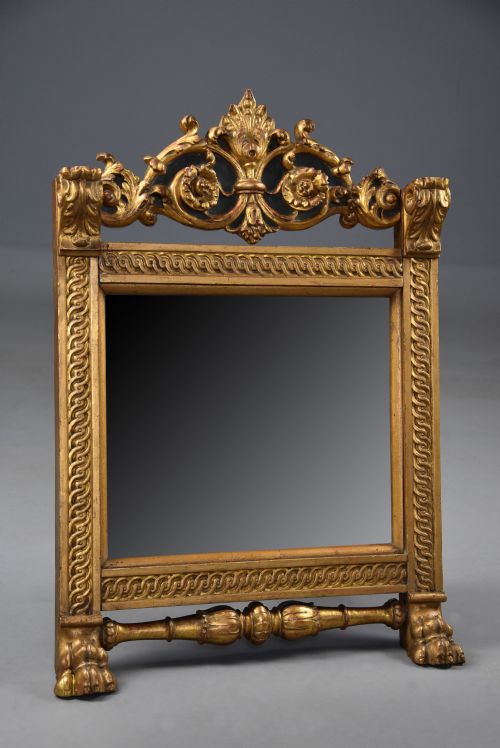
When you search for an ornate tabletop mirror, you are looking at portable dressing and vanity mirrors designed to sit upon furniture rather than hang upon a wall. These pieces primarily date from the nineteenth and early twentieth centuries, spanning periods from the Victorian era through the nineteen-thirties. The versions you are most likely to meet on this page include French Rococo revival dressing mirrors, Renaissance style carved giltwood examples, and champleve enamel and gilt bronze table mirrors.
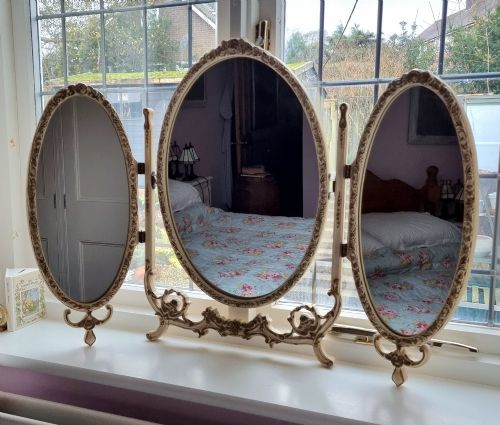
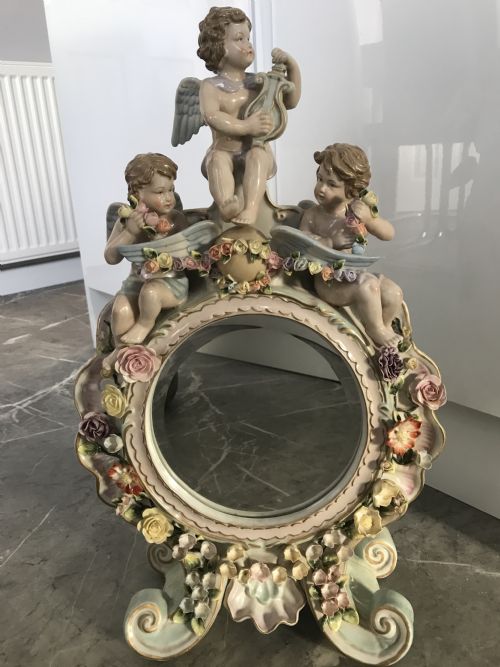
The forms range from simple oval and rectangular plates with easel backs to triple dressing table mirrors and elaborate porcelain frames adorned with flowers and cherubs. Originating from workshops across Britain, France, Russia, and Vienna, these objects served both a practical purpose for personal grooming and a decorative function within the boudoir or dressing room. The variety of styles reflects the revivalist tastes of the nineteenth century, drawing heavily on French rococo and napoleon iii design vocabulary.
Materials and construction
The construction of an ornate tabletop mirror relies on sturdy metal castings, carved wood, and moulded gesso to support heavy glass plates. Brass, gilt bronze, and silver mounts provide durable armatures that often feature champleve enamel details or chased ornamentation. Giltwood and carved wooden frames utilise traditional joinery and easel backs to maintain stability when angled on a table surface.
Glass plates in these pieces are commonly bevelled to catch the light and fit securely into rebated frames. Porcelain elements, such as those depicting cherubs and floral motifs on continental factory pieces, are hand-painted and glazed before being integrated into the structural metalwork or wooden backing.
Ornate Tabletop Mirror Retail Price Guide 2026
Typical asking prices for ornate tabletop mirror among the pieces listed under this phrase on Sellingantiques today, from the lower quarter to the upper quarter. They describe what is for sale here now, not the wider market.
The object forms include oval dressing mirrors, triple vanity setups, and rectangular easel plates influenced by French Rococo and Renaissance revival styles.
Distinguishing quality in craftsmanship
Quality in an ornate tabletop mirror separates the mass-produced domestic item from the finer artisanal creation by the crispness of its casting and carving. Better pieces exhibit deep, clean chasing on gilt bronze and brass, delicate champleve enamel work, and finely bevelled glass plates that retain their original silvering. Inferior examples often show softer details in moulded elements and simpler, plain wooden backs without structural refinement.
The integrity of the easel mechanism and the weight of the supporting frame also indicate superior manufacture. Heavier metals and robust hinges ensure the mirror holds its position securely, whereas lesser items may suffer from loose supports or thin metal frames that warp under the weight of the glass.
The Ornate Tabletop Mirror Glossary
- Champleve
- An enamelling technique where troughs are carved into the surface of a metal object and filled with vitreous enamel before firing. This method creates colourful, patterned designs across brass and gilt bronze frames.
- Easel back
- A hinged leg attached to the reverse of a mirror frame that allows it to stand upright on a table. It provides adjustable support for the viewing angle.
- Bevelled glass
- A glass mirror plate with edges cut and polished at an angle to create a framed border effect. This technique adds depth and catches light differently than a flat-edged plate.
- Gilt bronze
- Bronze that has been treated with a thin layer of gold or gold-coloured alloy to give it a rich metallic finish. It is frequently seen on French revival vanity mirrors.
- Rococo revival
- A nineteenth-century design style mimicking the asymmetrical curves, scrolls, and natural motifs of the eighteenth-century rococo movement. It dominates the ornamentation of many dressing mirrors from this period.
Ornate Tabletop Mirror: Frequently Asked Questions
What is an ornate tabletop mirror?
An ornate tabletop mirror is a portable looking glass designed to stand on a dressing table, chest of drawers, or vanity. These pieces feature decorative frames made from materials such as brass, gilt bronze, carved wood, or porcelain.
They combine practical utility with ornamental design, often incorporating historical revival styles like French rococo or Renaissance motifs into their construction.
How were these mirrors used?
These mirrors were primarily used in bedrooms and dressing rooms for personal grooming, hair styling, and applying cosmetics. Their portable nature allowed them to be positioned in the best light on top of furniture.
Because they included easel backs or pivoting frames, users could adjust the angle to suit their height and lighting needs.
Where were they made?
The pieces seen here originate from various European centres, with a strong representation of French workshops producing gilt bronze and champleve enamel designs. Other examples come from British makers, continental porcelain factories, and Vienna or Russia.
Each region brought distinct stylistic preferences and material specialisms to the creation of dressing table mirrors.
How do I date an antique tabletop mirror?
Dating relies on examining the materials, construction methods, and stylistic cues present in the frame and glass. Late nineteenth-century pieces often feature heavy cast brass, champleve enamel, or Renaissance revival carving, while nineteen-thirties examples show simpler, streamlined frames.
The presence of original bevelled glass, backboards, and easel mechanisms also helps determine the period of manufacture.
How do I care for an antique mirror?
Care for an antique tabletop mirror involves keeping it out of direct sunlight and away from excessive moisture to protect the metal finishes and wood. Dusting should be done gently with a soft, dry cloth without applying harsh chemical cleaners to the frame or glass.
Check the easel support periodically to ensure it bears the weight of the mirror safely without straining the hinges.