
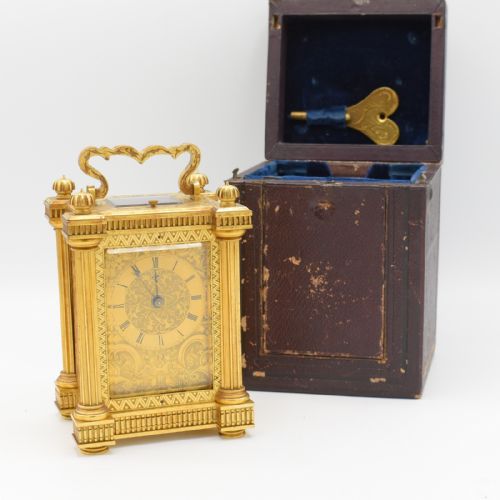


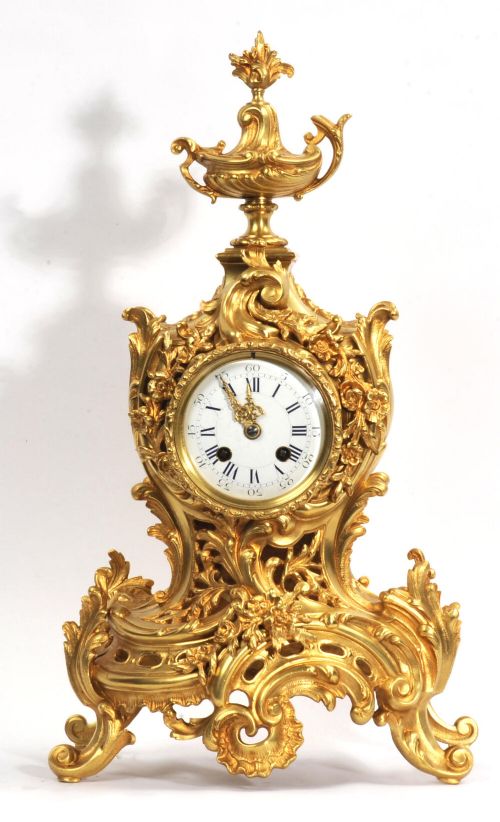


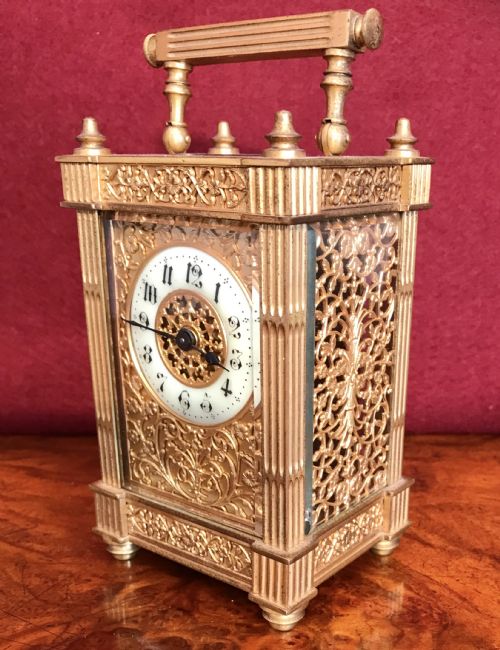

Ornate Tabletop Clock
An ornate tabletop clock brings domestic drama to a mantelpiece, combining intricate metalwork with precision engineering.
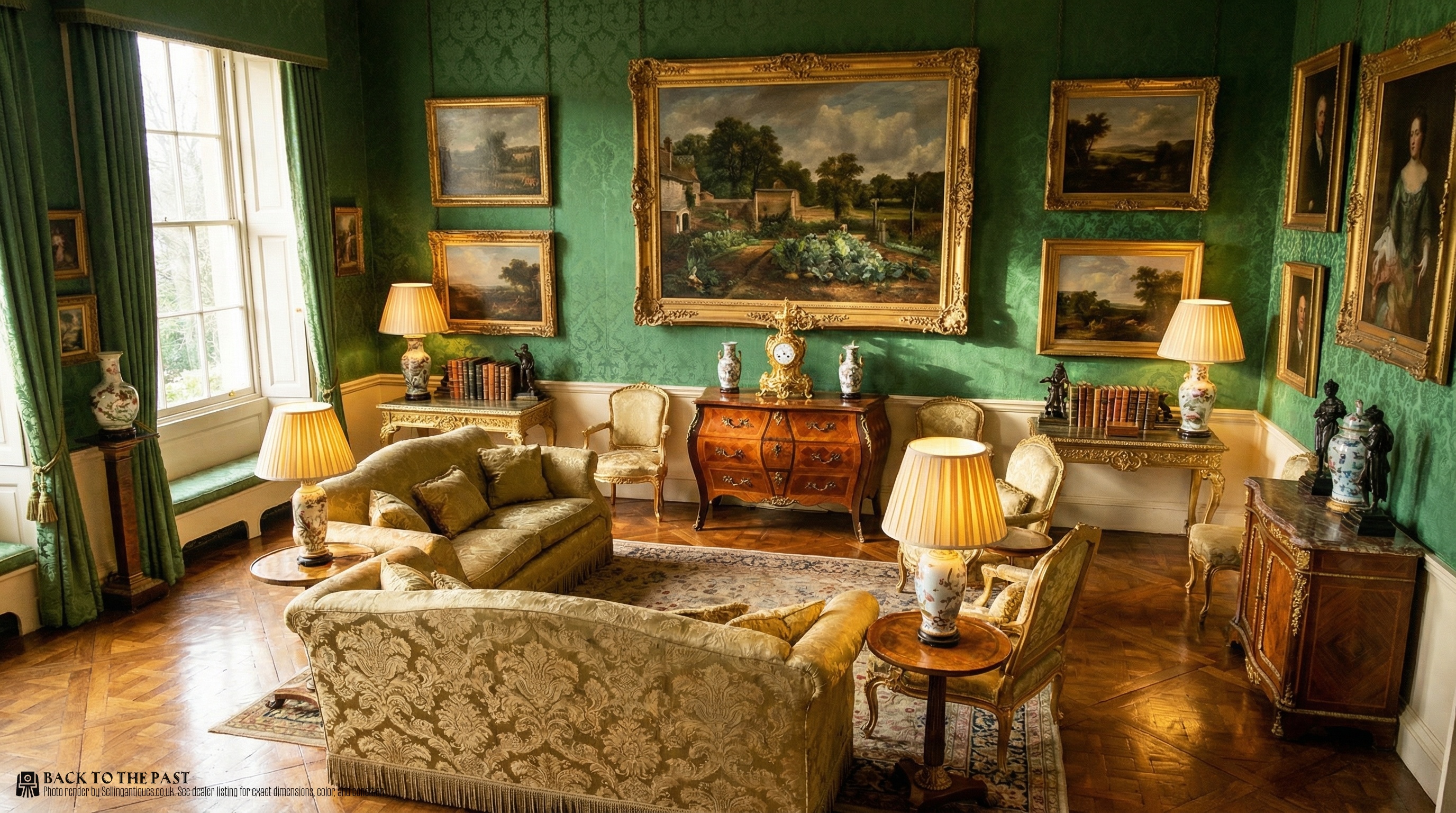
Ornate Tabletop Clock
When you search for an ornate tabletop clock, you encounter pieces spanning the Victorian and Edwardian periods, stretching back through the nineteenth century. These objects function simultaneously as domestic timekeepers and decorative sculptures, appearing in forms such as mantel clocks, desk clocks, and carriage clocks.
The versions you are most likely to meet on this page hail from French and British workshops, often adopting the exuberant curves of the Rococo Revival and Belle Epoque styles. They sit comfortably on desks, ledges, and mantelpieces, commanding attention through sheer density of ornamentation.
Makers utilised brass, gilt bronze, ormolu, and glass to construct these housings, frequently incorporating enamel dials and intricate filigree masks. A buyer finds both compact carriage clocks designed for travel and substantial mantel clocks meant to anchor a room.
How they were made
Foundries cast brass, gilt bronze, and ormolu into elaborate frames, shaping scrolling foliage and asymmetrical Rococo motifs by hand. Artisans then chased and gilded these metal surfaces to achieve a brilliant, reflective sheen.
Movements required precise mechanical skill, particularly in repeater mechanisms that chimed the hours and quarters upon demand. Craftsmen fitted glass panels into bevelled housings and applied enamel onto metal dials for legible, crisp numerals.
Listings feature pieces from the Victorian and Edwardian eras, spanning the 1850s to 1900, constructed from brass, gilt bronze, enamel, and leather.
What varies in quality
The distinction between standard production and exceptional work lies in the depth of the metal chasing and the crispness of the cast ornament. Finer pieces exhibit hand-finished details in the ormolu and bronze rather than soft, mass-produced contours.
Signed movements by known makers elevate a clock's standing, particularly when paired with undamaged enamel dials and intact glass panels. The integration of specialised complications, such as repeater systems, marks the upper tier of execution.
Howell & James London·Brunelot·Howell, James & Co.
The Ornate Tabletop Clock Glossary
- Ormolu
- A gilded bronze technique popular in French decorative arts, created by applying finely ground gold mercury amalgam to bronze. This process yields a rich, warm metallic lustre.
- Repeater
- A mechanical clock complication that chimes the last hour or quarter-hour when a lever or button is pressed. It allowed owners to check the time in total darkness.
- Carriage clock
- A small, portable spring-driven timepiece designed for travel during the nineteenth century. They usually feature a carrying handle and glass sides to reveal the inner escapement.
- Strut clock
- A timepiece supported by a hinged prop or stand at the back, intended primarily for placement on desks or tables. They gained popularity during the Victorian era.
- Filigree
- Ornamental work consisting of fine wire twisted into delicate openwork patterns. Clockmakers applied this technique to brass masks and panels to enhance visual texture.
Ornate Tabletop Clock: Frequently Asked Questions
How do I wind a mechanical desk clock?
Most nineteenth-century clocks utilise a small winding key inserted directly into arbors on the dial or backplate. Turn the key gently until you feel firm resistance, avoiding any force that might damage the mainspring.
Ensure you do not overwind the movement, as this can lock the gears. Keeping a consistent schedule helps maintain steady timekeeping.
Where should I place a heavy mantel clock?
Select a sturdy, level surface such as a mantelpiece, sideboard, or heavy desk capable of supporting the substantial weight of brass and bronze housings. Stability prevents vibrations that could interfere with the pendulum or balance wheel.
Keep the piece away from direct sunlight and damp environments to protect the gilt finishes and enamel dials from degradation.
How do I tell a Victorian clock from an Edwardian one?
Victorian examples often embrace heavy Rococo Revival forms with dense, ornate casting in gilt brass and bronze. Edwardian pieces frequently lean towards lighter Belle Epoque aesthetics or refined carriage clock formats with filigree panels.
Examine the overall weight, script on the dial, and casting style to determine the likely period of manufacture.
What is the difference between a mantel clock and a carriage clock?
Mantel clocks are larger, heavier stationary pieces designed to sit permanently on furniture, often featuring architectural or sculptural bronze cases. Carriage clocks are smaller, portable travel clocks enclosed in bevelled glass with folding carrying handles.
While mantel clocks anchor a room's decor, carriage clocks offer intricate mechanical visibility through their glass panels.