


Ornate Silver Candelabrum
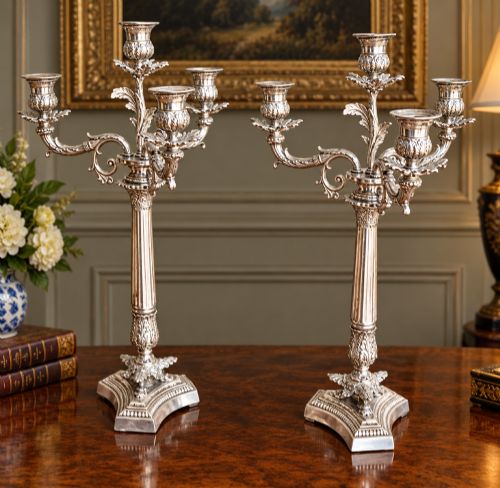
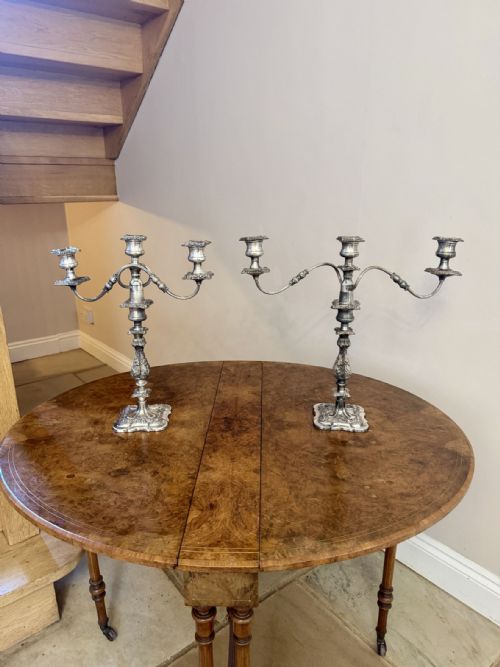
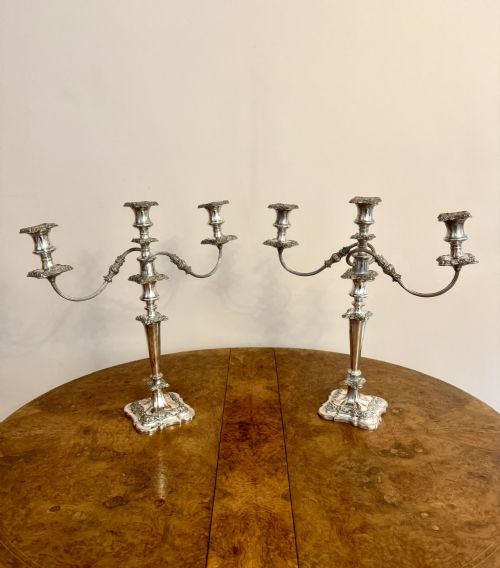
An ornate silver candelabrum commands the table with heavy Victorian and Regency presence, offering multiple candle arms for formal illumination.
Ornate Silver Candelabrum
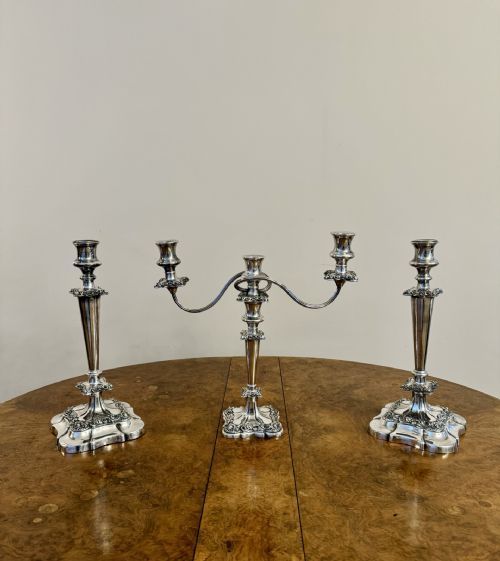
An ornate silver candelabrum brings substantial presence to a dining table or sideboard, typically taking the form of multi-light branching structures designed to hold three, five, or six candles. When you search for an ornate silver candelabrum, you encounter heavy Victorian and Regency examples configured as pairs or large single centrepieces, often accompanied by convertible candlesticks.
The selections on this page span from the mid-nineteenth century into the eighteen-eighties, encompassing distinct decorative movements such as Victorian Rococo Revival, Victorian Neoclassical, and Louis XV style. Alongside freestanding table candelabra, the inventory includes wall sconces and convertible candlestick sets that demonstrate the era's taste for elaborate domestic lighting.
Makers and firms from Sheffield and major British workshops produced these grand items, utilising substantial metal foundations to support intricate casting and branching arms. Their scale ranges from standard pair formations to massive six-light centrepieces adorned with figural details such as cherubs.
How they were made
Makers constructed these pieces using base metal, copper, and nickel silver as the foundational structure, upon which they applied silver plate, Old Sheffield Plate, or electroplated nickel silver. This plating technique provided the visual richness of solid precious metal while maintaining structural rigidity across complex branching arms.
Workshops employed casting methods to create the heavy, ornamented components characteristic of Victorian Rococo Revival and Neoclassical styles. Detailed elements like scrollwork, floral motifs, and cherubs were cast separately and then assembled into the final candelabra and wall sconce forms.
Some grand Victorian centrepieces include watchful cast cherubs peering out from beneath the candle branches.
What varies in quality
The distinction between standard production and top-tier items rests in the crispness of the cast ornamentation and the weight of the metal framework. Superior examples display deeply chased scrollwork and figures that retain sharp definition across every branch and base.
Scale and complexity also dictate the standing of a piece, with massive multi-light centrepieces and documented workshop attributions commanding greater visual and historical weight. The integrity of the silver plate over the underlying copper or nickel silver further determines the enduring character of each candelabrum.
Smith & Sissons & Co·Elkington·Blagden, Hodgson & Co
The Ornate Silver Candelabrum Glossary
- Candelabra
- A branched lighting fixture designed to hold multiple candles simultaneously. These pieces often feature removable top sections that convert them back into standard candlesticks.
- Old Sheffield Plate
- An early method of fusing a thin sheet of silver to a thicker copper ingot by heat and pressure. This technique produced a durable material prized by collectors of Regency and early Victorian wares.
- Electroplated Nickel Silver
- A process introduced in the nineteenth century where a silver coating was deposited via electrical current onto a nickel silver alloy base. This innovation largely superseded older plating methods in major British workshops.
- Wall Sconce
- A decorative lighting fixture secured directly to a wall rather than resting on a table surface. The examples found here utilise similar silver-plated casting techniques to their freestanding counterparts.
- Centrepiece
- A grand table ornament, sometimes configured as a multi-light candelabrum, intended as the focal point of a dining arrangement. These often incorporate sculptural figures such as cherubs within their design.
Ornate Silver Candelabrum: Frequently Asked Questions
What is an ornate silver candelabrum?
An ornate silver candelabrum is a branched candleholder designed for formal tables, featuring decorative casting from the Victorian and Regency periods.
These pieces use silver plate over copper, nickel silver, or base metal to achieve a substantial appearance.
How do I date these candelabra?
Dating relies on stylistic markers such as Victorian Rococo Revival curves or Regency neoclassical lines, alongside manufacturing evidence like Old Sheffield Plate or electroplating.
Makers' marks stamped into the metal can also help pinpoint the active years of the workshops.
Can these candelabra hold candles daily?
These items were built for dining room illumination and function well for modern candle use when handled with care during placement and cleaning.
Care should be taken to protect the silver-plated surfaces from abrasive cleaners and excessive heat.