




Ornate Overmantle Mirror
An ornate overmantle mirror brings grandeur to a room, historically hung above the fireplace to reflect candle- and daylight.
Ornate Overmantle Mirror
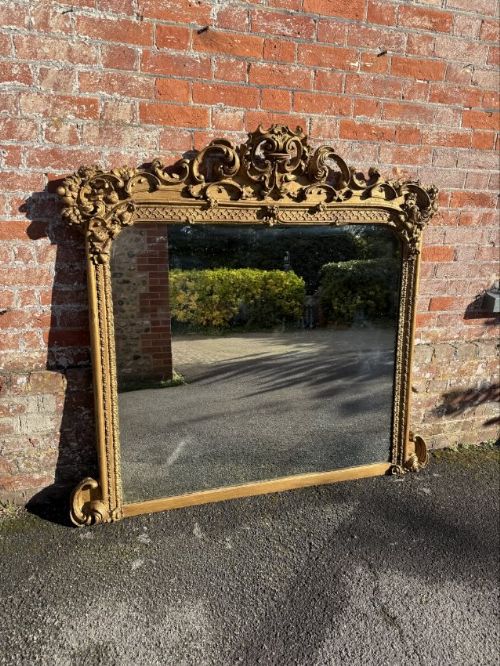
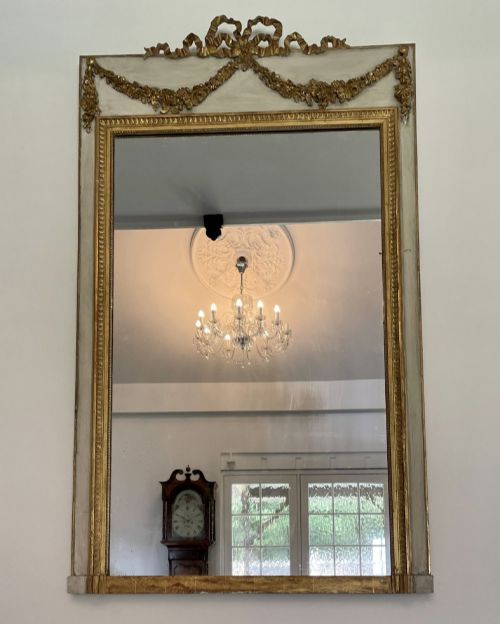
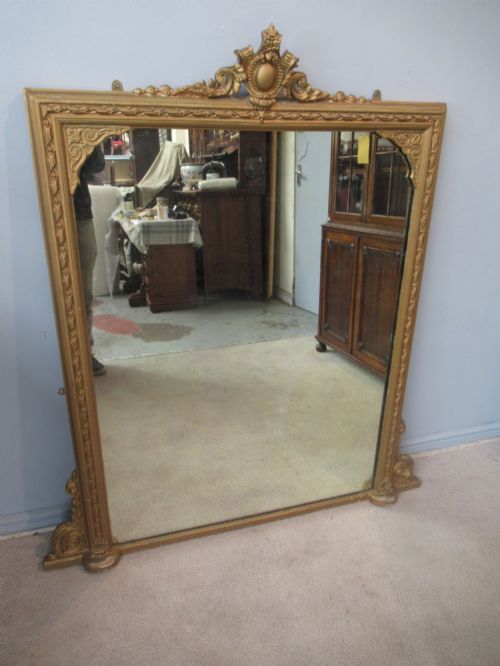
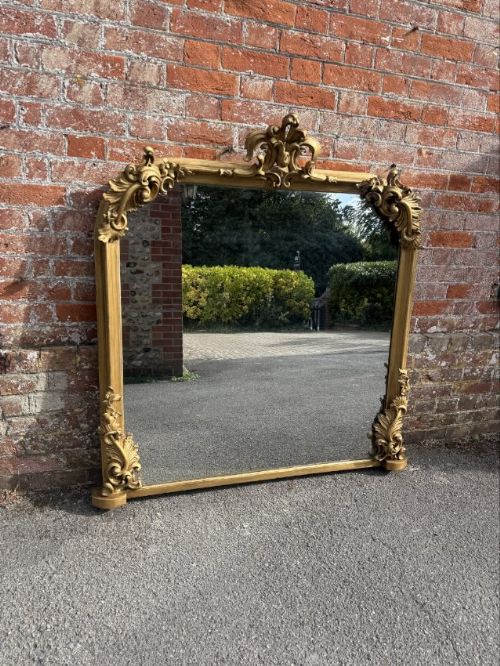
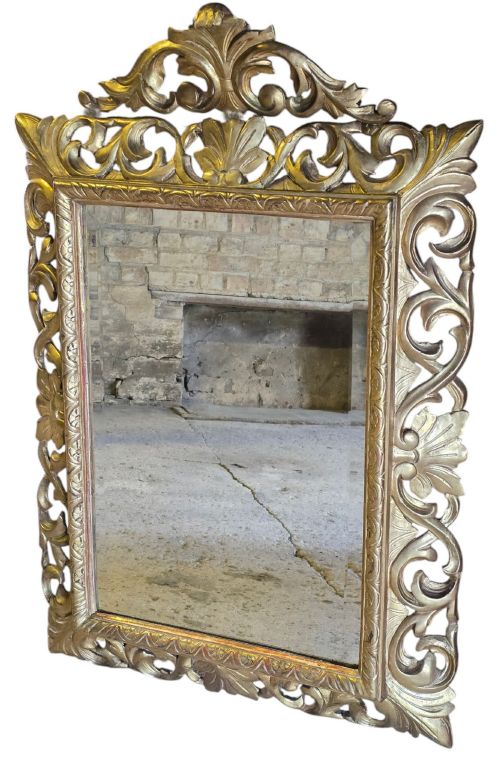
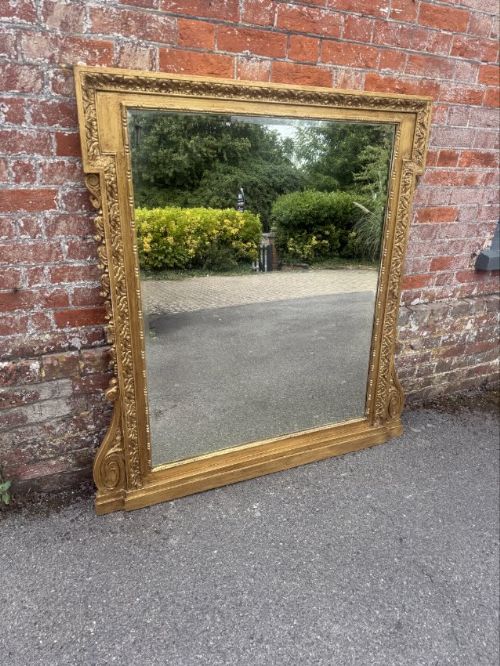
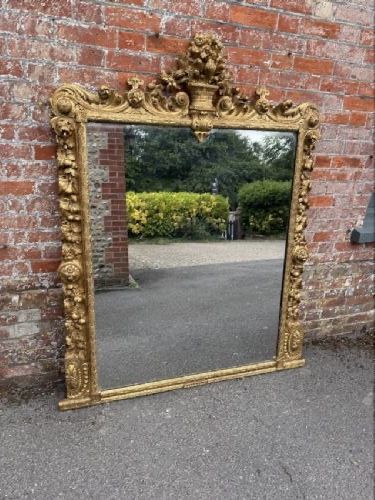
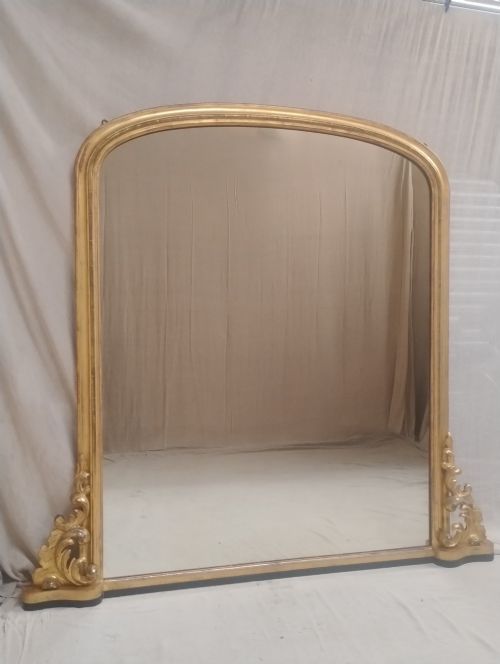
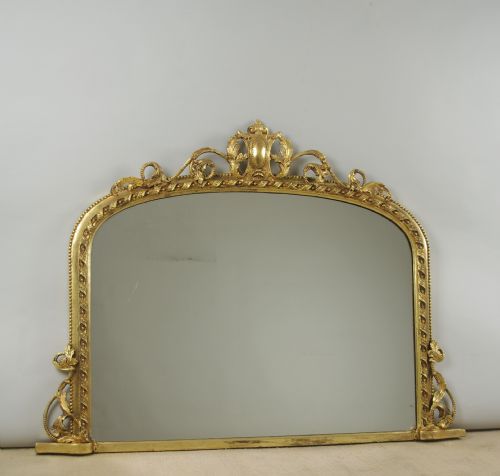
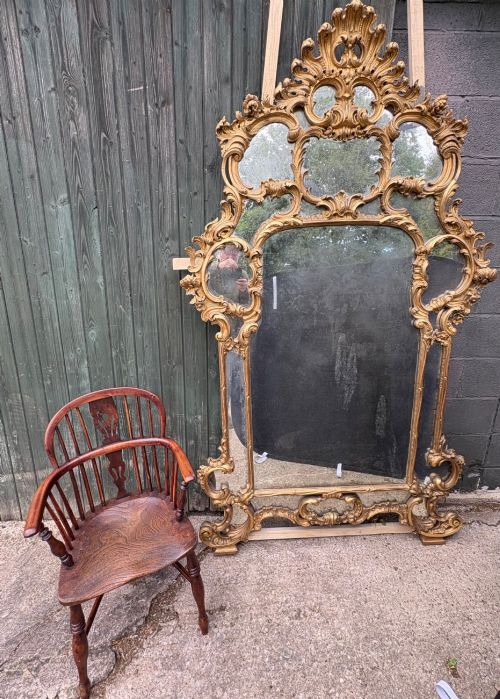
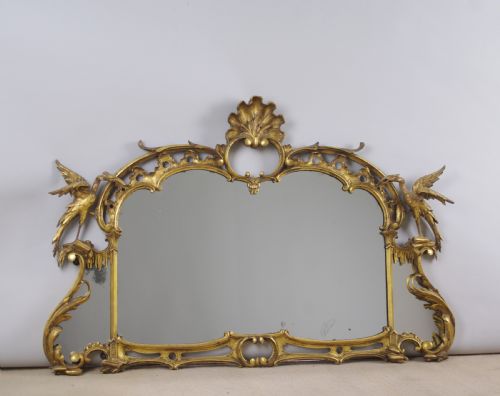
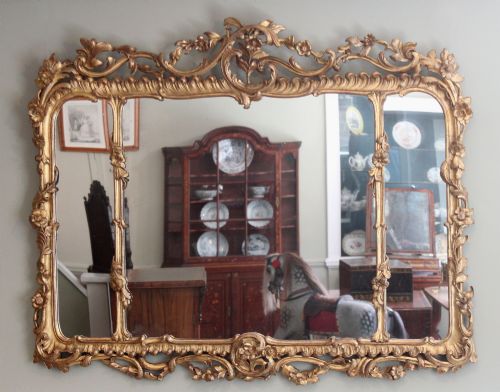
An ornate overmantle mirror is a large wall-hanging looking glass designed to sit directly above a mantelpiece or fireplace. The pieces documented here span the Victorian era, the Georgian period, and into the early twentieth century, taking forms such as arch top, shaped top, and oval mirrors.
Most examples encountered on this page belong to the nineteenth century, displaying elaborate framing associated with Victorian taste, Rococo Revival, and French Chateau styles. These substantial objects act as focal points in domestic interiors, combining functional glass with decorative woodwork.
How they were made
Makers constructed these frames using carved wood, gesso, and composition moulded ornaments applied to a wooden base. Gilding with gold leaf or painting provided the luminous surface finish seen on the majority of these wall mirrors.
Mirror glass was set into these heavy frames, often shaped with curved arches or elaborate crestings to fit specific architectural proportions above fireplaces.
Ornate Overmantle Mirror Retail Price Guide 2026
Typical asking prices for ornate overmantle mirror among the pieces listed under this phrase on Sellingantiques today, from the lower quarter to the upper quarter. They describe what is for sale here now, not the wider market.
Some nineteenth-century mirrors include ebonised details alongside gold leaf, offering a contrasting two-tone frame for Victorian parlours.
What varies in quality
The standard of carving and the crispness of the gesso mouldings separate ambitious pieces from simpler workshop productions. Deeply undercut carved wood demonstrates a higher level of artisan skill than cast composition applied in thick layers.
The preservation of the original gilding and the depth of the frame profile determine the visual impact of the object. Heavier, multi-tiered frames with integrated architectural details represent the upper tier of surviving examples.
The Ornate Overmantle Mirror Glossary
- Giltwood
- Wood that has been coated with gold leaf or powdered gold. This finish catches the light and resists tarnish over centuries.
- Gesso
- A plaster-like mixture applied to wood frames as a base for gilding. It allows for intricate, moulded relief decoration.
- Composition
- A durable paste of whiting, resin, and oil pressed into moulds. It forms the raised decorative details on many nineteenth-century frames.
- Overmantle
- A term for furniture or mirrors designed specifically for placement above a fireplace mantel. These pieces relate directly to the hearth below them in scale and design.
Ornate Overmantle Mirror: Frequently Asked Questions
Where should an overmantle mirror hang?
These mirrors traditionally hang directly above a fireplace mantelpiece, anchored securely to the wall to support their substantial weight.
They also function effectively on large blank walls in reception rooms to bounce light around the space.
How do I identify a Victorian mirror?
Victorian examples often feature heavy giltwood or gesso frames with arched tops and exuberant revival styling. Look for deep mouldings and proportions suited to nineteenth-century domestic architecture.
Construction methods using pine or hardwood frames under composition ornament also point to this period.
What is Chinese Chippendale style?
This design style incorporates asymmetrical motifs, pagodas, and intricate fretwork inspired by Chinese art. It appears in British furniture from the Georgian era onwards.
Mirrors in this style display playful, intricate wooden framing rather than heavy classical symmetry.
Are these mirrors heavy?
These pieces possess substantial weight due to their dense wooden frames, heavy gesso ornamentation, and large glass plates. Proper wall fixings into masonry or studs are essential for safe installation.
Professional hanging ensures the weight distributes correctly across the structure.