



Ornate Metal Vases
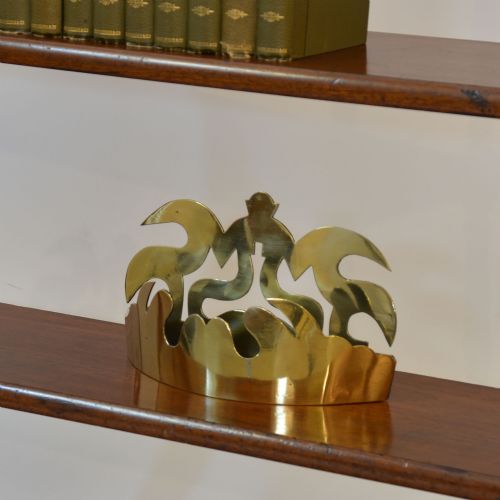
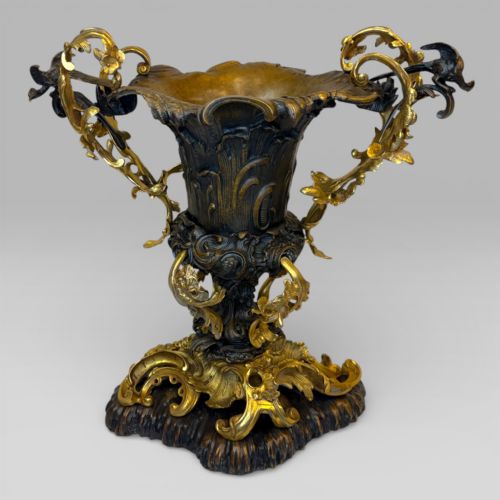
These ornate metal vases bring sculptural weight to a room, ranging from cast brass wall pockets to gilt bronze ewers shaped in nineteenth-century French and Victorian styles.
Ornate Metal Vases
Ornate metal vases encompass heavily decorated vessels, ewers, urns, and wall pockets fashioned primarily during the nineteenth century. When searching for ornate metal vases, buyers encounter items produced in revivalist idioms such as French Rococo, Victorian Renaissance, and Neoclassical styles.
Materials and construction methods
Maker techniques rely heavily on casting in brass, bronze, and gilt bronze, supplemented by hand-pierced metalwork and patinated finishes. Certain decorative vessels incorporate champleve enamel panels or hand-painted porcelain components fitted securely into metal mounts.
Makers utilised crystal glass combined with gilt bronze for centrepiece vases, while other works display intricate figural handles cast with subjects such as Bacchus and dolphins. Surface enrichment ranges from polished gilding to contrasting patinated tones.
Ornate Metal Vases Retail Price Guide 2026
Typical asking prices for ornate metal vases among the pieces listed under this phrase on Sellingantiques today, from the lower quarter to the upper quarter. They describe what is for sale here now, not the wider market.
Materials represented include cast metal, gilt bronze, champleve enamel, and crystal combined within single decorative objects.
Assessing quality and execution
Quality reveals itself in the crispness of the cast ornamentation and the depth of the chasing on bronze and brass surfaces. Pieces featuring detailed figural handles and precise pierced work demonstrate superior workshop execution compared to simpler, uniform castings.
The integration of mixed materials, such as champleve enamel or crystal bodies fitted with gilt bronze mounts, distinguishes finer decorative objects. Well-preserved patination and intact structural mounting further elevate the standing of these nineteenth-century vessels.
Barbedienne, Paris·Henry Dasson
The Ornate Metal Vases Glossary
- Ewer
- A large jug with a wide spout and elaborate handle, frequently produced in matched pairs as a decorative vessel.
- Ormolu
- Finely ground high-carat gold applied to a bronze base using a mercury amalgamation technique, common in French decorative arts.
- Champleve enamel
- A technique where troughs are gouged into a metal surface and filled with vitreous enamel before firing.
- Garniture set
- A matched group of three or more ornamental vases or urns, traditionally displayed together on a mantelpiece.
- Jugendstil
- The continental European manifestation of Art Nouveau, characterised by flowing organic lines, prevalent around nineteen hundred.
Ornate Metal Vases: Frequently Asked Questions
How do I clean antique brass and bronze vases?
Dust gently with a soft, dry cloth to preserve the existing patina and any applied gilding. Avoid chemical polishes that can strip away historical surface finishes on nineteenth-century metalwork.
For pieces with enamel or crystal components, keep moisture away from joints and mounts to prevent corrosion or loosening of the structural elements.
Were these vessels intended to hold water?
Many ornate metal vases, particularly decorative ewers, trophy vessels, and urns, served primarily as ornamental display pieces rather than functional flower holders. Their intricate internal construction and delicate materials often make them unsuitable for holding liquids.
Checking the interior will reveal whether a vessel was fitted with a removable liner or designed solely for visual impact within a room scheme.
How can I tell a Victorian piece from a later reproduction?
Examine the casting quality, seam lines, and the nature of any screw threads or fixings used in the construction. Nineteenth-century works typically display hand-finished chasing and period-appropriate patination that differs from modern mass-produced items.
Reviewing the materials recorded in the specific listings helps contextualize the manufacturing period, noting the presence of traditional alloys like ormolu and patinated bronze.
Where is the best place to display these vases?
These substantial metal objects suit placement on sturdy sideboards, mantelpieces, or as centrepieces on large tables where their sculptural form is fully visible. Paired ewers or urns look most effective when balanced symmetrically within a traditional interior.
Ensure the supporting surface can take the weight of dense cast bronze and crystal compositions, keeping them out of direct, harsh sunlight to protect delicate enamels.