




Ornate Metal Table Lamps
Ornate metal table lamps bring weight, intricate casting and rich historical revival styles directly into a room.
Ornate Metal Table Lamps
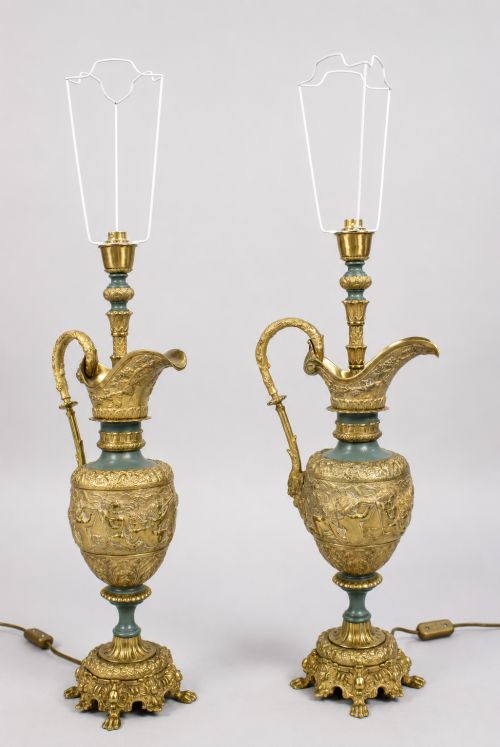
When you search for ornate metal table lamps, you encounter substantial lighting fixtures drawing upon Victorian, Edwardian, and various revival styles. The selection spans the nineteenth century through to the nineteen-twenties, incorporating forms such as ewers, urns, amphorae, and altar lights adapted for illumination.
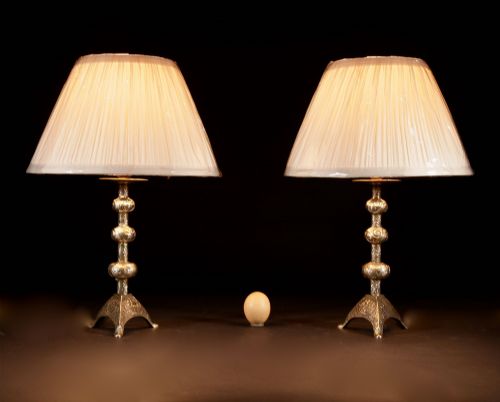
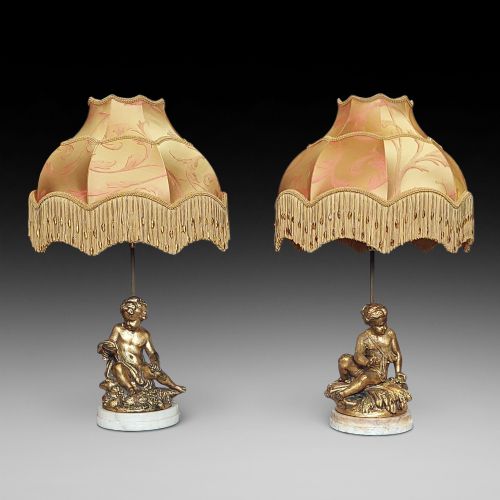
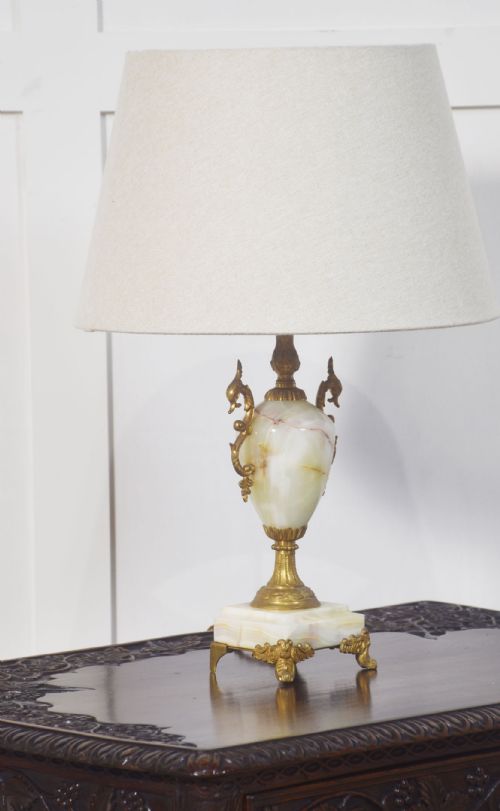
The versions most frequently met on this page are French pieces rendered in gilt metal or bronze, often paired with marble or onyx bases. Pairs feature prominently, alongside single reading lamps and converted oil lamps utilising fabric shades or glass components.
Makers and origins stretch across Britain, France, and Italy, reflecting diverse aesthetic movements from Rococo Revival and Neoclassical to Romanesque and Arts and Crafts. These objects function simultaneously as sculptural works and practical sources of light.
Materials and construction methods
Construction relies heavily on cast bronze, brass, and gilt metal, shaped through founding and detailed chasing. Many examples integrate stone elements, mounting metalwork onto bases of marble, onyx, or alabaster for added stability and visual contrast.
Surface decoration frequently involves fire-gilding, hand-painting, and enamel work applied to metal or porcelain bodies. Fabric and cut glass elements complete the assemblage, particularly on pieces dating from the Edwardian era onwards.
Several lamps stand proudly on tiny paw feet, reminding everyone that even lighting appreciates a touch of feline dignity.
Assessing quality in metal lighting
Quality rests primarily on the crispness of the metal casting and the depth of the chasing. Superior pieces display sharp relief and carefully finished details that retain their definition across complex surfaces like foliage, figures, and scrollwork.
The integration of secondary materials defines the upper tier of the range, such as matched marble plinths, substantial gauge metal mounts, and high-grade gilding. Lesser examples rely on lighter pressed brass and simpler surface finishes.
The Ornate Metal Table Lamps Glossary
- Ewer
- A jug with a large spout traditionally used for water, frequently adapted in the nineteenth century into the body of a decorative lamp.
- Gilt bronze
- Metal cast in bronze and treated with a layer of gold, also known asormolu in French decorative arts.
- Spelter
- A zinc alloy used as a less costly alternative to bronze for figural and decorative castings during the nineteenth and early twentieth centuries.
- Amphora
- A two-handled ancient vessel shape with a narrow neck, often reinterpreted in neoclassical and revival metalwork.
- Cairoware
- Metalwork featuring intricate inlaid decoration of silver and copper into brass or bronze, reflecting Middle Eastern craftsmanship popularised in European design.
Ornate Metal Table Lamps: Frequently Asked Questions
Are these lamps wired for modern use?
Most antique lamps are adapted for contemporary electrical standards while preserving their original metal components and wiring paths. Rewiring is typically undertaken carefully to protect the antique structure.
Buyers should inspect the lampholder and cord to ensure safety compliance with current regulations in their region.
How do I clean gilt metal lamps?
Dusting with a soft, dry cloth is the safest method for maintaining gilded surfaces without causing abrasion. Avoid commercial metal polishes, which can strip away thin layers of gold leaf or fire gilding.
Moisture should be kept away from fabric shades and stone bases during maintenance to prevent staining.
Can I find matching pairs easily?
Pairs of ornate metal table lamps appear frequently, particularly from French workshops of the late nineteenth and early twentieth centuries. These are often symmetrical designs intended for mantlepieces or sideboards.
Single lamps also feature strongly, offering distinct sculptural forms for smaller spaces.
What periods do these lamps represent?
The selection spans from the mid-nineteenth century through the Edwardian period and into the nineteen-twenties. Styles range from Victorian and Rococo Revival to Arts and Crafts and Neoclassical.
Dates are assigned based on stylistic evidence and manufacturing techniques typical of each era.