
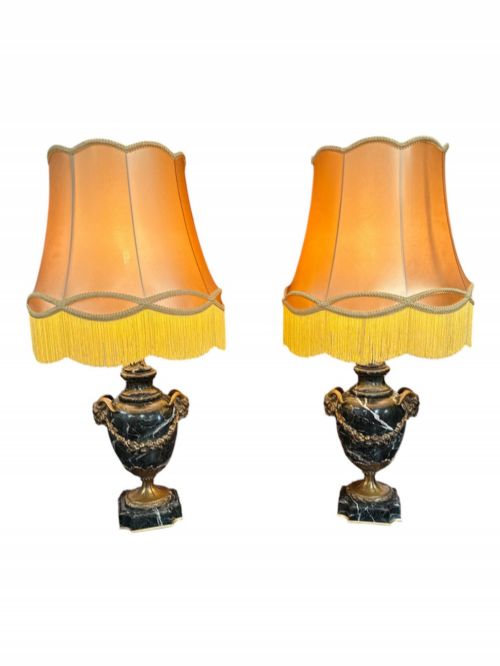


Pair Bronze Accent Lamps
Pair bronze accent lamps bring warmth and distinct period character to a room, combining cast metal bodies with classic silhouettes.
Pair Bronze Accent Lamps
When you search for pair bronze accent lamps, you find matching table lamps constructed primarily from bronze, often paired with contrasting materials like marble or crystal. These items serve as functional lighting while acting as decorative focal points on sideboards, desks, and mantlepieces.
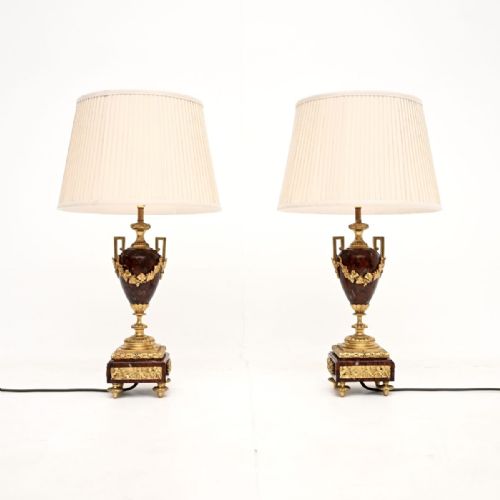
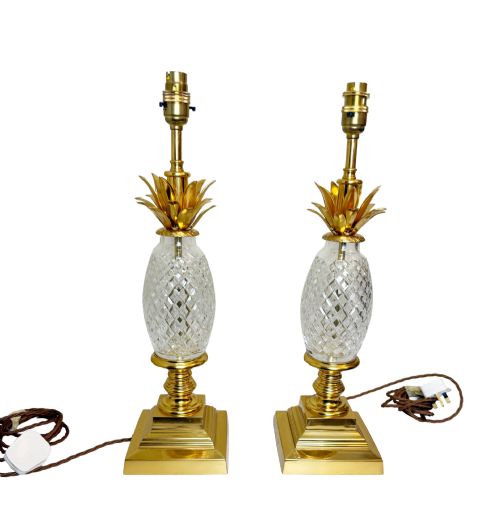
The versions you are most likely to meet on this page span the nineteenth and early twentieth centuries, drawing heavily on French Neoclassical, Regency, and Rococo Revival design vocabularies. They range from modest urn forms to elaborate pineapple motifs and monumental candlestick conversions.
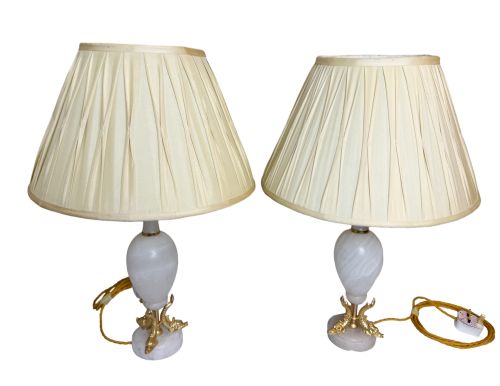
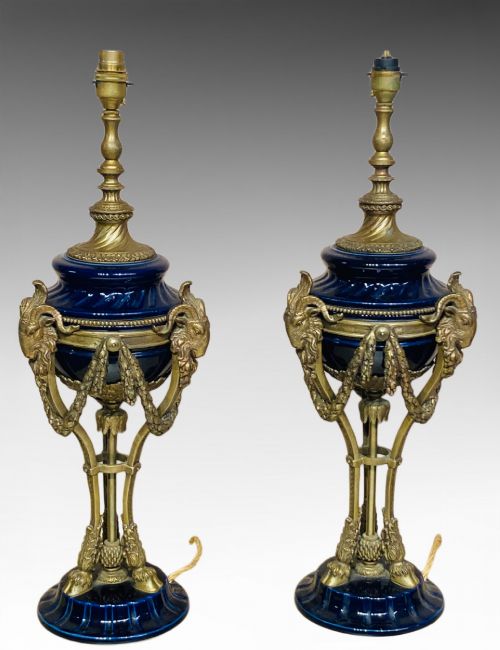
Many examples incorporate gilt bronze, ormolu, or brass mounts, while others feature blue glazed bodies or onyx bases. Their origins trace predominantly to French workshops and factories that specialised in decorative metalwork and lighting during the late nineteenth and early twentieth centuries.
How they were made
These lamps rely on traditional metal casting techniques to shape the bronze, brass, or ormolu components into ornate figures, urns, and foliate bases. Skilled artisans then chased and finished the metal surfaces by hand to create crisp detail and varied textures.
Natural stones such as marble and onyx were turned and polished to form stable, decorative plinths and columns that grounded the heavier metal tops. Cut crystal and glazed ceramics were incorporated into specific models to add translucency and colour contrast to the metallic structures.
What varies in quality
The distinction between ordinary and exceptional pieces lies primarily in the crispness of the metal casting and the depth of the hand chasing. Superior examples display sharply defined ornamentation and refined finishing on every visible surface, whereas lesser items often feature soft details and simplified mounts.
Material selection also dictates the hierarchy of quality, with dense marbles, genuine ormolu, and heavy cast bronze commanding greater appreciation than lighter brass alloys or composite substitutes. The integrity of the original pairing and the harmonious balance between the metalwork and the base materials determine the overall coherence of the design.
The Pair Bronze Accent Lamps Glossary
- Ormolu
- Gilt bronze created by applying a mercury and gold amalgam to a bronze object before firing. This technique produces a durable, rich golden surface finish characteristic of fine French decorative objects.
- Patina
- The surface sheen and colour acquired by bronze and metal through age and handling. A genuine patina develops naturally over decades and adds visual depth to the metal.
- Chasing
- The manual process of refining and detailing a metal casting using small hammers and punches. This technique sharpens edges and creates textures that raw casting cannot achieve.
- Regency
- A British design period spanning the early nineteenth century defined by classical restraint and archaeological revival motifs. Pieces from this era often feature clean architectural lines alongside bronze and ormolu mounts.
Pair Bronze Accent Lamps: Frequently Asked Questions
How do I date pair bronze accent lamps?
Dating relies on examining the casting techniques, fastening methods, and stylistic cues present in the metalwork and base materials. Nineteenth-century examples often feature hand-filed components and heavy sand castings, while twentieth-century pieces may show more uniform industrial finishing.
Comparing the decorative motifs, such as French Neoclassical urns or Belle Epoque details, against known period aesthetics helps narrow down the decade of production. Examining the wiring and internal fittings, while recognising modern rewiring, also provides clues regarding the age of the structural components.
Where should I place these lamps?
These lamps function effectively on sideboards, large console tables, and heavy desks where their substantial bronze and marble bases provide visual balance. They suit traditional living rooms, studies, and hallways that benefit from warm, localized accent lighting.
Because many examples feature ornate casting and reflective ormolu or crystal elements, placing them away from cluttered backgrounds allows the silhouette and materials to stand out. Ensuring the shade proportions match the scale of the bronze base keeps the overall composition balanced.
Are these lamps originally candlesticks?
Some period lighting pieces started life as candlesticks or oil lamps before undergoing conversion to electricity during the twentieth century. Such conversions often preserve the original bronze or ormolu stems while adapting the top fittings to accommodate lamp holders.
Evidence of adaptation can sometimes be found in the base or wiring channels, which indicates earlier domestic use. This practice of conversion was common as homes modernised during the early twentieth century.
How do I care for bronze and marble?
Maintenance requires gentle dusting with a soft, dry cloth to prevent the accumulation of grit in the chased details of the bronze. Avoid harsh chemical cleaners or abrasive polishes, which can strip away the historical patina or damage the gilt surfaces.
Marble and onyx bases should be wiped with a damp cloth and dried immediately to protect the stone from staining. Keeping the lamps away from excessive moisture and direct heat sources preserves both the metal finishes and the natural stone.