


Ornate Metal Lamps
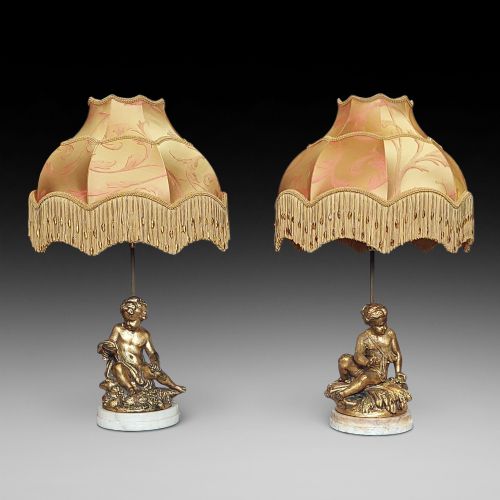
Ornate metal lamps bring together heavy cast brass, gilt bronze, and marble to illuminate a room with nineteenth and early twentieth century character.
Ornate Metal Lamps
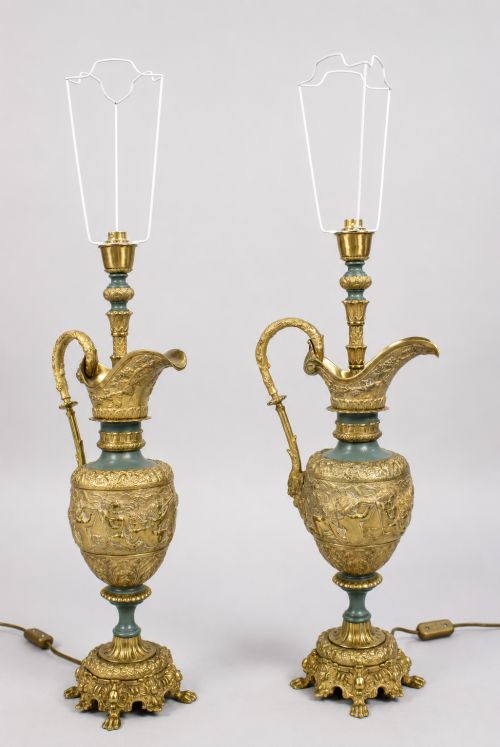
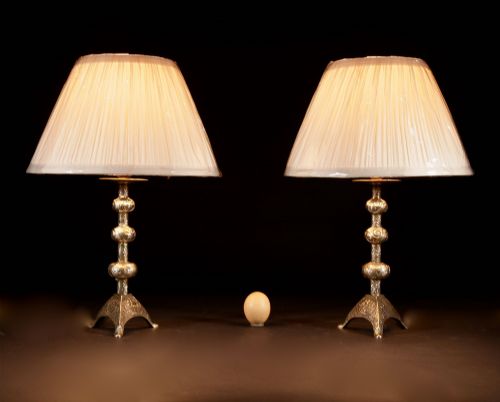
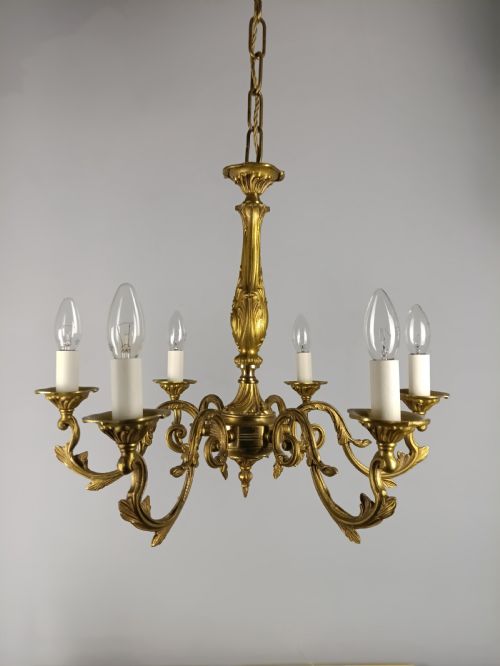
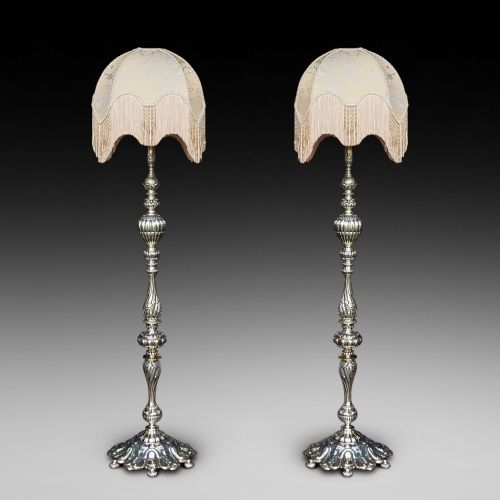
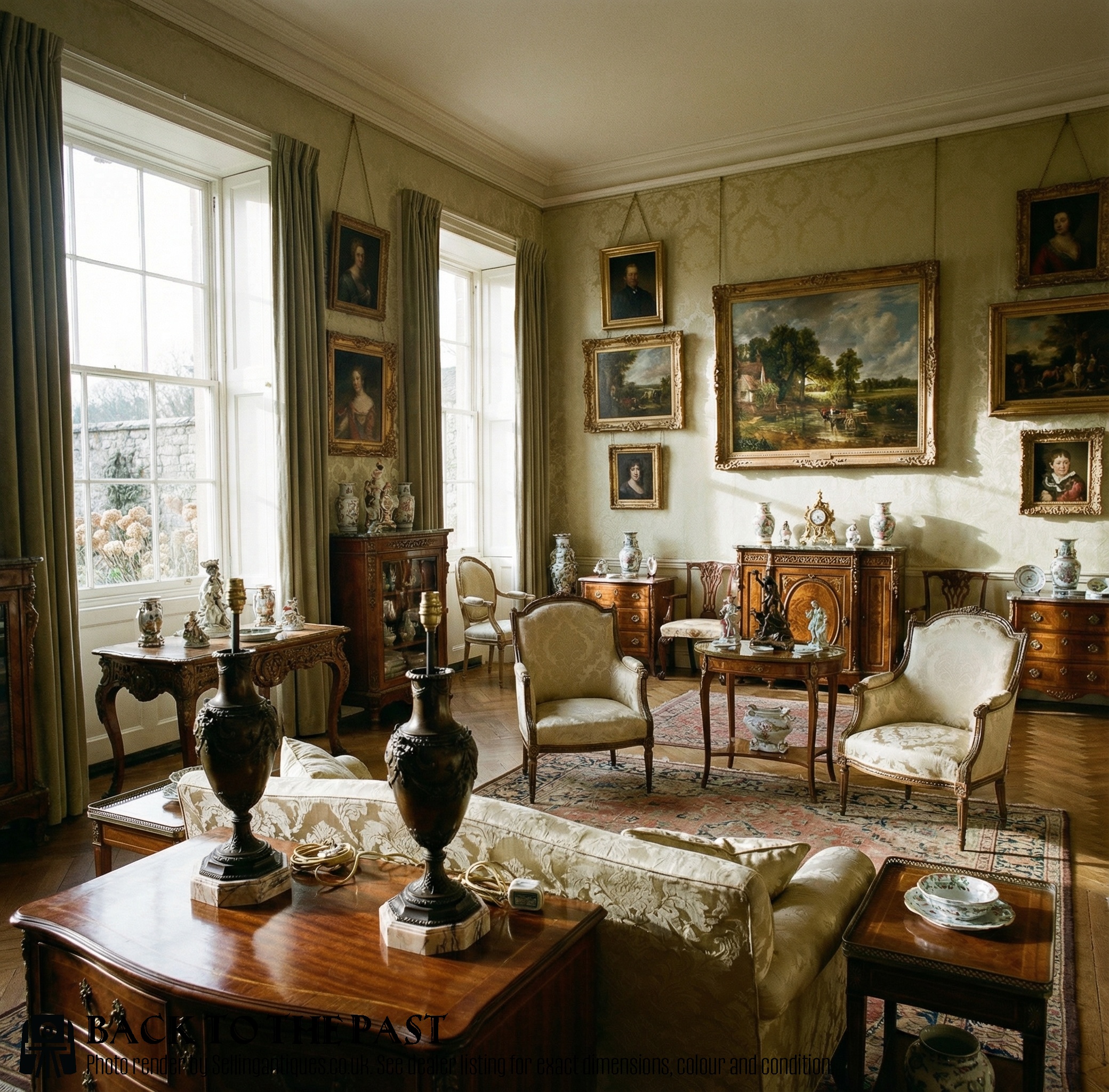
When you search for ornate metal lamps, you encounter table lamps, standard lamps, and multi-armed chandeliers spanning the Victorian and Edwardian eras. These pieces often draw on French Neoclassical, Rococo Revival, and Classical Revival styles, incorporating urn, ewer, or amphora forms.
The version you are most likely to meet on this page is a French table lamp or standard lamp cast in gilt metal, bronze, or brass, frequently mounted on marble or onyx bases. Many incorporate fabric shades or glass components to diffuse the light.
These items originate predominantly from the nineteenth and early twentieth centuries, capturing periods when interior lighting transitioned from oil to electricity while retaining elaborate decorative casting.
Assessing quality and finish
The refinement of the casting separates standard production from finer examples, with hand-chased details and heavy gauge bronze or brass creating a sharper, more defined silhouette. Finer pieces maintain crisp ornamentation across the scrollwork and figurative elements.
The choice of secondary materials also dictates the calibre of the piece, as genuine marble, alabaster, and ormolu mounts indicate higher workshop standards than simpler pressed metal alternatives.
Listings feature standard lamps, table lights, and chandeliers primarily from the Victorian and Edwardian periods, utilising brass, bronze, and gilt metal.
Wild and Wessel
The Ornate Metal Lamps Glossary
- Ormolu
- Gilded bronze produced by applying a mercury and gold amalgam to a bronze base. This technique creates a rich, durable golden surface seen on French lighting from the eighteenth century onwards.
- Spelter
- An alloy of zinc and lead used as a cheaper substitute for bronze. It was frequently painted or electroplated to imitate heavier metals.
- Ewer
- A large jug with a wide spout, often utilised as the central body for decorative nineteenth-century table lamps.
- Alabaster
- A fine-grained, translucent stone used for lamp bases and mounts. It allows light to pass through softly when placed near a bulb.
- Plaffonier
- A ceiling-mounted bowl light or flush fixture. These direct light downwards through cut glass and metal mounts.
Ornate Metal Lamps: Frequently Asked Questions
How do I date an ornate metal lamp?
Dating relies on stylistic clues, manufacturing methods, and material combinations recorded in the piece. Victorian and Edwardian examples often feature heavy casting, classical motifs, and specific wiring adaptations.
Examining the base, mount construction, and surface patination helps differentiate nineteenth-century productions from early twentieth-century interpretations.
What is the difference between brass and bronze?
Bronze is an alloy of copper and tin, prized for its durability and capacity to hold fine, sharp detail during casting. Brass is an alloy of copper and zinc, generally possessing a brighter yellow tone.
In antique lighting, bronze usually indicates a heavier, higher-status object, while brass appears across both utilitarian and decorative standard lamps.
Are these lamps heavy to place?
Many of these lamps incorporate solid cast metal bodies and marble or onyx bases, making them notably heavy. This weight provides stability, particularly for standard lamps and large table lamps.
When positioning them on furniture, ensure the surface can support concentrated weight, especially with stone-mounted bases.
Can these antique lamps be used daily?
These lamps function well in modern interiors when wired safely. Many retain their original sockets or have been adapted for contemporary electrical standards.
Routine use requires checking the internal wiring and ensuring the heavy metal bases remain stable on level surfaces.