


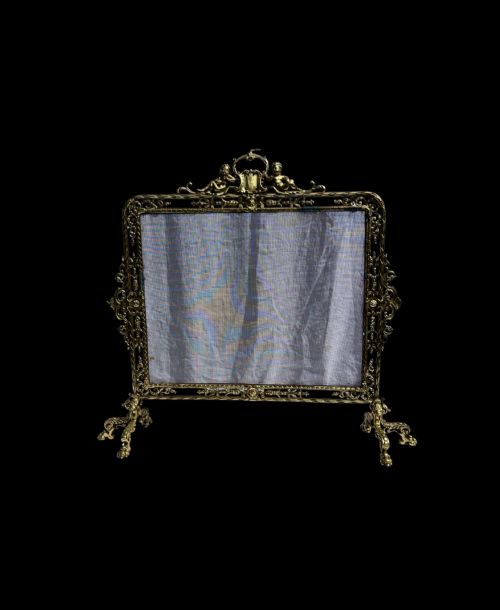

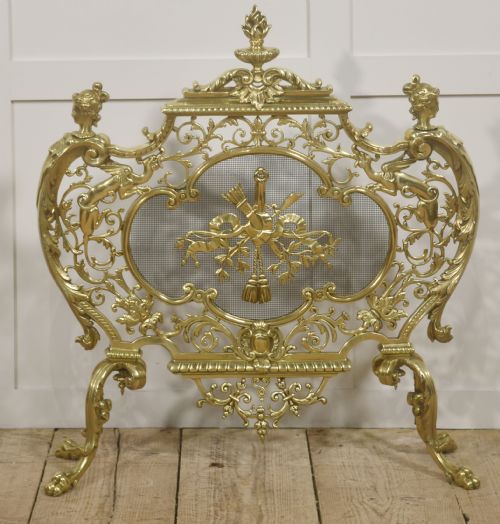
Ornate Metal Hearth
An ornate metal hearth brings weight and character to a fireplace, offering both functional protection and decorative French or Victorian flair.
Ornate Metal Hearth
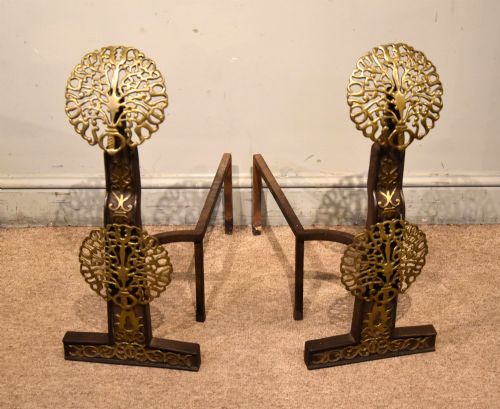
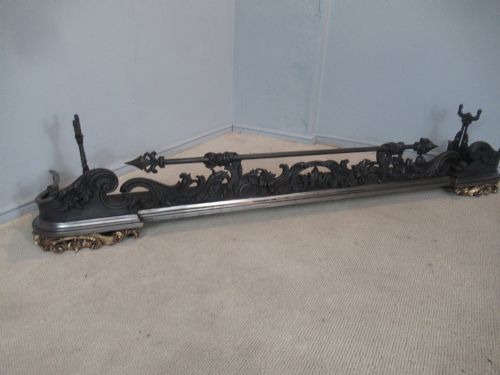
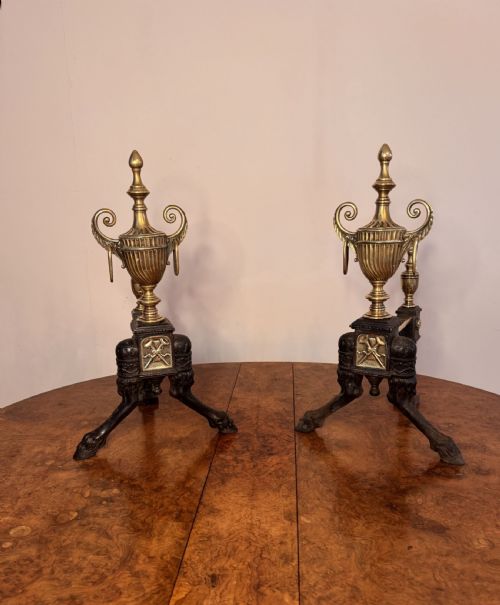
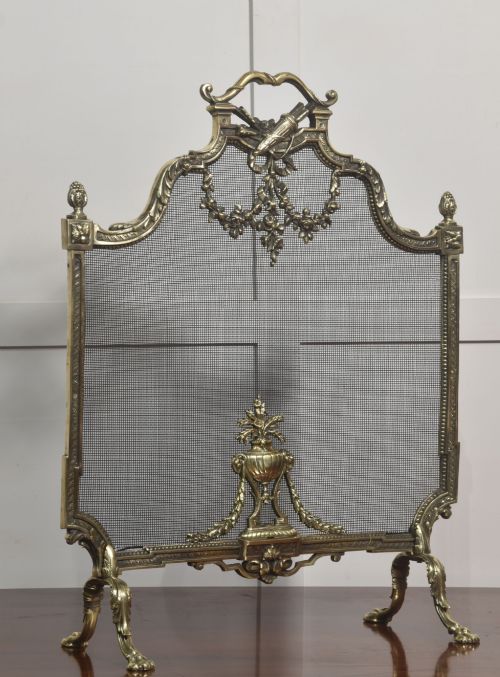
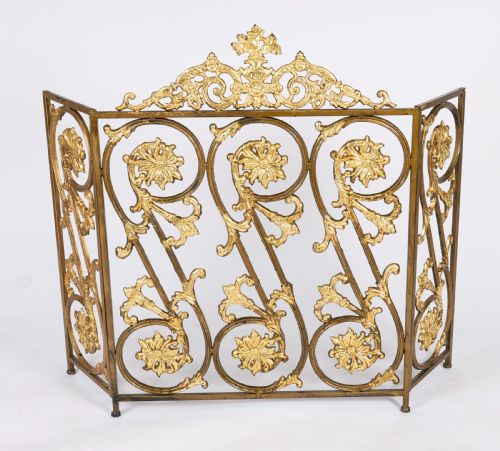
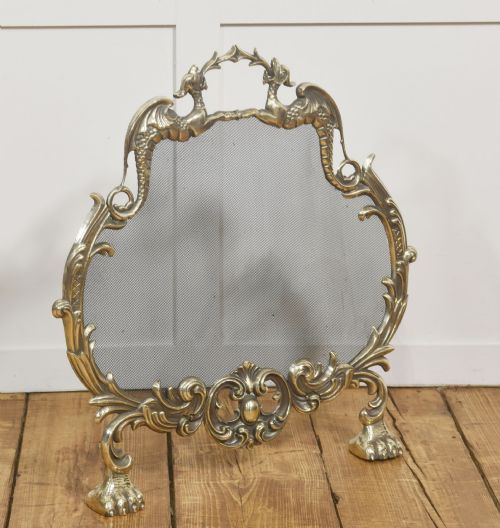
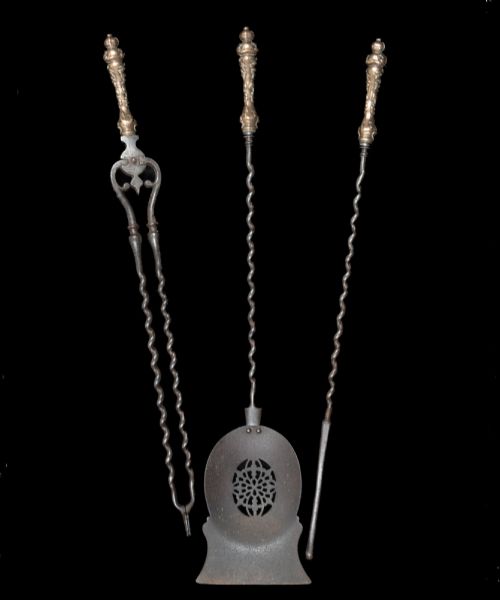
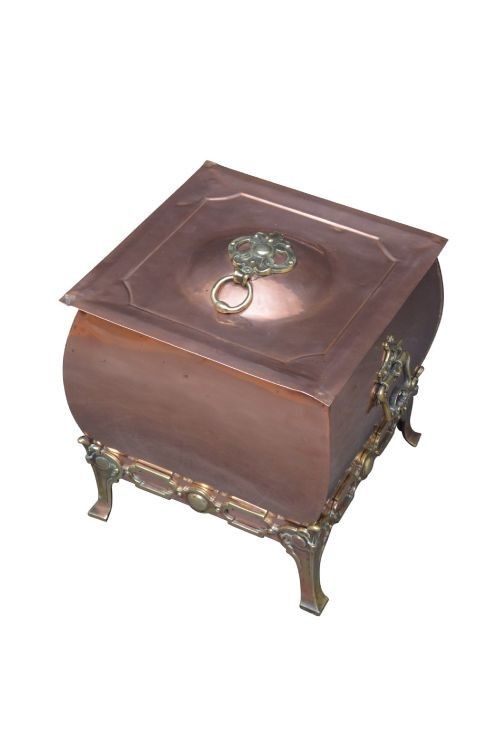
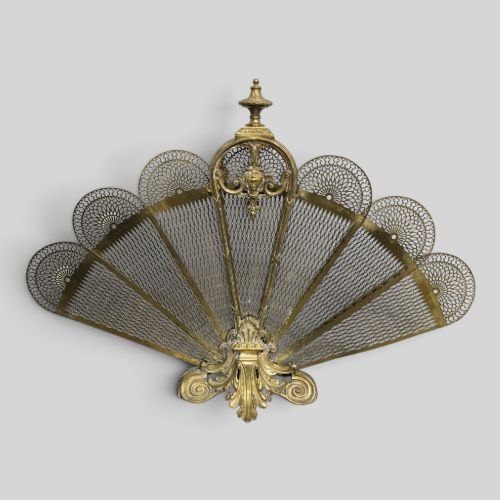
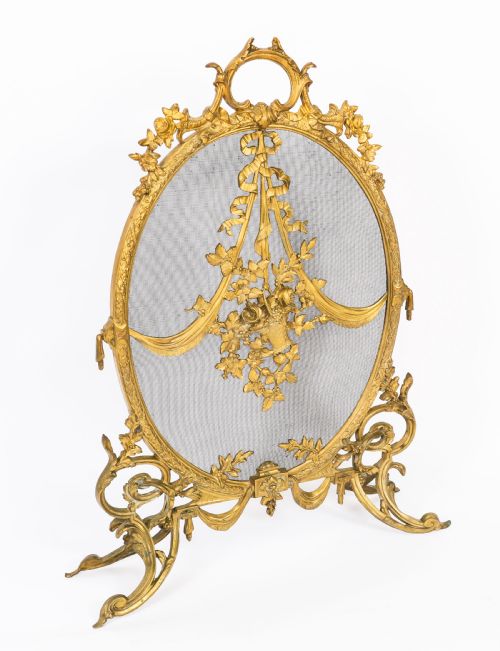
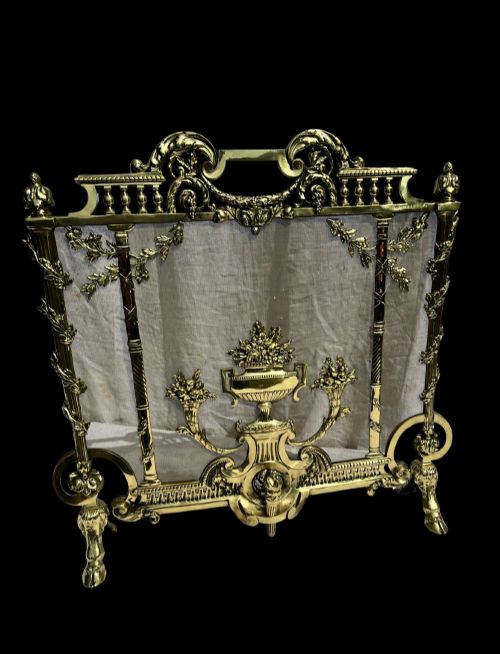
When searching for an ornate metal hearth, buyers typically encounter fireplace accessories such as fire screens, fire dogs, and fenders designed to frame and protect the fireplace opening. These items span the nineteenth century and the early twentieth century, taking the form of folding spark guards, solid fenders, and sculptural andirons.
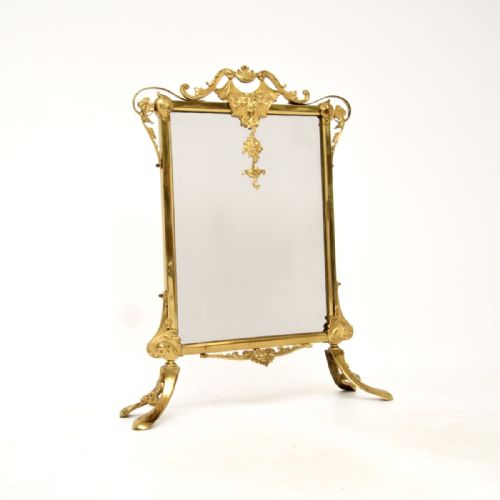
The most common variants on this page are fire screens rendered in brass, gilt brass, and gilt bronze, often featuring French Rococo, Louis Revival, or Victorian styling. Alongside screens, heavy cast iron and brass fire dogs or fenders provide structural presence to the hearth.
Originating largely from British and French workshops, these pieces combine utilitarian metalwork with ornate cast or pierced decoration. They serve to dress an active or dormant fireplace with period detail.
How they were made
Makers utilised casting, forging, and piercing techniques to shape metals such as brass, cast iron, wrought iron, and bronze into elaborate decorative patterns. Frames often incorporate wire mesh or steel mesh panels designed to contain sparks while maintaining visibility of the fire.
Gilt finishes and gilding were frequently applied to brass and bronze surfaces to highlight high-relief ornamentation like scrolls, classical trophies, and dolphins. Wrought iron and steel components were hand-hammered and joined to build sturdy fire dogs and adjustable fenders.
Ornate Metal Hearth Retail Price Guide 2026
Typical asking prices for ornate metal hearth among the pieces listed under this phrase on Sellingantiques today, from the lower quarter to the upper quarter. They describe what is for sale here now, not the wider market.
What varies in quality
Quality in these hearth furnishings is defined by the depth of the casting and the crispness of the chased or pierced detail. Finer examples display substantial weight in the metal and complex, high-relief ornamentation rather than flat, machine-stamped surfaces.
The integrity of the construction, from the stability of the feet on fire dogs to the tight weaving of wire mesh on folding screens, separates superior domestic ironmongery from simpler production.
The Ornate Metal Hearth Glossary
- Fire screen
- A protective barrier placed in front of an open fireplace to block stray sparks and ash. They often feature decorative brass frames with mesh or glass panels.
- Andirons
- Also known as fire dogs, these are horizontal metal supports placed in pairs inside a hearth to hold logs above the base for better airflow.
- Fender
- A low metal guard fitted around the hearth to contain falling embers and protect the surrounding floor. They are commonly forged from brass, iron, or steel.
- Gilt bronze
- An alloy treated with a fine layer of gold on its surface, frequently utilised in French revival decorative objects to produce a rich metallic sheen.
- Rococo revival
- A nineteenth-century design style mimicking the asymmetrical curves, scrolls, and natural motifs of the eighteenth-century French movement.
Ornate Metal Hearth: Frequently Asked Questions
What is a fire screen used for?
A fire screen serves primarily to shield the room from spitting embers and intense radiant heat when a fire is burning brightly.
When the fireplace is unlit, ornate versions act as decorative focal points to dress an empty hearth.
How do I choose between andirons and a fender?
Andirons sit inside the hearth to support firewood and elevate logs for improved combustion. They are chosen for their sculptural front terminals visible within the opening.
A fender outlines the perimeter of the hearth on the floor to contain rolling embers and frame the fireplace setup.
What metals are typical for Victorian hearth accessories?
Victorian hearth pieces predominantly utilise brass, cast iron, and wrought iron, often combined within a single object such as a brass-fronted iron fender.
More decorative items incorporate gilt brass, gilt bronze, copper, and fine steel mesh.
How do I identify French revival styles?
French revival pieces from the nineteenth century display characteristic motifs like Louis XIV, Louis XV, Louis XVI, or Empire styling. Look for symmetrical classical trophies, dolphin motifs, and exuberant Rococo scrolls cast into the metal.