




Ornate Marble Clock
An ornate marble clock brings heavy Victorian presence or French revival grandeur to a mantelpiece, combining solid stone cases with elaborate metal mounts.
Ornate Marble Clock
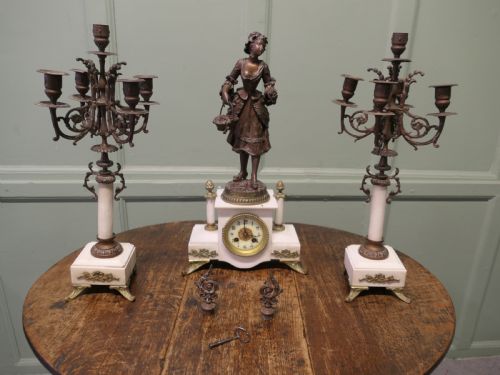
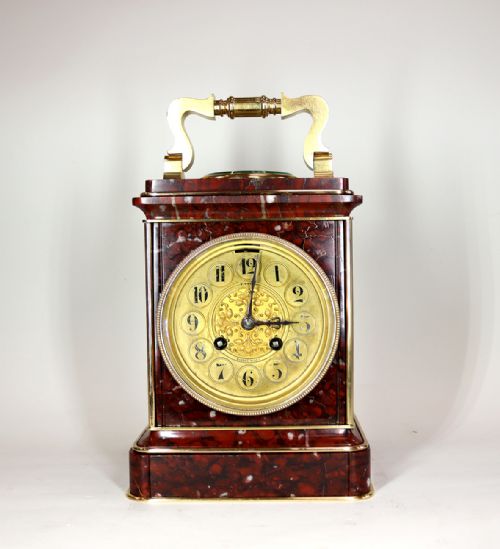
When you search for an ornate marble clock, you encounter substantial mantel pieces and multi-piece garniture sets hailing predominantly from the nineteenth century. These objects combine polished stone bodies in white, red, or rouge marble with contrasting metalwork.
The most common iterations on this page are French and Victorian designs spanning the decades from eighteen fifty to nineteen hundred. You will find mantel clocks flanked by matching side ornaments, portico forms, and figural compositions.
Makers utilised dense natural stones to house mechanical movements, often pairing the mineral case with gilt bronze, ormolu, brass, or spelter figures. Many incorporate enamelled dials and detailed casting work depicting cherubs, classical figures, or architectural motifs.
Measures of quality and execution
Quality separates simple production items from exceptional pieces through the crispness of the bronze casting and the depth of the marble polishing. Superior examples display finely chiselled ormolu mounts and signed movements by known makers rather than mass-produced generic components.
The integration of the garniture set also dictates standing within the category, where matching side pieces share the exact mineral composition and sculptural vocabulary of the central clock. Heavier gauge marble and substantial figural work by named sculptors elevate the piece significantly.
Ornate Marble Clock Retail Price Guide 2026
Typical asking prices for ornate marble clock among the pieces listed under this phrase on Sellingantiques today, from the lower quarter to the upper quarter. They describe what is for sale here now, not the wider market.
Listings feature marble and onyx bodies paired with ormolu, bronze, and gilt mounts across Victorian and French periods.
Auguste Moreau·Francois Moreau·Farcot·Luxor
The Ornate Marble Clock Glossary
- Ormolu
- Gilded bronze produced through a mercury amalgamation technique on metal castings. This finish provides a warm, lasting golden sheen common on French revival clock cases.
- Garniture
- A matching set of decorative objects consisting of a central clock flanked by two matching side pieces such as vases or candelabra. These sets were designed to sit symmetrically on a mantelpiece.
- Portico clock
- A style of mantel clock featuring an architectural case supported by four columns resembling a classical portico. The pendulum often swings visibly within the central open space.
- Spelter
- A zinc alloy frequently used as a cheaper alternative to bronze for casting figurative sculptures on clock cases. It is often painted or bronze-finished to imitate more expensive metals.
- Bezel
- The metal ring that holds the glass cover in front of the clock face. It is commonly hinged to allow access for setting the hands.
Ornate Marble Clock: Frequently Asked Questions
How do I wind an antique marble clock?
Most mechanical clocks require a specific winding key inserted into the dial holes to tension the springs. Care must be taken not to overwind the mechanism.
Moving the hands should be done slowly and strictly following the instructions for the specific movement type to avoid damaging the gear train.
What is a clock garniture?
A clock garniture is a matched set comprising a central mantel clock and two accompanying ornamental pieces. These side pieces are typically urns, vases, or candelabra designed to match the clock's materials.
Placed together on a mantelpiece, they create a balanced and decorative display characteristic of Victorian and French interiors.
How do I clean marble and ormolu?
Marble surfaces respond best to dusting with a dry microfibre cloth and gentle wiping with a damp cloth if necessary. Harsh chemical cleaners can strip the polish from the stone.
Ormolu mounts should be dusted gently without using metal polishes, which can wear away the thin layer of fire gilding.
How can I tell the period of a clock?
Dating relies on stylistic cues, materials, and signatures stamped on the movement backplate or dial. Victorian and nineteenth-century pieces often show specific revival styles like Louis XVI or Second Empire.
Mechanisms evolved through the decades, moving from simple pendulum setups to more complex escapements, which helps narrow down the production era.