





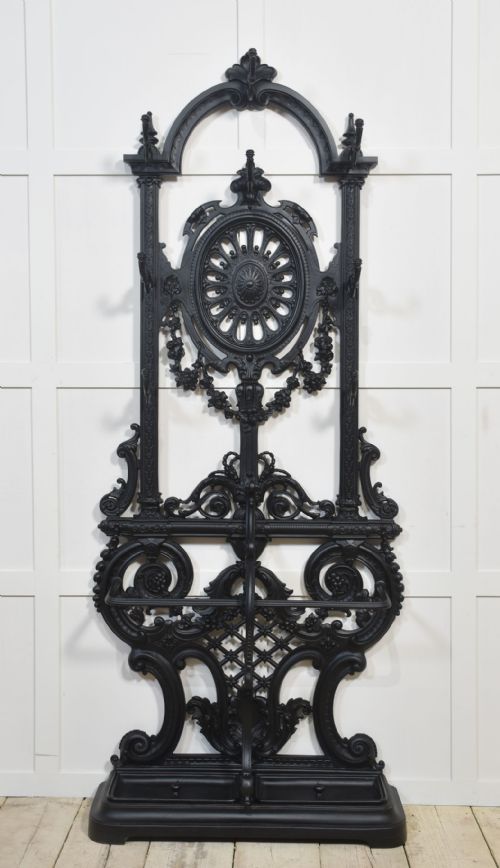


Ornate Hallway Furniture
Ornate hallway furniture brings character to an entrance hall through carved timber and cast metal forms.
Ornate Hallway Furniture
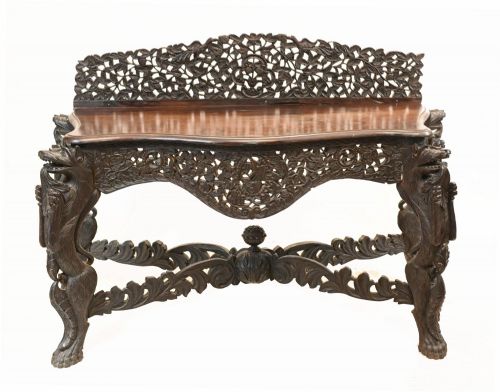
Ornate hallway furniture encompasses a range of domestic items designed to furnish entrances, passages and lobbies from the nineteenth century onwards. Pieces in this category include console tables, umbrella stands, hall stands, hall chairs and settles constructed to make an impression upon arrival.
The versions most commonly met on this page belong to the Victorian period, spanning cast iron umbrella stands and heavily carved oak or walnut hall furniture. These items reflect the Victorian preoccupation with practical household administration combined with dense historical revival ornamentation.
Origins represented across these examples stretch from British workshops to French Empire designs and Italian Renaissance Revival influences. Each object serves a distinct domestic purpose, from storing wet umbrellas to providing seating for callers waiting in the hall.
How they were made
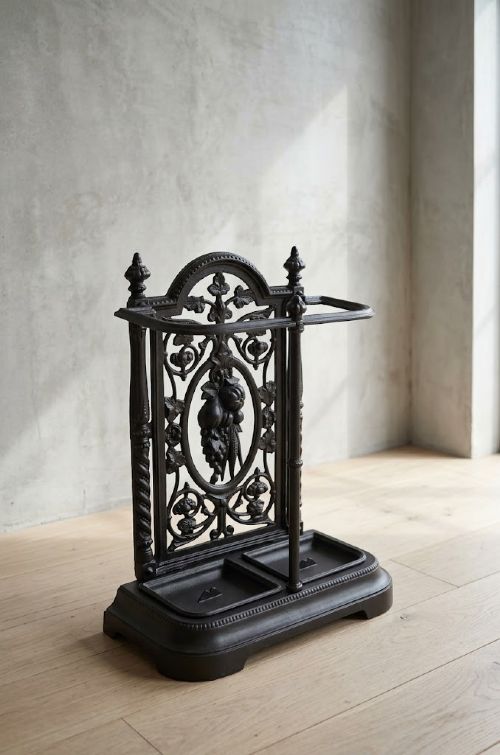
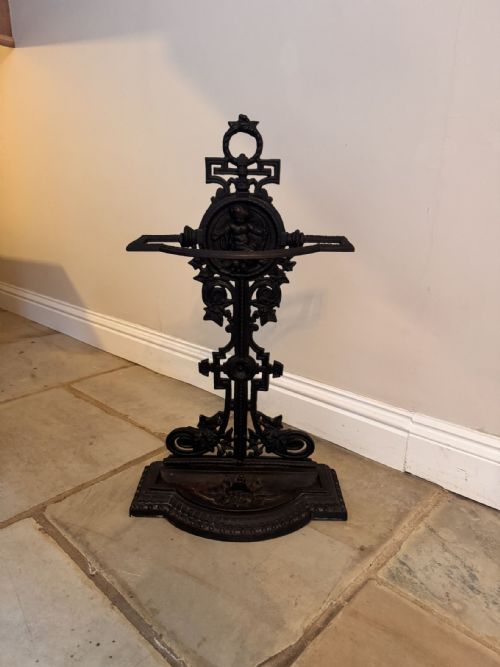
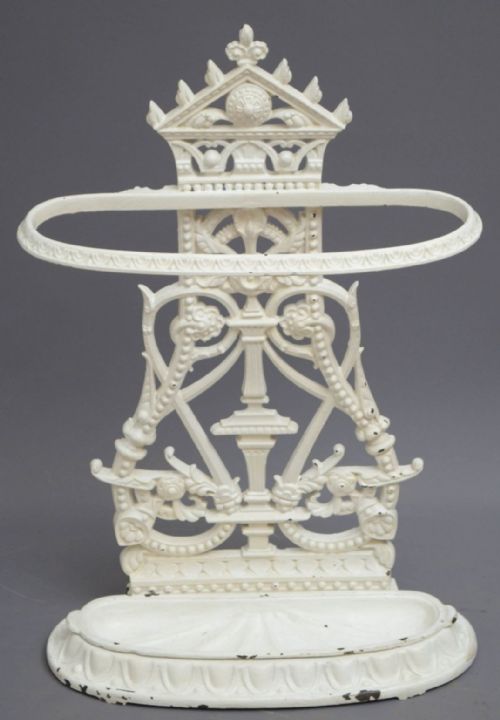
Cast iron production forms a cornerstone of these pieces, particularly for umbrella and stick stands where heavy metal moulding creates complex openwork patterns and robust utility. Foundries utilised cast iron to achieve intricate scrollwork and structural rigidity capable of withstanding daily hallway use.
Woodwork relies heavily on oak, walnut, mahogany and teak, shaped through traditional joinery and deep hand carving. Craftsmen applied parcel gilt highlights and marble tops to console tables, pairing dense timber frames with contrasting surface materials.
Stylistic execution draws directly from Gothic Revival, Anglo-Burmese, French Empire and Italian Renaissance repertoires. Makers combined structural timber with applied mouldings and turned elements to create densely ornamented surfaces.
Ornate Hallway Furniture Retail Price Guide 2026
Typical asking prices for ornate hallway furniture among the pieces listed under this phrase on Sellingantiques today, from the lower quarter to the upper quarter. They describe what is for sale here now, not the wider market.
Listings feature items spanning the nineteenth century, utilising materials including cast iron, oak, walnut, teak, mahogany, marble, glass and parcel gilt.
What varies in quality
Depth and crispness of hand carving separate standard production from superior examples in wooden items such as hall chairs, settles and console tables. Sharp undercuts and well-defined relief work indicate a higher degree of skill from the cabinetmaker.
Weight and structural integrity distinguish cast iron umbrella and hall stands, where thicker castings retain sharper surface detail and provide superior stability. Finer metalwork displays cleaner edges in the moulded patterns without excessive surface pitting.
Selection of secondary materials, such as the matching of marble tops on console tables or the retention of original parcel gilt finishes, marks the upper tier of quality. Coherence between the chosen revival style and the execution of the hardware dictates the overall success of the piece.
The Ornate Hallway Furniture Glossary
- Console table
- A wall-mounted or bracket-supported table designed for narrow spaces, frequently topped with marble and paired with a mirror.
- Hall stand
- A composite piece of entrance furniture combining a mirror, coat hooks, umbrella wells and occasionally a small seat or glove drawer.
- Parcel gilt
- A decorative technique where specific raised portions of a carved wooden or metallic surface are selectively covered in thin gold leaf.
- Settle
- A high-backed wooden bench with solid arms and an enclosed lower storage compartment, designed to block drafts in entranceways.
- Gothic Revival
- An architectural and decorative style drawing inspiration from medieval ecclesiastical forms, prominent in nineteenth-century furnishings.
Ornate Hallway Furniture: Frequently Asked Questions
What pieces count as ornate hallway furniture?
Ornate hallway furniture includes functional items designed for nineteenth-century entrances, such as umbrella stands, console tables, hall stands, chairs and settles. These items feature decorative elements drawn from various revival styles.
They combine utility with display, serving visitors while organising outdoor wear and accessories in the home.
Where were these pieces placed in a house?
Such pieces stood directly in entrance halls, vestibules and corridors where guests first entered the home. Console tables sat beneath mirrors, while umbrella stands waited near the front door.
Larger hall stands anchored the wall space to provide immediate coat and hat storage upon arrival.
How do I identify a Victorian cast iron stand?
Victorian cast iron stands display heavy metal construction with moulded openwork patterns designed to hold wet walking sticks and umbrellas. They often incorporate drip pans at the base to catch moisture.
The weight of the metal and the complexity of the scrollwork distinguish these nineteenth-century utility pieces from lighter modern reproductions.
What is the difference between a console table and a hall table?
Console tables traditionally feature bracket supports or attachment points to secure them against a wall, frequently finished with marble tops. Hall tables are often freestanding furniture designed for similar narrow spaces.
Both served as decorative surfaces for incoming mail, card trays and decorative objects.