



Ornate Hall Light
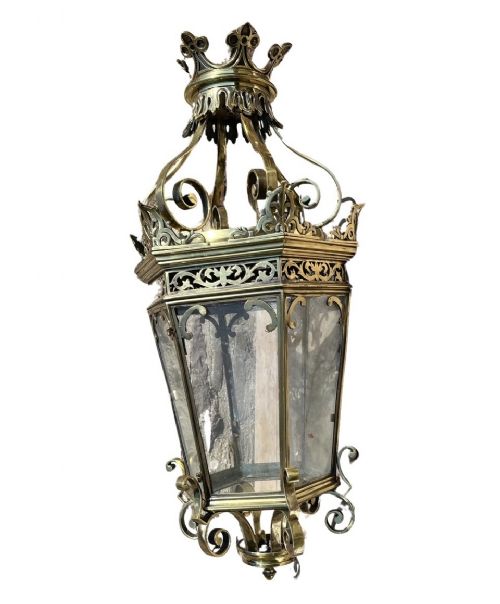
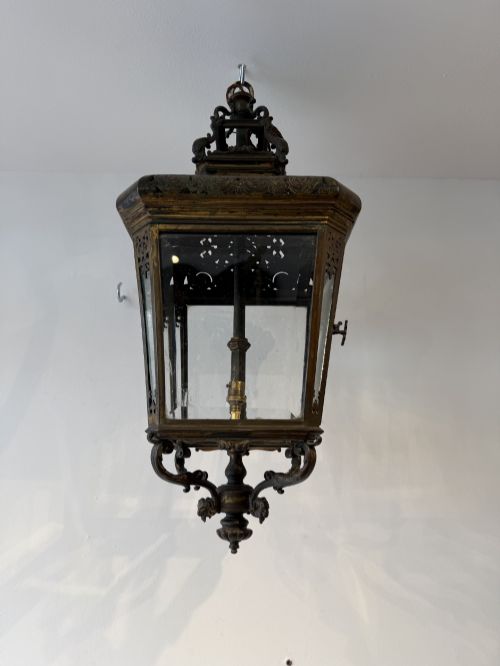
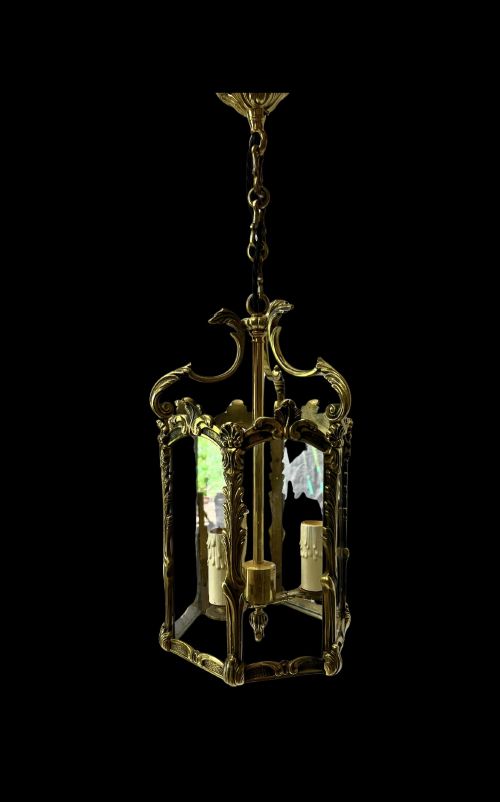
An ornate hall light sets the tone for an entire interior, casting patterned shadows from brass, bronze, and giltwood.
Ornate Hall Light
An ornate hall light is a hanging fixture designed to illuminate entryways, corridors, and landings with decorative metalwork and glass. Buyers seeking an ornate hall light will find hanging lanterns, ceiling lights, and chandeliers originating from the nineteenth and early twentieth centuries.
The examples gathered here span from the 1860s through to the 1930s, encompassing French Rococo, Louis XVI, Gothic Revival, and Venetian Baroque styles. These pieces range from grand gilded brass hexagonal lanterns to carved wooden fixtures featuring intricate scrollwork and coloured glass panels.
Materials and construction
Metalworking forms the core of these lanterns, utilising cast bronze, brass, and gilt bronze finished with hand-chiselled details. Giltwood and carved wood provide rich structural frames, often enhanced with gold leaf and paired with toleware accents.
Glazing typically involves clear or tinted glass panels, sometimes configured with a hinged door to allow access for lighting and maintenance. Many of these period fixtures have been electrified for modern use while retaining their original structural metal and timber frames.
Ornate Hall Light Retail Price Guide 2026
Typical asking prices for ornate hall light among the pieces listed under this phrase on Sellingantiques today, from the lower quarter to the upper quarter. They describe what is for sale here now, not the wider market.
Design influences across these selections range from French Rococo and Louis XVI to Gothic Revival, Venetian Baroque, and Florentine Baroque.
Assessing craftsmanship and design
Quality in these lanterns rests upon the depth of the casting and the precision of the hand-carved details in the giltwood or bronze. Superior examples display crisp chasing on the metalwork and well-defined decorative motifs rather than soft, mass-produced contours.
The choice of materials and the complexity of the style also dictate the distinction of a piece, with monumental carved frames and substantial gilt bronze outperforming simpler brass constructions. Preservation of the original gilding and glass further elevates the stature of a hanging lantern.
The Ornate Hall Light Glossary
- Gilt Bronze
- Bronze that has been coated with a layer of gold, providing a durable and luminous metallic finish.
- Giltwood
- Wood that has been prepared and coated with thin sheets of gold leaf, frequently seen on baroque and rococo frames.
- Toleware
- Enamelled or lacquered sheet metal, often utilised in decorative lighting and accessories for its painted colour.
- Hexagonal
- Having six sides, a common geometric form for hanging hall lanterns that allows light to project evenly in multiple directions.
- Gothic Revival
- A nineteenth-century architectural and decorative style drawing inspiration from medieval forms and pointed arches.
Ornate Hall Light: Frequently Asked Questions
Where should a hall lantern hang?
These fixtures suit entrance halls, high ceilings, and sweeping stairwells where they can be viewed from multiple angles. Their primary purpose is to provide atmospheric illumination while serving as a central decorative anchor for the space.
Ensure adequate clearance beneath the lantern so that it hangs safely above head height, typically allowing at least seven feet of space from the floor.
How do I identify French Rococo style?
French Rococo designs feature asymmetrical scrolls, shell motifs, and naturalistic curves that mimic organic growth. These elements create a sense of flowing movement across the bronze or brass framework of the lantern.
Later revivals in the nineteenth century closely copied these eighteenth-century aesthetics, often incorporating hexagonal glazing and elaborate cast mounts.
What is the difference between brass and bronze?
Brass is an alloy of copper and zinc, yielding a bright golden tone, whereas bronze is primarily copper combined with tin, resulting in a darker, heavier material. Bronze generally permits sharper detail when cast and chased by hand.
Both metals were heavily utilised in nineteenth-century lighting, sometimes with additional gilt or patinated finishes applied to the surface.