


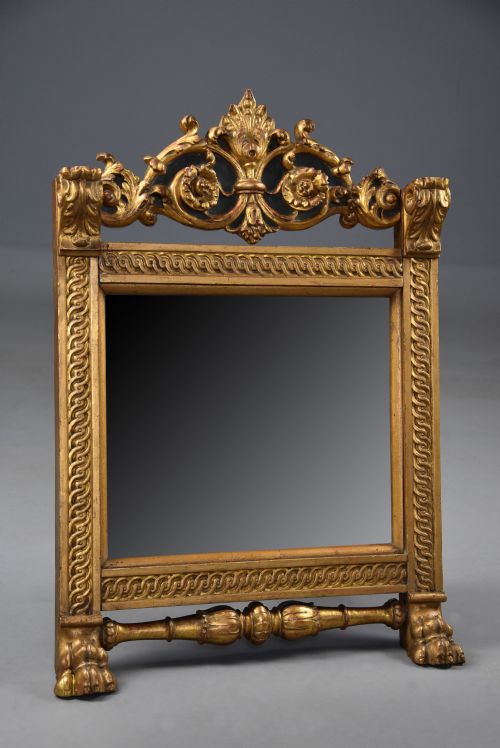


Ornate Giltwood Table
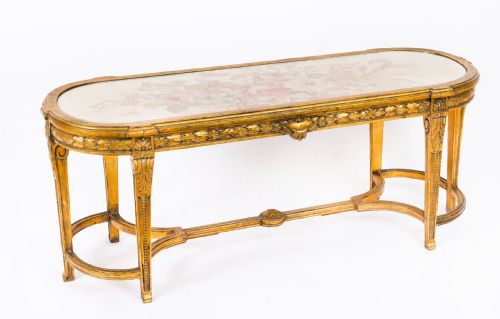
An ornate giltwood table brings a dramatic sweep of carved detail and golden reflection to a room, led by French and Italian revivals.
Ornate Giltwood Table
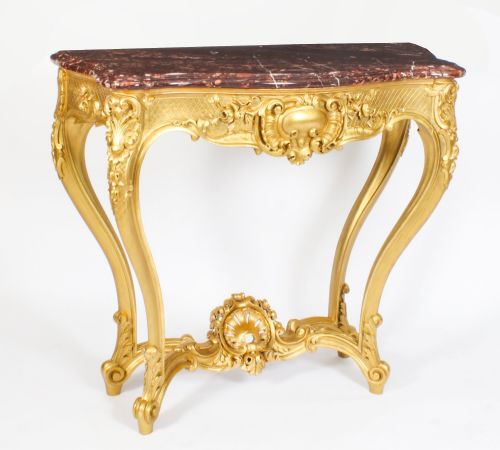
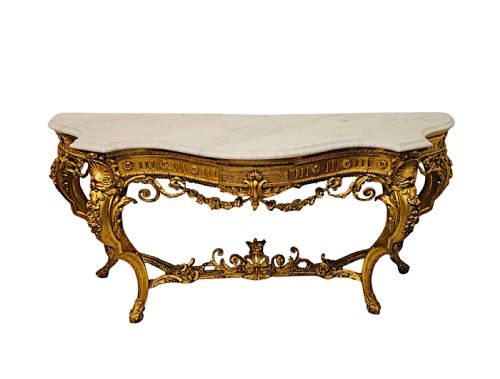
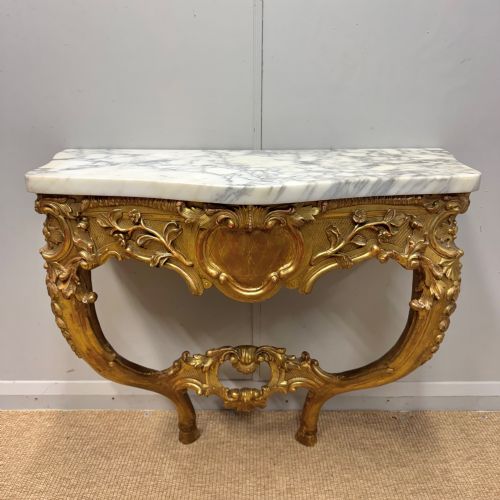
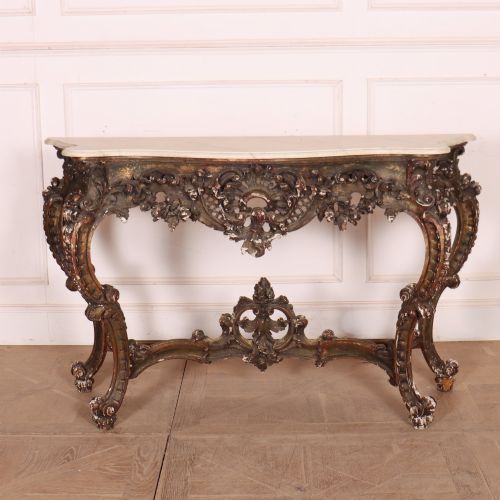
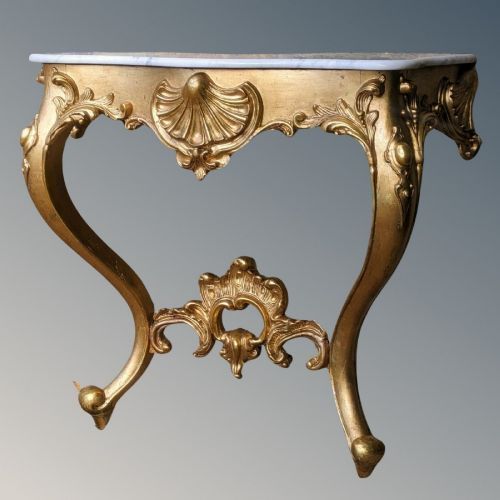
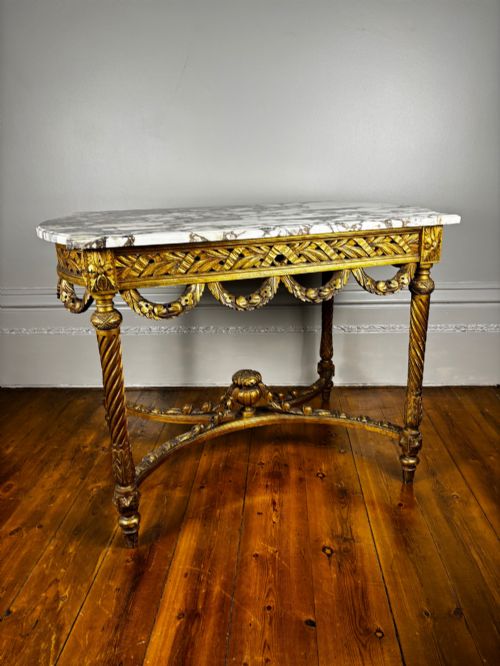
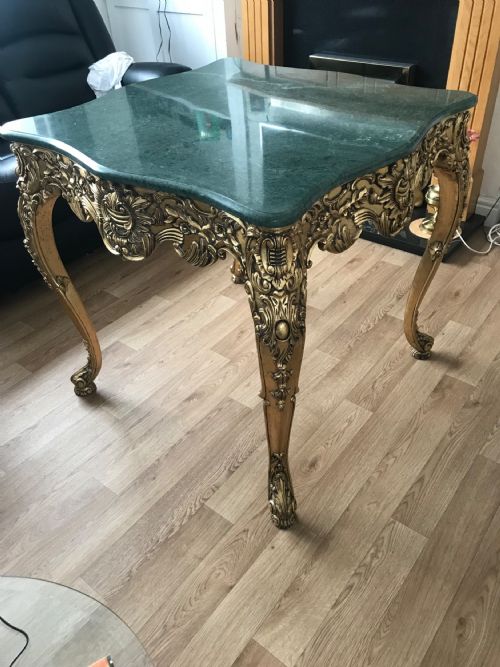
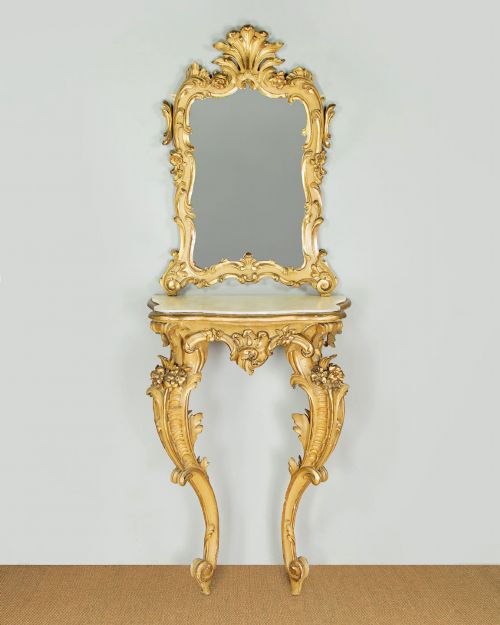
When you search for an ornate giltwood table, you encounter console tables, side tables, and centre tables designed to command attention in a formal interior. Console tables dominate the selections, frequently paired with matching wall mirrors or topped with substantial white Carrara and green marble slabs.
The objects stem from 18th-century roots through various 19th-century revivals up to the early 20th century. French Rococo and Louis styles appear alongside Italian Baroque and Renaissance influences, shaping the serpentine fronts, carved figures, and elaborate frames characteristic of the period.
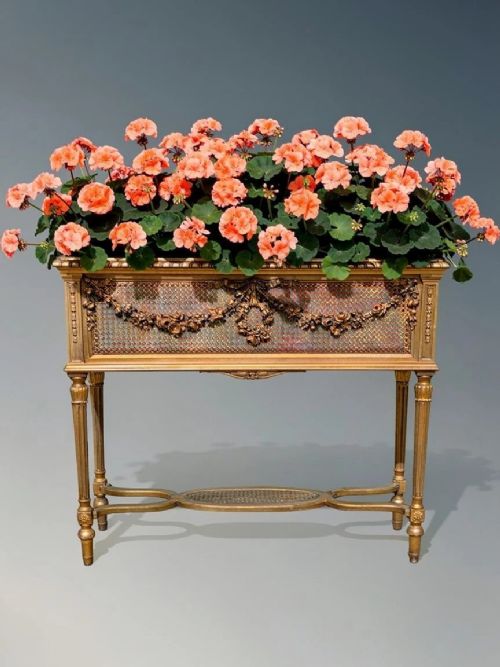
Smaller variations also surface, including occasional tables, coffee tables, and table lamps, yet the large console remains the definitive expression of the form. These pieces function as architectural anchors against walls or as centrepieces in grand hallways and reception rooms.
Materials and Construction
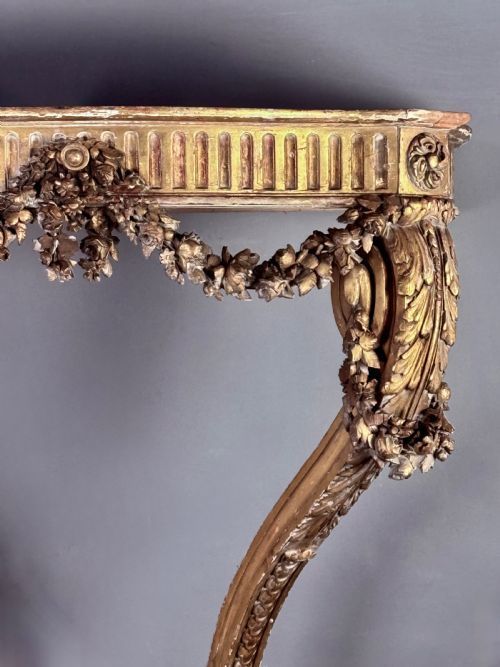
The foundational carcase is typically constructed from wood, utilising carved timber or applied gesso to build up high-relief scrolls, foliage, and figural motifs. Artisans then applied gold leaf or paint and gilt finishes over the prepared surfaces to achieve a luminous metallic sheen.
Heavy marble slabs form the tops of many console and centre tables, providing a cool, polished contrasting surface to the gilded woodwork below. Glass and mirror elements integrate into companion pieces and table mirrors, completing the reflective scheme typical of the style.
Ornate Giltwood Table Retail Price Guide 2026
Typical asking prices for ornate giltwood table among the pieces listed under this phrase on Sellingantiques today, from the lower quarter to the upper quarter. They describe what is for sale here now, not the wider market.
Carved wooden dolphins and putti unexpectedly support heavy marble slabs alongside classic floral scrolls and maidens.
Distinguishing Quality in Giltwood
Depth and crispness of the wood carving set superior examples apart from standard production, as skilled hands render asymmetric Rococo scrolls and biological forms with sharp definition. The quality of the underlying gesso preparation dictates how cleanly the gold leaf adheres and reflects light.
The selection and thickness of the marble top also indicate the standing of the piece, with solid, polished Carrara or green marble slabs representing high-tier commissions. Integration between the console base and its matching mirror or wall fixing demonstrates the original cohesion of the commission.
Felix Alfred Ternisien
The Ornate Giltwood Table Glossary
- Giltwood
- Wood covered with a thin layer of gold leaf or powder. This finish ages to show a warm metallic lustre across the carved details.
- Console table
- A table designed to stand against a wall, frequently supported by wall brackets or ornate front legs. These pieces often feature shaped marble tops.
- Gesso
- A plaster mixture applied to wood surfaces as a base for gilding. It allows carvers to crisp up intricate decorative motifs before applying gold leaf.
- Rococo
- An ornate 18th-century design style characterised by asymmetry, C-scrolls, and plant motifs. It heavily influenced later 19th-century revival furniture.
- Serpentine
- A furniture front or edge that curves outward centrally and inward at the sides. This contour adds fluid movement to heavy timber and marble structures.
Ornate Giltwood Table: Frequently Asked Questions
Where should I place a console table?
Console tables sit naturally against a flat wall in a hallway, drawing room, or dining space. They work well beneath a matching wall mirror or large artwork to anchor the visual weight.
Because many possess finished backs intended to stand against a surface, they rarely float in the middle of a room unless formed as a centre table.
How do I clean a giltwood surface?
Dust giltwood gently with a dry, soft brush or microfiber cloth to protect the delicate gold leaf layer. Avoid liquid cleaners, polishes, or damp cloths, which can lift the gesso and flake the metallic finish.
Marble tops require separate care using mild stone soap and water, ensuring no moisture drips onto the gilded wooden frame.
Are these tables sturdy enough for daily use?
These tables are primarily decorative and architectural furniture pieces designed to hold lamps, mirrors, or ornamental objects rather than heavy loads. Heavy marble slabs provide natural gravity to steady the base, but the elaborate carved legs require careful placement away from high-traffic bumps.
Careful handling ensures the carved gesso and gold leaf remain intact over decades of domestic life.
How do I distinguish an 18th-century piece from a later revival?
Examination of the timber tool marks, the composition of the underlying gesso, and the wear patterns on the gold leaf help separate original 18th-century work from 19th-century revivals. Revival pieces often display machine-assisted precision or heavier, denser plaster preparations beneath the gilding.
Stylistic proportions and historical joinery techniques further clarify the exact manufacturing period.