

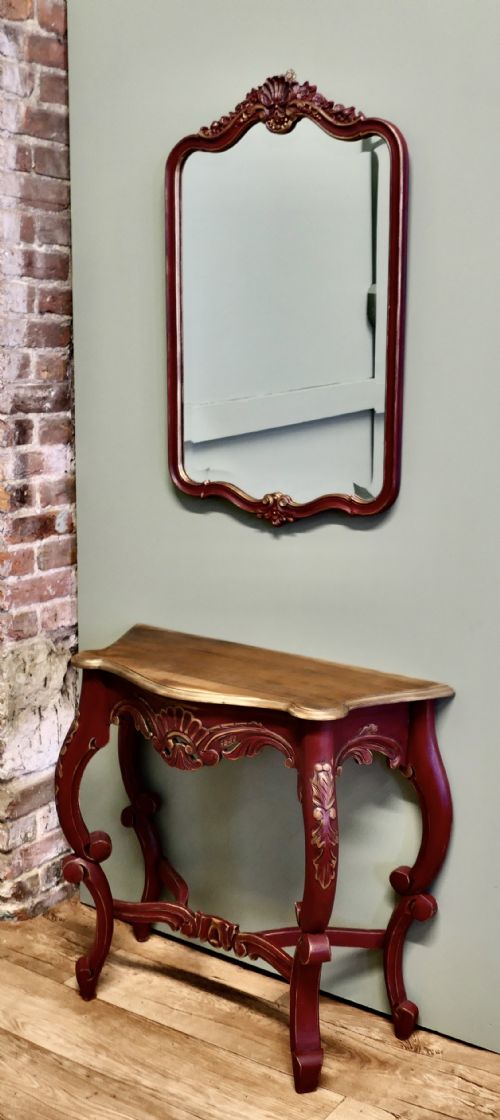


Ornate French Foyer Table
These ornate French foyer table options bring classical elegance to an entrance hall, offering surface space and striking design.
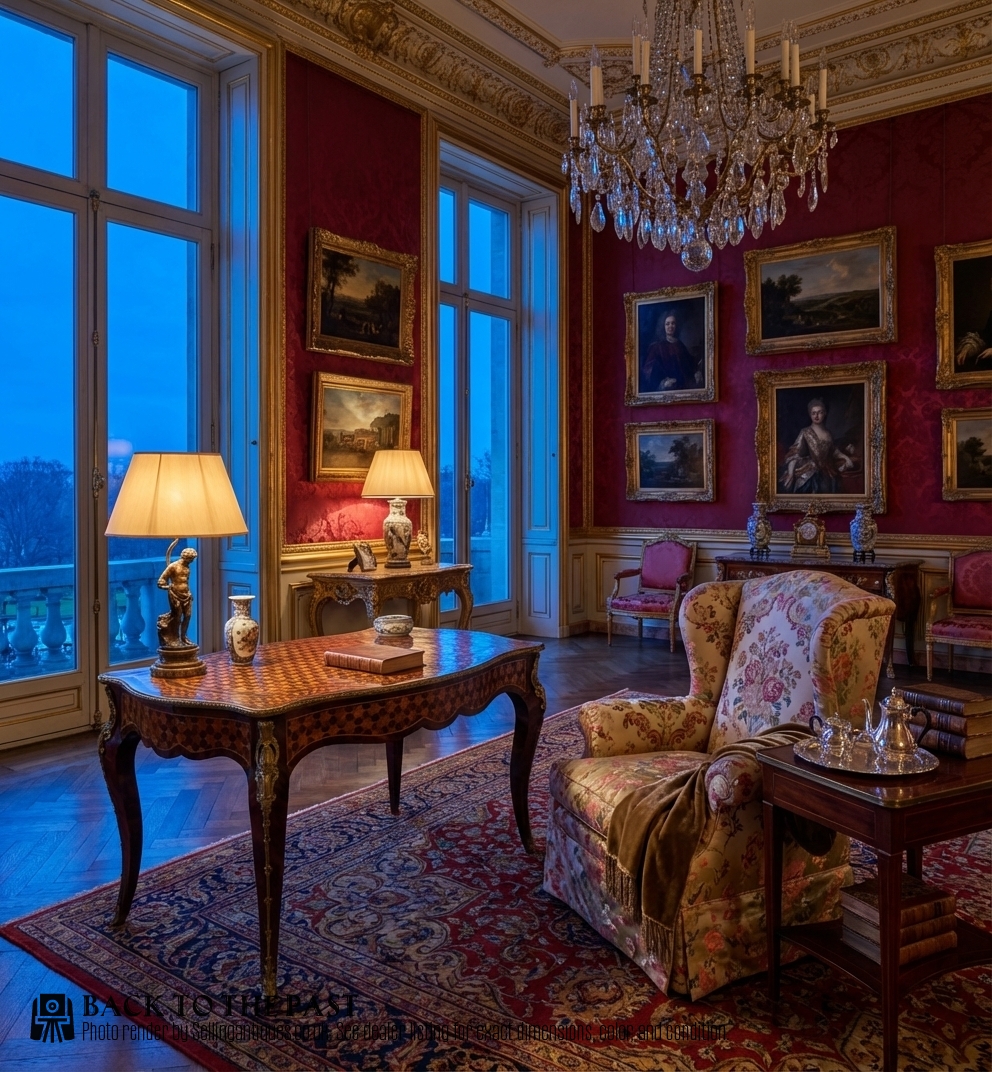
Ornate French Foyer Table
An ornate French foyer table encompasses centre tables and console tables designed to sit grandly in a hallway or principal room. These pieces provide a functional surface whilst displaying decorative carving, inlay, or gilding.
Buyers will encounter console tables, console table and mirror sets, and freestanding centre tables across the selection. Forms range from freestanding tables meant for the middle of a room to console tables placed flat against a wall.
The materials and styles span centuries of French design, including nineteenth-century giltwood, ebonised wood, and burr walnut. Revivals of Louis XV and Louis XVI styles sit alongside Art Deco and Napoleon III examples.
How they were made
Cabinet makers utilised dense hardwoods such as walnut and rosewood, often applying intricate parquetry inlay or boulle work to the primary surfaces. Frames were heavily carved from timber before receiving applications of giltwood, parcel-gilt, or painted finishes.
Many tables incorporate heavy marble tops, requiring sturdy wooden underframes and precise joinery to support the stone weight. Ormolu mounts and brass details were cast and applied to accentuate corners, legs, and aprons.
Ornate French Foyer Table Retail Price Guide 2026
Typical asking prices for ornate french foyer table among the pieces listed under this phrase on Sellingantiques today, from the lower quarter to the upper quarter. They describe what is for sale here now, not the wider market.
Tables featuring burr walnut and boulle inlay offer fascinating grain patterns that developed decades before the timber was shaped.
What varies in quality
The refinement of the carving dictates the visual success of the piece, with hand-chiseled details surpassing mechanical or heavy-handed execution. Crisp lines in giltwood and balanced proportions across the legs and apron signify superior workmanship.
The integration of materials such as genuine marble tops and finely cast ormolu mounts elevates certain examples above simpler painted or parcel-gilt timber versions. The precision of parquetry and inlay work further separates standard production from exceptional pieces.
The Ornate French Foyer Table Glossary
- Console table
- A table designed to stand against a wall, frequently secured to it, often paired with a matching wall mirror. These pieces occupy minimal floor space whilst providing a decorative display surface in a hallway.
- Centre table
- A freestanding table intended to be viewed from all sides, placed in the middle of a room rather than against a wall. Such pieces often feature finished parquetry or inlaid details across the entire top surface.
- Giltwood
- Timber that has been coated with a thin layer of gold leaf. This finish creates a brilliant reflective surface popular in classical French furniture design.
- Ormolu
- Gilded bronze used for decorative mounts and furniture ornamentation. The technique involves applying a gold amalgam to bronze before heating.
- Parquetry
- Geometric wood inlay patterns assembled from small veneer tiles. Makers utilised different timber tones to create intricate tabletops.
Ornate French Foyer Table: Frequently Asked Questions
Where should I place a foyer table?
These tables suit hallways, entrance spaces, and principal reception rooms where a statement piece is required.
Freestanding centre tables require room to walk around them, whereas console tables fit neatly against a flat wall beneath a mirror or artwork.
How do I care for marble tops?
Marble surfaces require gentle cleaning with damp cloths and neutral soaps to avoid damaging the polished stone.
Coasters and protective pads prevent scratching and staining from keys or decorative objects placed on the surface.
What is the difference between console and centre tables?
Console tables feature flat backs designed to sit flush against a wall, sometimes paired with wall-mounted mirrors.
Centre tables are finished on all four sides and stand independently in open floor spaces.
How do I identify Louis XVI style?
Louis XVI style furniture is characterised by straight tapered legs, neoclassical symmetry, and restrained geometric carving.
This aesthetic contrasts with the curving asymmetry of earlier Rococo designs.