

Ornate Fireplace Guard
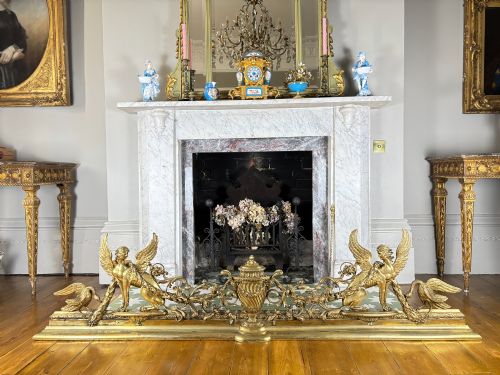
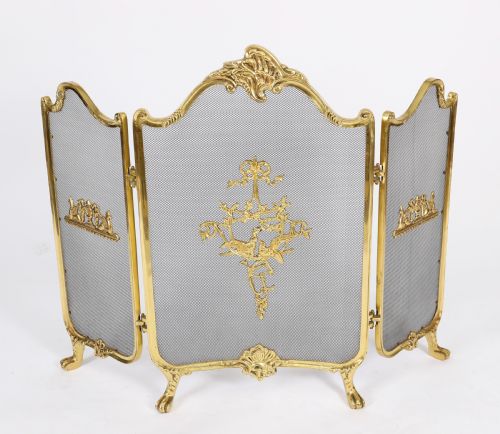
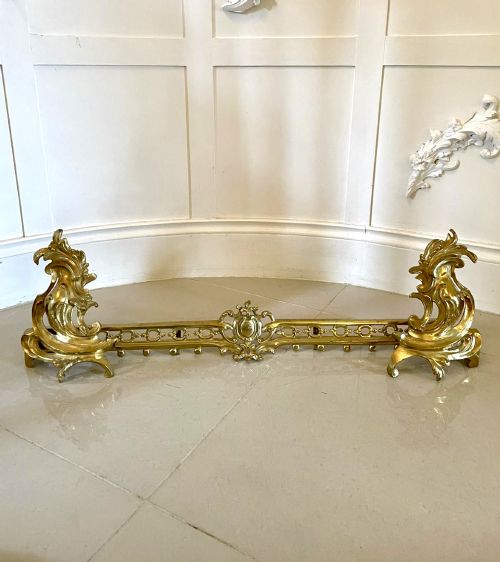
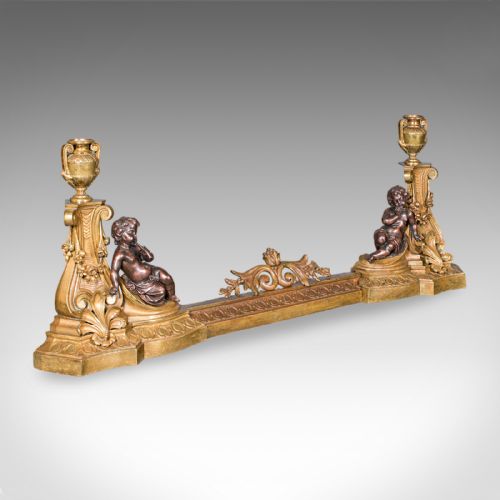
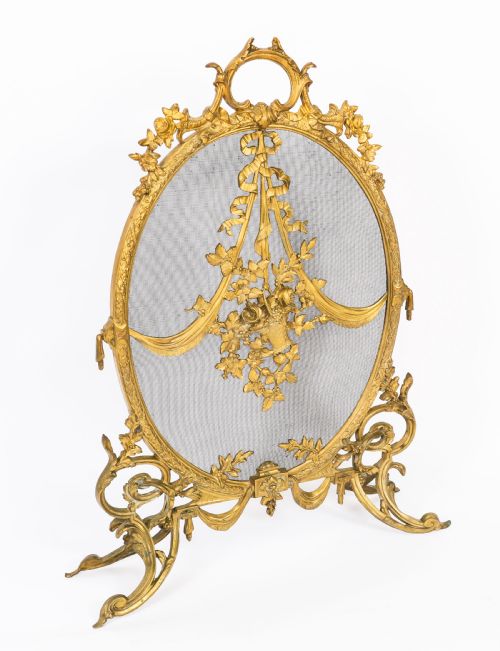
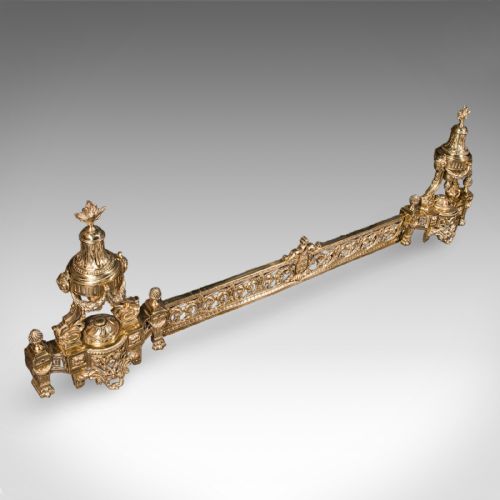
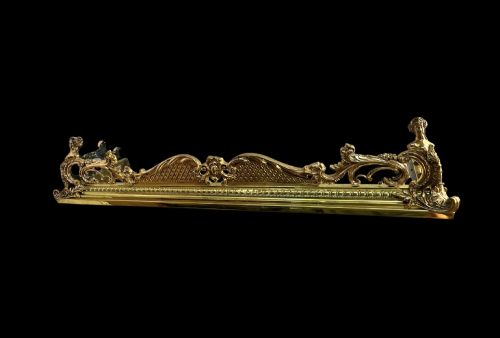
An ornate fireplace guard protects a room from stray embers while adding a decorative centrepiece to the hearth, typically taking the form of a French screen or English fender.
Ornate Fireplace Guard
An ornate fireplace guard encompasses both vertical fire screens and horizontal hearth fenders designed to contain sparks and frame the hearth. These pieces date predominantly from the nineteenth century and the Victorian era, reflecting domestic heating customs of the period.
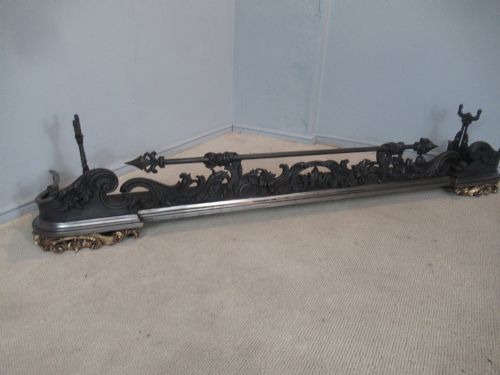
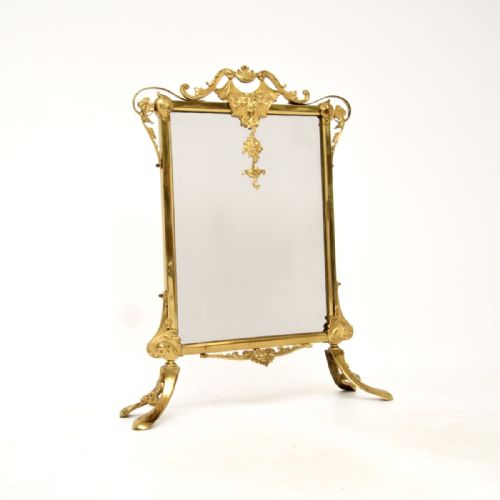
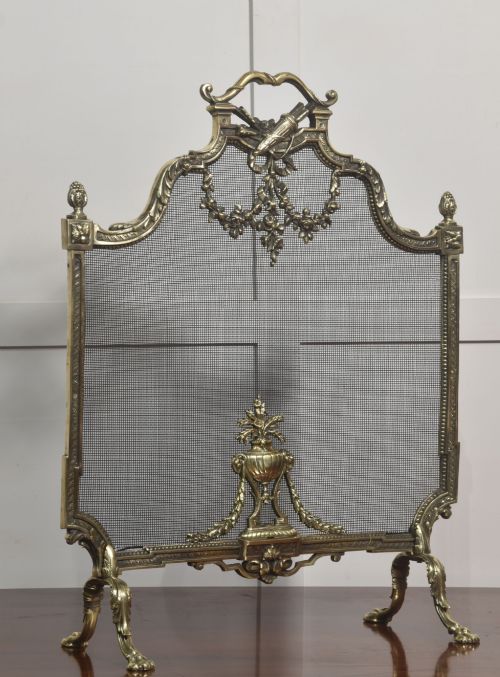
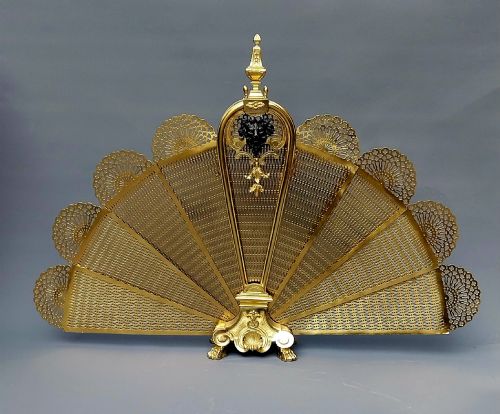
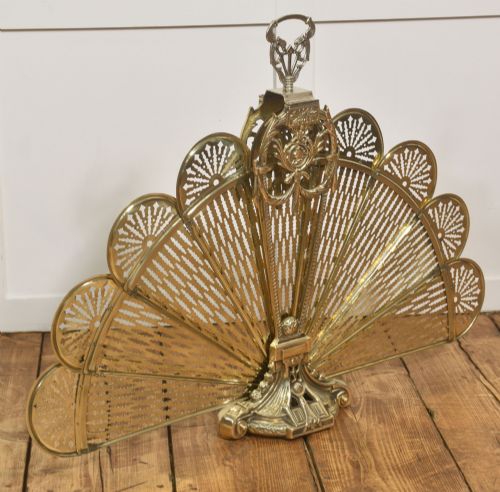
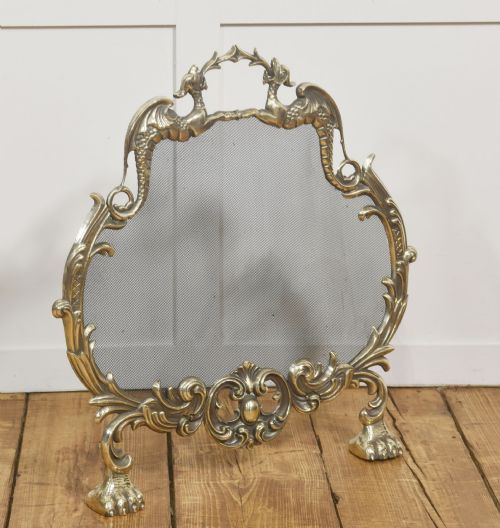
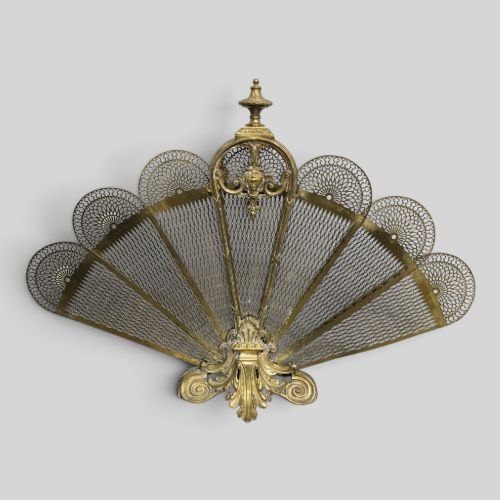
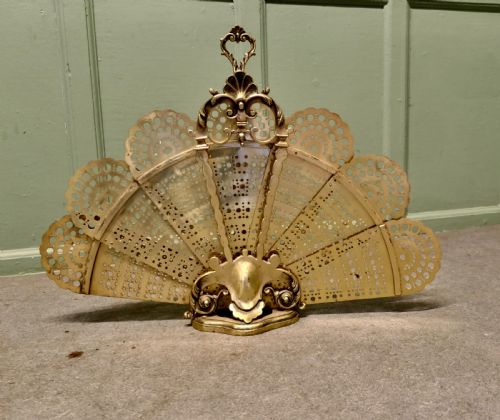
French examples lean towards ornate Rococo Revival, Louis XV, and Louis XVI styles executed in gilt bronze, brass, or gilt metal. English pieces frequently appear as heavy adjustable brass and bronze fenders or folding peacock fan screens.
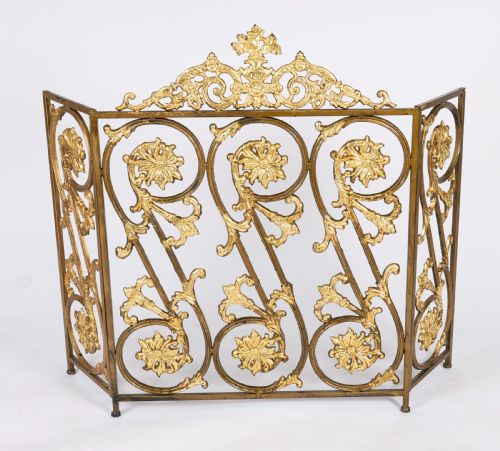
The inventory on this page ranges from freestanding folding screens with wire mesh panels to extendable kerbs and guards featuring cast or pierced ornamentation. Buyers meet various formats, including triple screens and heavy hearth fenders.
How they were made
Maker workshops utilised cast brass, gilt bronze, and wrought iron to construct the structural frames and decorative mounts. Metal components were cast, pierced, and chased to achieve intricate scrollwork and classical motifs.
Wire mesh and folding fan blades were integrated into screens to provide functional spark protection without blocking the warmth of the fire. Gilt finishes and polychrome details were applied to enhance the decorative impact of the metalwork.
Ornate Fireplace Guard Retail Price Guide 2026
Typical asking prices for ornate fireplace guard among the pieces listed under this phrase on Sellingantiques today, from the lower quarter to the upper quarter. They describe what is for sale here now, not the wider market.
Dolphins swim across nineteenth-century French mesh screens, guarding hearths from leaping flames.
What varies in quality
The standard of an ornate fireplace guard rests upon the depth of the casting and the crispness of the chased detail in the brass or bronze. Heavy gauge metals and substantial construction distinguish the finest nineteenth-century examples from lighter production pieces.
Articulation mechanisms, such as extending fender bars and functional folding screen hinges, demonstrate the precision of the original workshop. Finer items exhibit integrated decorative elements like dolphins, classical trophies, or flaming torches rather than repetitive stamped patterns.
Bouhon Frères
The Ornate Fireplace Guard Glossary
- Fire screen
- A movable vertical guard placed in front of an unlit or low fireplace to block heat or conceal the grate. These often feature folding panels or wire mesh.
- Fireplace fender
- A low metal kerb placed on the hearth around the perimeter of the fireplace to contain ash and rolling embers. Many Victorian examples include adjustable lengths.
- Gilt bronze
- An alloy of copper and zinc or tin coated with a fine layer of gold leaf or mercury gilt, commonly referred to as bronze doré. This technique provides a lasting metallic lustre.
- Rococo Revival
- A nineteenth-century design style drawing on eighteenth-century French aesthetics, characterised by asymmetrical scrolls, shell motifs, and naturalistic curves. It dominates many French screen designs.
- Peacock fan screen
- A specific type of fire screen composed of overlapping metal blades that fan out into a circular array resembling a peacock tail. They often fold away neatly when not in use.
Ornate Fireplace Guard: Frequently Asked Questions
How do I choose the right size fender?
Measure the width and depth of your hearth stone carefully before selecting an adjustable or fixed fender. Ensure the internal dimensions match your fireplace opening while leaving adequate clearance for fire tools.
Consider the projection of the fender into the room, as heavier nineteenth-century models require sufficient floor space around the hearth surround.
What is the difference between a screen and a fender?
A fire screen stands vertically to shield the room from direct heat and flying sparks, often positioned centrally before the opening. A fender sits horizontally on the floor to enclose the hearth boundary.
Many period rooms utilised both accessories simultaneously, pairing a decorative brass fender on the floor with a matching folding screen behind it.
Are these guards safe to use with modern fires?
Historic fire guards and spark screens provide a decorative barrier, but wire mesh panels should be checked for structural integrity before use with an active open fire. Ensure the screen sits stably on the hearth surface.
Many collectors utilise these ornate pieces primarily for decorative display or with electric and gas hearth installations rather than high-heat solid fuel fires.