



Ornate Desk Inkstand
An ornate desk inkstand gathers inkwells, pen rests and compartments into a formal writing desk centrepiece.
Ornate Desk Inkstand
An ornate desk inkstand brings together heavy metalwork, cut glass and ceramic containers designed to hold ink and pens upon a writing surface. These pieces span the Victorian, Edwardian and nineteenth-century periods, incorporating desk accessories, inkwells and complete desk sets.
Stylistic influences vary widely across the selection, drawing upon French Rococo Revival, Chinoiserie, Napoleon III, Art Nouveau and French Empire designs. Makers and retailers such as Harrods, James Cartland & Sons and Elkington appear amongst the nineteenth-century and early twentieth-century examples.
Materials and construction methods
Makers utilised cast brass, gilt bronze and ormolu to form the structural body and stands of each inkstand, frequently employing detailed chasing and surface gilding. Cut glass and ceramic bodies provide the internal ink reservoirs, combining heavy metal foundations with translucent vessels.
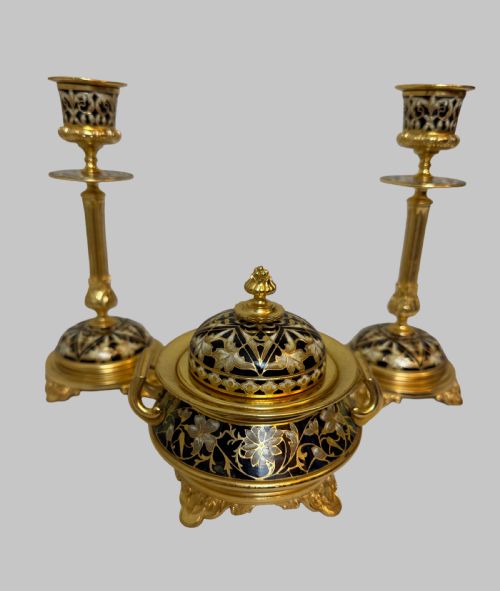
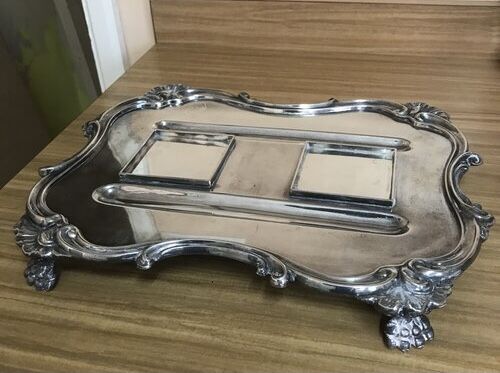
Champlevé enamel and marble insertions appear on select French and nineteenth-century pieces, adding colour and contrasting textures to the metal framework. Silver plating over a base metal foundation offers a bright reflective finish on larger desk tidies and stands.
Ornate Desk Inkstand Retail Price Guide 2026
Typical asking prices for ornate desk inkstand among the pieces listed under this phrase on Sellingantiques today, from the lower quarter to the upper quarter. They describe what is for sale here now, not the wider market.
Some nineteenth-century desk pieces cleverly concealed inkwells inside miniature cabinets or alongside ticking clocks to amuse the Victorian writer.
Distinguishing quality in desk pieces
Quality rests upon the crispness of the cast metal ornamentation and the weight of the brass, ormolu or bronze structure. Superior pieces display deep, sharply defined relief work in styles such as Rococo Revival or Chinoiserie rather than soft or shallow surface decoration.
The integration of materials dictates the standard of the piece, seen in heavy cut-glass inkwells that fit precisely into their designated brass or gilt bronze housings. Complete sets that retain their original matched components, such as accompanying candlesticks or fitted letter holders, demonstrate higher production ambition.
James Cartland & Sons·Elkington·Harrods·Moser
The Ornate Desk Inkstand Glossary
- Inkstand
- A desk stand designed to hold one or more inkwells along with pen rests and occasionally matching accessories. This serves as the primary functional base for writing implements.
- Ormolu
- Gilt bronze ornamentation applied to furniture and decorative objects during the eighteenth and nineteenth centuries. The technique involves coating metal with a finely ground mercury and gold amalgam.
- Champlevé
- An enamelling technique where troughs or cells are hollowed out of a metal surface and filled with vitreous enamel paste before firing. This creates colourful decorative patterns across brass and bronze objects.
- Desk Tidy
- A compartmented desk accessory arranged to hold envelopes, pens and small writing supplies alongside the central inkwell. These pieces help organise paperwork on a traditional writing surface.
- Grand Tour
- A cultural journey undertaken by nineteenth-century travellers who collected souvenirs such as brass and glass desk pieces across continental Europe.
Ornate Desk Inkstand: Frequently Asked Questions
What is an ornate desk inkstand?
An ornate desk inkstand is a decorative metal or glass desk accessory designed to hold liquid ink and writing pens in an organised stand.
These pieces served as functional desktop furnishings in nineteenth-century and early twentieth-century offices and studies, combining utility with elaborate artistic styles.
How do I date an antique inkstand?
Dating relies upon stylistic markers such as Victorian, Edwardian, Art Nouveau or Rococo Revival motifs, alongside manufacturing materials like cast brass and champlevé enamel.
Maker marks stamped into the metal by firms like Elkington or James Cartland & Sons also help establish the production era.
Were these inkstands used for daily writing?
Yes, they were essential desktop items placed on writing tables to supply ink for dip pens before fountain pens and ballpoints became common.
The hinged lids on the glass inserts kept the ink from drying out too quickly during everyday use.
How should I clean a brass and glass inkstand?
Dust the metal gently with a soft dry cloth and avoid harsh chemical polishes that can strip the historic patina from brass or gilt bronze surfaces.
Removable glass inkwells can be carefully washed in warm soapy water and dried thoroughly before being placed back into their stands.