



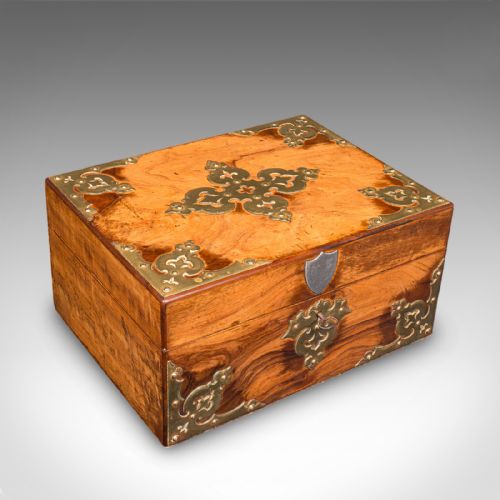

Ornate Chest
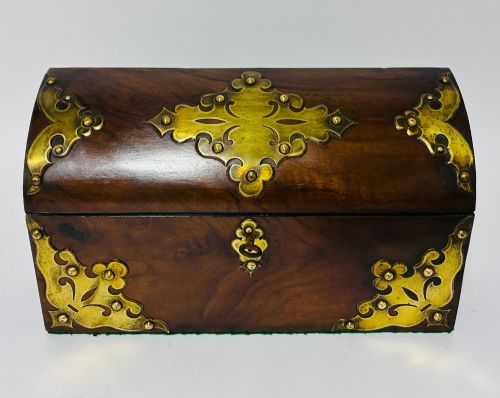
An ornate chest brings together walnut, brass and intricate carving from the seventeenth century through to the Victorian era.
Ornate Chest
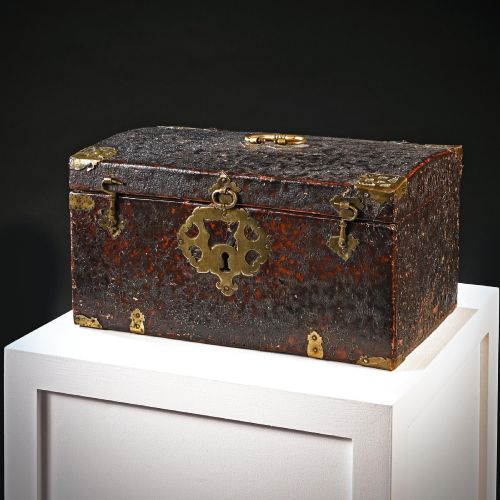
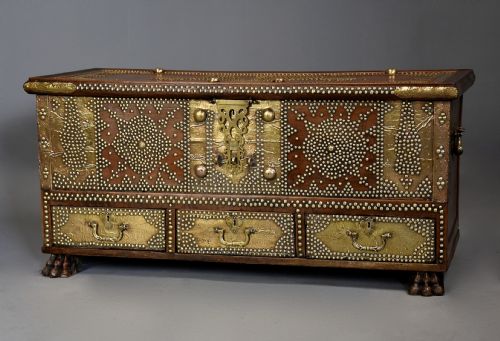
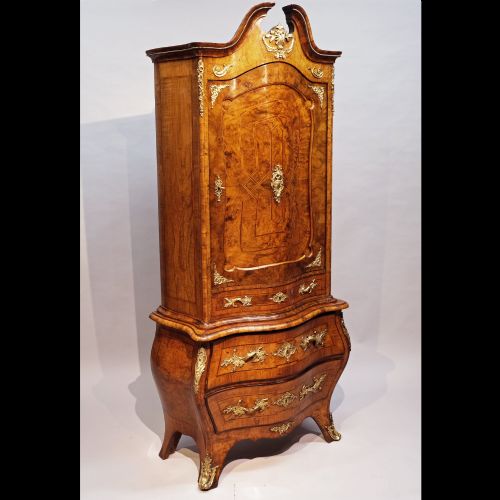
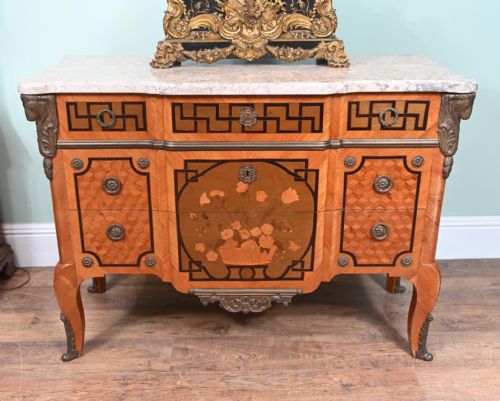
An ornate chest encompasses everything from small travelling boxes and jewellery caskets to large commodes and dowry storage cabinets. When you search for an ornate chest, you find pieces spanning the seventeenth, eighteenth and nineteenth centuries, originating from Britain, France, India and beyond.
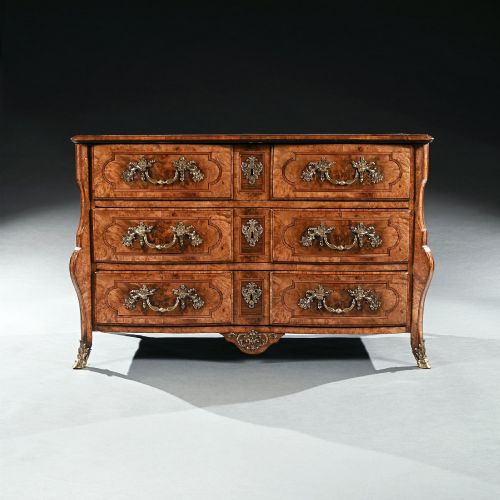
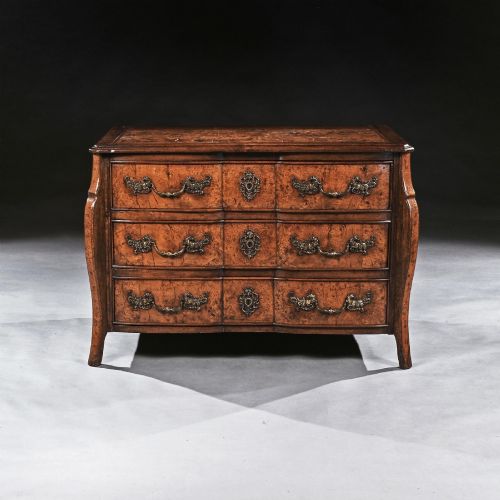
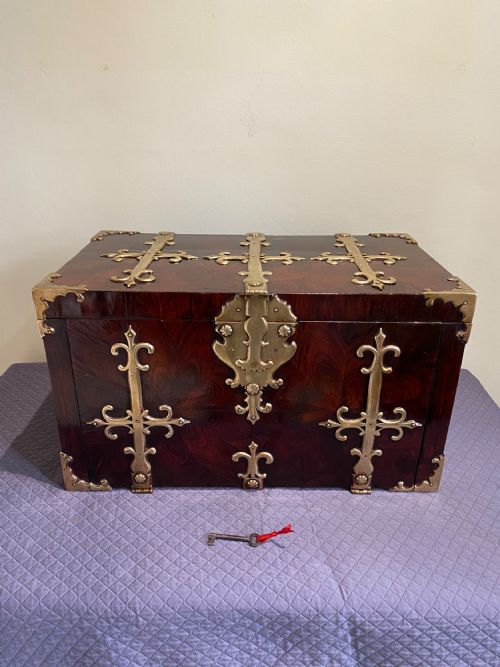
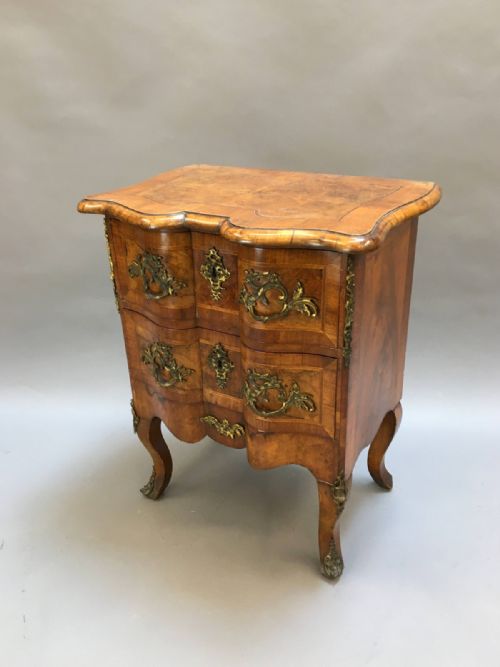
The most common forms on this page are walnut commodes, brass-mounted jewellery boxes and carved wooden trunks. These objects served domestic storage and travel purposes, finished with decorative mounts, marquetry inlay or elaborate metalwork.
How they were made
These pieces rely on hardwoods such as walnut, oak and burr maple, frequently paired with decorative veneers like kingwood and coromandel. Surface ornamentation is achieved through marquetry inlay, hand-carving and painted finishes.
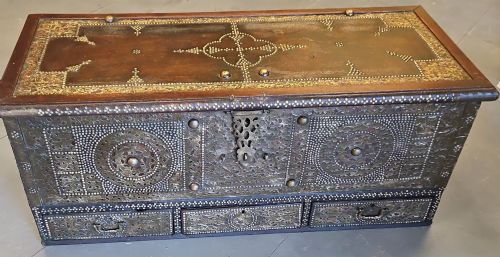
Metal components play a structural and decorative role, utilising cast brass, ormolu, silver mounts and iron studwork. Travelling boxes and caskets often incorporate heavy brass binding and flush handles for durability.
Ornate Chest Retail Price Guide 2026
Typical asking prices for ornate chest among the pieces listed under this phrase on Sellingantiques today, from the lower quarter to the upper quarter. They describe what is for sale here now, not the wider market.
Listings span from seventeenth-century leather travelling boxes to late Victorian steamer trunks.
What varies in quality
The standard of execution in timber selection and joinery distinguishes finer examples, particularly in the cut of burr walnut and the precision of marquetry inlay. Cabinets and commodes with well-matched grain and harmonious proportions demonstrate superior workshop practice.
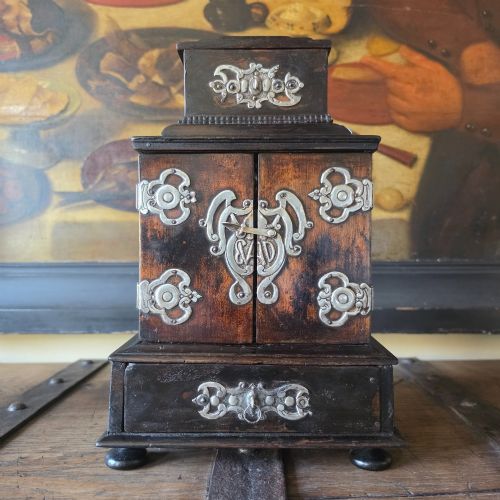
The refinement of metal mounts, whether chased ormolu, engraved brass plates or intricate studwork, indicates the maker's hand. Original locks, hinges and keys also contribute significantly to the integrity of the piece.
Thomas Hache of Grenoble
The Ornate Chest Glossary
- Commode
- A decorative chest of drawers, often standing on relatively high legs and associated with eighteenth-century French design.
- Casket
- A small ornamental box used for holding jewellery or valuables, frequently mounted with brass, silver or ormolu.
- Cassone
- A traditional Italian dowry chest, typically large and heavily carved or decorated with giltwood.
- Marquetry
- The art of applying pieces of veneer to a structure to form decorative patterns and pictorial designs.
- Ormolu
- Gilt bronze mounted on furniture or decorative objects, popular in French and Victorian decorative arts.
Ornate Chest: Frequently Asked Questions
What is the difference between a commode and a chest of drawers?
A commode generally refers to a low chest of drawers of French or continental origin, often featuring ornate marquetry, shaped fronts and decorative mounts. Standard chests of drawers are typically taller and follow British domestic forms.
Both serve similar storage functions, but commodes place greater emphasis on decorative presence and stylistic ornamentation within a room.
How are jewellery caskets different from standard boxes?
Jewellery caskets are smaller decorative containers designed specifically for valuables, frequently utilising luxury materials like tortoiseshell, coromandel, silver and ormolu. They often feature lined interiors and elaborate exterior casting.
Standard wooden boxes and trunks serve general storage or travel needs, relying on brass binding, iron hardware and simpler timber construction.
How do I identify a seventeenth-century piece?
Seventeenth-century pieces typically display heavier timber construction, hand-carved panels, and structural iron or brass hardware. Joinery techniques from this period rely on pegged framing rather than modern fasteners.
Surfaces often show deep patination on oak or walnut, reflecting early domestic or travelling use before the lighter veneers of the eighteenth century became widespread.
Where were dowry chests used?
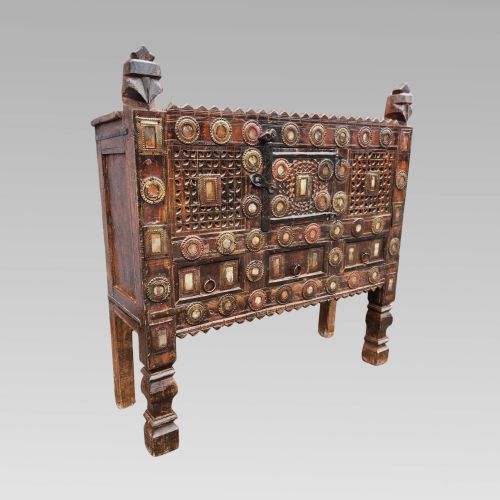
Dowry chests and storage cabinets originated across various cultures, including Indian Damchiya cabinets and European coppers or cassones. They were built to hold household goods and valuables for marriage.
These pieces often feature regional carving styles, such as heavy teak or oak work, designed to withstand daily use while displaying family status.