

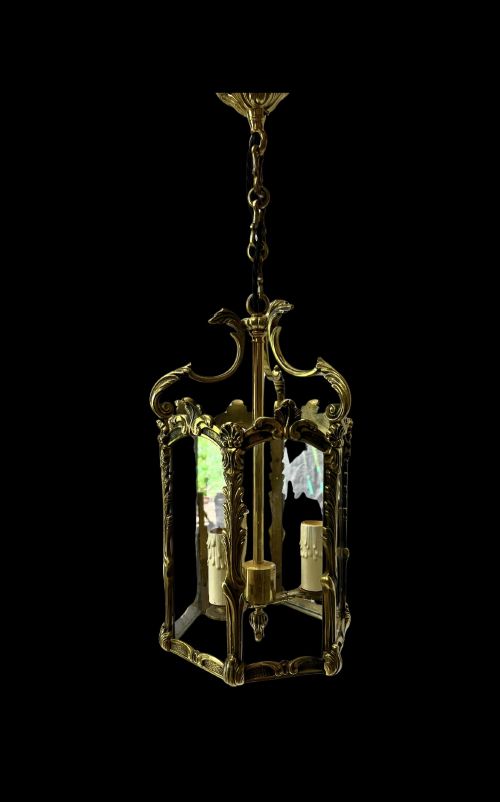


Ornate Ceiling Lanterns
Ornate ceiling lanterns bring a dramatic focal point to halls and rooms, forged in metal and glass to cast warm, patterned light.
Ornate Ceiling Lanterns
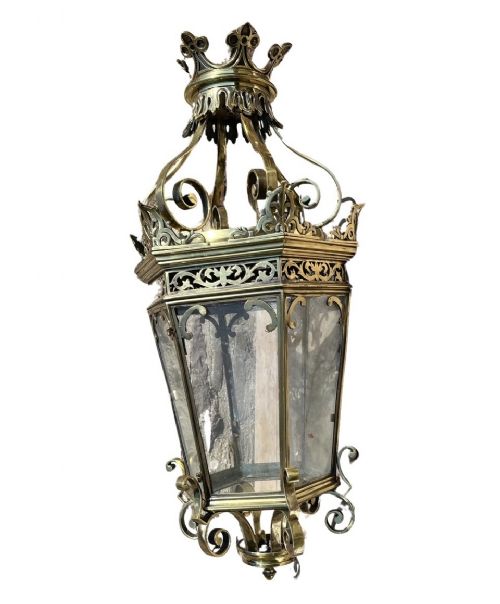
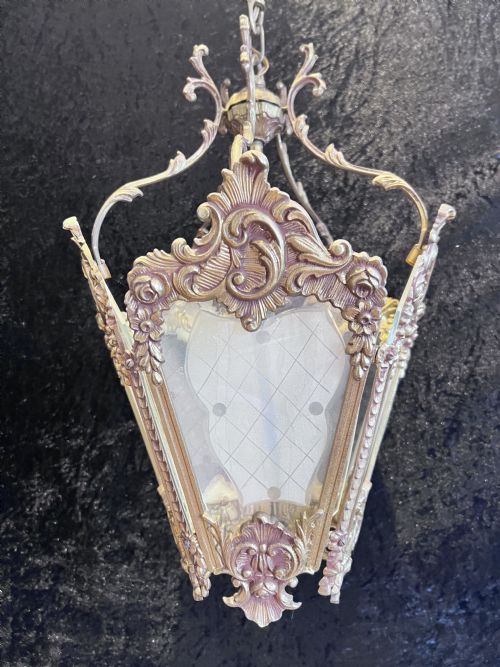
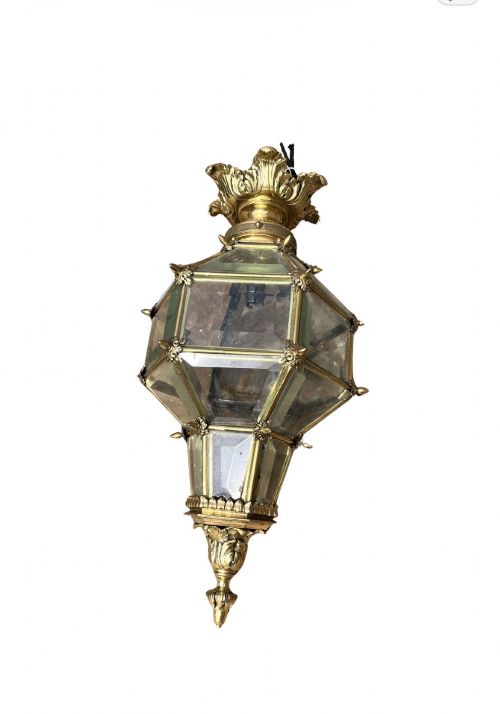
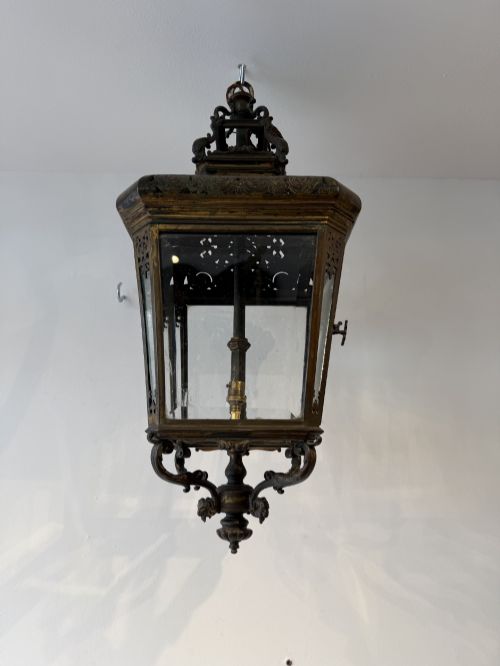
When searching for ornate ceiling lanterns, buyers encounter fixtures designed to hang from above, illuminating entrance halls and principal rooms. These pieces originate across the nineteenth and early twentieth centuries, drawing on historical French, Venetian, and Gothic motifs.
The selections available here lean heavily toward French Rococo and Louis XVI styles, alongside Italian Florentine interpretations. Forms include hexagonal hanging hall lanterns, pendant lights, and carved wooden frames fitted with glass panels.
Materials span from cast brass and gilded bronze to carved giltwood and crystal. Many examples incorporate glazed sides with doors for access to the interior light source.
How they were made
Maker's workshops built these lanterns using cast metals such as brass, bronze, and gilt bronze, often shaping the metal into elaborate scrolls and floral flourishes. Gilding was applied to surfaces to catch the ambient light.
Wooden examples rely on carved giltwood, sometimes paired with toleware components. Glazing involved fitting clear, coloured, or crystal glass panels securely into metal frameworks or wooden housings.
Electrical components have frequently been added or updated to replace earlier oil or candle fittings while retaining the original decorative exterior structure.
Ornate Ceiling Lanterns Retail Price Guide 2026
Typical asking prices for ornate ceiling lanterns among the pieces listed under this phrase on Sellingantiques today, from the lower quarter to the upper quarter. They describe what is for sale here now, not the wider market.
Some lanterns feature tiny hinged doors, built so servants could easily reach inside to tend the candles without dismantling the entire fixture.
What varies in quality
The distinction between standard and superior pieces rests on the depth and crispness of the casting or wood carving. Finer lanterns display hand-finished detailing on the mounts, foliage, and structural frames rather than soft, mass-produced contours.
The choice of materials also divides the range, with substantial gilded bronze and heavy crystal commanding greater presence than lighter brass or simpler configurations. Original glass panels and intact surface gilding preserve the integrity of the design.
The Ornate Ceiling Lanterns Glossary
- Gilt Bronze
- Bronze metal treated with a thin layer of gold or gold-coloured alloy. This technique provides a durable, lustrous finish that resists tarnishing.
- Giltwood
- Wood, typically carved timber, coated with gold leaf or gold paint. It creates a rich, reflective surface popular in classical Italian and French designs.
- Toleware
- Enamelled or lacquered sheet metal items. Artisans utilised this material to add colourful accents and secondary decorative elements to lighting fixtures.
- Rococo
- An ornate artistic style characterised by asymmetric scrolls, shell motifs, and natural curves. It heavily influences many nineteenth-century French lighting designs.
- Crystal
- High-clarity glass cut with precision facets to refract light. It adds sparkle and visual complexity to hanging lamps and chandeliers.
Ornate Ceiling Lanterns: Frequently Asked Questions
Where should I hang an ornate ceiling lantern?
These fixtures suit high-ceilinged entrance halls, stairwells, and principal reception rooms where they can command visual attention.
Ensure adequate clearance beneath the lowest point of the lantern for foot traffic and door swings.
Are these lanterns wired for modern electricity?
Many period lanterns have been adapted for modern electrical supplies, though the extent of the wiring varies by piece.
A qualified electrician should inspect and install older fixtures to ensure safety and compatibility with current standards.
How do I date a brass or bronze lantern?
Dating relies on examining the casting techniques, fastening methods, and stylistic cues such as Rococo revival motifs or Regence period influences.
Patina on the metal and the nature of the glass panels also offer clues to the nineteenth or early twentieth-century origins.
How do I clean a glass and metal lantern?
Dust metal frames gently with a soft dry cloth and clean glass panels with standard glass cleaner applied to a cloth rather than the fixture directly.
Avoid abrasive cleaners that might damage delicate surface gilding or patination on brass and bronze.