
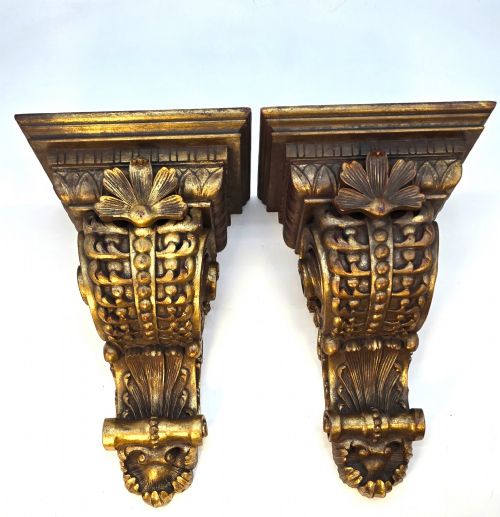


Ornate Carved Wall Brackets
Ornate carved wall brackets bring architectural depth and gleaming surface to a room, holding small treasures and lights with ease.
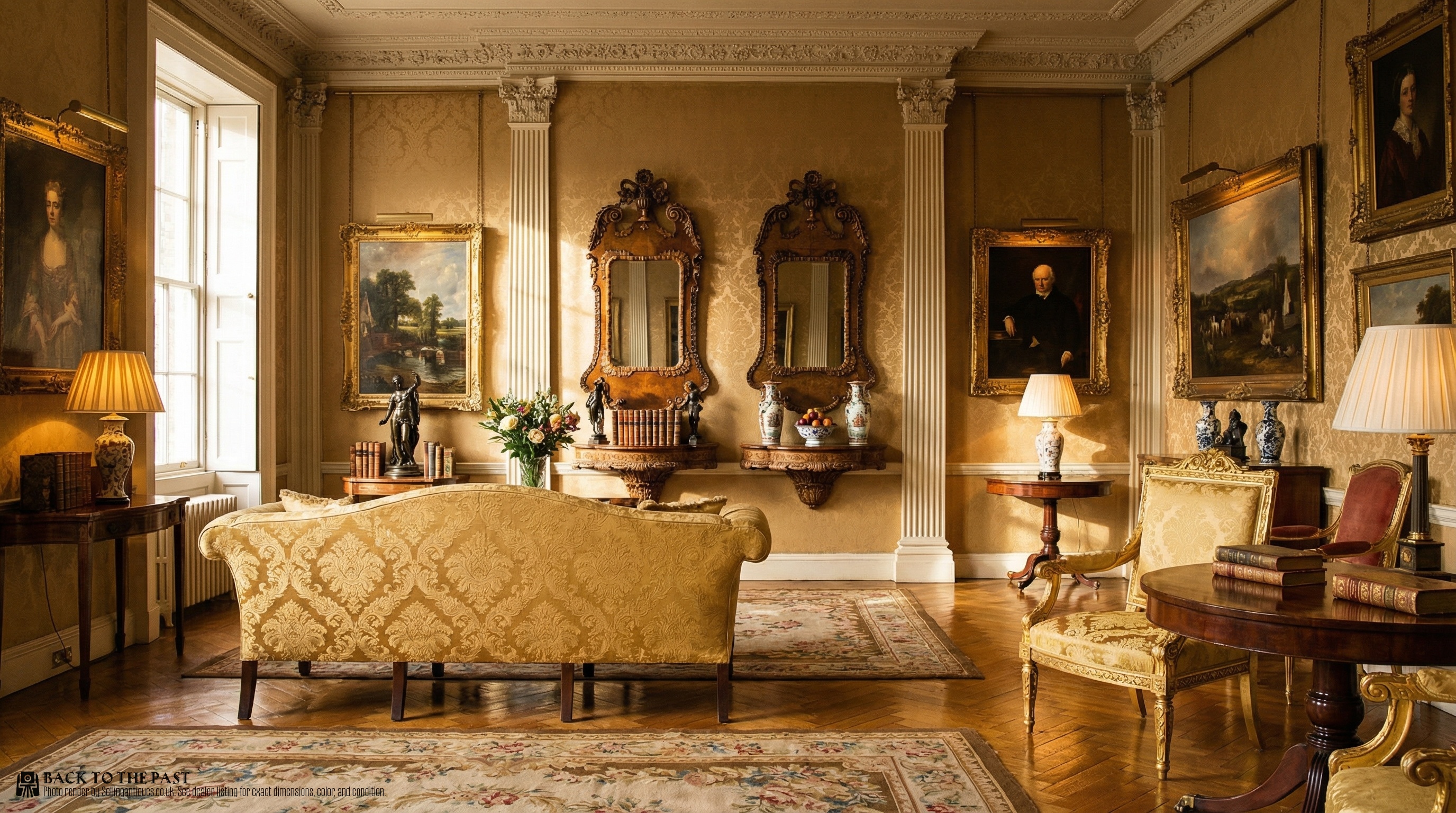
Ornate Carved Wall Brackets
When buyers search for ornate carved wall brackets, they encounter pieces designed to project from a vertical surface, supporting objects or illuminating a room. These fixtures range from single wooden shelves to pairs framed in giltwood, echoing historical interior schemes.
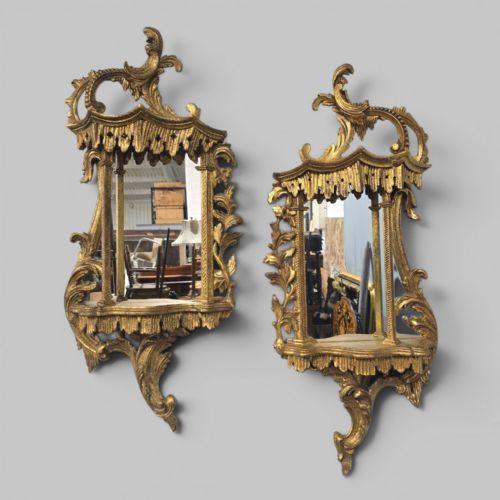
The selections available here lean heavily towards nineteenth-century examples and revival styles. Pieces span from Victorian and Rococo Revival to Chinese Chippendale and Italian Neoclassical designs.
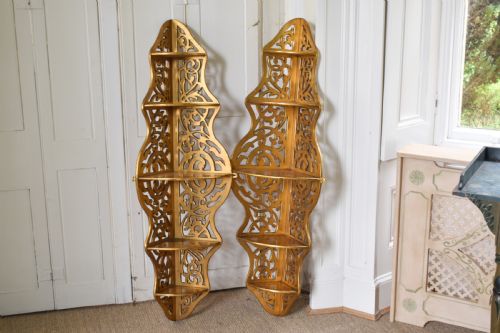
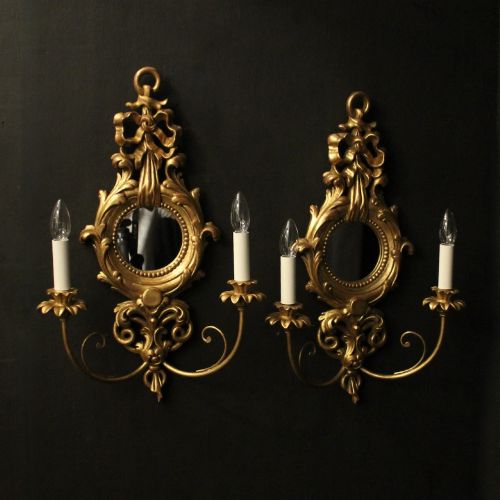
Forms include dedicated wall brackets, corner shelves, and mirror combinations such as pier glasses and girandoles. Walnut, giltwood, and gesso appear alongside wrought iron and gilt bronze.
Materials and construction
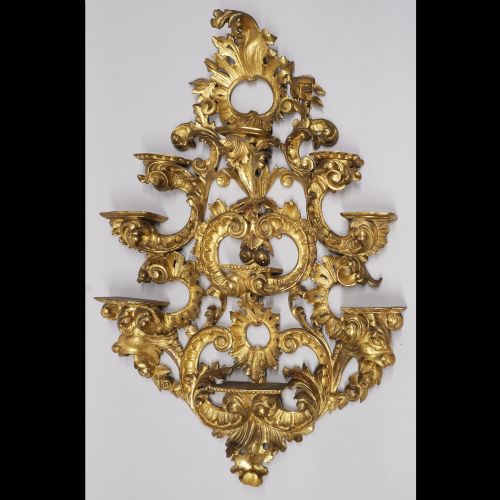
Makers shaped these supports primarily from wood, utilising walnut for robust carved corbels and softer timbers for detailed gesso work. Carvers worked directly into the material to achieve deep relief foliage, scrolls, and figural elements.
A grinning wooden cherub watches over the room from a carved bracket mirror, holding court above the wall.
Distinctions in quality
The depth and crispness of the carving separate standard items from superior examples. Skilled hands produced undercut foliage and expressive cherubs that retain sharp definition beneath layers of gilding.
The integrity of the underlying wood and the correct application of gold leaf over gesso determine longevity. Original gilding surfaces show authentic ageing rather than flat modern paint replacements.
The Ornate Carved Wall Brackets Glossary
- Giltwood
- Wood that has been coated with gold leaf. This finish defines many decorative brackets and mirrors from the eighteenth and nineteenth centuries.
- Corbel
- A structural bracket projecting from a wall to support a weight. Carved versions serve both a load-bearing purpose and a purely decorative function.
- Girandole
- A branched wall light or sconce, often incorporating a mirror. The reflective glass multiplies the illumination from candles or bulbs.
- Gesso
- A plaster-like mixture applied to wood as a base for gilding or painting. It allows carvers to achieve smooth, fine details before applying gold leaf.
- Pier glass
- A tall mirror designed to hang on the wall between windows. These often sit above a matching console table or wall bracket.
Ornate Carved Wall Brackets: Frequently Asked Questions
How were wall brackets used originally?
Original interiors utilised these fixtures to display porcelain, clocks, and small sculptures above furniture. They also served as wall-mounted candle supports to cast light across reception rooms.
Positioning them at eye level or above console tables drew the eye upward and maximised the reflective qualities of nearby mirrors.
Are these brackets structurally sound for heavy items?
Many carved wooden and gilt bronze brackets were built to hold substantial decorative objects securely. However, weight capacity depends entirely on the strength of the wall fixing and the integrity of the wooden joint where the shelf meets the backplate.
Checking the back construction reveals how firmly the bracket anchors to a wall. Fragile gesso surfaces require careful handling rather than heavy loads.
How do I identify a revival style piece?
Revival pieces draw inspiration from earlier eras such as Louis XIV, George I, or Rococo aesthetics. Nineteenth-century workshops frequently reinterpreted these historical motifs using contemporary machinery alongside traditional hand carving.
Looking closely at the tool marks, timber type, and construction methods helps distinguish a nineteenth-century revival item from an eighteenth-century original.
Where should I hang a wall bracket?
Wall brackets suit hallways, living rooms, and dining areas where they punctuate plain expanses of wallpaper or paint. Hanging them symmetrically in pairs frames doorways, fireplaces, or large paintings effectively.
Ensuring they sit at a height where they will not be knocked by passing traffic protects both the bracket and its displayed object.