

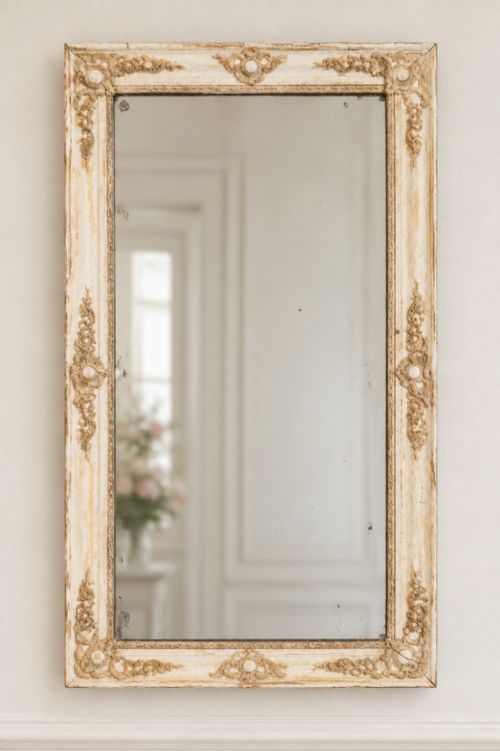
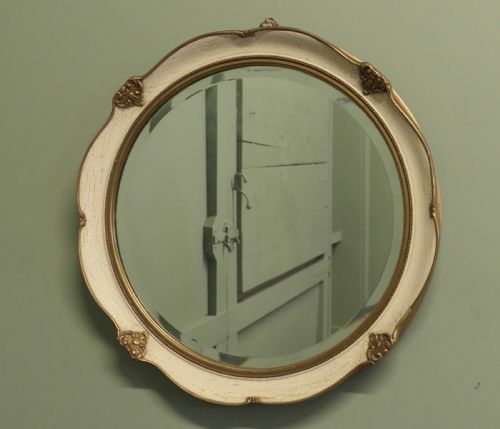
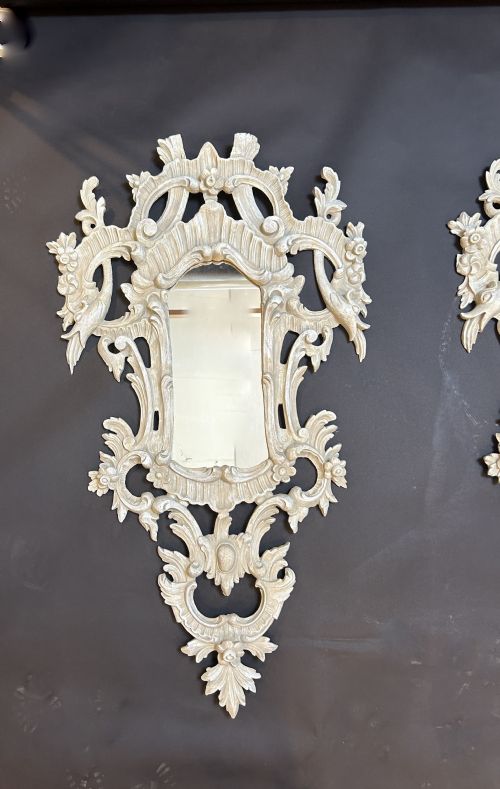
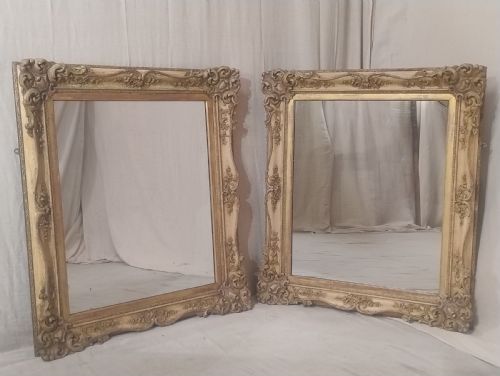


Ornate Carved Cream Mirror
These ornate carved cream mirror examples bring a touch of historic French and Italian style into a room, offering both light and decorative presence.
Ornate Carved Cream Mirror
When you search for an ornate carved cream mirror, you encounter wall mirrors, overmantel mirrors, and console tables originating across the eighteenth, nineteenth, and twentieth centuries. These pieces display distinct influences such as French Chateau, Rococo Revival, Georgian, and Victorian styles.
The selection here leans heavily towards nineteenth century pieces alongside works from the eighteen-eighties and early twentieth century. Overmantel mirrors and wall mirrors dominate the selection, often featuring painted or parcel gilt finishes alongside cream and white tones.
Continental origins appear frequently, bringing ornate carving and distressed painted surfaces into domestic spaces. Buyers select these items to anchor a room, whether placed above a fireplace or mounted on a principal wall.
How they were made
The construction of an ornate carved cream mirror relies on carved wood and natural gesso applied to form relief ornamentation. Artisans shaped wooden frames before applying paint, cream finishes, and touches of gold leaf or parcel gilding.
Mirror glass sits within these elaborate frames, occasionally surviving as original antique plate. Frame makers utilised traditional joinery and carving techniques appropriate to periods ranging from the eighteenth century to the art deco era.
Ornate Carved Cream Mirror Retail Price Guide 2026
Typical asking prices for ornate carved cream mirror among the pieces listed under this phrase on Sellingantiques today, from the lower quarter to the upper quarter. They describe what is for sale here now, not the wider market.
The listings span from the eighteenth century through to the art deco period, predominantly featuring wood, gesso, and mirror glass.
What varies in quality
The depth and crispness of the wood carving distinguish superior examples from simpler production. Hand-carved details show precision and fluidity that machine-routed or later recast mouldings lack.
The condition and age of the glass plate, combined with the integrity of the original gesso and paint layers, determine the character of the piece. Surfaces that show honest age without crude repainting hold greater appeal.
The Ornate Carved Cream Mirror Glossary
- Gesso
- A plaster-like mixture applied to wood frames to create a smooth surface for carving and gilding. It allows for intricate relief ornamentation before painting.
- Parcel Gilt
- A technique where only specific raised portions of a frame receive gold leaf, contrasting with the painted cream background. This highlights the carved details.
- Overmantel Mirror
- A large mirror designed specifically to hang on the wall directly above a fireplace mantelpiece. These pieces often feature horizontal proportions to fit the hearth.
- Rococo Revival
- A nineteenth century design movement inspired by the flamboyant, asymmetrical curves and shell motifs of the French eighteenth century. It defines much of the ornate framing seen here.
Ornate Carved Cream Mirror: Frequently Asked Questions
How do I hang a heavy overmantel mirror safely?
These substantial frames require secure fixings into structural wall studs or masonry using heavy-duty brackets. Professional installation is recommended to support the combined weight of the wood and glass.
Ensure the hanging wire or strap matches the load capacity of the chosen hardware to prevent movement over time.
Are these mirrors fitted with original glass?
Some pieces retain their original antique mirror glass, which often exhibits characteristic foxing, minor speckling, and silvering irregularities. Other examples feature replacement plates fitted during later restoration work.
Examining the depth and reflection of the glass helps determine its age relative to the frame.
How should I clean a painted and gilded frame?
Dust the carved wooden surfaces gently with a soft, dry brush to prevent dirt accumulation in the recessed gesso details. Avoid liquid cleaners, harsh solvents, or abrasive cloths that might damage the cream paint or delicate parcel gilding.
Glass cleaner applied directly to a cloth rather than the glass protects the surrounding frame from moisture.
How do I date a nineteenth century carved mirror?
Examine the construction of the wooden backboards, the composition of the gesso, and the style of the carving for period indicators. Revival pieces borrow eighteenth-century motifs but display Victorian or Edwardian manufacturing methods.
Comparing the joinery and finish helps place the object within the broader nineteenth or early twentieth-century timeline.