



Ornate Carved Buffet
These ornate carved buffet examples bring heavy timber, deep relief work, and historical revivals straight into a dining room or hall.
Ornate Carved Buffet
An ornate carved buffet serves as a substantial storage piece and a formal display surface, typically found in Victorian dining spaces and grand reception rooms. When searching for an ornate carved buffet, collectors encounter impressive sideboards, cabinets, and cupboards built for presence and utility.
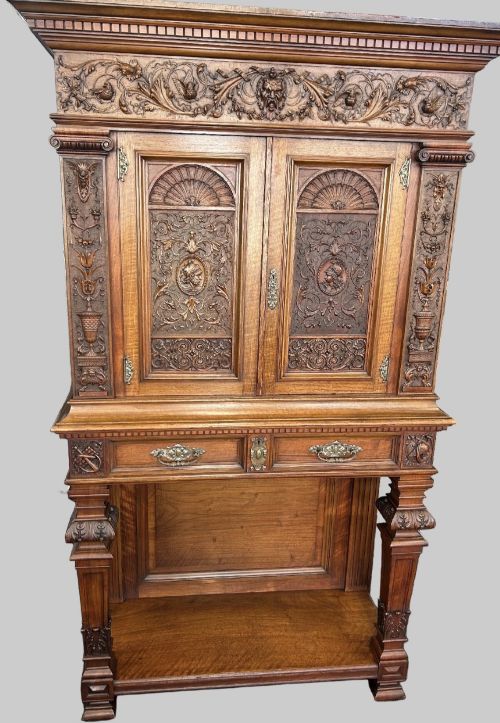
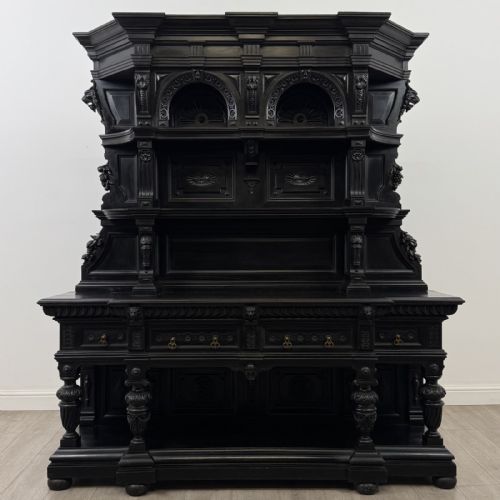
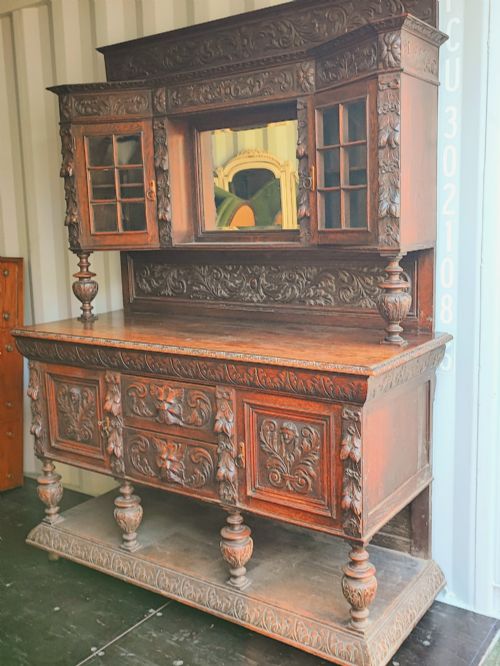
The pieces appearing on this page span the Victorian era, the nineteenth century, and earlier epochs, drawing heavily on revival idioms. Oak, walnut, and ebonised hardwood form the backbone of these sturdy constructions, often enriched with glass panels and mirror backs.
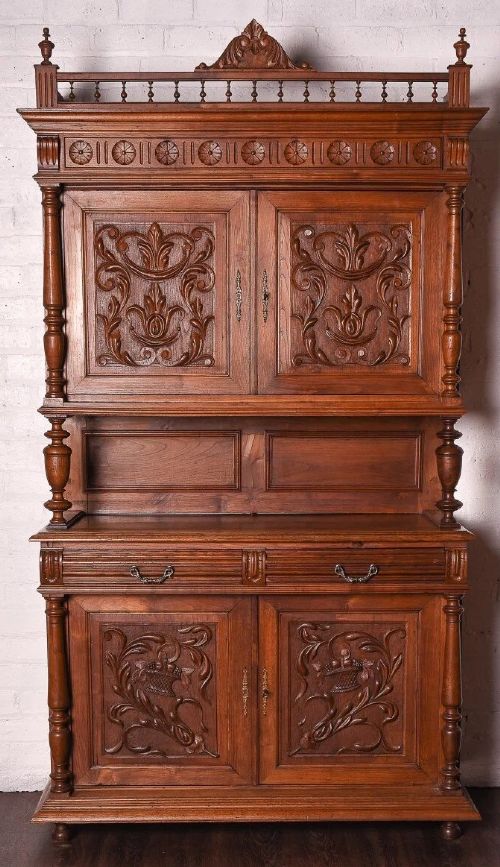
Forms range from large mirror-backed sideboards to compact cabinets on stands and pot cupboards. Makers applied historicist designs freely, mixing Renaissance, Jacobean, and Louis XIII motifs into heavy wooden frames.
How they were made
Joiners and cabinetmakers relied on dense domestic hardwoods like oak and walnut, alongside ebonised hardwood and occasional exotic timbers such as rosewood. These heavy woods provided the structural integrity required to support deep sculptural relief without warping.
Carving was executed by hand directly into the timber, producing high-relief panels, lion masks, and figurative scenes. Metal elements, brass hardware, and iron fittings were integrated for hinges, handles, and structural reinforcement, while glass and mirrors added reflective depth to the larger sideboards.
Ornate Carved Buffet Retail Price Guide 2026
Typical asking prices for ornate carved buffet among the pieces listed under this phrase on Sellingantiques today, from the lower quarter to the upper quarter. They describe what is for sale here now, not the wider market.
Cabinetmakers occasionally hid fierce carved lion masks on drawer pulls to guard the family silver from sticky fingers.
What varies in quality
The depth and crispness of the wood carving separate standard production pieces from masterworks of sculpture. Sharp undercutting in the foliage and figures denotes skilled workshop execution.
Timber selection and the integration of secondary materials dictate the overall character. Heavy walnut and figured oak with well-matched grain outclass plain, commercial pine carcases disguised by surface dark stain.
Gillows·Sigmund Jaray, Wien
The Ornate Carved Buffet Glossary
- Buffet
- A sideboard or cupboard designed for holding food, tableware, or household items. These pieces anchor dining rooms with substantial storage.
- Renaissance Revival
- A nineteenth-century stylistic movement reviving sixteenth-century architectural and sculptural forms. Pieces often feature heavy cornices, columns, and figural carving.
- Ebonised Hardwood
- Timber treated with chemical solutions or dark finishes to imitate expensive ebony. This technique was popular in Victorian formal furniture.
- Mirror Back
- A tall wooden superstructure incorporating a mirrored glass panel above the main sideboard surface. It reflects light and displays porcelain or silver.
Ornate Carved Buffet: Frequently Asked Questions
What rooms suit an ornate carved buffet?
These large timber pieces demand generous floor space and high ceilings to balance their visual weight. Dining rooms and grand hallways provide the traditional setting where they function as serving tables or storage.
Placing them against structural walls ensures proper support for heavy oak and walnut carcases. Their ornate surfaces complement period architectural details like panelled walls and moulded cornices.
How do I care for carved wood?
Maintaining heavy carved timber involves dusting intricate recesses regularly with soft bristle brushes. Avoiding direct sunlight and sudden temperature shifts prevents wood splitting and shrinkage.
Applying occasional natural wax feeds the grain and preserves the historic sheen of walnut and oak. Harsh modern chemical polishes should be avoided entirely to protect the antique finish.
How do I identify a revival style?
Revival furniture borrows specific architectural and decorative motifs from earlier centuries like the Renaissance or Jacobean period. Look for classical columns, round-headed arches, and strapwork carved into nineteenth-century oak.
Cabinetmakers mixed historical elements freely during the Victorian era to satisfy demand for historic grandeur. The combination of machine-cut carcases with hand-carved relief panels often points to nineteenth-century revival work.
What is the difference between a buffet and a sideboard?
Buffets historically focused on holding food and serving dishes within dining spaces. Sideboards evolved similar storage functions with added drawers and cupboards for cutlery and linen.
Many nineteenth-century examples blur these lines by incorporating mirror backs, display cabinets, and pot cupboards into a single multi-tier construction.