





Ornate Carved Bed
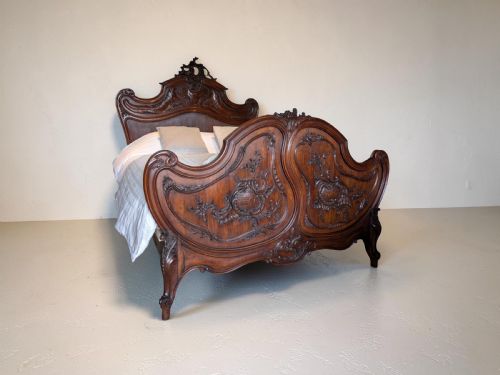
An ornate carved bed brings heavy historic timberwork and sculptural detail straight into a modern bedroom.
Ornate Carved Bed
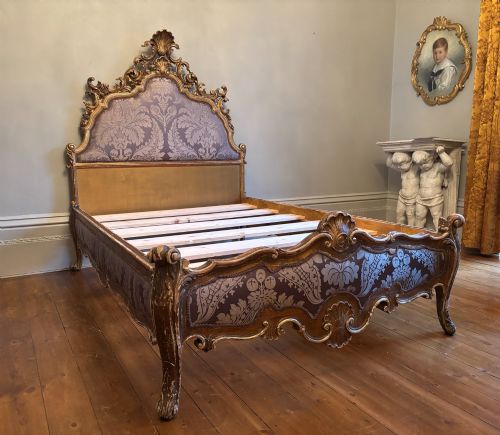
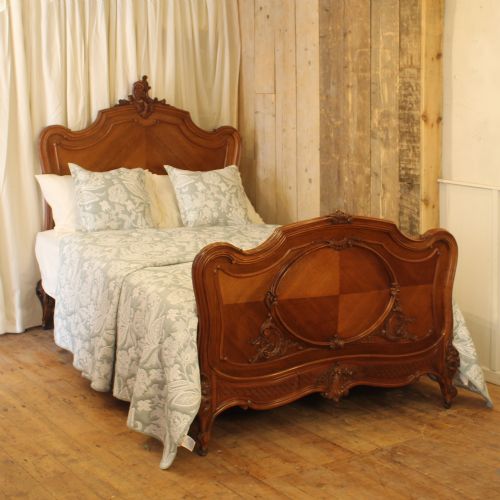
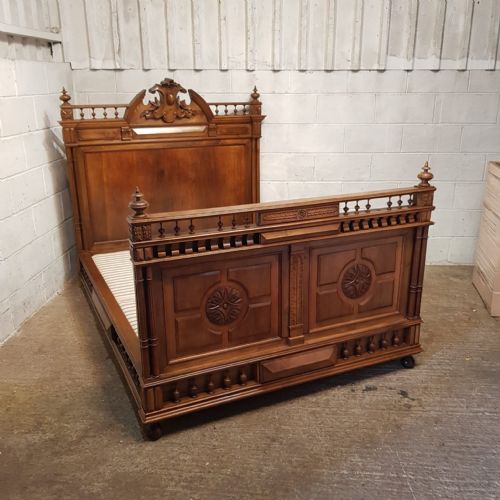
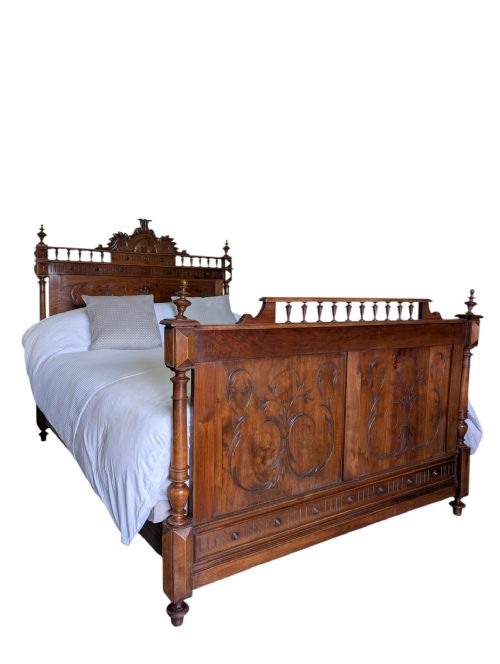
When you search for an ornate carved bed, you encounter substantial wooden frames spanning the Victorian era through the early twentieth century. These pieces encompass French Rococo Revival styles, Italian craftsmanship, and oak Breton designs.
The selection on this page relies heavily on walnut and oak timbers configured as double or king size bedsteads. Many examples incorporate deep relief carving alongside fabric upholstered elements such as damask.
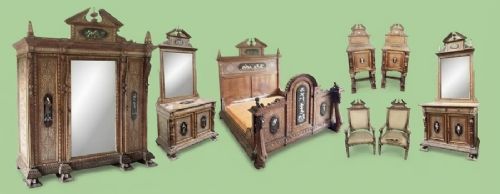
Beyond standard bedframes, the evidence includes four poster beds and complete bedroom suites sharing matching decorative motifs. These larger ensembles provide coordinated woodwork across multiple furniture pieces.
How they were made
Makers shaped these frames from dense hardwoods like walnut and oak, selecting timber capable of supporting deep hand-chiseled motifs. Artisans applied gilt and paint highlights directly to the carved wooden surfaces to accentuate relief work.
Upholstered sections utilise traditional textile integration, pairing structural wood with fabrics such as damask. Metal components like cast iron appear alongside timber elements in specific Victorian iterations.
Ornate Carved Bed Retail Price Guide 2026
Typical asking prices for ornate carved bed among the pieces listed under this phrase on Sellingantiques today, from the lower quarter to the upper quarter. They describe what is for sale here now, not the wider market.
Listings feature periods spanning from the Victorian era up to the 1920s, constructed predominantly in walnut, oak, and mahogany.
What varies in quality
The depth and clarity of the chisel work distinguish standard production from superior pieces. Crisp, undercut foliage and figures demonstrate higher sculptural competence than shallow, machine-routed patterns.
The integrity of the structural timber dictates longevity, with straight-grained walnut and quarter-sawn oak holding complex joinery better than lesser woods. Complete suites with matching auxiliary items demand closer attention to uniform patination across all components.
Waring & Gillows
The Ornate Carved Bed Glossary
- Bedstead
- The framework of a bed consisting of headboard, footboard, and rails, designed to hold a mattress and base.
- Damask
- A reversible figured fabric of silk, wool, linen, or cotton, frequently utilised for historic bed upholstery.
- Giltwood
- Wood that has been thinly coated with gold leaf or gold paint to simulate solid gold enrichment.
- Rococo Revival
- A nineteenth-century design movement favoring asymmetrical scrolling ornament, shell motifs, and naturalistic curves.
- Walnut
- A heavy, dark hardwood prized for its rich grain pattern and suitability for intricate carving.
Ornate Carved Bed: Frequently Asked Questions
Will a historic bed fit a modern mattress?
Historic bed dimensions often differ slightly from contemporary standard sizes. Modifications to side rails or custom mattress sizing may be necessary for daily use.
Checking internal frame measurements before acquisition ensures proper accommodation of modern sleep components.
How do I care for carved wooden headboards?
Regular dusting with a soft, dry cloth prevents particulate accumulation within deep recesses of the carving. Avoid silicone-based polishes that degrade historic wax and varnish finishes over time.
Maintaining stable room humidity protects dry hardwoods from seasonal splitting along glued joints.
What is a French Louis XV bedstead?
This style references eighteenth-century French design principles characterised by cabriole legs, flowing asymmetry, and floral carving. Nineteenth-century revival pieces emulate these aesthetic choices using period timber construction techniques.
Curved headboards and low footboards typically define the silhouette of these continental frames.
How are four poster beds constructed?
Four poster beds utilise four vertical posts supporting an overhead tester frame, which originally held curtains for warmth and privacy. Heavy timber corner posts anchor the side rails and headboard through mortise and tenon joinery.
Mahogany and other dense woods provide the structural strength required for these tall configurations.