




Ornate Cabriole Chair
These ornate cabriole chair examples combine flowing serpentine frames with curved legs, offering striking focal seating for period interiors.
Ornate Cabriole Chair
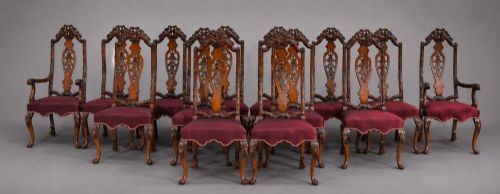
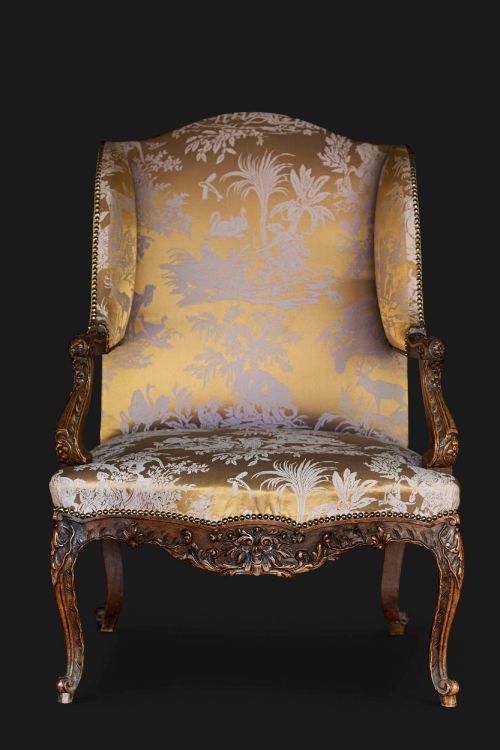
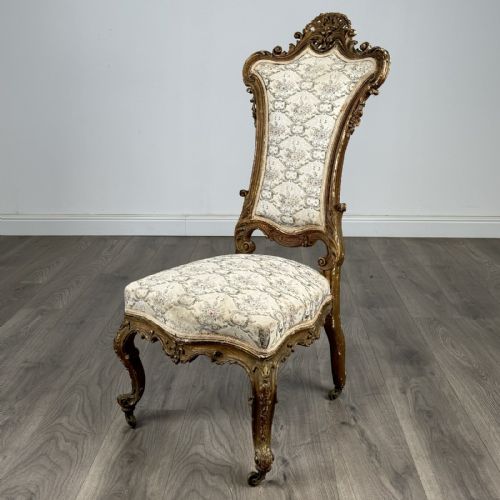
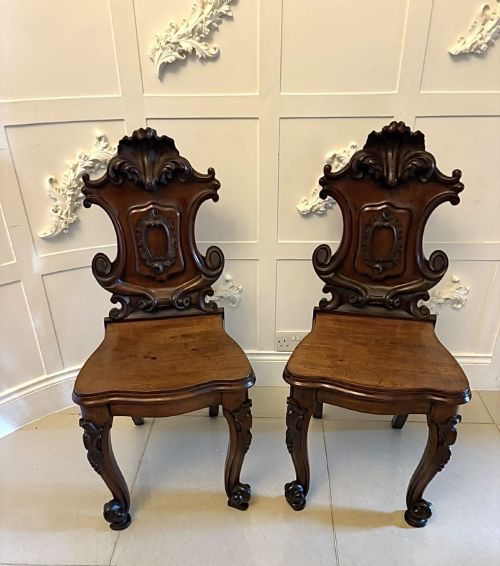
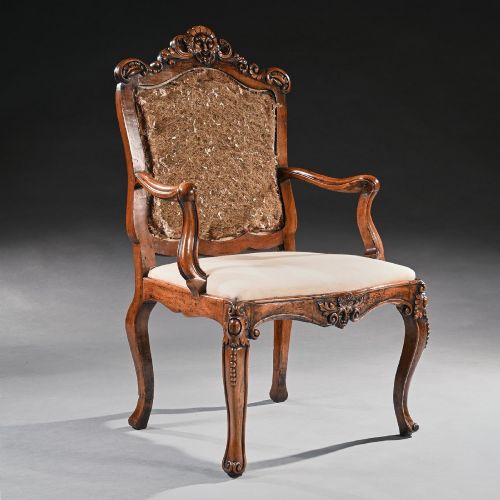
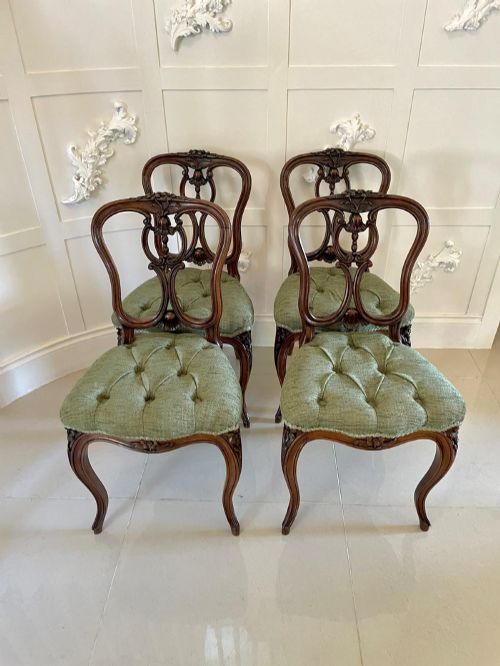
An ornate cabriole chair sits at the intersection of structural woodwork and elaborate continental revival design. The pieces gathered here span armchairs, side chairs, and hall chairs originating from the eighteenth to the early twentieth century.
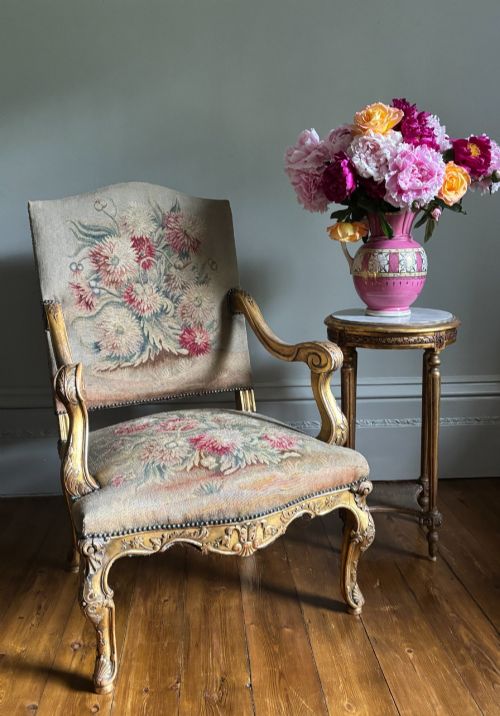
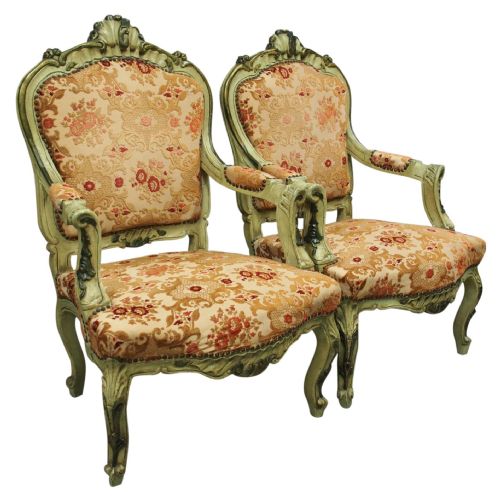
You will most commonly encounter nineteenth-century walnut and giltwood interpretations drawing heavily on French Rococo and Regence aesthetics. These range from salon chairs to substantial open armchairs featuring pronounced leg curves.
Earlier eighteenth-century walnut examples also appear, alongside Victorian sets and pairs from continental European workshops. Each variation relies on the characteristic double-curved leg form to anchor its decorative carved woodwork.
How they were made
Cabinetmakers shaped these frames primarily from solid walnut, mahogany, and giltwood, carving deep relief ornamentation directly into the timber. Frames often incorporate applied gilt finishes or painted surfaces alongside exposed grain.
Upholstered components utilise traditional stuffing secured with textile coverings, damask, or tapestry panels. Brass tacks frequently edge the fabric borders, fastening the textiles tightly to the wooden seat rails.
Ornate Cabriole Chair Retail Price Guide 2026
Typical asking prices for ornate cabriole chair among the pieces listed under this phrase on Sellingantiques today, from the lower quarter to the upper quarter. They describe what is for sale here now, not the wider market.
Current listings feature walnut, mahogany, and giltwood constructions spanning the eighteenth to the twentieth centuries.
What varies in quality
The depth and crispness of the carved detail dictate the upper tiers of quality, separating deeply undercut foliage from softer, more mechanised moulding. Pierced splats and extravagantly carved head rails require considerable skill to execute cleanly.
Timber selection and structural integrity also divide the standard pieces from finer survivals. Solid walnut and heavy giltwood retain their joints and carved profiles better over centuries of use than softer woods.
The Ornate Cabriole Chair Glossary
- Cabriole leg
- A furniture leg that curves out at the knee and tapers inward to the ankle, mimicking animal limbs. This form typifies eighteenth-century and revival seating.
- Giltwood
- Timber coated with a thin layer of gold leaf over a prepared gesso ground. It provides a bright, reflective surface on formal display chairs.
- Damask
- A reversible figured fabric woven on a jacquard loom with patterns formed by contrasting warp and weft threads. It frequently covers nineteenth-century salon seats.
Ornate Cabriole Chair: Frequently Asked Questions
What is a cabriole leg?
A cabriole leg is a furniture support that swells outward at the knee and curves inward toward the foot. It forms the defining structural feature for this category of seating.
Carpenters carved these double-curved profiles directly from solid timber such as walnut or mahogany. The design derives from animal limbs and gained immense popularity during revival periods.
Where were these chairs used?
These seating pieces functioned primarily in formal reception rooms, parlours, and salons. Armchairs and boudoir chairs provided decorative seating for guests.
Hall chairs served more transit spaces within larger residences, often constructed as matching pairs in walnut or mahogany. Their rigid wooden seats accommodated callers briefly before entry.
How do I date a chair?
Dating relies on combining the timber species, carving style, and construction methods visible on the frame. Eighteenth-century examples typically show hand-cut joinery and dense walnut.
Nineteenth-century revival pieces often adopt softer proportions or machine-assisted joinery alongside applied gilt finishes. Comparing the specific revival style helps narrow the decade of manufacture.
Are these chairs comfortable?
Comfort varies significantly depending on the specific form and period of the seating. Open armchairs and boudoir chairs with upholstered pads offer relaxed support for sitting.
Side chairs and hall chairs prioritise formal posture and decorative display over deep cushioning. Many historical examples utilise firm traditional stuffing methods rather than modern spring systems.