





Ornate Bronze Wall Lights
These ornate bronze wall lights bring French revival styles and gilded warmth to period interiors.
Ornate Bronze Wall Lights
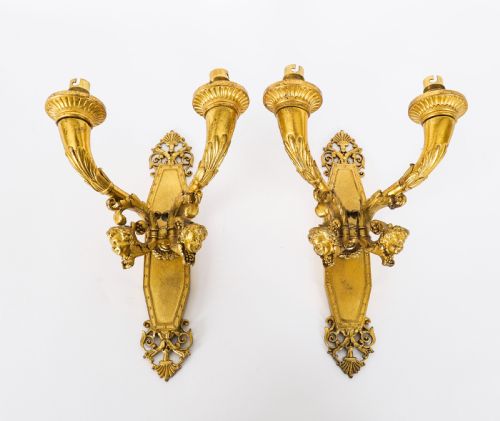
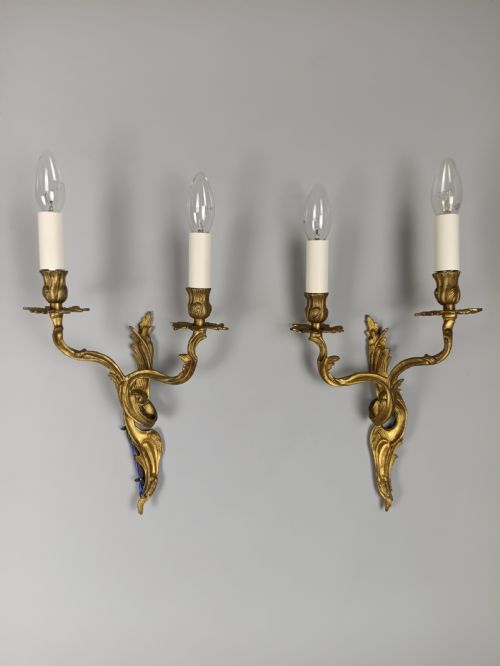
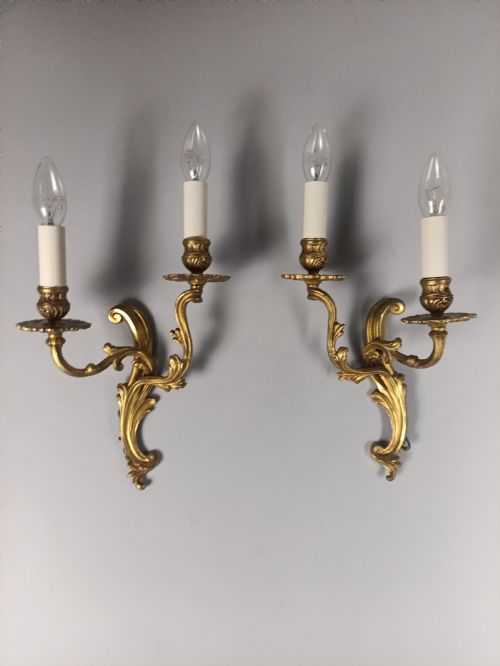
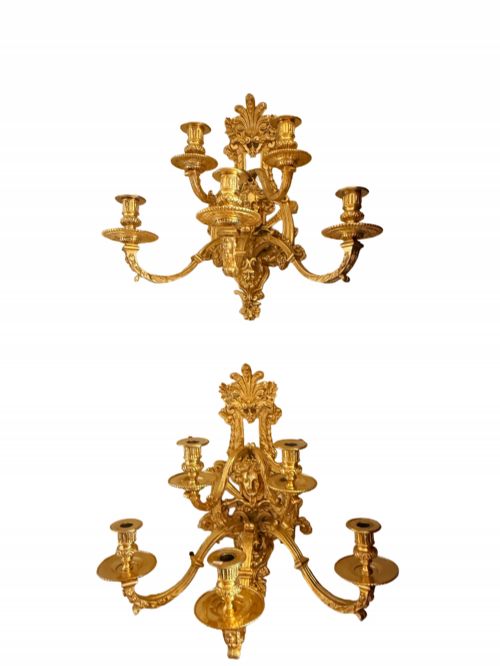
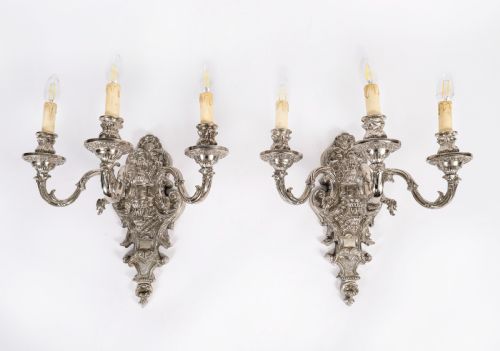
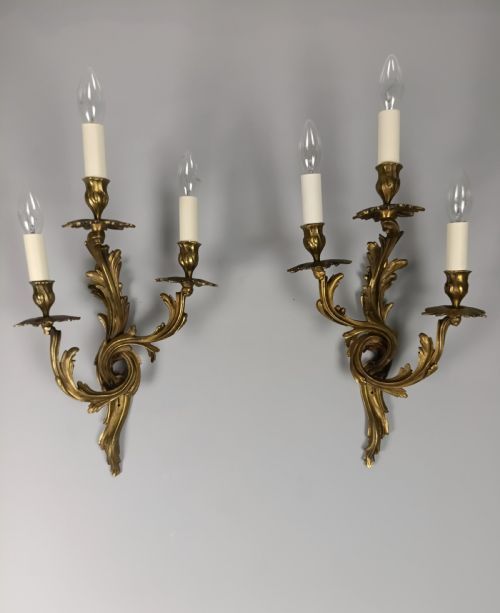
When searching for ornate bronze wall lights, buyers encounter fixtures designed to project illumination across period rooms using multiple candle branches or arms. These fittings emerge predominantly from French workshops spanning the nineteenth and early twentieth centuries, adopting revival styles rooted in earlier court aesthetics.
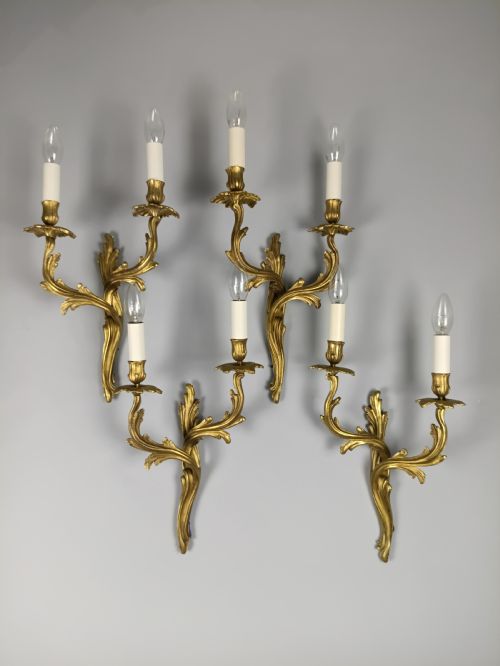
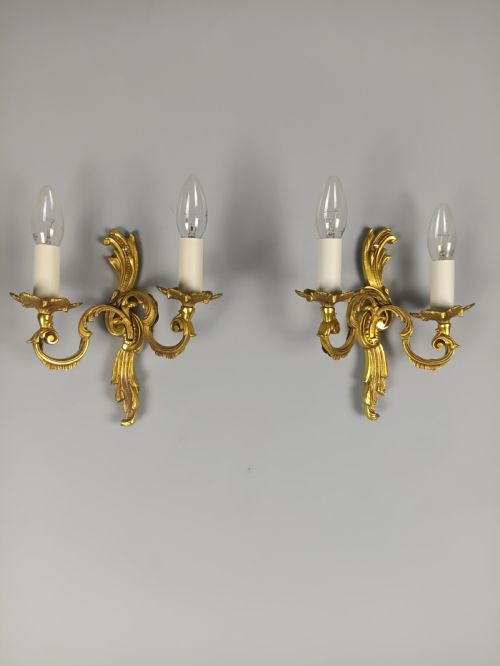
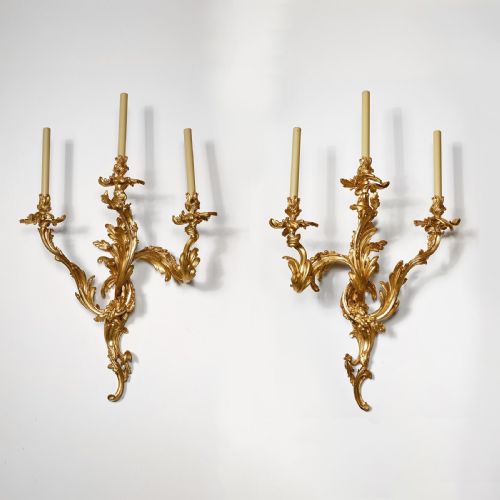
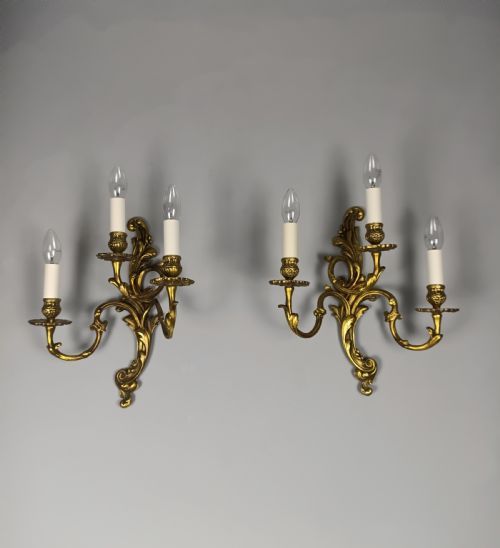
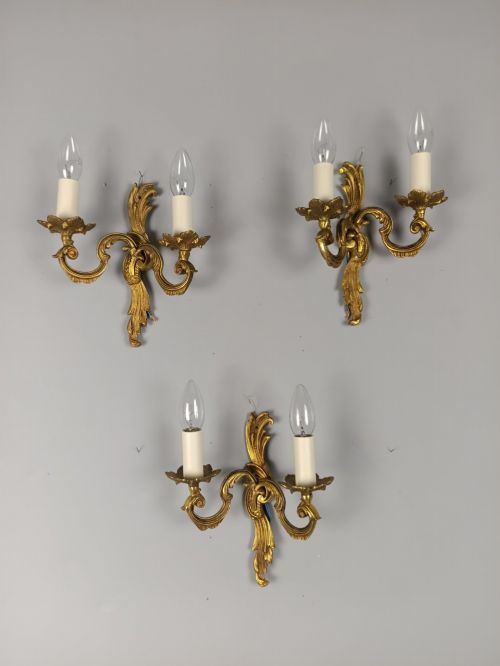
The most common versions met on this page are matched pairs carrying two or three arms, often shaped with asymmetrical curves or rich surface gilding. Alongside standard wall lights and sconces, listings occasionally include girandoles, mirrored wall appliques, and larger chandeliers carrying similar metalwork.
Originating largely from continental ateliers, these pieces display heavy decorative casting that reflects historical design movements such as Rococo, Neoclassical, and Louis XIV. They serve both a practical lighting function and a distinct decorative role within traditional interior schemes.
Materials and Construction Methods
The construction of these pieces relies heavily on cast bronze, brass, and applied surface treatments including ormolu and mercury gilding. Metal components are formed through traditional foundry methods, creating substantial backplates and branching arms designed to support multiple candle holders.
Surface ornamentation is achieved through meticulous chasing and the application of gold leaf or gilt layers over bronze and brass bases. Selected examples incorporate glass or crystal droplets, mirrored backplates, and silver plating to enhance light reflection from internal candles or early electric fittings.
Ribbon motifs tied delicately in metal demonstrate how seventeenth-century court fancies still charmed people well into the twentieth century.
Distinctions in Quality
Quality within these lighting fixtures is defined by the crispness of the metal casting and the depth of the hand-chased detail across the scrollwork and foliage. Superior examples display sharp relief and carefully articulated motifs that remain clear even beneath heavy layers of historical gilding.
The choice of base metal and the richness of the ormolu or gilding further separate standard production from exceptional pieces. Heavier bronze castings with integrated structural integrity and well-preserved surface finishes represent the upper tier of surviving examples.
The Ornate Bronze Wall Lights Glossary
- Ormolu
- Finely chopped high-carat gold amalgam applied to a bronze base through mercury gilding techniques. This finish imparts a warm, durable metallic sheen characteristic of high-status French decorative arts.
- Sconce
- A wall-mounted lighting fixture designed to hold candles or electric lamps and project illumination forward into a room. These units often feature decorative backplates that reflect the light.
- Girandole
- An ornamental branched wall light or candelabrum featuring mirrors or reflective backplates to multiply the ambient light in a space.
- Rococo
- An exuberant decorative style originating in France during the eighteenth century and revived in the nineteenth century, characterised by asymmetrical curves, C-scrolls, and naturalistic shell motifs.
- Applique
- A flat or slightly curved wall-mounted light fitting designed to sit flush against panelling or plasterwork.
Ornate Bronze Wall Lights: Frequently Asked Questions
How do I choose the right size wall light?
Selecting the correct proportion depends on the scale of the wall space and the height of the ceiling in your room. Multi-branch fixtures require adequate clearance to balance visual weight against surrounding furniture.
Smaller twin-arm versions suit intimate spaces, while larger three-branch or multi-light appliques demand broader wall expanses to anchor the room visually.
Were these lights originally wired for electricity?
Most antique lighting fixtures of this vintage were originally designed for wax candles rather than electrical wiring. Many surviving examples have since been adapted or rewired to accommodate modern electrical standards.
Listings frequently note whether pieces remain ready to install with contemporary internal wiring while preserving the historical exterior metalwork.
How do I distinguish between bronze and brass?
Bronze generally possesses a heavier density and a darker, richer natural patina compared to the brighter yellow tone typical of brass. Many period pieces combine a bronze or brass core beneath thick applications of gold-coloured ormolu or gilding.
Examining the weight and the underlying colour where surface wear occurs helps clarify the primary metal composition.
What interior settings suit French revival sconces?
These decorative fittings complement traditional drawing rooms, period dining spaces, and formal hallway installations. Their ornate metalwork pairs effectively with wood panelling, textured wallpaper, and classical architectural mouldings.
Positioning them beside mirrors or above mantelpieces helps maximise their decorative impact within a room.