





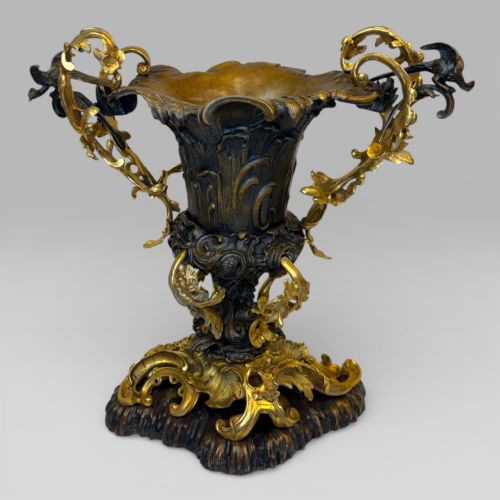
Ornate Bronze Vases
These ornate bronze vases bring nineteenth-century French and Victorian decorative flair to interiors through heavy cast metal and detailed mounting.
Ornate Bronze Vases
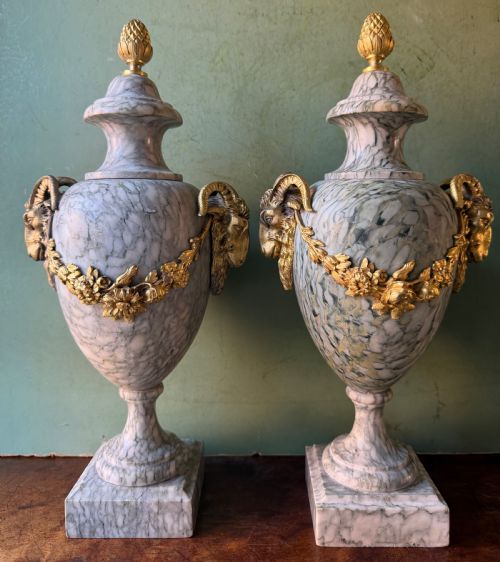
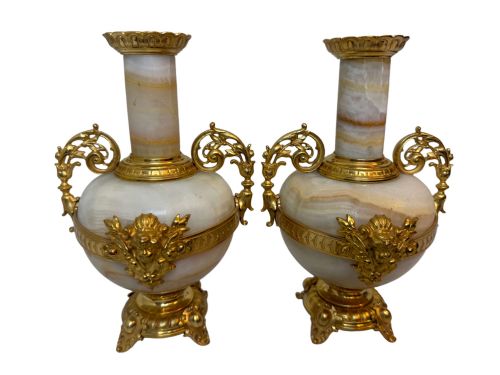
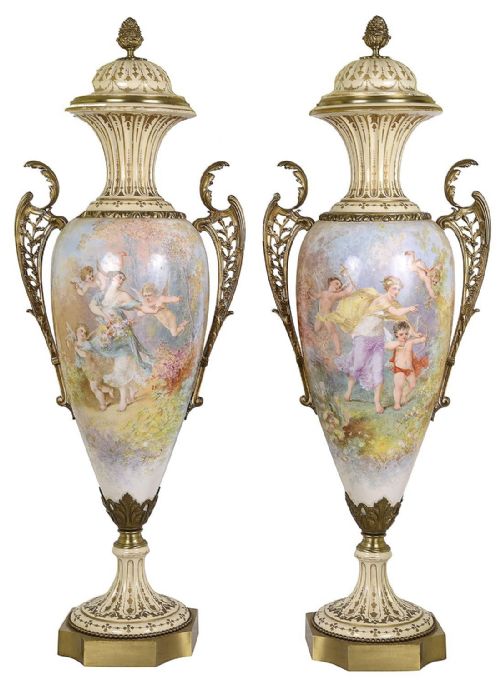
When searching for ornate bronze vases, buyers encounter heavy nineteenth-century metalwork, frequently paired with contrasting materials like marble, onyx, and porcelain. The selection leans heavily toward pairs, often taking the form of ewers, urns, or garniture components designed for prominent display on mantelpieces or console tables.
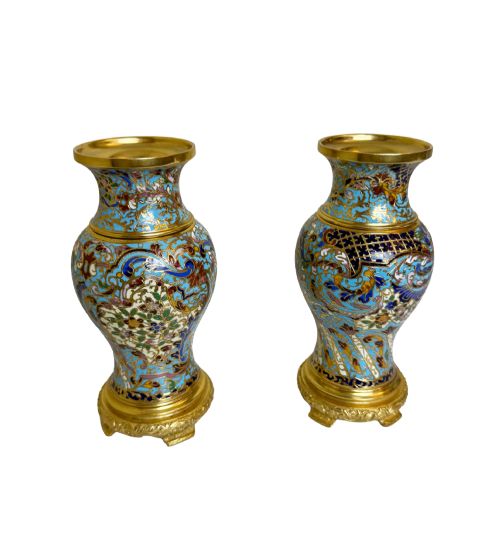
Nineteenth-century French and Victorian Renaissance Revival styles dominate the available forms, reflecting a taste for classical antiquity and elaborate surface ornamentation. Pieces range from straightforward patinated or gilt bronze vessels to complex compositions incorporating crystal, enamel, and champleve or cloisonne techniques.
The objects serve primarily as decorative focal points rather than functional vessels for fresh flowers. Many incorporate figural handles, such as dolphins or mythological figures, alongside classical motifs derived from Louis XVI and neoclassical repertoires.
Materials and construction methods
Foundry work relied on traditional casting methods to produce thick bronze, brass, and ormolu components that could support intricate surface chiselling and fire gilding. Workshops utilised patination to create contrasting dark surfaces alongside bright gilt highlights.
Makers integrated mined minerals and manufactured elements into the metal frames, combining campan vert marble, white onyx, alabaster, and cut crystal with the cast bronze. Enamel work, including champleve and cloisonne, added permanent colour directly onto the metal bodies.
Mounts were mechanically secured with threaded pins and nuts, allowing different media to be assembled into a single decorative unit. Master founders sometimes signed their work on the bronze base, documenting the origin of the casting.
Ornate Bronze Vases Retail Price Guide 2026
Typical asking prices for ornate bronze vases among the pieces listed under this phrase on Sellingantiques today, from the lower quarter to the upper quarter. They describe what is for sale here now, not the wider market.
Several ewers feature spirited Bacchus masks and twisting dolphin handles, proving that nineteenth-century desk and mantel ornaments loved a bit of marine drama.
Assessing quality in metalwork
The choice of secondary materials significantly influences the overall caliber of an object. Highly figured marble bases, heavy crystal bodies, and vibrant, intact enamel work denote higher manufacturing costs and greater ambition from the maker.
Proportion and architectural balance dictate the visual success of mixed-media pieces. A harmonious relationship between the bronze mounts and the central stone or ceramic body indicates thoughtful design rather than hurried assembly.
Barbedienne Paris·Henry Dasson
The Ornate Bronze Vases Glossary
- Ormolu
- Gilded bronze produced by applying a mercury and gold amalgam to a bronze base and heating it until the mercury vaporised. This historic technique produced a durable, deep golden finish.
- Champleve
- An enamelling technique where troughs or cells are hollowed out of the metal surface and filled with vitreous enamel paste before firing. The metal partitions remain visible between the coloured areas.
- Cloisonne
- Enamelling work created by soldering flat metal wires onto a metal base to form compartments, which are then filled with coloured enamel. The piece is fired and polished smooth.
- Ewer
- A large jug with a wide spout and a decorative handle, historically used for water but adapted in the nineteenth century as an ornamental display piece. They are frequently paired with vases in mantel garnitures.
- Garniture
- A set of ornamental objects designed to be displayed together on a mantelpiece or sideboard, typically comprising a central clock flanked by matching vases or candelabra.
Ornate Bronze Vases: Frequently Asked Questions
What are ornate bronze vases made of?
These pieces combine cast bronze, brass, and gilt ormolu with decorative additions such as porcelain, enamel, and hardstones like campan vert marble or white onyx. The variety reflects nineteenth-century manufacturing trends that favoured mixed-media display objects.
Foundries used patination and fire gilding to alter the surface colour of the metal, creating contrast between matte dark areas and bright metallic highlights.
How were ornate bronze vases used originally?
Owners placed these decorative vessels on mantelpieces, console tables, and pedestals as symbols of wealth and sophisticated taste during the Victorian and Napoleon III periods. They frequently formed part of larger matched garniture sets alongside clocks or candelabra.
Because of their delicate enamel work, gilt surfaces, and stone bodies, they served as visual centrepieces rather than functional containers for water.
How do I tell nineteenth-century pieces apart?
Dating relies on stylistic clues, manufacturing techniques, and occasional foundry marks stamped into the bronze. Pieces from the 1860s and 1870s often favour heavy Renaissance Revival forms, while items from the 1880s and 1890s frequently draw on Louis XVI neoclassical revival styles.
The presence of hand-chased details, traditional fire gilding methods, and specific regional aesthetic choices help separate French studio pieces from general Victorian production.
How should I clean bronze vases?
Dusting with a soft, dry microfibre cloth is sufficient for routine maintenance of patinated and gilded surfaces. Avoid commercial metal polishes, abrasive cloths, and liquid cleaners, which can strip the historic gilt or damage fragile enamel and marble elements.
Keeping the objects away from direct sunlight and excessive moisture protects the underlying stone components and prevents the degradation of historic lacquers.