


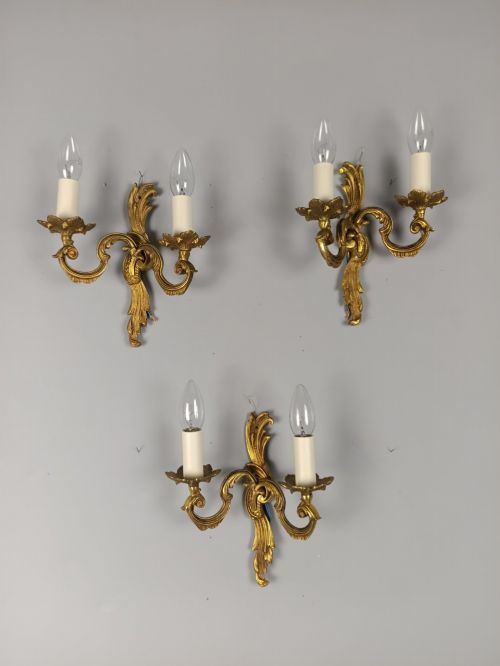


Ornate Brass Wall Appliques
These ornate brass wall appliques bring warmth and period detail to a room, cast in heavy metals and finished in deep gilt tones.
Ornate Brass Wall Appliques
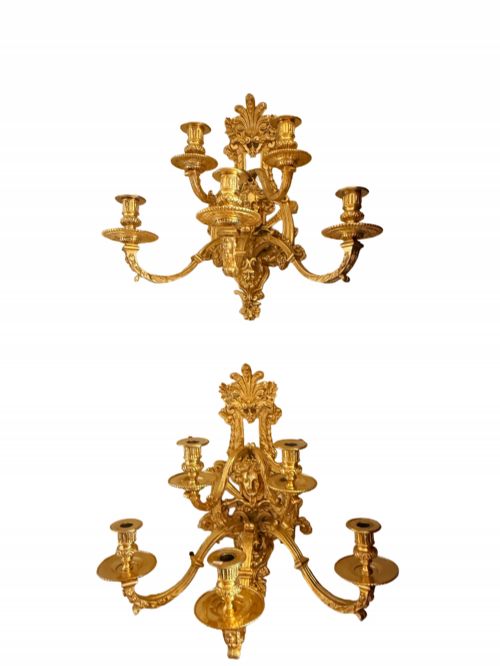
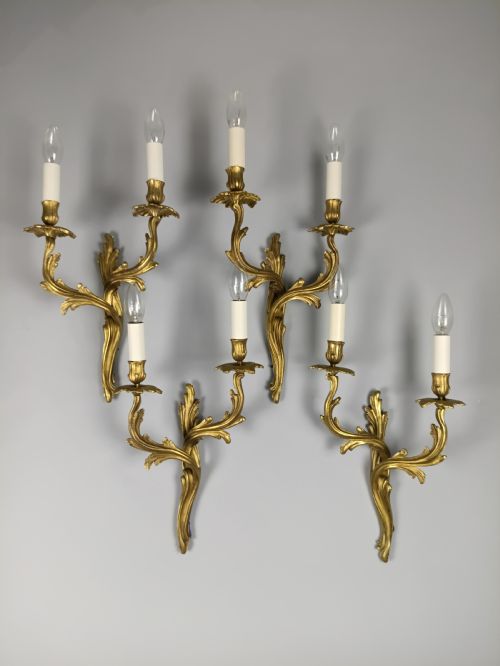
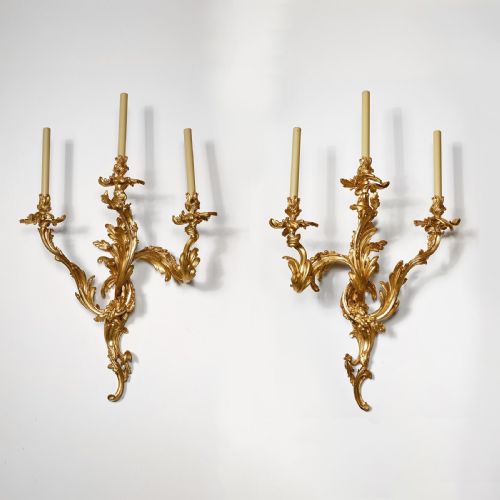
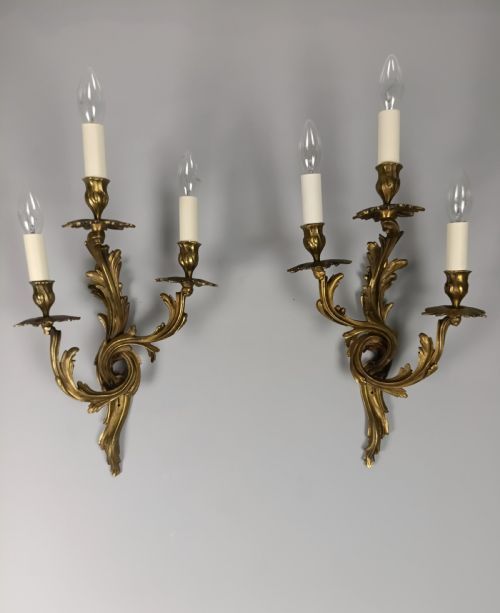
When you search for ornate brass wall appliques, you encounter lighting fixtures designed to mount directly onto vertical surfaces, often shaped as sconces or candelabras. The pieces available here span from the nineteenth century into the early twentieth century, showing strong French design influences.
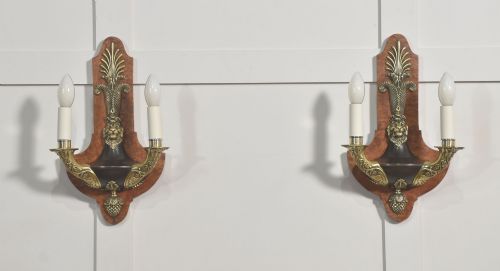
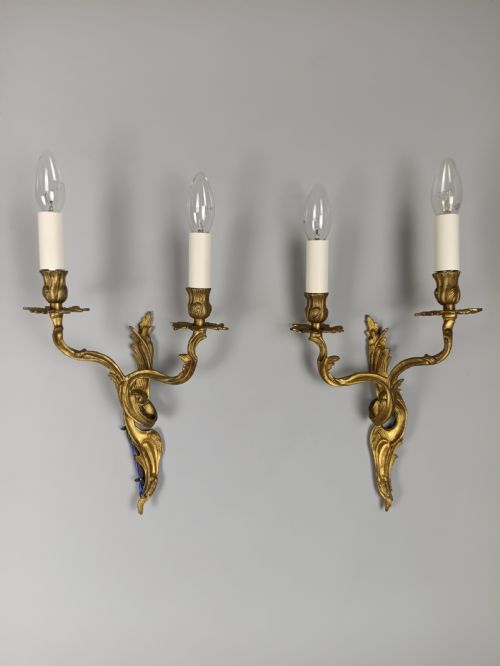
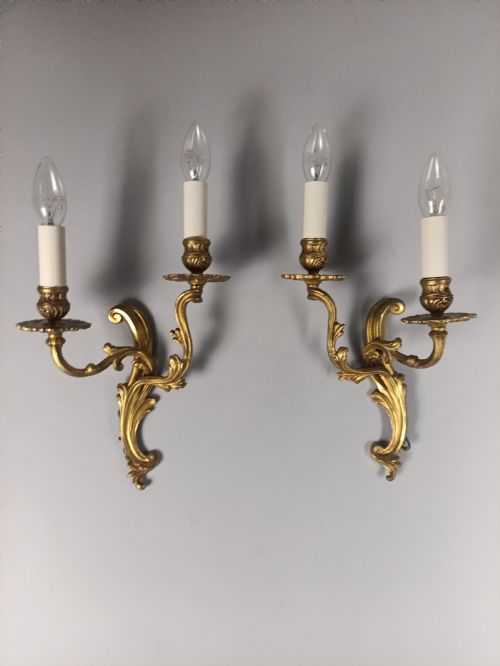
You are most likely to meet pairs or sets of twin-arm and triple-arm lights rather than isolated single fixtures. These items frequently display stylistic revivals such as Rococo, Louis XIV, and Empire patterns.
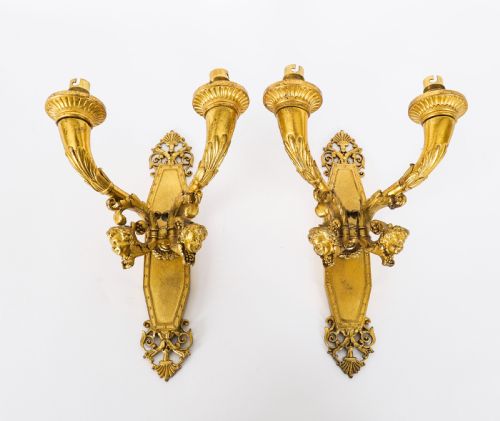
Makers often drew upon classical architectural motifs and natural forms, integrating ribbons, cherubs, and scrolling foliage into the casting. Such pieces served to illuminate grand reception rooms and hallways in period properties.
Materials and construction methods
The construction of these fixtures relies heavily on brass, bronze, and ormolu, with many examples receiving a surface gilding to enhance their reflective quality. Artisans employed sand casting or lost-wax techniques to achieve intricate scrollwork and high-relief ornamentation.
Surfaces were often hand-finished and chased after casting to sharpen details like acanthus leaves and cherub faces. Gilded bronze and ormolu variants show a deeper, more resonant lustre than plain brass surfaces.
Several heavy brass sconces feature watchful cherubs peering out from the scrollwork, ready to guard your hallway against gloom.
Judging the quality of wall appliques
Quality rests upon the crispness of the chased detail and the weight of the cast metal used in the arms and backplate. Superior examples retain deep, sharp relief work where human hands have refined the raw casting after it left the mould.
The depth and application of the gilding or ormolu finish dictate the longevity and visual richness of the fixture. Substantial backplates and robust branch junctions also indicate a higher standard of manufacture compared to lighter, flatter stampings.
The Ornate Brass Wall Appliques Glossary
- Ormolu
- A technique of applying finely ground, high-karat gold to a bronze object using a mercury amalgamation process, or simply denoting gilt bronze. It provides a warm, durable finish that resists tarnishing over decades.
- Sconce
- A wall-mounted lighting fixture designed to carry candles or electric lamps. These objects project outwards to cast light across a room.
- Chasing
- The artful hand-tooling of metal surfaces using small punches and hammers after casting. This process cleans up seams and crispens decorative details.
- Applique
- A decorative fitting applied to a surface, often used interchangeably with wall lights or sconces in period contexts. It describes the ornamental nature of the fixture against the wall.
- Rococo Revival
- A nineteenth-century design movement inspired by the asymmetry and flowing curves of the eighteenth-century French style. It relies heavily on C-scrolls, floral motifs, and shell work.
Ornate Brass Wall Appliques: Frequently Asked Questions
How do I install antique wall lights?
Many of these fixtures have been rewired for modern electrical standards, allowing them to connect directly to standard domestic wall wiring behind the backplate. A qualified electrician should handle the mounting to ensure the heavy brass and bronze frames are safely secured to wall studs.
Because original backplates vary in dimension, checking the fixing points before installation prevents alignment issues with existing wall boxes. Professional fitting protects both the fragile historical metalwork and your home's electrical circuit.
Were these lights originally for candles?
The earlier nineteenth-century examples and many revival pieces were originally manufactured to hold wax candles before being converted for electricity in later decades. Drip pans and stubby nozzles often remain as evidence of this original function.
Later twentieth-century iterations were frequently produced with electrical wiring integrated from the outset. This evolution means modern buyers find a mix of converted antique brassware and purpose-built period electric fittings.
How do I date an antique wall light?
Dating relies on examining the casting techniques, screw types, mounting hardware, and the overarching stylistic movement referenced in the design. Heavy sand castings and hand-chased details typically point toward nineteenth-century production.
Twentieth-century reproductions or later revival pieces often display lighter metal gauges and more uniform machine finishing. Comparing the wiring channels and fixing screws also helps establish the era of manufacture.