
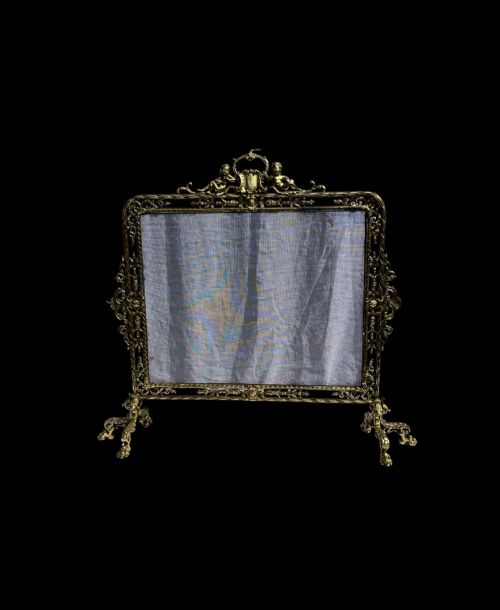
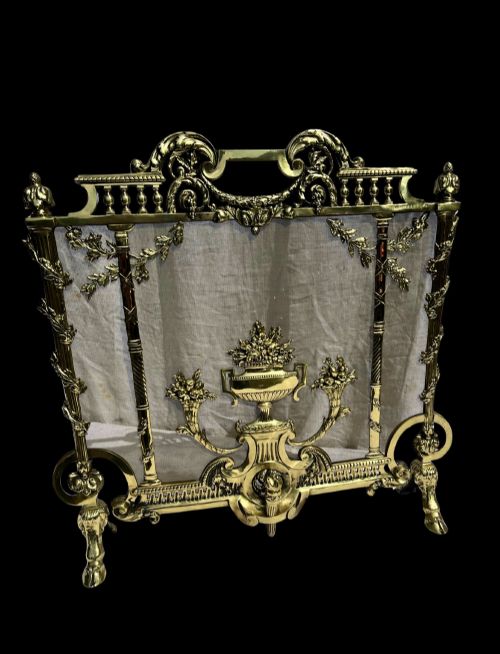
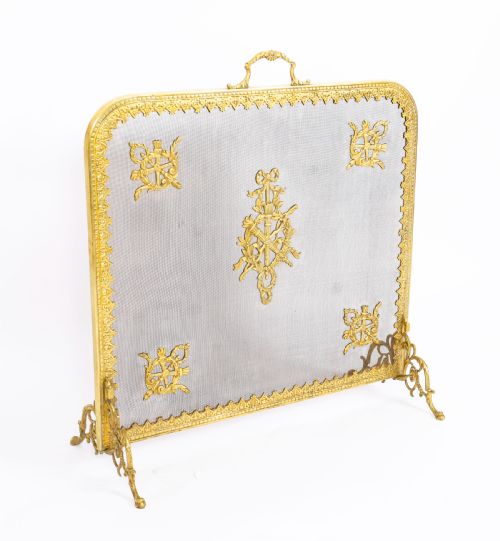
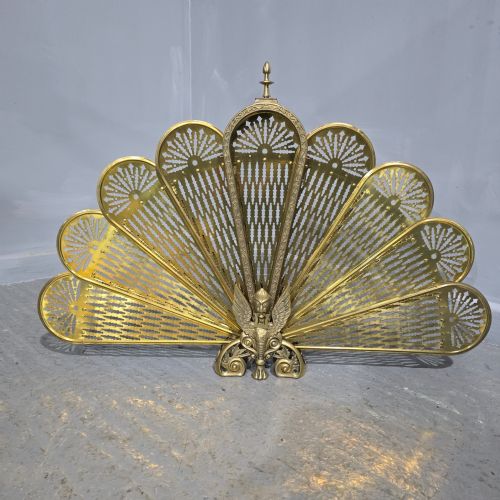


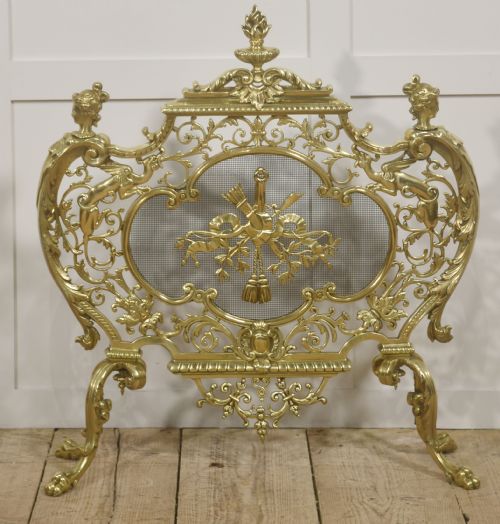

Ornate Brass Spark Guard
An ornate brass spark guard keeps embers in the hearth while bringing French revival elegance and polished warmth to a room.
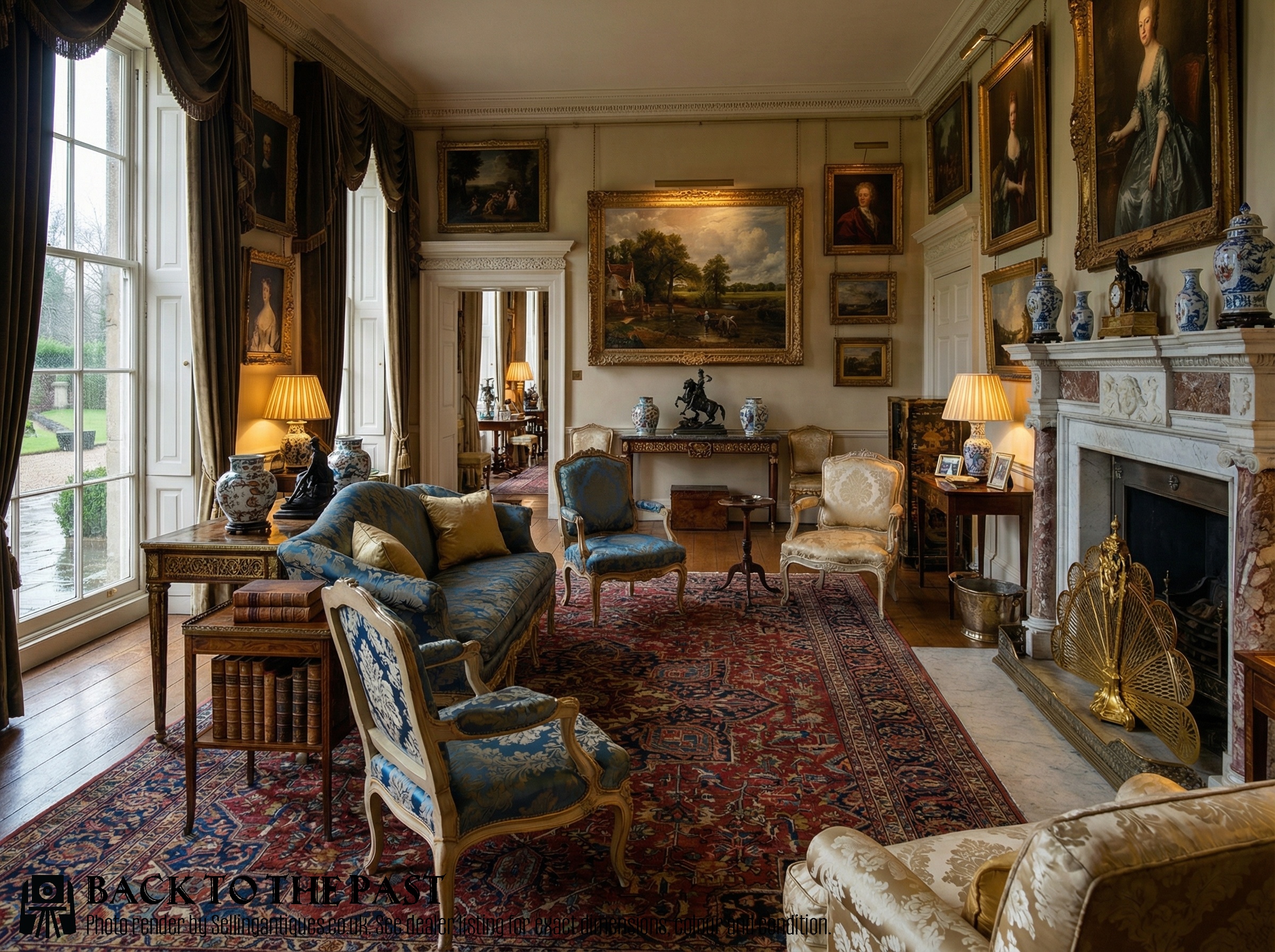
Ornate Brass Spark Guard
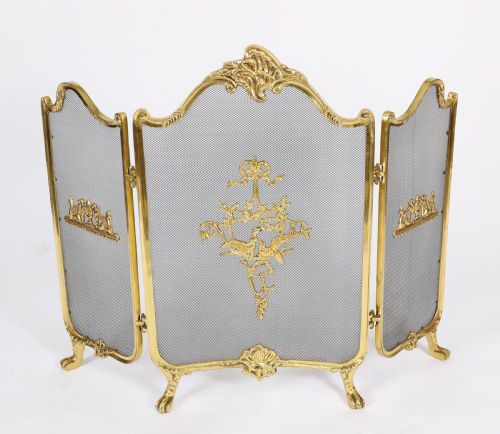
An ornate brass spark guard is primarily encountered as a free-standing fire screen or fireplace guard originating from the nineteenth century. These items were designed to sit before an active grate, protecting the room from stray sparks whilst serving as a decorative focal point during warmer months.
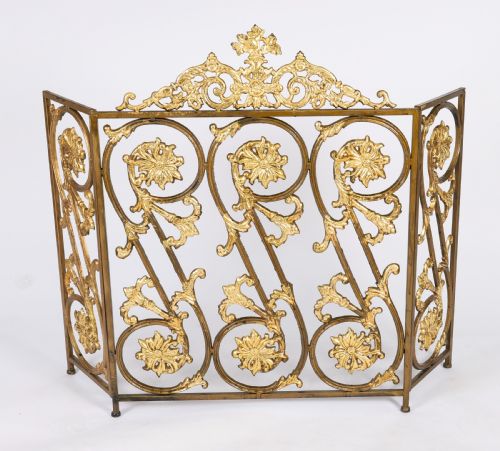
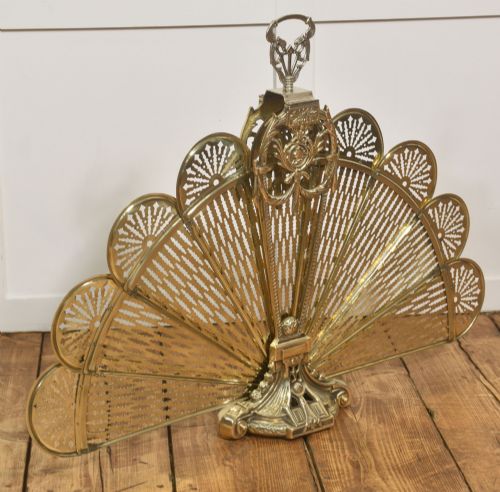
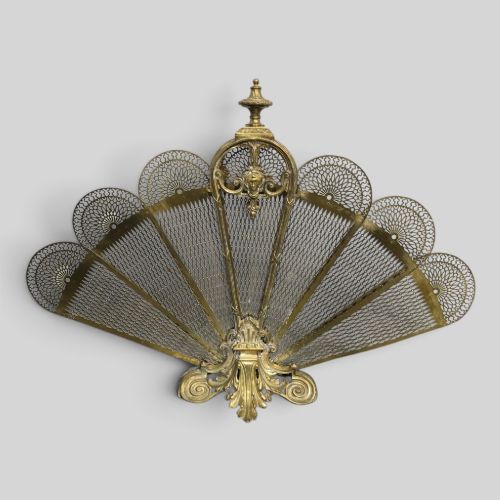
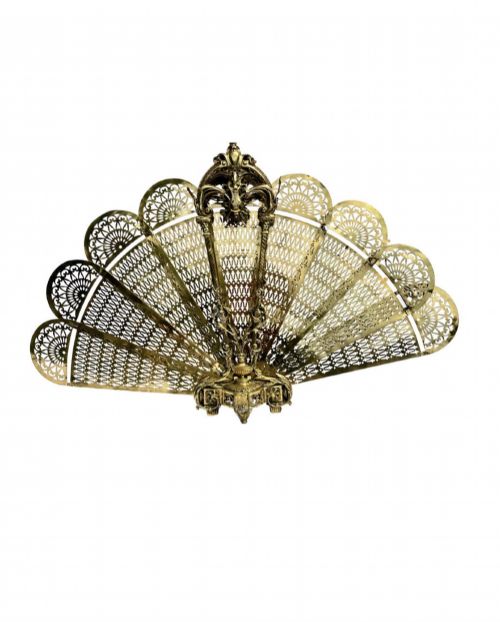
The selections available lean heavily towards French revival aesthetics, including Rococo, Louis XIV, Louis XVI, and Empire styles. Alongside classical frames, folding peacock fan designs appear frequently, offering a characteristic spreading silhouette made from individual metal blades.
How they were made
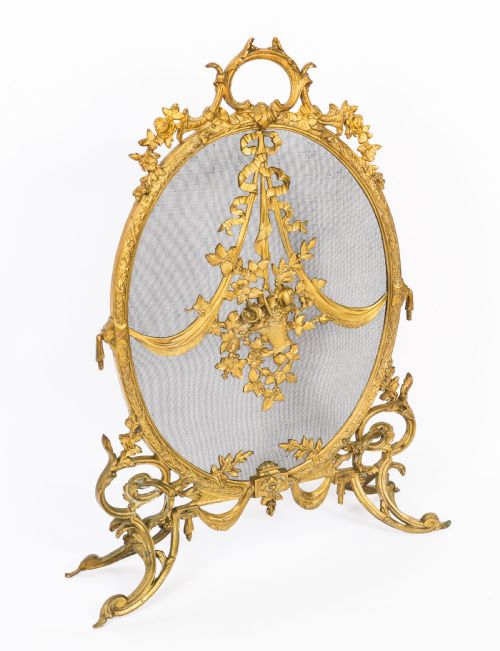
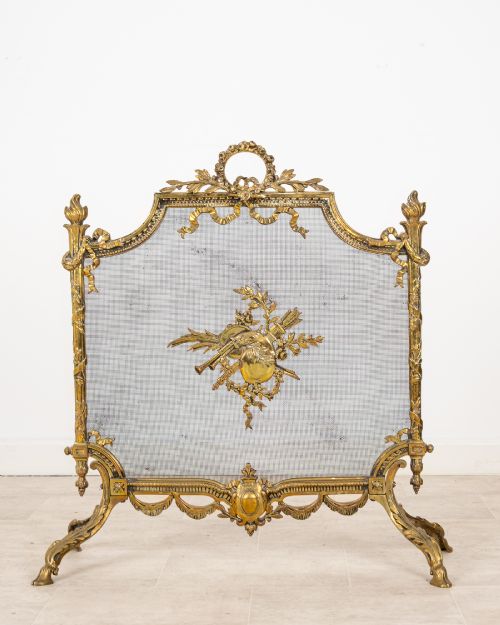
Construction relies upon combinations of cast brass, gilt bronze, and fine wire mesh panels. Makers utilised heavy casting for structural frames and ornate feet, mounting pierced metal or woven wire mesh to contain embers effectively.
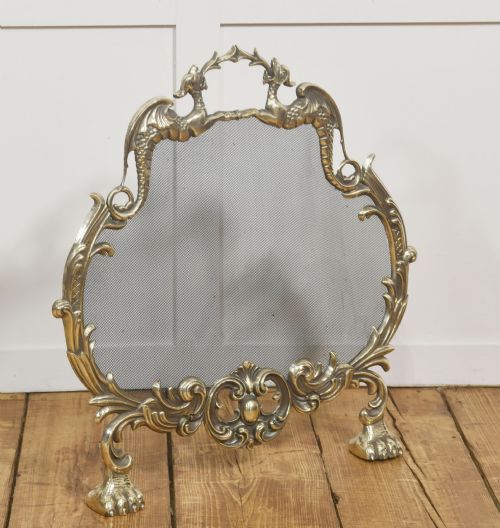
Surface finishing involved mercury gilt, lacquering, or careful polishing to highlight elaborate cast details such as scrolling foliage, dolphins, and classical trophies. Many examples combine solid brass framing with flexible mesh screens or articulating fan blades.
Current listings span the Victorian era and the nineteenth century, featuring materials such as gilt bronze, wire mesh, and cast brass.
What varies in quality
Quality rests upon the crispness of the casting and the depth of the chased detail across the frame. Finer examples display sharply defined Rococo scrolls and figures without the softening blur often found in later or mass-produced castings.
The calibre of the materials also dictates the standing of a piece, distinguishing heavy gilt bronze from lighter brass pressings. Integral stability, robust hinge mechanisms in folding screens, and securely mounted mesh panels separate superior examples from standard hearth accessories.
The Ornate Brass Spark Guard Glossary
- Fire screen
- A decorative barrier placed in front of a fireplace opening when the fire is unlit or to block radiant heat. They are frequently fitted with mesh panels to function as spark guards.
- Gilt bronze
- Metalware coated with a thin layer of gold, providing a rich metallic finish often seen on high-end French nineteenth-century pieces. It is sometimes known by the French term ormolu.
- Wire mesh
- A woven metal fabric fitted into the frame of a screen to allow heat to pass while trapping flying embers. It forms the primary protective barrier of the guard.
- Rococo revival
- A nineteenth-century design movement favouring asymmetrical scrolls, shell motifs, and naturalistic curves reminiscent of the French eighteenth century. It dominates the ornamentation of many surviving brass screens.
- Peacock fan
- A specific screen configuration composed of pivoting metal blades that fold together like a hand fan. When opened, they resemble a peacock tail spread in display.
Ornate Brass Spark Guard: Frequently Asked Questions
How do I use a spark guard safely?
Place the free-standing screen squarely in front of the fireplace opening before lighting a solid fuel fire. Ensure the mesh or solid panels cover the entire hearth aperture to intercept any popping embers.
Keep the base stable on a level hearthstone and allow adequate clearance from open flames to prevent overheating the metal frame.
How do I clean an antique brass screen?
Dust the ornate frame and wire mesh gently with a soft, dry brush or microfibre cloth. Avoid abrasive metal polishes that can strip thin gilt layers or historical patination from the brass.
If the metal requires deeper cleaning, use a mild soapy solution on a damp cloth and dry thoroughly immediately afterwards.
What is the difference between a fire screen and a spark guard?
A fire screen historically served to shield people from the intense radiant heat of an open fire. Many nineteenth-century examples incorporate wire mesh specifically to function as a spark guard.
While some decorative screens used solid panels or embroidery, brass versions almost universally doubled as functional spark barriers.
How do I date a nineteenth-century brass screen?
Examine the casting quality, joining techniques, and stylistic revival cues such as Louis XIV or Rococo motifs. Heavy cast bronze frames and hand-woven mesh often point towards mid-nineteenth-century French manufacture.
Victorian pieces frequently display stamped brass components and simpler mechanical joints compared to earlier bespoke examples.