



Ornate Brass Candle Holders
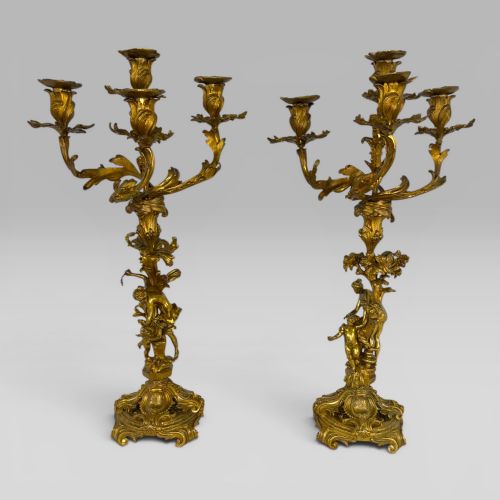
These ornate brass candle holders bring together heavy cast metal, gilded surfaces, and nineteenth-century domestic illumination.
Ornate Brass Candle Holders
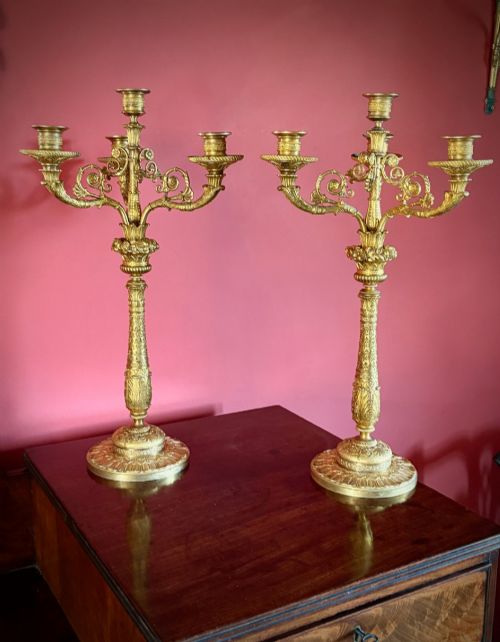
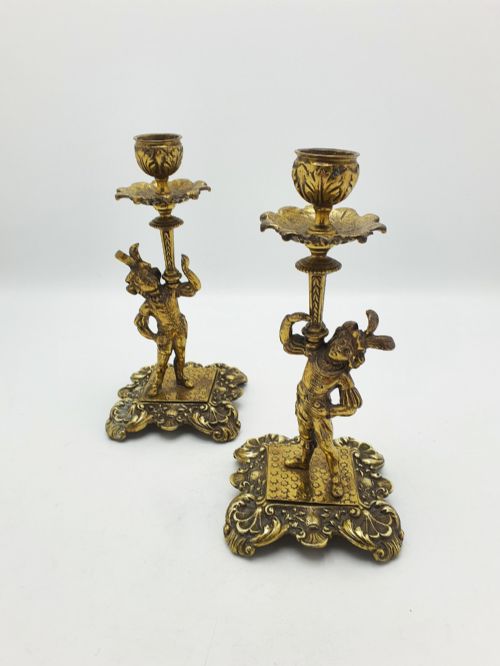
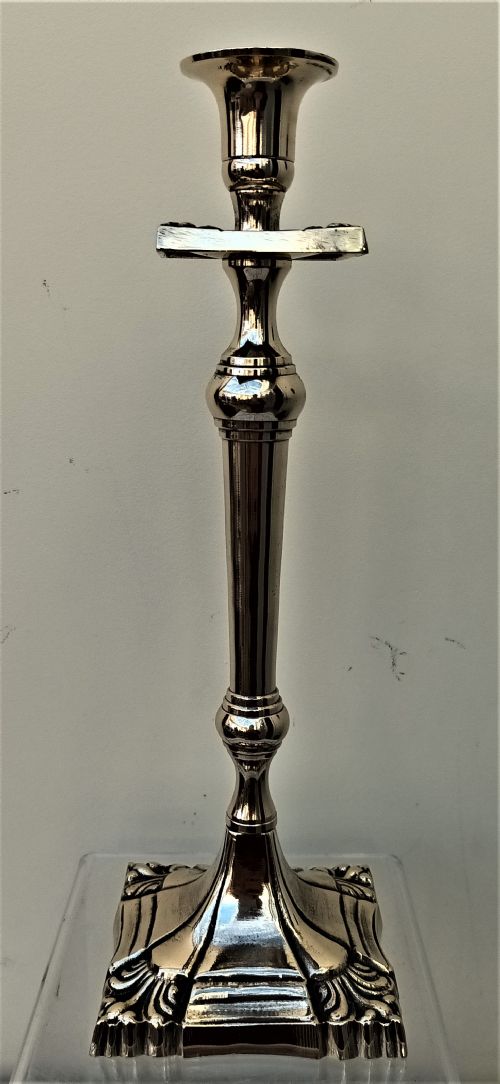
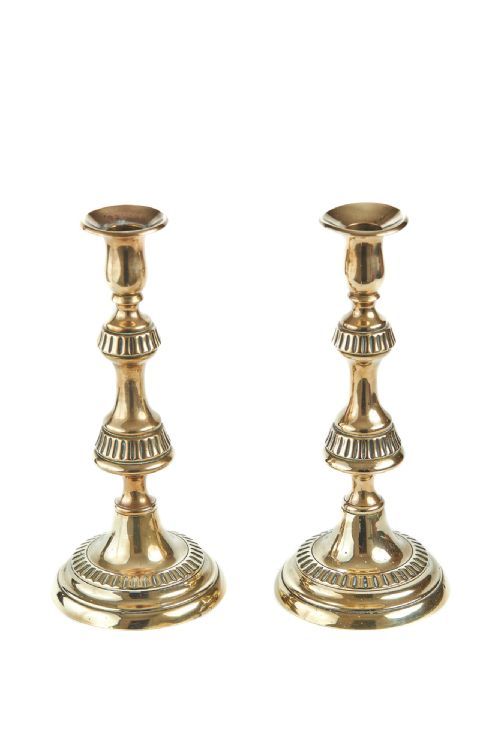
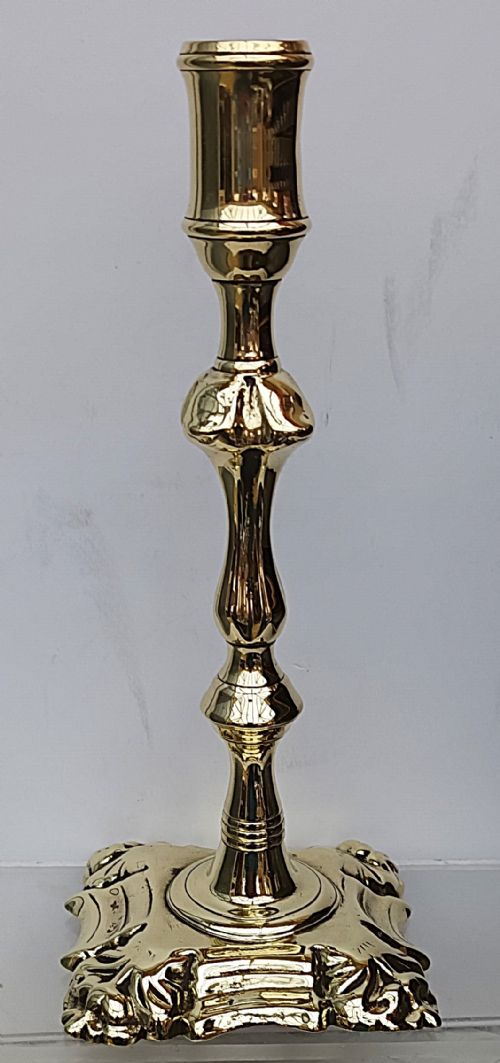
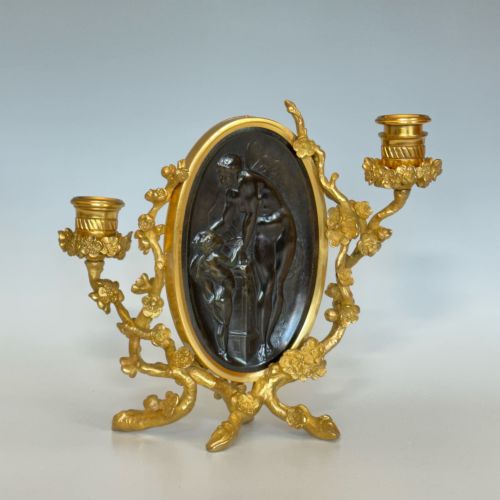
Ornate brass candle holders encompass multi-branch candelabra, single-light sticks, and figural chambersticks spanning the Regency and Victorian periods. Buyers encounter heavy pairs cast in brass, ormolu, and gilt bronze, often showing French Rococo, Empire, or Neoclassical revival influences.
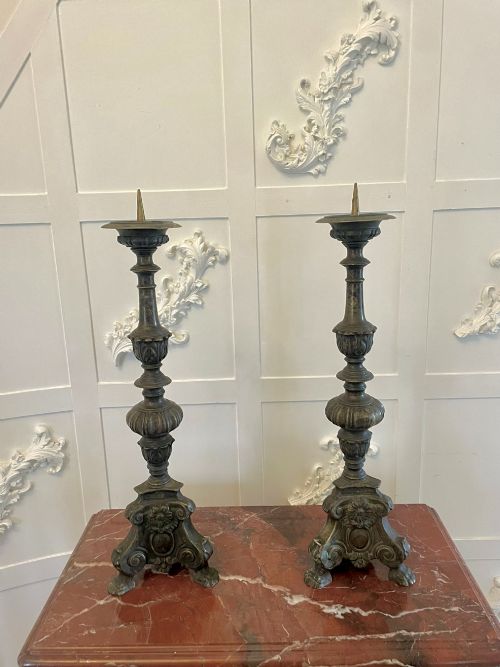
The nineteenth-century examples dominate the selection, ranging from tall ceremonial prickets to wall-mounted girondelle mirrors fitted with sconces. Domestic lighting from this era prioritised sculptural weight and decorative cast detail over simple utility.
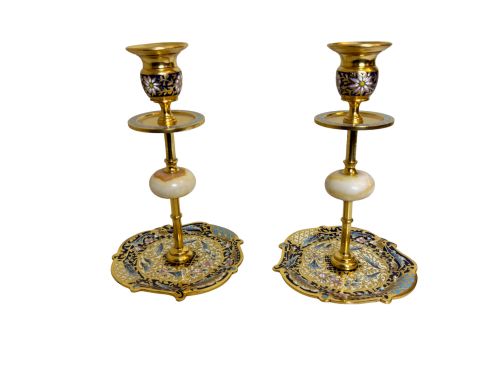
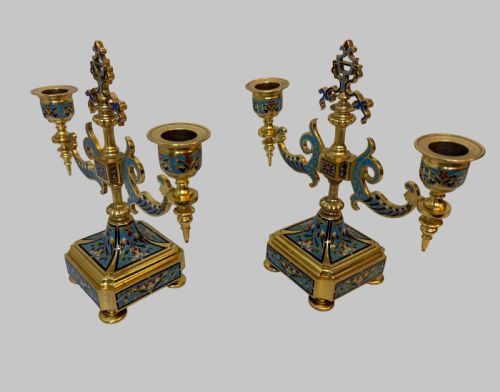
Makers and workshops across England and France produced these pieces using durable copper-alloy foundations, frequently integrating secondary materials like marble or champleve enamel to heighten the visual impact.
How they were made
Foundry workers utilised sand-casting and lost-wax methods to form the brass, bronze, and ormolu components in distinct sections before assembling them with threaded rods. This multi-part construction allowed workshops to combine chased foliage, figural mounts, and structural shafts into solid arrangements.
Surface finishing involved mercury gilding for ormolu, hand-chasing of cast details to sharpen acanthus leaves and drapery, and occasionally lacquering the polished brass to preserve the metallic sheen.
Ornate Brass Candle Holders Retail Price Guide 2026
Typical asking prices for ornate brass candle holders among the pieces listed under this phrase on Sellingantiques today, from the lower quarter to the upper quarter. They describe what is for sale here now, not the wider market.
Materials across the inventory include brass, gilt bronze, ormolu, glass, marble, and champleve enamel.
What varies in quality
The crispness of the chased detail distinguishes standard production from superior workshop output, where artisans manually refined the cast surfaces to define every feather, leaf, and facial feature. Heavier gauge metal and secure multi-part joints indicate better structural integrity.
The integration of secondary elements such as onyx bases, marble plinths, and champleve enamel panels separates basic domestic items from high-status decorative objects designed for formal reception rooms.
The Ornate Brass Candle Holders Glossary
- Ormolu
- Gilded bronze produced by applying a mercury-gold amalgam to a cast bronze object and heating it to drive off the mercury. This technique creates a rich, matte yellow-gold finish typical of French decorative pieces.
- Pricket
- A sharp metal spike set in the centre of a drip pan to secure a heavy wax taper directly. These were common in ecclesiastical settings and large nineteenth-century dining rooms.
- Champleve
- An enamelling technique where troughs or cells are hollowed out of the metal surface and filled with vitreous paste before firing. The coloured glass paste creates vibrant geometric or floral patterns.
- Girondelle
- A wall-mounted mirror with attached candle sconces designed to reflect and multiply the flickering light of candles within a room. They gained popularity during the Regency and Victorian eras.
- Candelabra
- A branched lighting fixture holding multiple candles across separate arms extending from a central stem. They range from small tabletop versions to massive multi-light floor stands.
Ornate Brass Candle Holders: Frequently Asked Questions
What periods do these candle holders represent?
The selections span the Regency and Victorian eras, with the majority originating in the nineteenth century. Makers drew heavily on French Rococo, Empire, and Neoclassical revival styles.
English brasswork runs alongside French gilt bronze and ormolu pieces, reflecting the international tastes of nineteenth-century interior decoration.
How were multi-arm candelabra constructed?
Workshops cast the individual arms, bobeches, and central shafts separately using sand-casting or bronze-founding techniques. Artisans then threaded and bolted these components together around a central internal rod.
This modular approach allowed manufacturers to create complex forms like three, four, or six-branch lighting fixtures with secure joints.
What is the difference between brass and ormolu?
Brass is a copper and zinc alloy cast into utilitarian or decorative objects, while ormolu specifically denotes high-purity cast bronze that has received a mercury-gilding treatment. Ormolu displays a distinct golden surface layer that does not tarnish in the manner of bare brass.
Nineteenth-century makers often reserved ormolu for luxury salon pieces while using cast brass for standard domestic lighting.
How do I care for antique brass and bronze?
Dust the surfaces gently with a soft, dry cloth to prevent grime accumulation in the chased recesses of the cast ornament. Avoid harsh commercial cleaning agents or abrasive polishes that strip original patination and thin gilding layers.
Maintaining a stable indoor humidity prevents active corrosion on exposed copper alloys and protects embedded elements like marble or enamel.