






Ornate Accent Lamp
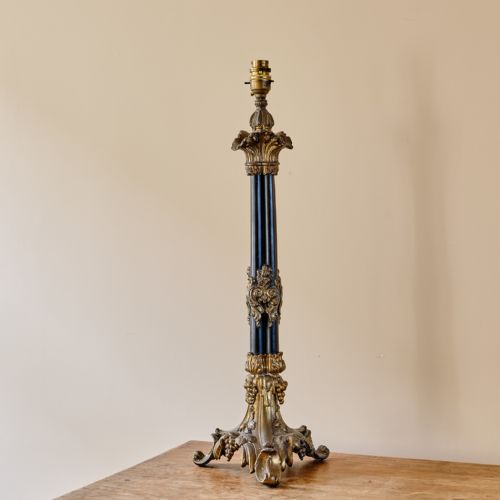
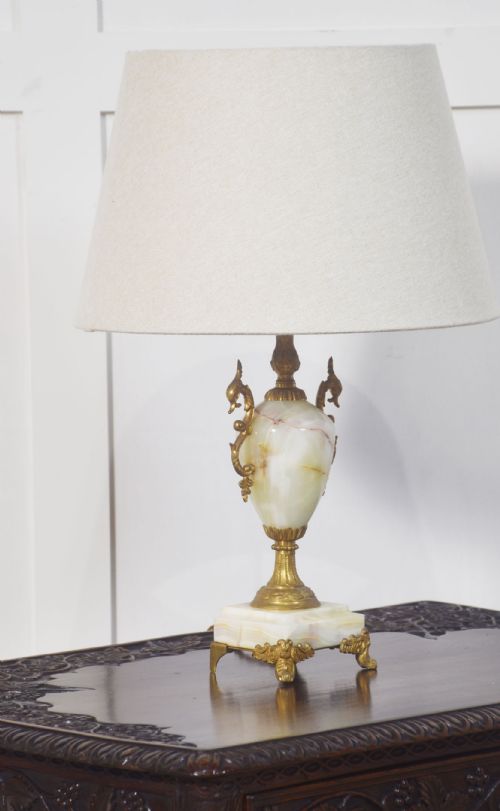
An ornate accent lamp brings heavy brass, veined marble, and rich gilding together to light a room with distinct period character.
Ornate Accent Lamp
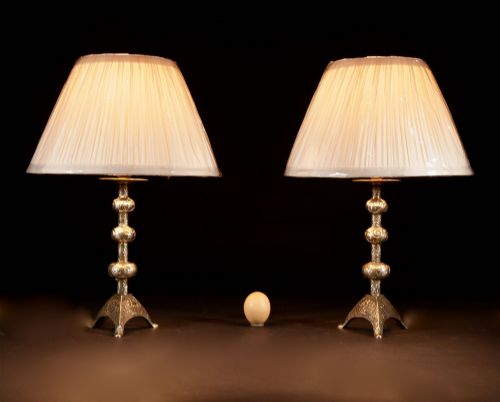
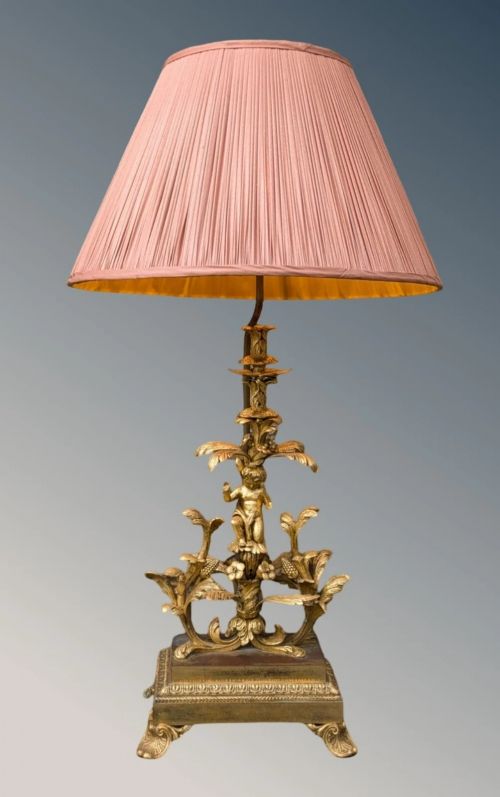
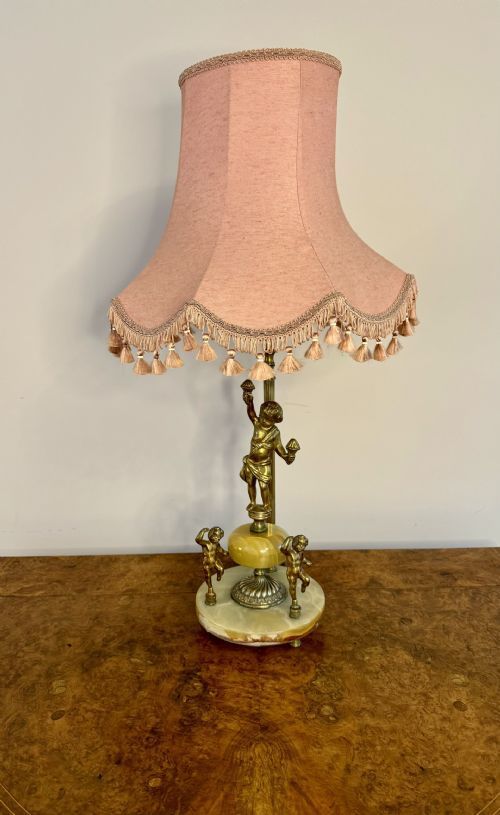
When you search for an ornate accent lamp, you encounter heavily decorated table lighting drawing on nineteenth-century and early twentieth-century design traditions. The most common examples on this page combine cast metals with stone bases or carved wooden frames.
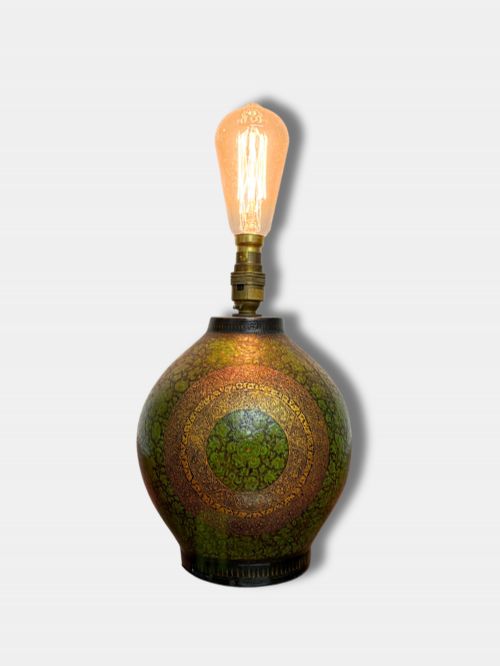
Makers drew inspiration from French Rococo, Romanesque, and Anglo-Indian styles, creating substantial pieces meant to draw the eye on side tables and pedestals. These lamps range from compact boudoir lights to large sculptural forms executed in bronze or brass.
Victorian and Edwardian versions dominate the selection, often incorporating intricate metalwork, repoussé details, and painted finishes. Alongside dedicated lighting, the listings include occasional tables that served similar decorative functions in period interiors.
Materials and construction
Foundry workers cast brass and bronze using traditional methods, frequently applying fire gilding, gold leaf, or paint to achieve a lustrous surface finish. Marble and onyx served as heavy, stable foundations for tall stems and elaborate metal mounts.
Woodworkers carved giltwood and mahogany for associated side tables and lamp bases, utilising intricate relief work and gilding. Metal components were often assembled with threaded rods, securing heavy stone bases beneath decorative collars.
Ornate Accent Lamp Retail Price Guide 2026
Typical asking prices for ornate accent lamp among the pieces listed under this phrase on Sellingantiques today, from the lower quarter to the upper quarter. They describe what is for sale here now, not the wider market.
Listings feature items spanning the eighteenth century through the Edwardian period, constructed from brass, marble, onyx, and giltwood.
Evaluating the standard
Quality rests in the crispness of the casting and the depth of the hand-chasing on metal components. Lesser pieces rely on simple stamped parts, while superior examples exhibit finely articulated relief work and substantial weight.
The choice of materials dictates the upper tier of the range, seen in genuine marbles, heavy bronzes, and genuine gold leaf rather than modern substitutes or surface paints. Structural integrity in the joints and mounts separates well-preserved examples from those with loose or compromised assemblies.
The Ornate Accent Lamp Glossary
- Repoussé
- Metalworking technique where the artisan hammers the design from the reverse side to form a raised relief on the front. This method creates textured patterns across brass lamp bodies.
- Gilt bronze
- Copper alloy coated with a thin layer of gold, providing a durable and radiant finish that resists tarnishing. It appears frequently on French lighting from the nineteenth century.
- Onyx
- Translucent banded stone utilised for decorative lamp bases and architectural columns. Its natural variations give each piece a distinct visual weight.
- Rococo Revival
- Nineteenth-century design movement favouring asymmetrical scrolls, floral motifs, and shell ornaments. This style heavily influenced the curves of ornate lamp bases.
- Romanesque Revival
- Architectural and decorative style emulating medieval rounded arches and heavy stonework. Lamps in this manner display sturdy, robust proportions and formal motifs.
Ornate Accent Lamp: Frequently Asked Questions
What periods do these lamps come from?
The pieces span the eighteenth, nineteenth, and early twentieth centuries, with a strong concentration of Victorian and Edwardian examples.
Maker styles include French Rococo Revival, Romanesque, and Anglo-Indian designs that reflect the historicism popular during those eras.
How are marble and onyx used in these lamps?
Stone serves primarily as a heavy, stable base or central column for metal light fittings. The dense weight keeps tall or top-heavy designs secure on side tables.
Natural veining in the marble and onyx adds colour variation and contrast against the gilt metal mounts.
Can I use modern bulbs in these lamps?
Most period lamps accept standard modern bulbs once the internal wiring has been updated to meet contemporary safety standards. You should consult a qualified electrician to check the lamp holder.
Retaining the original switch or collar is common, but modern flex and plugs ensure safe daily use.
How do I clean gilt metal safely?
Dust surfaces gently with a soft, dry cloth to prevent scratching the delicate gold leaf or gilt finish. Avoid chemical polishes that strip away historical patination and thin gold layers.
For stubborn grime, a slightly damp cloth with mild soap works best, followed immediately by thorough drying.