





Ornamental Brass Lighting
Ornamental brass lighting brings functional warmth and decorative presence into a room, spanning nineteenth-century classical columns to early twentieth-century French chandeliers.
Ornamental Brass Lighting
When you search for ornamental brass lighting, you enter a field populated by table lamps, chandeliers, candlesticks, and wall sconces produced across the nineteenth and early twentieth centuries. These pieces combine structural metalwork with decorative motifs drawn from neoclassical, Victorian, Edwardian, and Art Nouveau repertoires, serving both illumination and interior adornment.
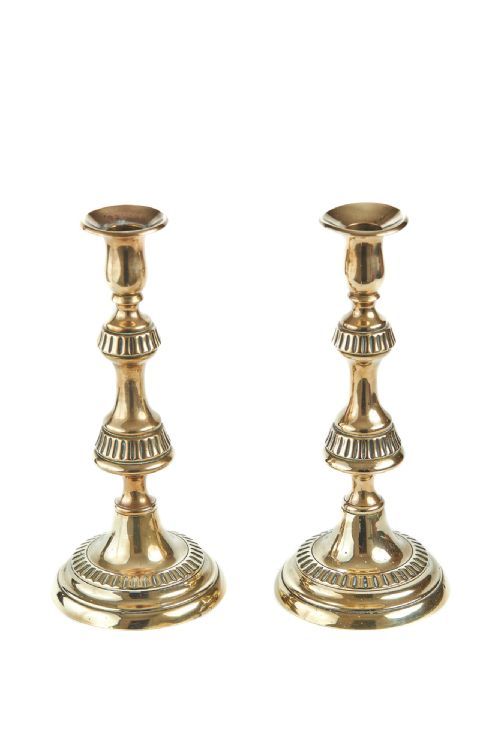
You are most likely to encounter matched pairs of candlesticks alongside single or multi-light table lamps fashioned from brass, gilt bronze, and patinated metal. Many examples incorporate secondary materials such as glass, marble, onyx, or ceramic components to enrich their profiles and add textural contrast.
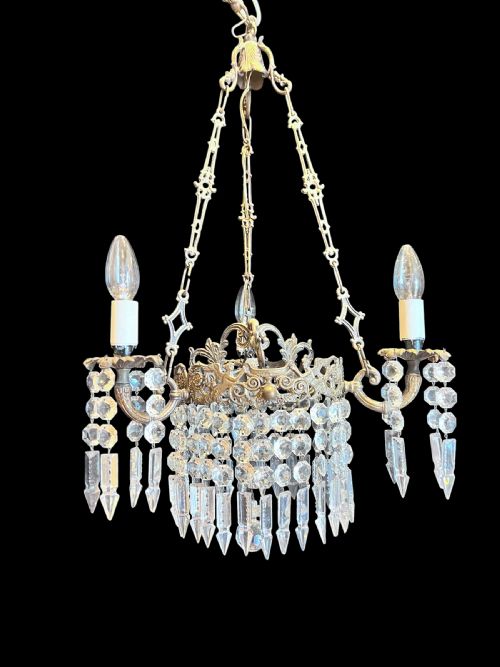
The selection ranges from restrained columnar desk lamps to exuberant French rococo revival and Napoleon III wall lights set with crystal drops. Whether wired for electricity or preserved in their original format, these objects reflect the prevailing aesthetic tastes of their respective periods.
What Varies in Quality
Quality rests upon the crispness of the casting and the depth of hand-finishing applied to the metal surfaces. Superior pieces display sharply defined ornamentation without surface porosity, whereas lesser examples show softer, blurred contours from worn moulds.
The integrity of the construction distinguishes finer lighting, evident in heavy gauge brass, secure joints, and well-balanced proportions. The integration of high-grade secondary materials like genuine onyx, marble, or crystal further separates standard production items from exceptional works.
Listings feature brass lighting spanning the nineteenth century through the 1930s, incorporating glass, marble, onyx, and fabric elements.
Liberty
The Ornamental Brass Lighting Glossary
- Ormolu
- Gilded bronze, where a layer of gold amalgam is applied to a bronze base through heat processing. This technique imparts a durable, rich metallic lustre characteristic of fine French and English decorative objects.
- Candelabra
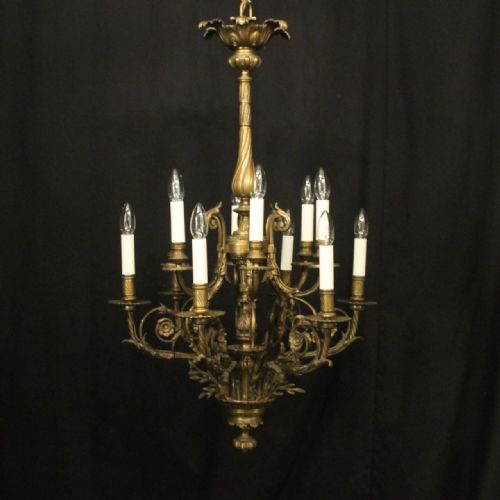
- A branched candlestick designed to hold multiple tapers simultaneously. These fixtures often feature central stems with removable or fixed arms.
- Sconce
- A wall-mounted lighting fixture designed to hold candles or electric bulbs. They frequently incorporate reflective backplates to amplify the spread of illumination.
- Patination
- The surface alteration acquired by metal through age, handling, or deliberate chemical treatment. It creates tonal variations that reveal the history of the object.
- Napoleon III Style
- A nineteenth-century French aesthetic combining eclectic historical revivals with lavish ornamentation. It favors rich materials, symmetry, and theatrical display.
Ornamental Brass Lighting: Frequently Asked Questions
Are these lamps wired for modern use?
Many pieces arrive with modern electrical wiring installed, whilst others retain their original historical fittings or candle holders.
Buyers planning to use them should consult a qualified electrician to ensure compatibility with current safety standards.
How do I identify a French piece?
French lighting often displays distinct stylistic traits such as rococo scrolls, gilt bronze mounts, or Napoleon III proportions. Maker marks stamped onto the base or bronze components can also point to Parisian workshops.
English or other European pieces tend to favor cleaner classical column designs or straightforward Victorian brass work.
What is the difference between brass and gilt bronze?
Brass is a copper and zinc alloy with a warm, golden hue that can be polished or patinated to various depths. Gilt bronze, or ormolu, utilises a bronze substrate coated in a fine layer of gold.
Gilt bronze generally offers a heavier weight and a deeper, more lustrous golden finish than standard brass.
How should I clean antique brass?
Dusting with a soft, dry cloth is usually sufficient for regular maintenance, preserving the accumulated patination of the metal. Aggressive metal polishes should be avoided, as they can strip away historic surface finishes and patinas.
If cleaning is necessary, use a mild, non-abrasive solution recommended for antique metals.