

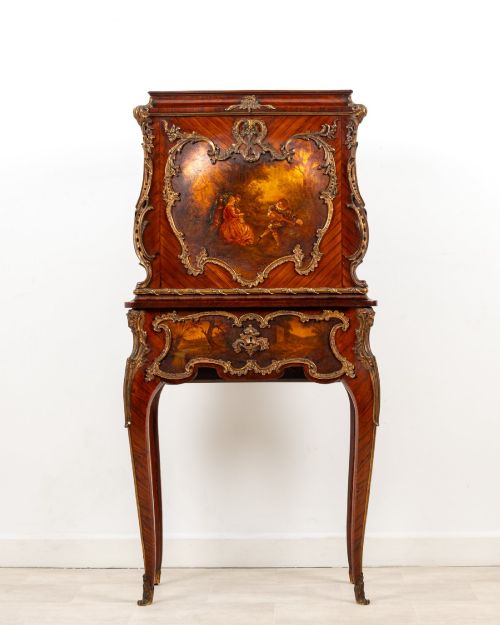


Ormolu Writing Stand
An ormolu writing stand brings gilt metalwork and polished stone to a desk, offering a functional piece of period interior design.
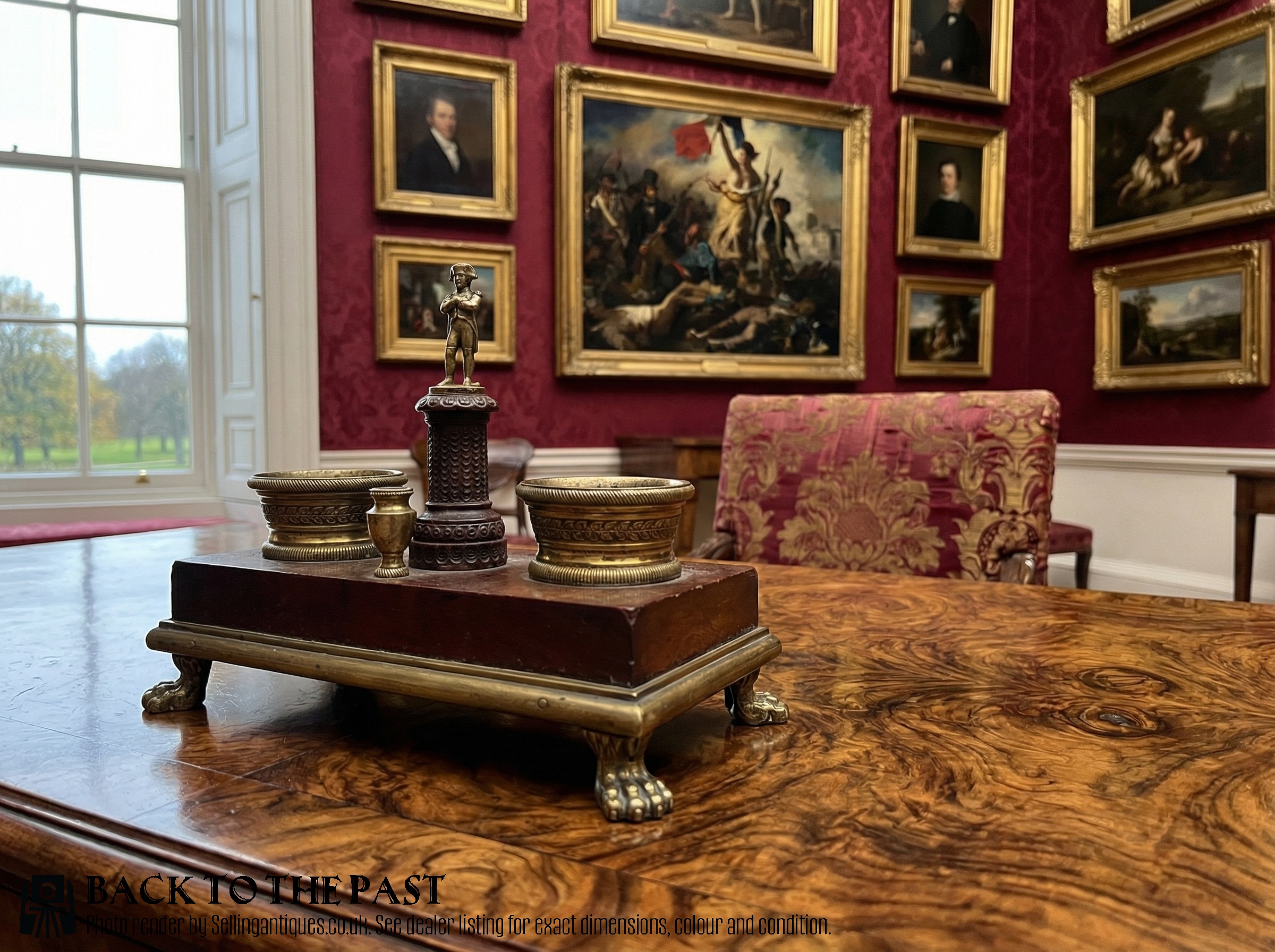
Ormolu Writing Stand
An ormolu writing stand combines gilt bronze mounts with materials like marble, glass, and mahogany to hold inkwells and writing implements. These desk accessories appear in French Empire, Louis XV Revival, and Victorian styles.
The pieces on this page span the eighteenth, nineteenth, and early twentieth centuries, encompassing forms from simple inkstands to fitted writing cabinets and lecterns.
How they were made
Maker's workshops cast bronze or brass before applying a distinct gilt finish known as ormolu, pairing the bright metal with turned glass containers and fitted stone bases. Cabinetmakers built wooden elements from mahogany, kingwood, and coromandel, often mounting the timber directly with cast bronze details.
Marble and onyx sections provide heavy foundations for inkwells and candlestands, requiring precise stonemasonry to fit the metal collars and mounts securely.
Ormolu Writing Stand Retail Price Guide 2026
Typical asking prices for ormolu writing stand among the pieces listed under this phrase on Sellingantiques today, from the lower quarter to the upper quarter. They describe what is for sale here now, not the wider market.
Listings feature materials including ormolu, gilt bronze, marble, glass, brass, kingwood, mahogany, coromandel-wood, and onyx.
What varies in quality
The crispness of the bronze casting and the depth of the gilding set finer examples apart from simpler production pieces. Heavier stone bases and denser cabinet woods like kingwood indicate a higher grade of manufacture.
Design complexity also marks the range, moving from plain brass-mounted trays to elaborate architectural inkstands featuring busts, hinged lids, and integrated ormolu candlestands.
Albert Marionnet
The Ormolu Writing Stand Glossary
- Ormolu
- A gilded bronze finish applied to decorative metal mounts. It creates a bright, golden decorative surface on desk accessories.
- Inkstand
- A desk tray or stand holding one or more inkwells, sanders, and penholders. These pieces formed the central writing equipment on nineteenth-century desks.
- Kingwood
- A dense, richly figured exotic timber used in fine cabinetmaking. It often appears on nineteenth-century French writing furniture.
- Vernis Martin
- A type of simulated Japanese lacquer developed in France. It decorates the panels of eighteenth and nineteenth-century cabinet furniture.
Ormolu Writing Stand: Frequently Asked Questions
What is an ormolu writing stand?
An ormolu writing stand is a desk accessory featuring gilded bronze mounts combined with materials like marble, glass, or mahogany.
These pieces typically hold inkwells, pens, or candles, serving both a decorative and practical function on a writing desk.
How do I date a writing stand?
Dating relies on identifying the prevailing design style, such as French Empire, Louis XV Revival, or Art Nouveau, alongside the primary materials used.
Nineteenth-century examples frequently combine ormolu with onyx, marble, or exotic woods like kingwood and coromandel.
Where were these pieces made?
Many of these desk stands originate from French workshops, particularly from nineteenth-century Paris.
English Victorian makers also produced similar pieces incorporating local timbers and imported gilt bronze mounts.
How do I clean ormolu?
Ormolu requires gentle dusting with a soft cloth to protect the delicate gilt bronze surface from abrasion.
Harsh chemical polishes must be avoided entirely, as they strip away the historic gilding.