


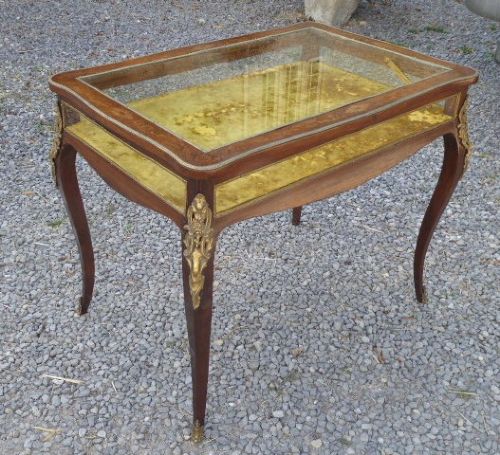
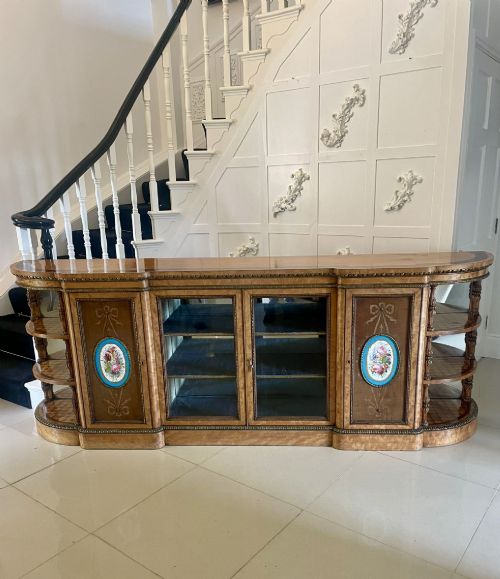
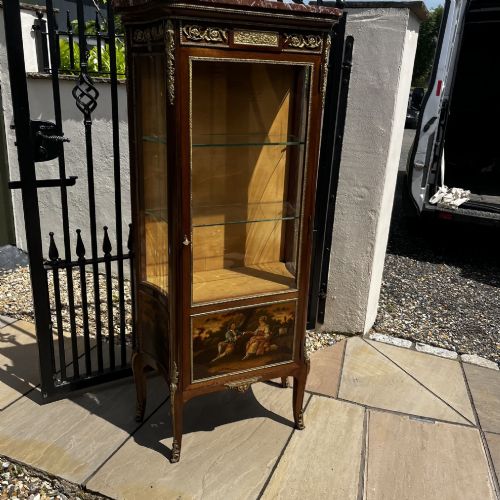
Ormolu Vitrine
An ormolu vitrine brings French revival elegance into a room, offering glazed display space framed in gilt bronze mounts and fine timbers.
Ormolu Vitrine
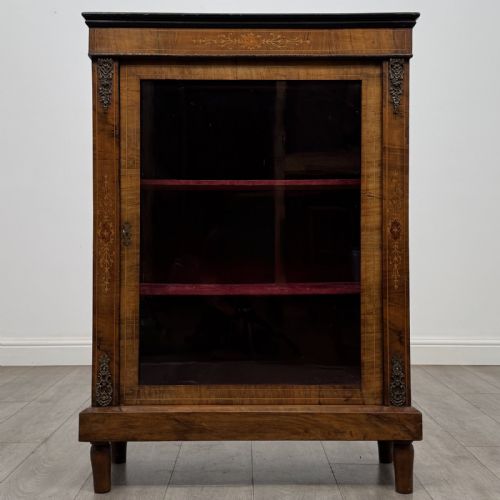
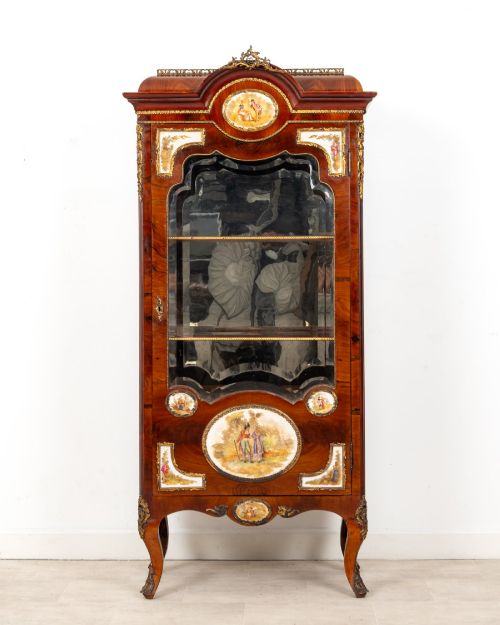
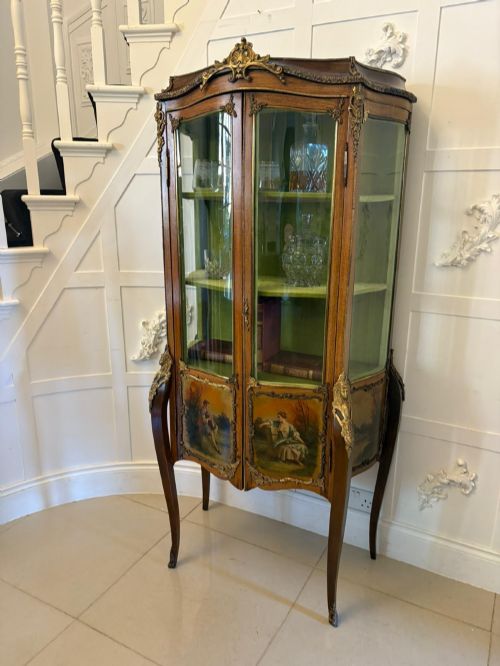
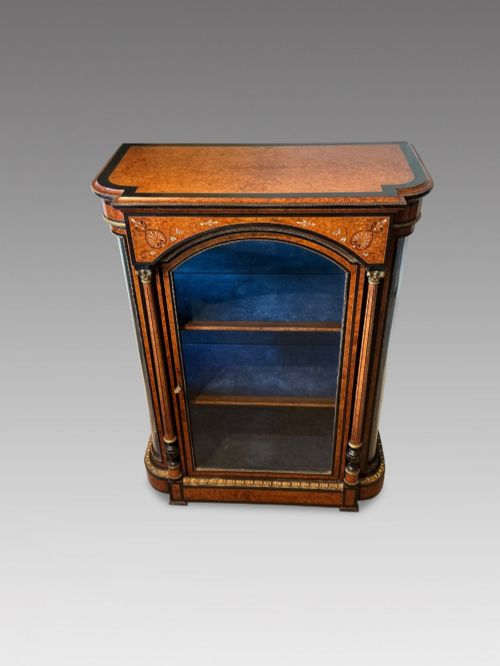
When you search for an ormolu vitrine, you encounter French and Victorian display cabinets built to showcase porcelain, bijouterie and curiosities behind glass panels. The most common examples on this page date from the nineteenth century, spanning periods from eighteen fifty to nineteen hundred, and adhere to Louis XV and Louis XVI revival styles.
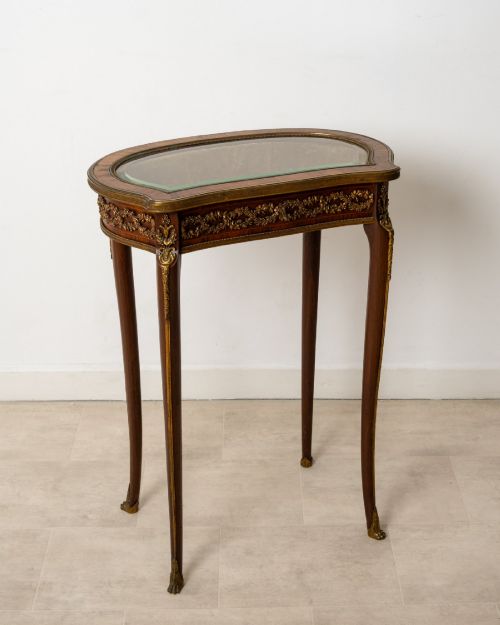
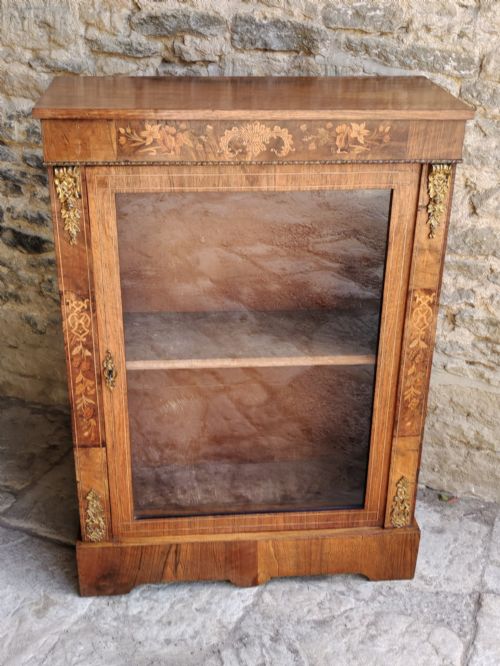
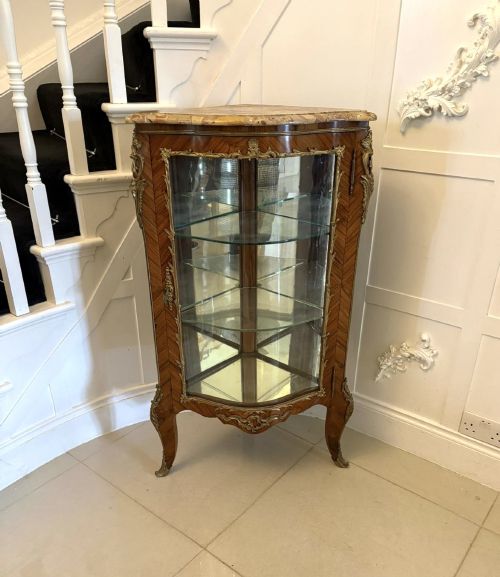
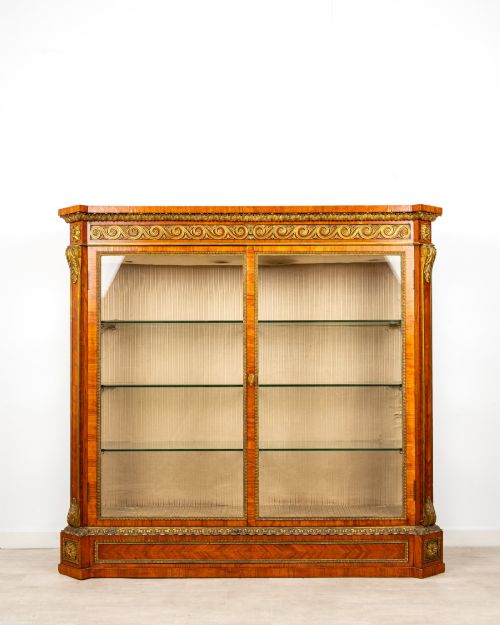
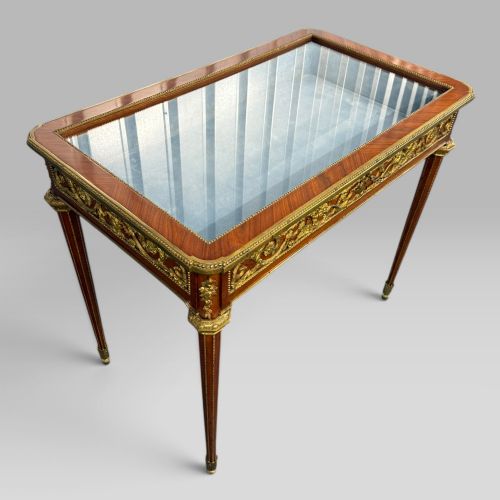
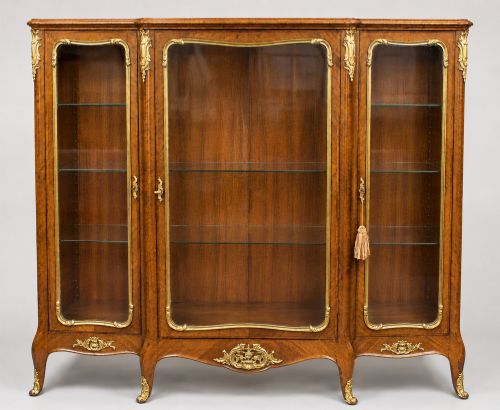
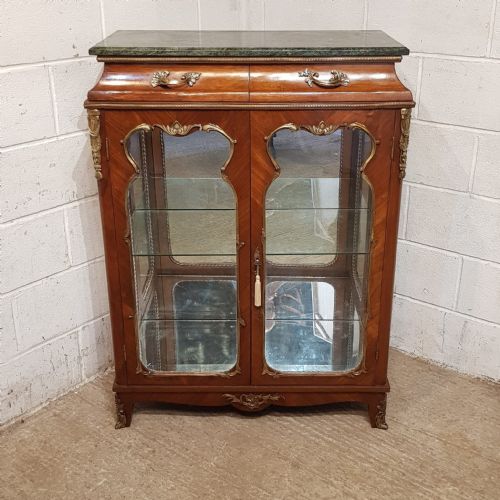
Makers and cabinetmakers constructed these display pieces in varied timber carcases, most frequently kingwood, mahogany and walnut, augmented by intricate marquetry or parquetry. Forms range from serpentine corner cabinets and wall-mounted sedan vitrines to large credenzas and freestanding display tables.
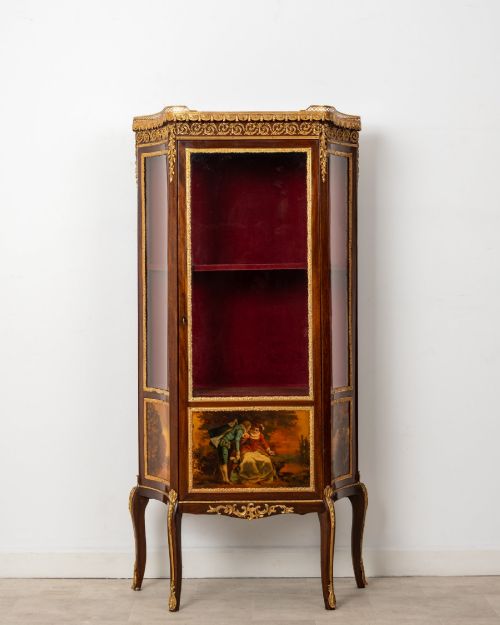
The integration of glass on sides and doors distinguishes these items from standard bookcases, allowing light to enter from multiple angles. Ormolu mounts, cast in gilt bronze or brass, outline the doors, feet and shoulders to emphasise the architectural curves of the woodwork.
Quality variations in ormolu vitrines
The standard of an ormolu vitrine rests upon the precision of the gilt bronze casting and the depth of its subsequent hand-chiseling. Superior mounts possess sharp botanical or rococo definition and retain a deep, warm gilding tone, whereas inferior replacements show soft, flat surfaces with dull finishes.
Cabinetwork separates standard production pieces from exceptional works associated with master makers. Tighter veneer joints, symmetrical parquetry, heavier gauge timbers and substantial marble slabs indicate higher atelier standards, while simpler carcases rely on painted decoration to mask basic construction.
Ormolu Vitrine Retail Price Guide 2026
Typical asking prices for ormolu vitrine among the pieces listed under this phrase on Sellingantiques today, from the lower quarter to the upper quarter. They describe what is for sale here now, not the wider market.
Listings feature eighteenth-century revival styles including Louis XV, Louis XVI and Napoleon III, constructed from kingwood, walnut, mahogany and satinwood.
François Linke·H. J. Hatfield & Sons
The Ormolu Vitrine Glossary
- Ormolu
- Gilded bronze mounts applied to furniture. This technique uses mercury or galvanic gilding processes to adhere a gold layer to a bronze base.
- Vitrine
- A glass-fronted display cabinet. It serves to protect delicate porcelain and objets d'art while keeping them visible.
- Vernis Martin
- A simulated Japanese lacquer developed in France. It consists of multiple layers of resin varnish applied over painted panels.
- Marquetry
- Inlaid wood veneers forming decorative pictures or patterns. Craftsmen cut contrasting timber pieces together to achieve a tight fit.
- Bijouterie table
- A glass-topped display table with a shallow well. It is designed specifically for inspecting small valuables and jewellery at close range.
- Parquetry
- Geometric wood veneer patterns. Squares, triangles and lozenges create tiled surfaces across cabinet doors and tabletops.
Ormolu Vitrine: Frequently Asked Questions
What items go inside an ormolu vitrine?
These cabinets were originally designed to house imported porcelain, silver trinkets and miniature portraits. Owners utilise the glass shelving and glazed doors today to display similar collections of fragile decorative objects.
Interior mirrored backs often amplify natural light, helping smaller cabinet items remain fully visible from across a room.
How do I distinguish Louis XV and Louis XVI styles?
Louis XV style furniture relies on asymmetrical curves, cabriole legs and flowing rococo ormolu mounts. Louis XVI pieces introduce neoclassical restraint, featuring straight fluted legs, rectangular proportions and symmetrical gilt bronze motifs.
Both styles appear frequently among nineteenth-century revival cabinets on this page.
Where should I place a display cabinet at home?
Position your vitrine away from direct sunlight to protect antique wood veneers from fading and to prevent interior temperature fluctuations that could affect glass seals. Placing the piece against an interior wall ensures stability, especially for taller kingwood and mahogany models.
Consider room lighting so that natural rays strike the side glass panels, illuminating the shelved contents properly.
How do I care for antique wood and ormolu?
Dust the timber surfaces regularly with a dry, soft cloth and avoid commercial silicone sprays that damage antique finishes. Clean ormolu mounts gently without harsh abrasives to preserve the original gilt surface.
Maintain stable humidity levels in the room to prevent timber shrinkage and keep veneer joints secure.