



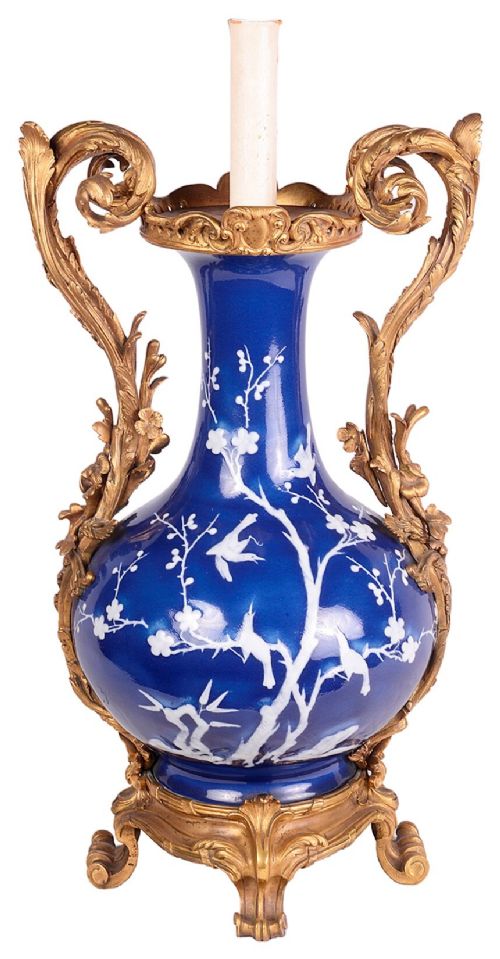


Ormolu Vase Lamps
These ormolu vase lamps combine gilded bronze mounts with antique porcelain and stone vessels to bring warmth and height to a room.
Ormolu Vase Lamps
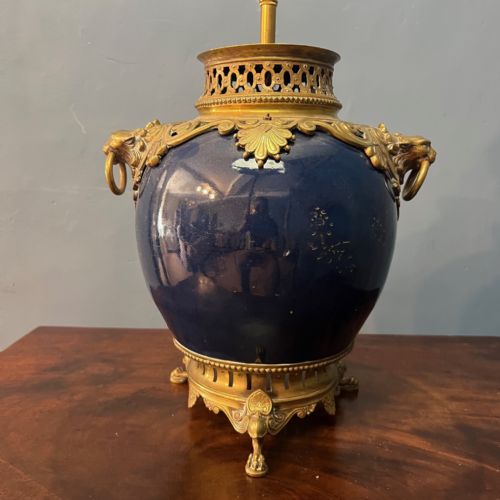
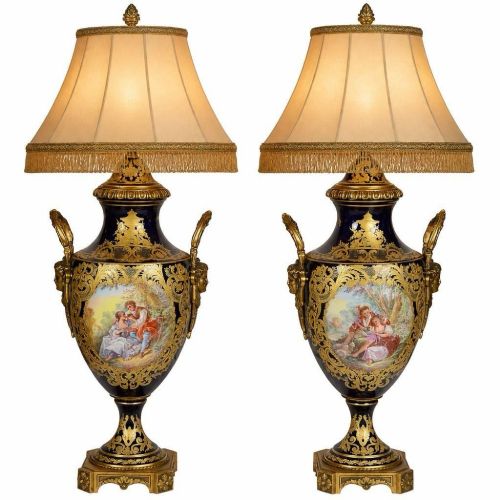
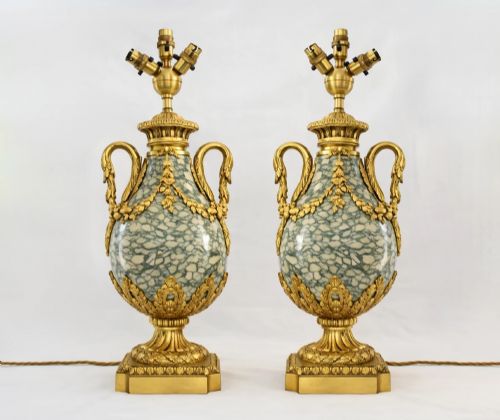
When you search for ormolu vase lamps, you encounter decorative vessels from the eighteenth and nineteenth centuries that have been converted to hold electrical fittings. These pieces pair European gilt bronze and ormolu mounts with bodies formed from Chinese export porcelain, French Sevres wares, and marble cassolettes.
The most common examples on this page are nineteenth-century French creations housing Asian ceramics, such as Canton, Rose Medallion, and blue and white vases. Many survive in matched pairs, reflecting their original purpose as garniture sets on mantelpieces before later adaptation into table lamps.
The styles span Rococo Revival and Louis XVI designs, alongside Chinoiserie and Chinese Export aesthetics. These varying idioms show how European makers incorporated imported oriental ceramics into opulent domestic lighting schemes.
Judging quality and execution
The distinction between ordinary and exceptional pieces lies in the crispness of the bronze chasing and the harmony between the mount and the vessel. Superior ormolu displays sharp, deeply undercut foliage and scrolls that hug the contours of the porcelain precisely, rather than generic mounts forced onto ill-fitting shapes.
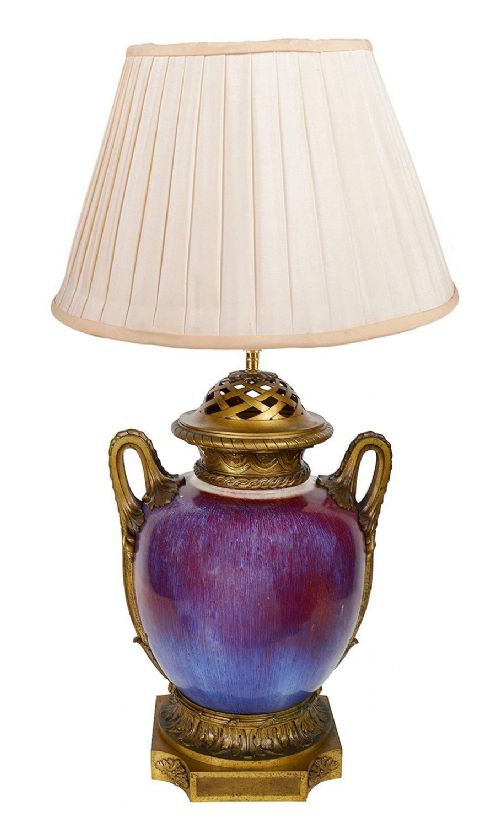
The quality of the underlying ceramic vessel dictates much of the stature, with finely painted famille rose, pate-sur-pate, or powder blue glazes commanding attention. When the porcelain or enamel work exhibits meticulous detail and the gilt bronze shows heavy, well-cast weight, the object achieves a successful synthesis of decorative arts.
Ormolu Vase Lamps Retail Price Guide 2026
Typical asking prices for ormolu vase lamps among the pieces listed under this phrase on Sellingantiques today, from the lower quarter to the upper quarter. They describe what is for sale here now, not the wider market.
Several vases started their journeys holding incense or flowers on grand mantelpieces before spending their retirement lighting up dark corners.
The Ormolu Vase Lamps Glossary
- Ormolu
- Gilt bronze, formed by applying a gold-mercury amalgam to a bronze base and firing it to leave a golden layer. This technique creates a rich surface that resists tarnishing over centuries.
- Cassolette
- A decorative vase or urn featuring a reversible or pierced lid that could function as a burner for perfumes. In lamp conversions, these marble or porcelain vessels retain their distinct classical profile.
- Famille Rose
- A palette of Chinese ceramic glazes introduced in the eighteenth century, dominated by opaque pink enamel. It appears frequently on export porcelain mounted in Europe.
- Chinoiserie
- European artistic style reflecting Chinese motifs and decorative techniques. It heavily influenced the eighteenth and nineteenth-century taste for Asian ceramics mounted in gilt bronze.
- Pate-sur-pate
- Ceramic decoration technique involving layers of liquid clay built up in low relief on a contrasting body. This process creates cameo-like designs prized on nineteenth-century French porcelains.
Ormolu Vase Lamps: Frequently Asked Questions
Are these lamps originally wired for electricity?
These vessels started life as decorative vases, urns, or cassolettes during the eighteenth and nineteenth centuries. They were converted into lamps at later dates to suit modern interiors.
The conversion process typically involved running a cord through a drilled base or securing a brass pipe through the centre of the vessel without damaging the antique body.
How do I identify French versus Chinese porcelain?
Chinese export wares often feature traditional motifs like blue and white patterns, Rose Medallion scenes, or famille verte glazes. French factories like Sevres produced soft-paste or hard-paste porcelain with uniform bleu celeste grounds and gilded neoclassical details.
Many nineteenth-century French pieces also incorporated imported Asian ceramics into domestic mounts, blending eastern bodies with western bronze work.
What is the difference between ormolu and gilt bronze?
Ormolu is simply the historical term for gilt bronze, derived from the French ou moulu, meaning ground gold. Both terms describe a bronze substrate treated with a gold finish.
In marketplace descriptions, the words are often used interchangeably to denote the golden metallic mounts framing the porcelain and stone bodies.
How should I choose a lampshade for these?
Selecting a shade depends on the scale and visual weight of the gilt bronze mounts and the ceramic body below. Fabric shades in neutral silks allow the intricate patterns of the vase and the chased details of the ormolu to remain the primary focus.
The proportions should balance the height of the base and the width of the mounts to maintain visual stability.