

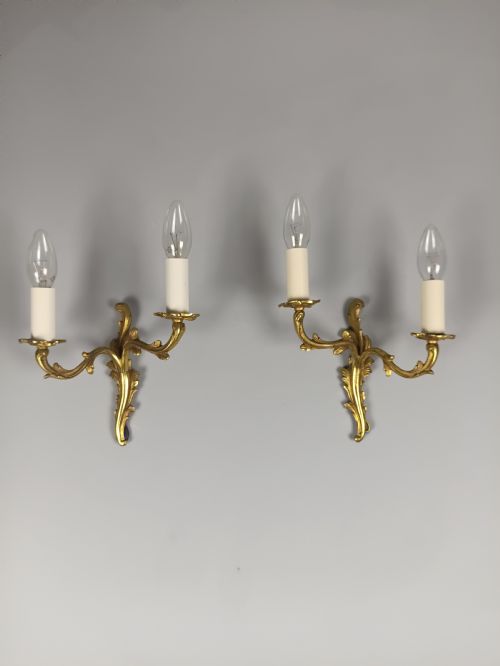


Ormolu Two Arm Sconces
These ormolu two arm sconces bring genuine warmth and period character to a wall.
Ormolu Two Arm Sconces
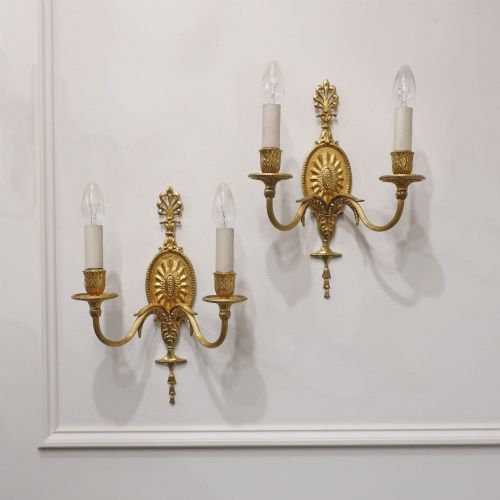
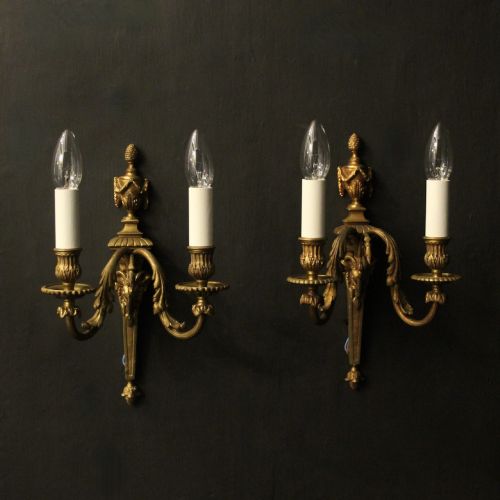
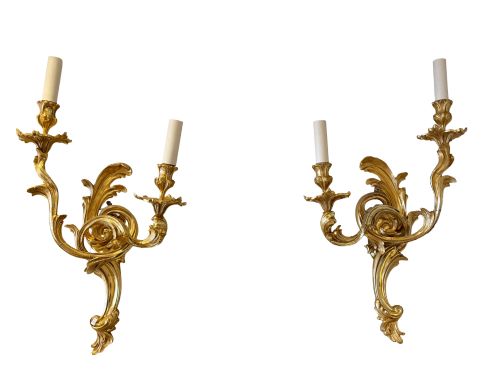
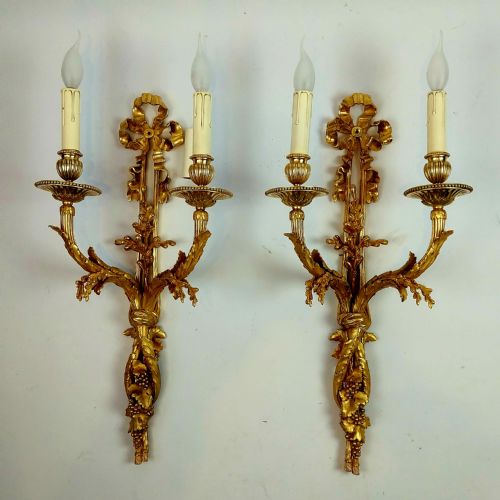
When you search for ormolu two arm sconces, you are looking at dual-light wall fixtures designed to hold candles or direct electricity. The pieces available here span from the nineteenth century into the early twentieth century, taking the form of pairs of wall lights, candelabras and occasional sets. Most examples originate from French workshops, bringing continental styling directly to the interior.
Stylistic influences across the selection draw heavily upon French Rococo Revival, Louis XV and Louis XVI Neoclassical designs, alongside Regency and Adam styles. You will find items featuring two arms predominantly, though occasional triple arm variants and candlesticks appear in the mix. These fixtures attach directly to the wall to project ambient illumination across a room.
Materials and construction
The primary construction relies on cast bronze or brass, which is then heavily gilded to achieve the characteristic rich surface finish known as ormolu. Artisans also combined patinated bronze with gilded elements to create contrast within the scrolling arms and backplates. Metal casting techniques of the nineteenth and early twentieth centuries allowed for intricate floral and scroll motifs to be rendered with precision.
Many of these fixtures have been adapted for modern use, resulting in rewired electrical components housed within the original metal bodies. The combination of chased gilt bronze and structural brass creates a sturdy assembly capable of supporting multiple candle nozzles. Surface gilding techniques vary from application to application, yielding either a bright polished sheen or a more muted historic lustre.
Ormolu Two Arm Sconces Retail Price Guide 2026
Typical asking prices for ormolu two arm sconces among the pieces listed under this phrase on Sellingantiques today, from the lower quarter to the upper quarter. They describe what is for sale here now, not the wider market.
Listings feature items spanning the nineteenth century, nineteen-twentieth transition years, and the 1920s and 1930s, constructed from gilt bronze, brass and patinated bronze.
Assessing quality and craftsmanship
The distinction between standard production and finer work lies in the crispness of the chasing and the depth of the metal casting. Superior pieces exhibit sharply defined acanthus leaves, scrolls and figurative details that retain their clarity without appearing smoothed over. The quality of the gilding itself dictates how the metal catches the light, with deeper applications maintaining their warmth over decades of exposure.
Weight and structural integrity also separate the grades of work, as denser bronze castings offer greater rigidity in the arms than lighter brass alternatives. The harmony of the design, whether adhering strictly to French Rococo or Neoclassical canons, reflects the skill of the original workshop. Finer pairs demonstrate symmetrical balance and careful alignment across both sconces.
The Ormolu Two Arm Sconces Glossary
- Ormolu
- A method of applying finely ground high-carat gold to a bronze base, producing a rich golden finish. This decorative technique defines much of the French lighting from the periods represented.
- Patinated bronze
- Darkened or chemically treated bronze surfaces that provide a contrasting background to gilded details. This treatment enhances the visual depth of floral and scroll ornamentation.
- Candelabra
- A branched candlestick holder designed to support multiple candles or light sources from a single base or wall fixture. These branching arms form the structural core of many wall lights.
- Chasing
- The manual process of refining a metal casting with punches and hammers to sharpen details and textures. High-quality chasing separates masterwork bronzes from standard commercial output.
- Louis XV Revival
- A decorative style mimicking the asymmetric curves, naturalistic foliage and shell motifs of the mid-eighteenth century. This aesthetic heavily influences nineteenth-century French lighting design.
Ormolu Two Arm Sconces: Frequently Asked Questions
How do I install antique wall sconces?
Professional installation by a qualified electrician is strongly recommended, especially for pieces that have been rewired for modern mains electricity. The backplate typically secures to a standard wall junction box using concealed fixings.
Care must be taken to ensure the wall structure can support the weight of solid bronze or brass fixtures, particularly with heavier multi-arm designs.
Can these sconces use modern light bulbs?
Many surviving fixtures have already been converted to electricity, often utilising small candelabra-base lamp holders that fit within the original candle tubes. Low-wattage LED bulbs are suitable for maintaining the historic aesthetic while keeping heat output minimal.
Original brass and gilt surfaces should not be exposed to excessive heat from oversized bulbs to preserve the finish.
How do I clean ormolu and gilt bronze?
Dusting gently with a soft, dry feather duster or microfiber cloth prevents the accumulation of grime without risking the delicate surface finish. Water, abrasive cleaners and chemical polishes must be avoided entirely, as they strip away the historic gilding.
Professional conservation is advised if deeper cleaning becomes necessary to address tarnish or oxidation.
How can I tell a French sconce from an English one?
French pieces frequently display more exuberant Rococo or Neoclassical casting with elaborate asymmetric scrolling and deep chasing. English interpretations from similar periods, such as Adam or Regency styles, often favour stricter symmetry and restraint.
Examining the casting methods and assembly screws on the reverse side can also offer clues regarding the country of origin.