

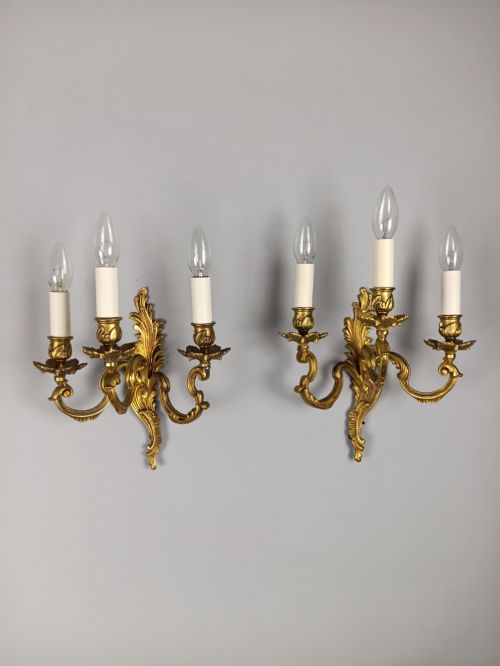
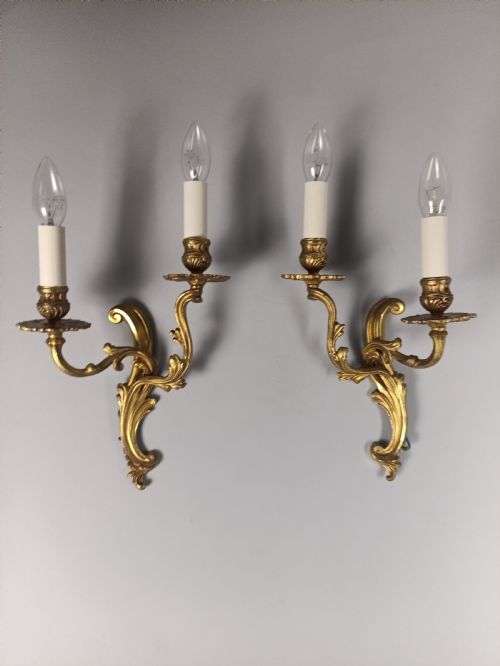


Rococo Gilt Metal Appliques
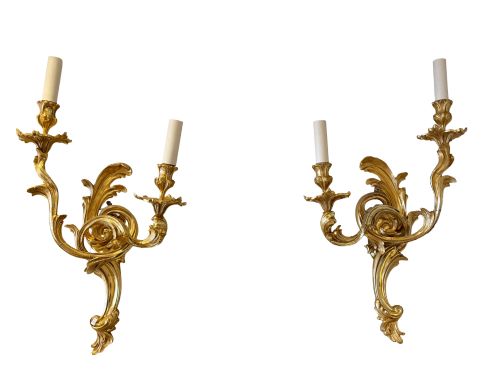
Rococo gilt metal appliques bring curving, ornamental splendour to walls, casting warm illumination while channelling exuberant 18th-century French design.
Rococo Gilt Metal Appliques
When you search for rococo gilt metal appliques, you encounter decorative wall lighting designed to mount directly onto vertical surfaces. These pieces function primarily as wall lights, wall sconces and candelabra, projecting illumination outward from living spaces and corridors.
The objects appearing most frequently on this page originate from the early decades of the 20th century, alongside late 19th-century interpretations and occasional 18th-century examples. French styling dominates the selection, frequently drawing upon Louis XV aesthetics, French chateau influences and broader Rococo Revival movements.
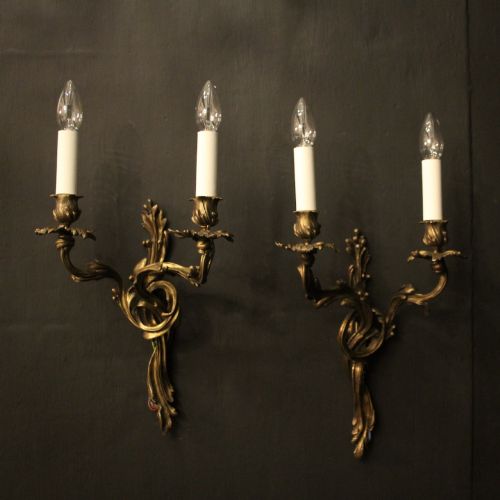
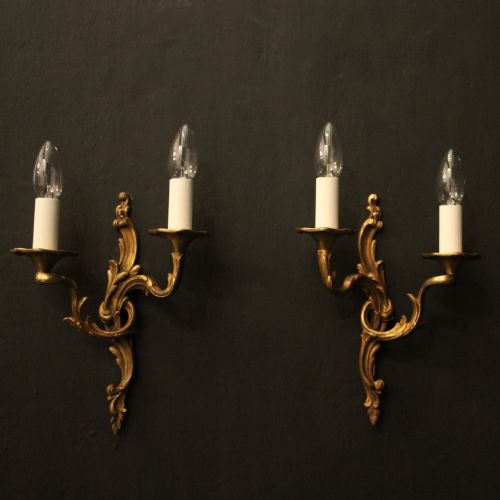
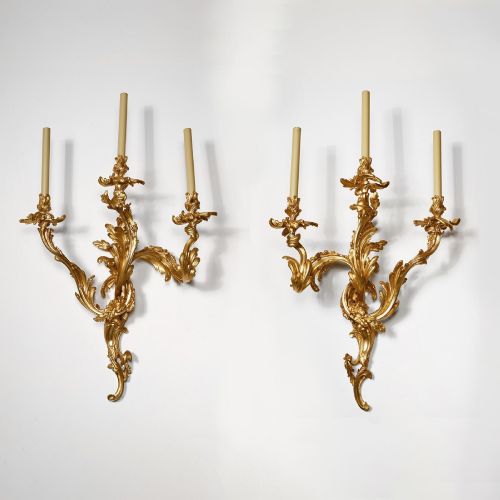
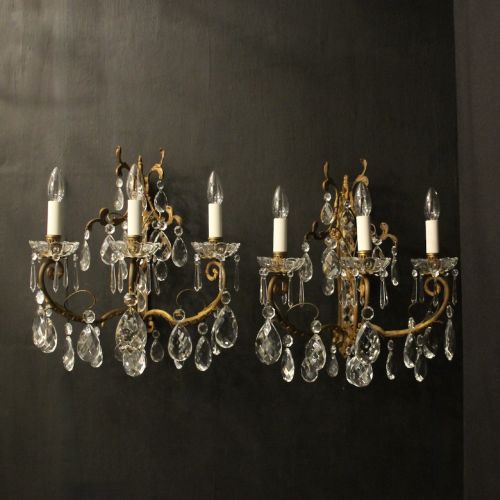
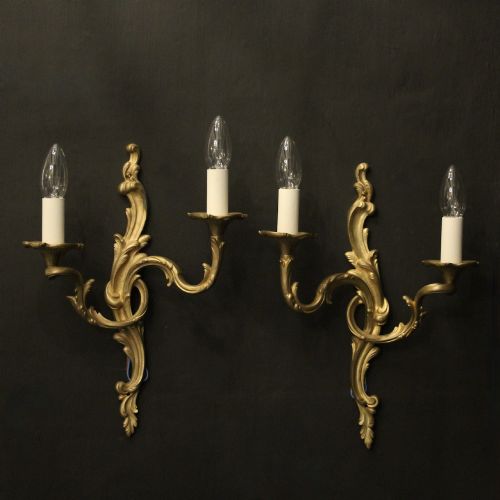
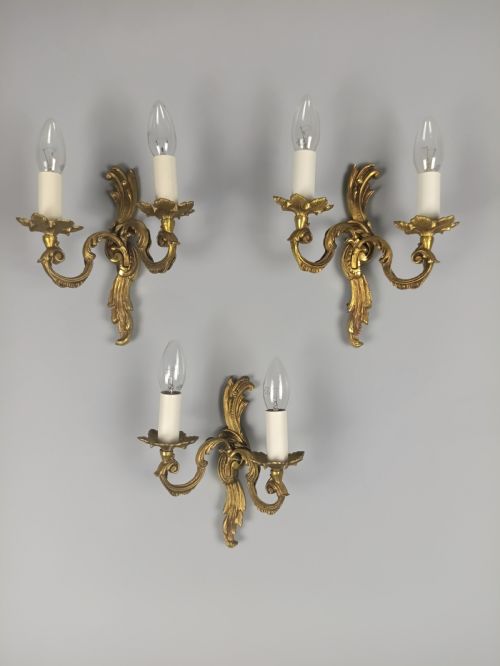
Most items emerge as matched pairs or sets, featuring twin, triple or four-branch arm configurations designed to hold candles or electrical fittings. Their physical presence relies on scrolling asymmetrical forms, organic leaf motifs and shell-like cartouches characteristic of the Rococo style.
Materials and Construction
The structural body of these wall lights relies on cast and chased metal, predominantly utilising bronze, brass and general gilt metal. Artisans frequently applied gold leaf or mercury gilding to impart a rich surface lustre across the metallic substrate.
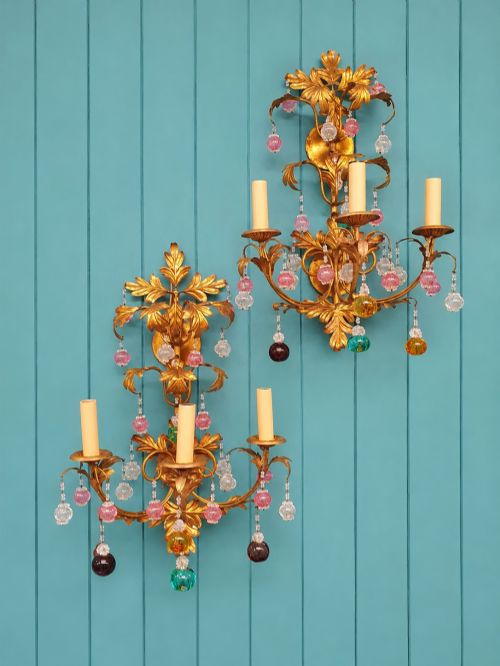
Selected examples incorporate crystal elements, adding refractive sparkle to complement the heavy metallic framework. Casting techniques allowed makers to achieve deep, undulating scrolls and asymmetrical contours central to the design vocabulary.
Rococo Gilt Metal Appliques Retail Price Guide 2026
Typical asking prices for rococo gilt metal appliques among the pieces listed under this phrase on Sellingantiques today, from the lower quarter to the upper quarter. They describe what is for sale here now, not the wider market.
Materials across the inventory range from heavy gilt bronze and ormolu to lighter brass and general gilt metal.
Distinctions in Quality
Quality rests heavily on the crispness of the casting and the depth of the chasing work upon the metal surface. Finer examples display sharp, hand-finished botanical details and clean undulations rather than softened edges resulting from worn moulds.
The substance of the metal base dictates the overall weight and durability, with solid bronze and heavy ormolu constructions sitting above lighter brass variations. Furthermore, the richness and application method of the gilding determine how successfully the object catches ambient light over time.
The Rococo Gilt Metal Appliques Glossary
- Applique
- A wall-mounted decorative light fixture designed to hold candles or lamps. This term often interchanges with wall sconce in historical inventories.
- Ormolu
- Finely ground high-carat gold applied to a bronze base using a mercury amalgam technique. It provides a distinct golden finish characteristic of high-end antique metalwork.
- Rococo
- An ornate artistic style originating in 18th-century France characterised by asymmetry, scrollwork and curving natural motifs. It forms the primary decorative vocabulary for these wall lights.
- Candelabra
- A branched candlestick holder designed to support multiple light sources from a single base. They frequently appear in wall-mounted formats across the 19th and early 20th centuries.
- Louis XV Style
- A revival aesthetic reflecting the French royal court of the mid-18th century. It emphasises exuberant curves, floral garlands and asymmetrical cartouches.
Rococo Gilt Metal Appliques: Frequently Asked Questions
What is the difference between an applique and a sconce?
An applique is historically a French term for a decorative wall-mounted light fixture, while sconce represents the more common English equivalent. Both describe the same fundamental category of wall illumination.
In marketplace listings, these terms are frequently used interchangeably by dealers to describe bracketed wall lights designed for candles or electricity.
How do I date a gilt metal wall light?
Dating relies on examining the casting techniques, mounting hardware, wiring channels and wear patterns across the metal surface. Earlier 18th-century pieces display hand-chased details and candle-prickets, whereas 19th and 20th-century revivals often integrate adapted electrical fittings.
Stylistic shifts also offer clues, as late 19th-century Rococo Revival pieces frequently exhibit heavier casting weights and brighter gilding compared to genuine 18th-century originals.
Were these originally wired for electricity?
Most appliques dating from the 19th and 20th centuries were originally manufactured for candles before being converted for electric bulbs at a later stage. Even pieces produced in the 1920s and 1930s often required subsequent rewiring to meet modern safety standards.
Examining the backplate and arm interiors usually reveals whether channels were hollowed for wiring during manufacture or added during later adaptations.
How should I clean gilded bronze wall lights?
Gilded surfaces require gentle dusting with a soft dry cloth to prevent the accumulation of grime within the intricate Rococo scrollwork. Abrasive cleaners and chemical polishes must be strictly avoided because they strip away the delicate gold leaf or ormolu layer.
Professional conservation is recommended if tarnishing or heavy oxidation obscures the original metallic lustre of the bronze or brass.