

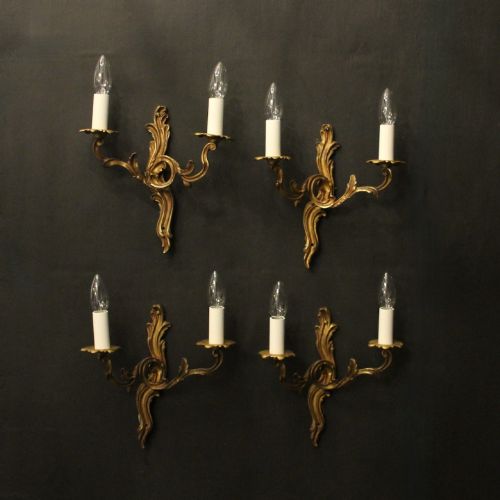
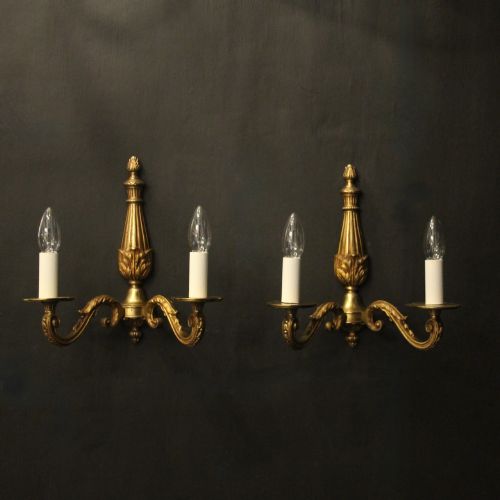
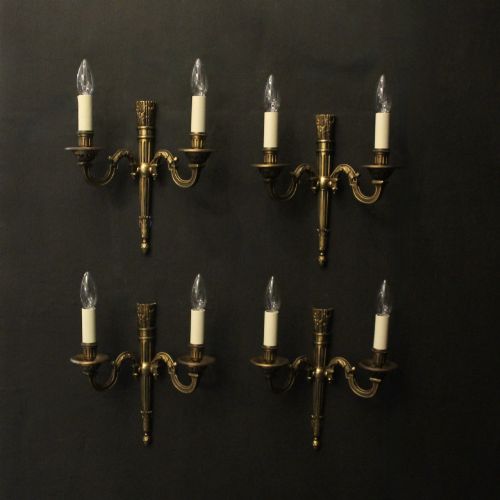
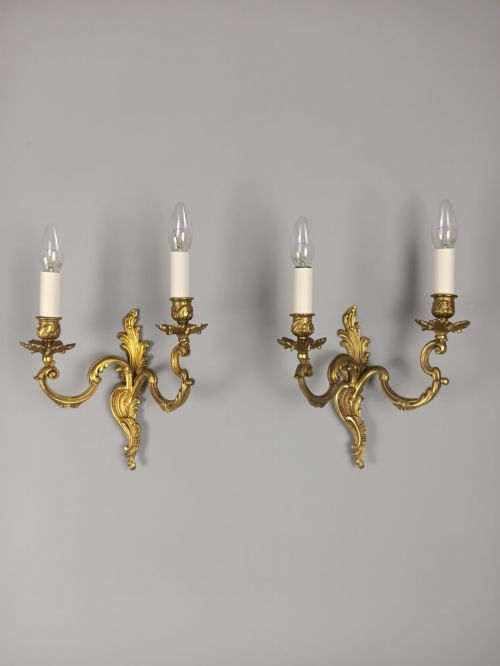
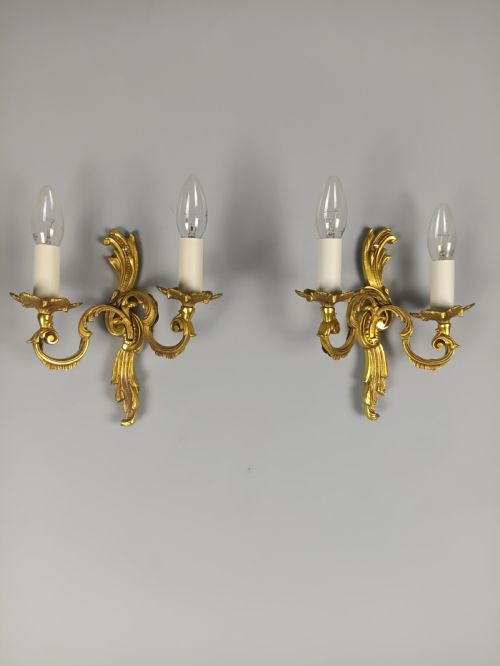
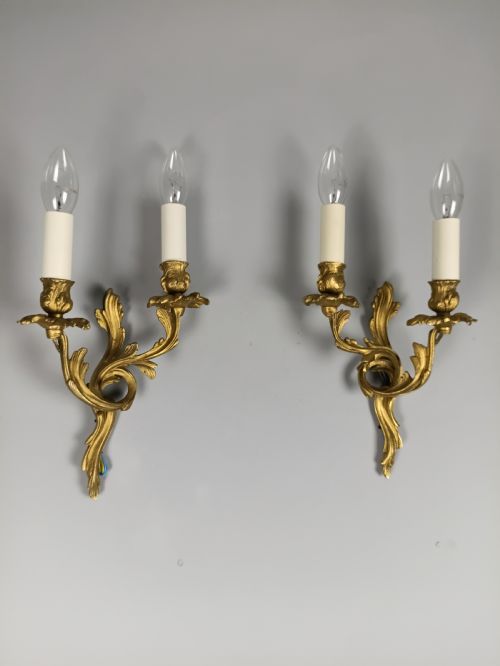
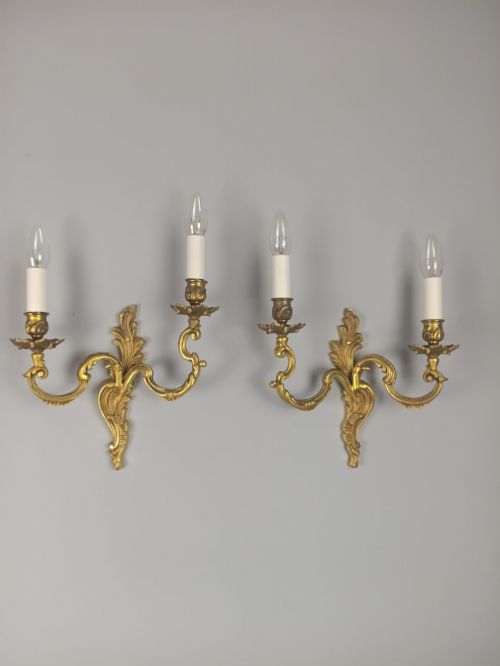
Ormolu Twin Light Sconces
When you search for ormolu twin light sconces, you encounter decorative wall fittings designed to cast warm, dual illumination across a room.
Ormolu Twin Light Sconces
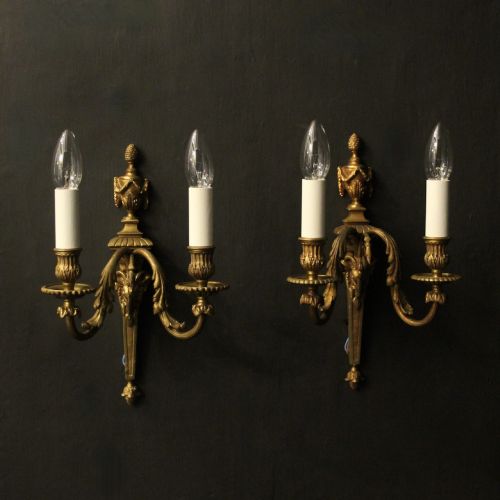
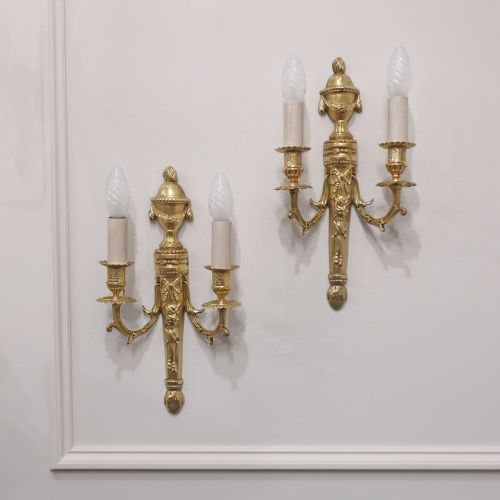
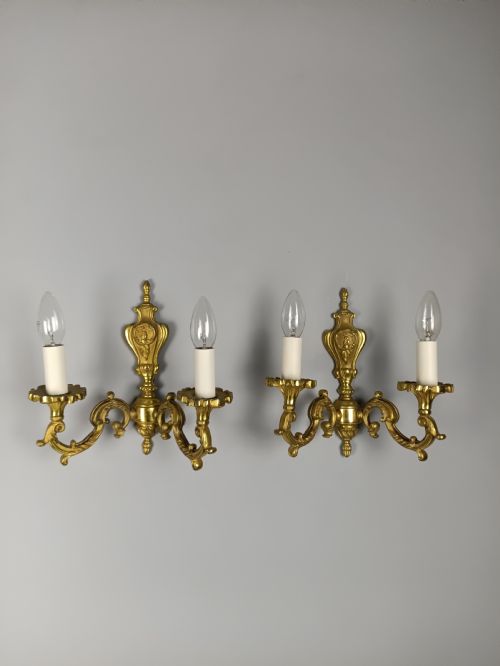
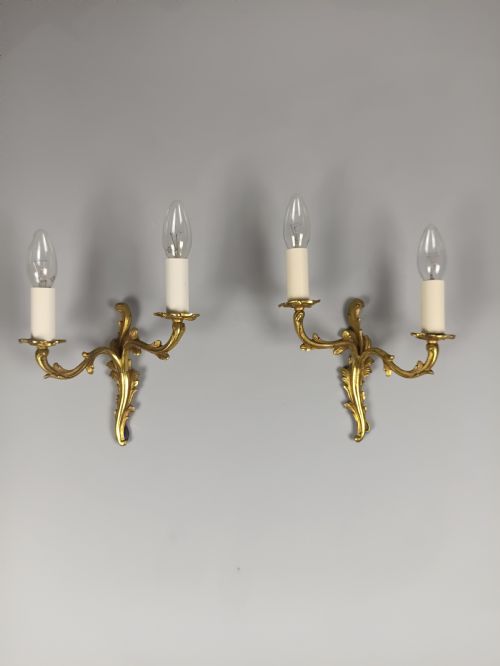
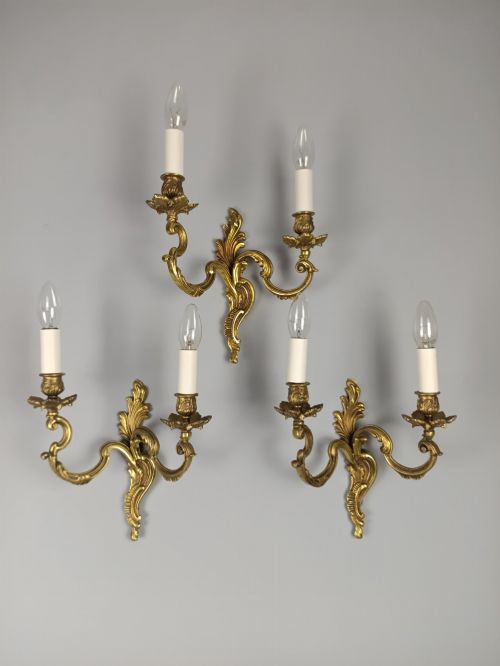
Ormolu twin light sconces are decorative wall lights designed to hold two candles or bulbs, projecting warm light across a room. When you search for ormolu twin light sconces, you encounter metal wall fixtures shaped to ornament interiors with dual branches. The listings here predominantly feature French origins spanning from the nineteenth century into the twentieth century.
How They Were Made
These wall lights are cast and worked in materials including ormolu, gilt bronze, brass, and gilt metal. The foundational metal is shaped into intricate scrollwork, cherub figures, or architectural motifs before receiving a golden surface treatment. Gilded bronze and ormolu applications provide a rich, enduring metallic sheen that catches and reflects ambient room light.
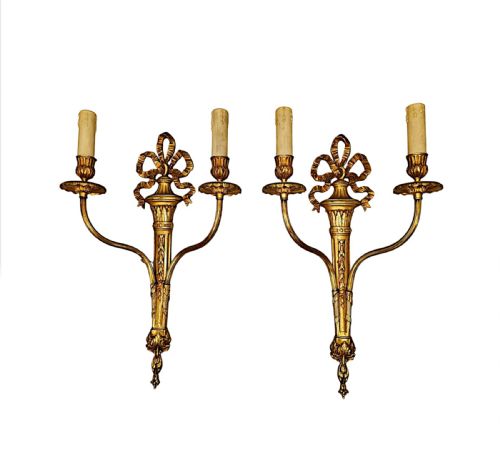
The construction relies on traditional foundry techniques, joining individual cast arms and backplates securely together to support twin branches. Many examples combine cast bronze elements with chased detailing to achieve crisp relief on leaves, ribbons, and classical urns. Surface gilding is applied to the base metal, uniting the various components into a cohesive decorative object.
Ormolu Twin Light Sconces Retail Price Guide 2026
Typical asking prices for ormolu twin light sconces among the pieces listed under this phrase on Sellingantiques today, from the lower quarter to the upper quarter. They describe what is for sale here now, not the wider market.
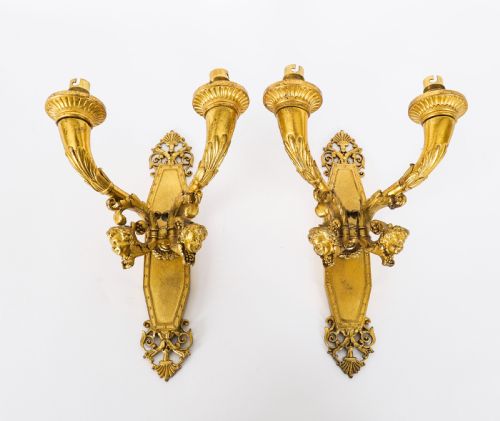
Several pairs feature cherubs clinging faithfully to the branches, proving that even eighteenth-century lighting required celestial assistance.
What Varies in Quality
The richness and preservation of the gilding further separate standard production from finer decorative work. Original fire gilding or well-maintained gold finishes possess a warm, layered tone that differs visibly from flat, modern chemical plating. The integration of decorative elements like porcelain plaques or figural cherubs also elevates the visual complexity of the design.
Casier
The Ormolu Twin Light Sconces Glossary
- Ormolu
- Gilded bronze produced by applying a mercury and gold amalgam to a bronze base and heating it until the mercury evaporates. This historic technique yields a deep, matte golden finish characteristic of fine antique metalwork.
- Applique
- A wall-mounted light fixture designed to hold candles or electric bulbs, synonymous with a wall sconce. These pieces project outward from the wall surface to illuminate corridors and living spaces.
- Rococo
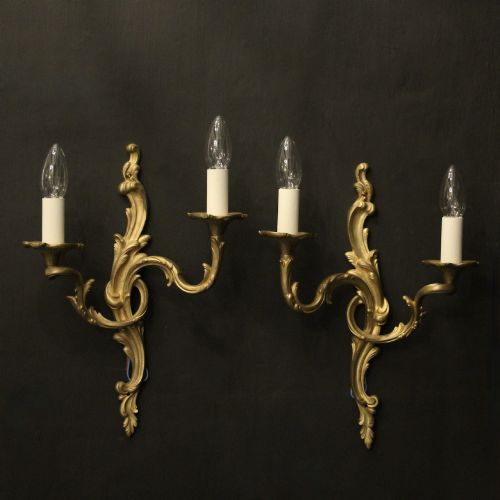
- An ornate design style from the eighteenth century, revived in later periods, featuring asymmetrical scrollwork and naturalistic plant motifs. Sconces in this style display swirling acanthus leaves and dynamic, flowing contours.
- Empire
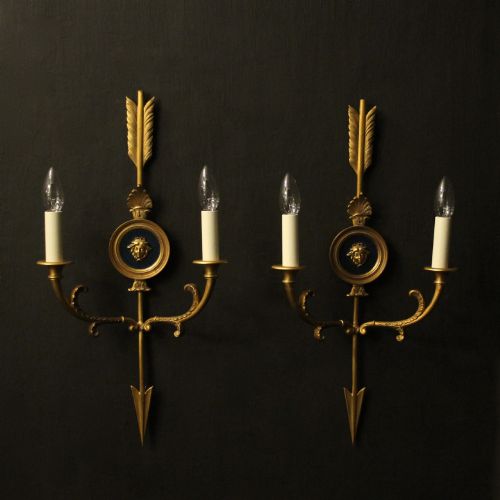
- A neoclassical style rooted in nineteenth-century French design, drawing inspiration from ancient Roman and Greek motifs. Pieces often incorporate military trophies, sphinxes, and formal architectural symmetry.
- Gilt Bronze
- Bronze metal treated with a thin layer of gold to impart a lustrous metallic appearance. It serves as the primary structural and decorative medium for the majority of these wall lights.
Ormolu Twin Light Sconces: Frequently Asked Questions
How were twin light sconces used historically?
These wall lights were positioned beside mirrors, fireplaces, or along hallway walls to multiply the flickering illumination of candles within a room. The twin branches allowed a single fixture to cast double the light, helping to brighten dimly lit period interiors.
Over time, many of these historic fixtures were adapted for modern electricity while retaining their original wall-mounted bracket positions. They continue to serve as both functional illumination sources and decorative wall sculptures in contemporary homes.
How do I distinguish between different period styles?
Rococo style sconces feature asymmetric scrollwork, curling acanthus leaves, and naturalistic forms that feel fluid and organic. In contrast, Neoclassical and Louis XVI examples display strict symmetry, straight architectural lines, urns, and classical ribbon motifs.
Empire period pieces stand out through heavier, bolder Roman-inspired symbols such as laurel wreaths and formal military trophies. Examining the specific motifs carved into the backplate usually reveals the stylistic influence of the design.
Can these wall sconces be wired for electricity?
Many surviving pairs and sets have already been rewired for modern electrical standards by previous owners or specialist dealers. The original candle nozzles or drip pans are frequently adapted to conceal lamp holders while preserving the historic outward appearance.
When evaluating a set, you can inspect the backplate and arms for wiring channels or consult a professional electrician regarding safe installation. This allows you to enjoy antique lighting safely with contemporary household circuits.
What distinguishes ormolu from gilded brass?
Ormolu specifically refers to historic mercury gilding applied to a bronze substrate, creating a durable, deep golden matte texture. Gilded brass is a lighter, less costly alternative often found in later or more modest production pieces.
Bronze provides a heavier physical weight and holds finer chased detail than brass, which tends to feel lighter and brighter in its golden finish. Handling multiple examples helps you develop an eye for the distinct heft and surface depth of genuine bronze work.