
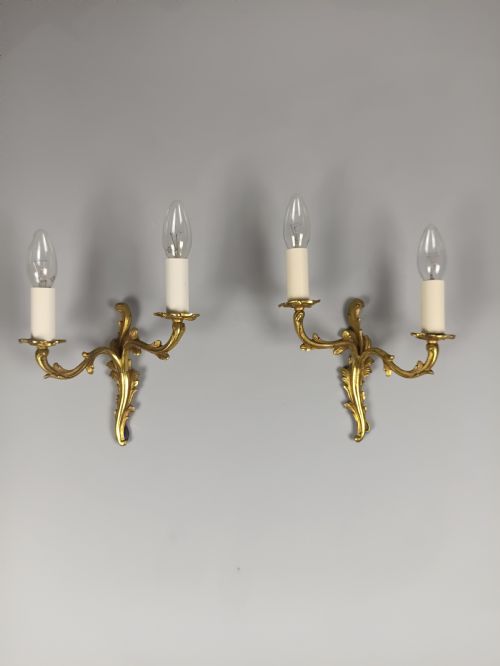
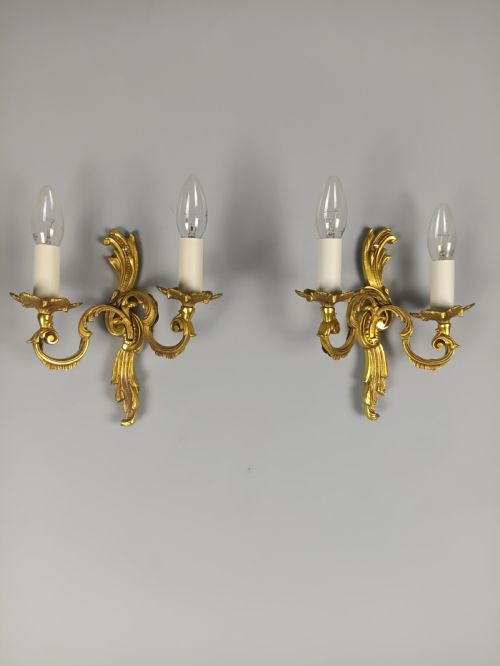
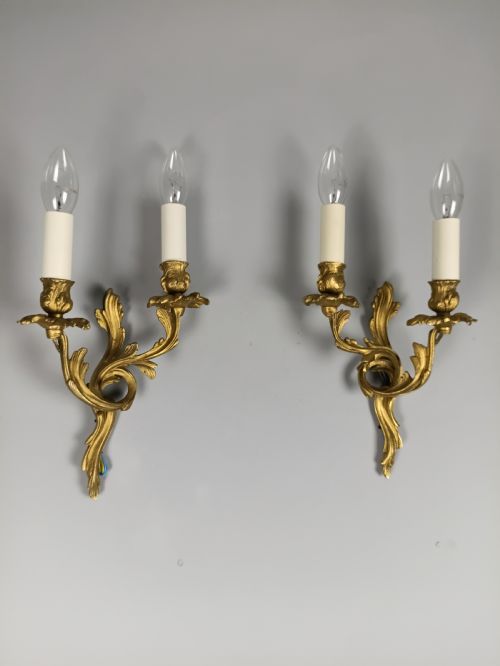

Ormolu Twin Arm Lights
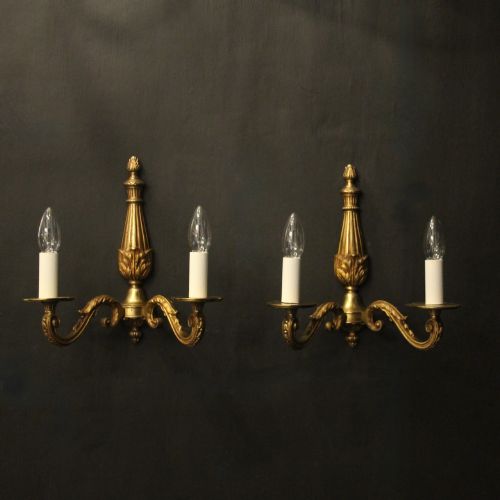
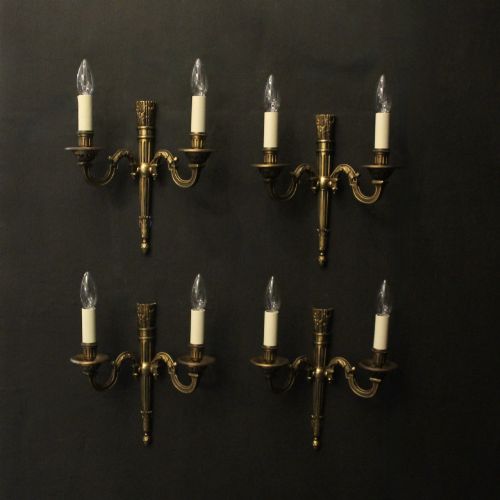
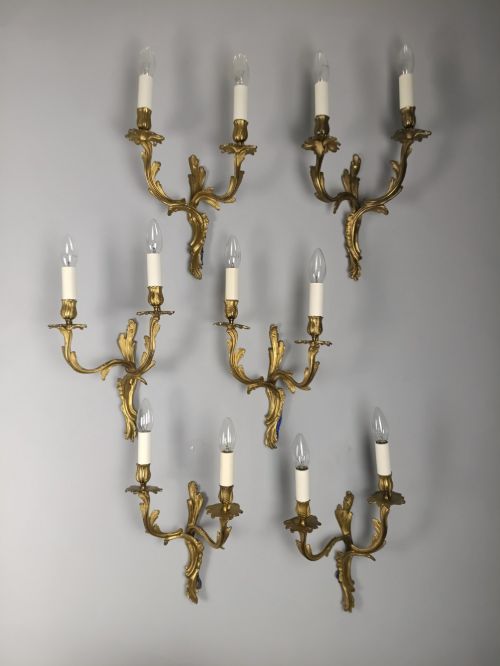
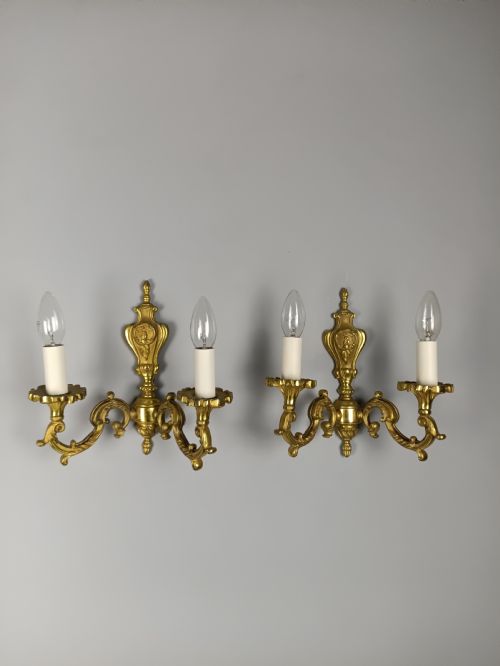
When you handle ormolu twin arm lights, you hold French and English metalwork from the nineteenth and early twentieth centuries designed to mount upon a wall and cast candle or electrical illumination.
Ormolu Twin Arm Lights
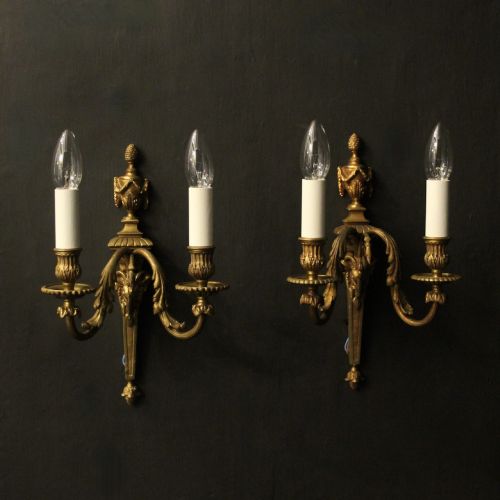
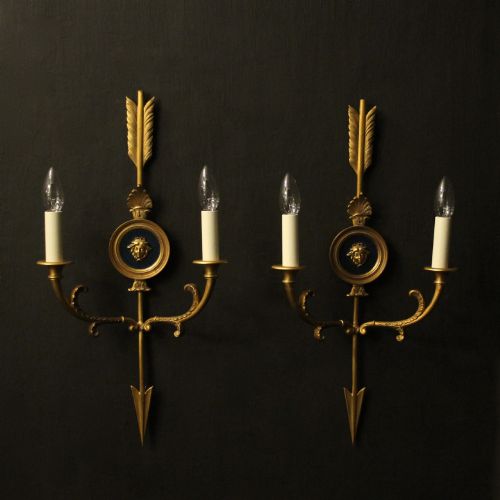
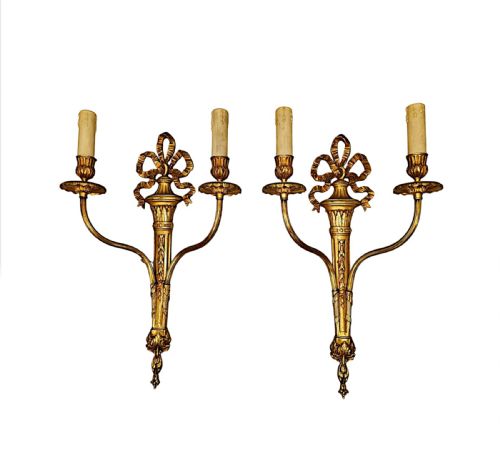
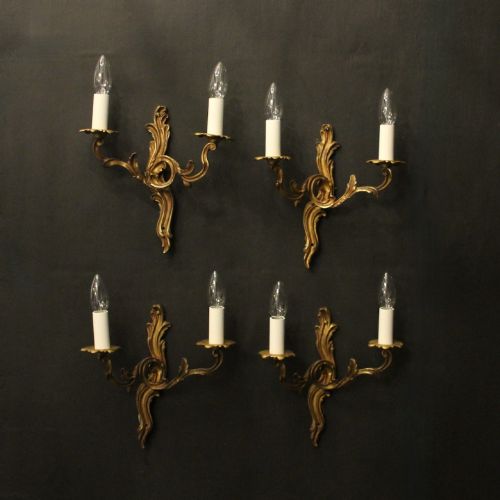
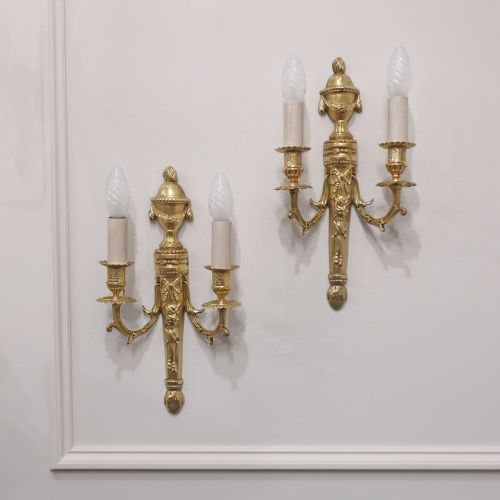
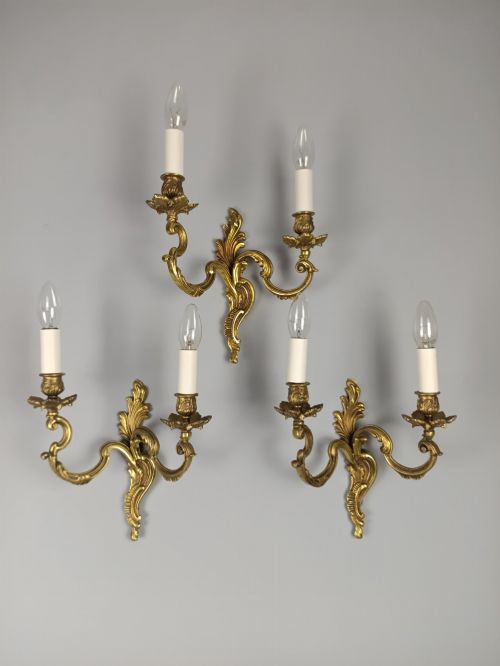
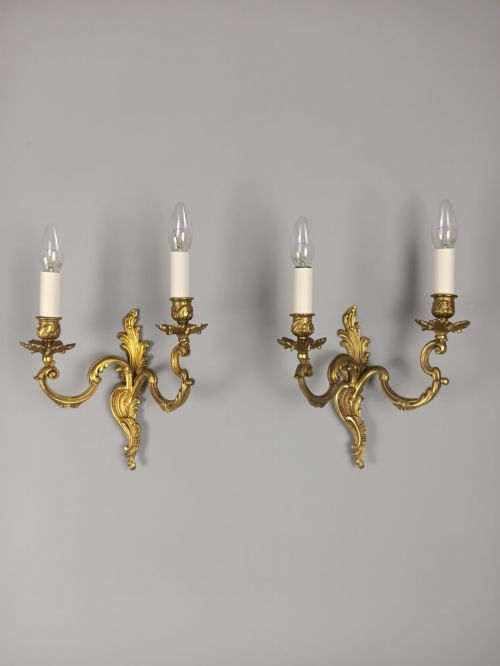
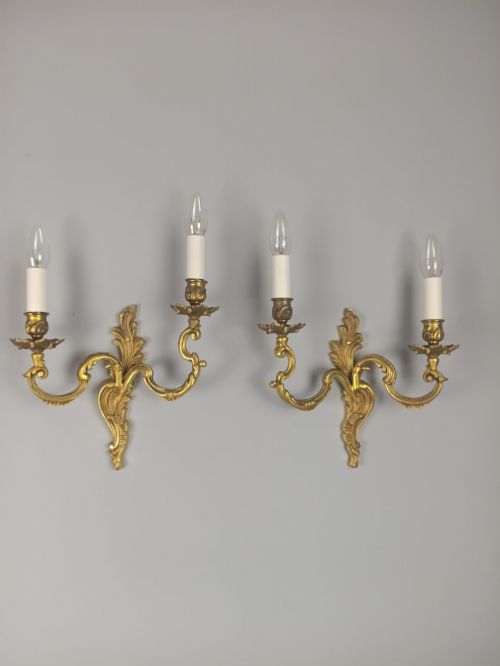
When you search for ormolu twin arm lights, you encounter wall sconces, wall lights, and standard lamps produced across various decades from the nineteenth century up to 1930. The most frequent pieces on this page are French wall fixtures featuring two arms, often originating from the 1920s and 1930s.
The aesthetic vocabulary draws heavily from classical and continental traditions, including French Rococo, French Empire, Louis XVI, and Neoclassical styles. Pieces range from modest brass constructions to elaborate gilt bronze castings associated with the Grand Tour or Victorian periods.
How they were made
Makers utilised bronze, brass, and metal as base substrates for these lighting fixtures, frequently applying a layer of gilt or ormolu to the exterior surface. This gilding technique provided the characteristic golden sheen associated with luxury furnishings of the period.
Casting methods allowed workshops to produce intricate decorative motifs such as scrolling foliage, cherubs, and classical drapery. Individual components were then assembled into twin arm configurations ready for wall mounting.
Several pairs incorporate bronze cherubs standing upon marble bases, watching silently over the room.
What varies in quality
The refinement of the casting work dictates the visual clarity of foliage, figures, and scrollwork on the arms and backplates. Crisp detail in the metalwork separates superior examples from softer, more generalized production.
The depth and application of the gilding or ormolu finish influence how the light catches the surface of the metal. Heavier, more durable gilding retains its lustre more successfully than thinner washes applied to base brass.
Casier
The Ormolu Twin Arm Lights Glossary
- Ormolu
- Gilded bronze, typically produced by applying a mercury and gold amalgam to a bronze base and firing it to leave a rich golden layer. It provides a durable and warm metallic finish.
- Gilt Bronze
- Bronze metal that has been coated with a thin layer of gold leaf or gold paint for decorative effect. It appears frequently in nineteenth-century French lighting.
- Wall Sconce
- A decorative lighting fixture fixed to a wall rather than placed on a table or floor. These often incorporate twin arms to hold candles or electric bulbs.
- Empire Style
- A neoclassical design style originating in nineteenth-century France during the rule of Napoleon. It employs military motifs, classical urns, and strict symmetry.
- Rococo
- An ornate artistic style characterised by asymmetry, curves, and shell-like scrollwork. It influences many nineteenth-century French wall lights.
Ormolu Twin Arm Lights: Frequently Asked Questions
How do I install antique wall lights?
Many surviving pieces arrive rewired for modern electrical use while retaining their original brass or gilt bronze structures. An electrician should mount them securely to wall studs and connect them to domestic wiring.
Because these items originate from the nineteenth and early twentieth centuries, backplates may require bespoke mounting brackets to sit flush against modern plaster walls.
What is the difference between ormolu and gilt brass?
Ormolu specifically refers to gilded bronze, whereas brass is an alloy of copper and zinc. Bronze generally allows for sharper, heavier castings than brass.
Both materials received similar surface gilding treatments, but bronze items often carry more weight and deeper historical provenance.
How do I clean gilded metal fixtures?
Dust gently with a soft, dry cloth to prevent the accumulation of dirt within the intricate scrollwork and cast details. Avoid harsh chemical cleaners or abrasive polishes that might strip away the original ormolu or gilt surface.
Water and moisture should be kept away from electrical components during any routine maintenance of wired wall sconces.
Can I date these lights by their style?
Stylistic revivals mean a 1930s piece can replicate Louis XVI or French Rococo aesthetics accurately. Examining the casting technique, fixing screws, and metal composition helps determine the actual age.
French pieces from the 1920s and 1930s frequently combine historical motifs with construction methods standard to the early twentieth century.