

Ormolu Style Wall Sconces
Ormolu style wall sconces bring brilliant metalwork and classical proportion to an interior, illuminating rooms through the design vocabulary of past centuries.
Ormolu Style Wall Sconces
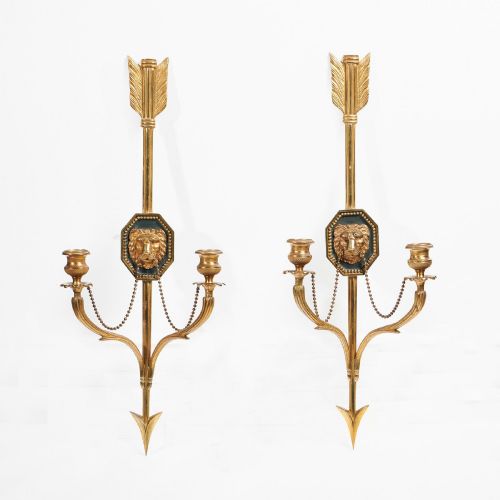
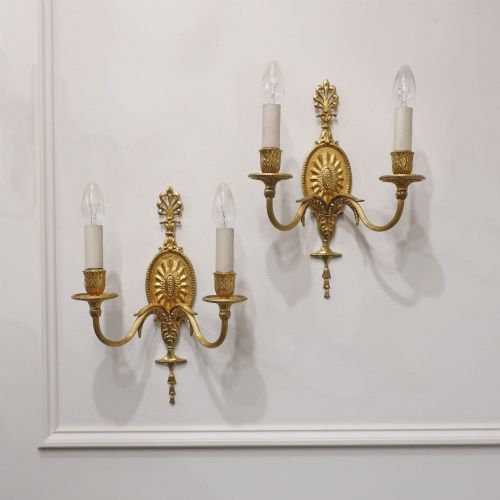
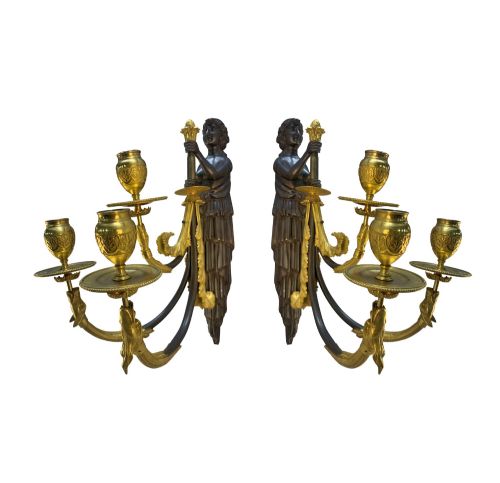
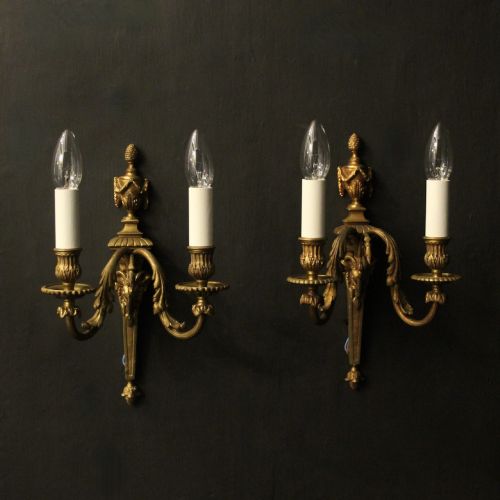
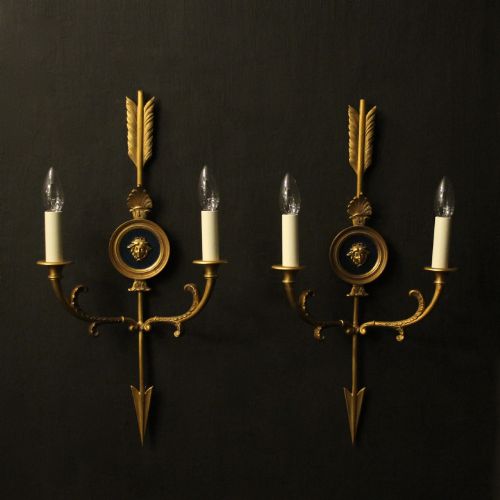
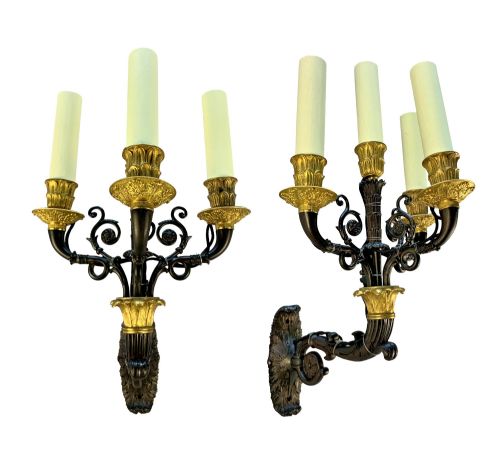
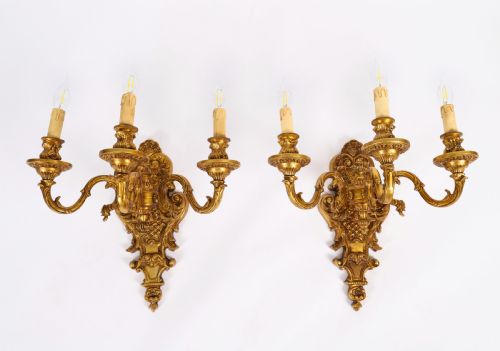
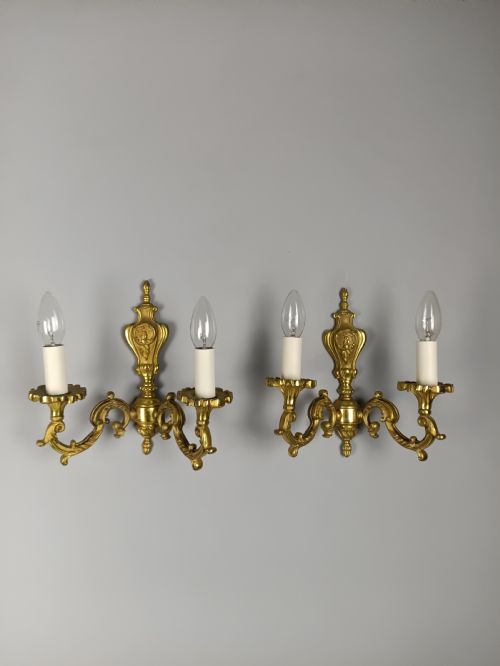
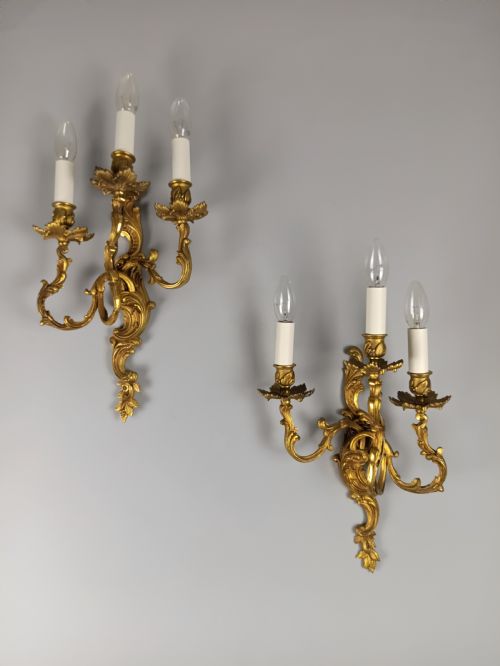
Ormolu style wall sconces are decorative lighting fixtures designed to mount directly onto vertical surfaces, providing both illumination and sculptural ornamentation. When searching for ormolu style wall sconces, buyers encounter lighting apparatus configured with branches, arms, or brackets meant to hold candles or electric bulbs.
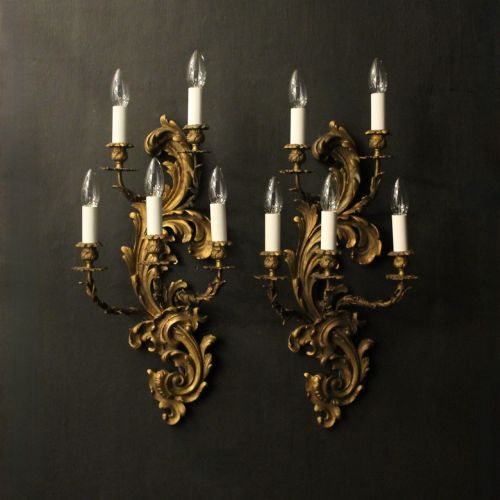
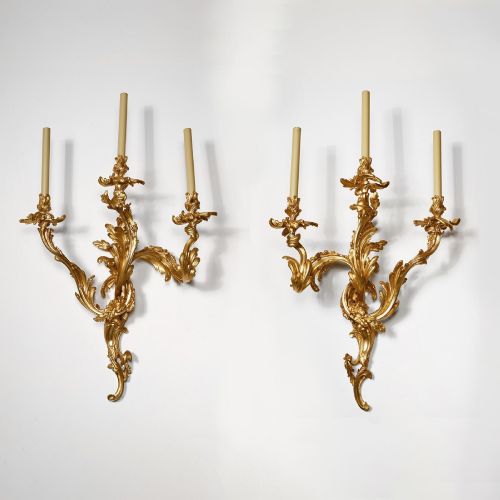
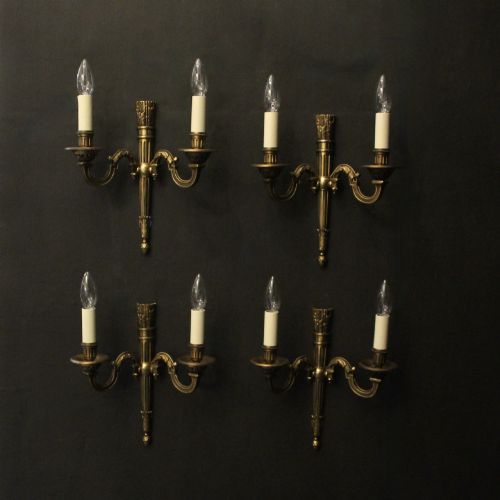
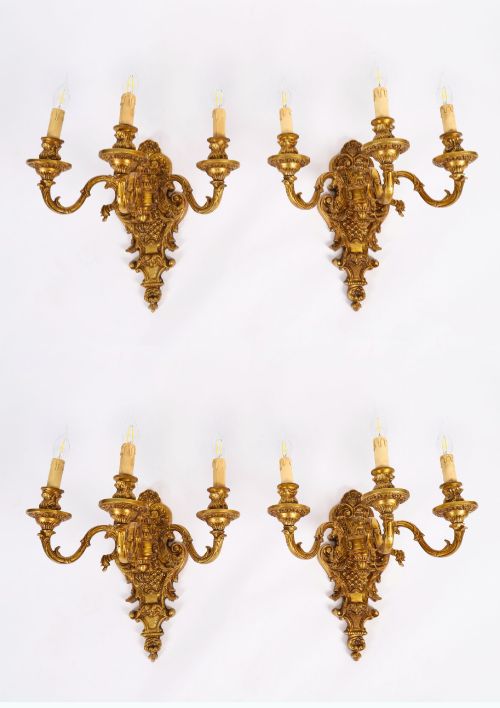
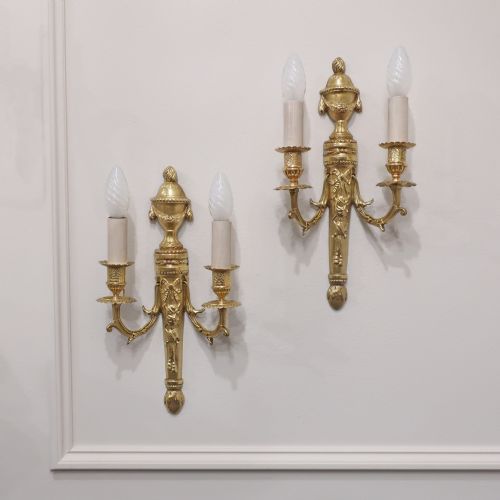
The pieces available on this page originate predominantly from France, with examples spanning from the nineteenth century into the twentieth century. Forms range from simple twin-arm lights to large sets of four or six branches, often referencing historical periods such as the Regency, Empire, and Louis XVI styles.
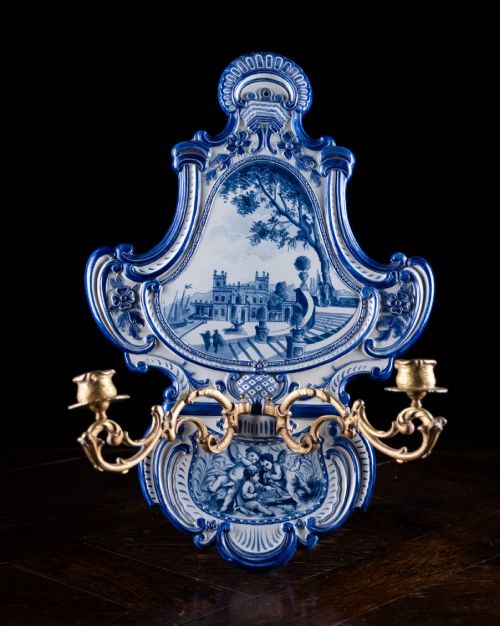
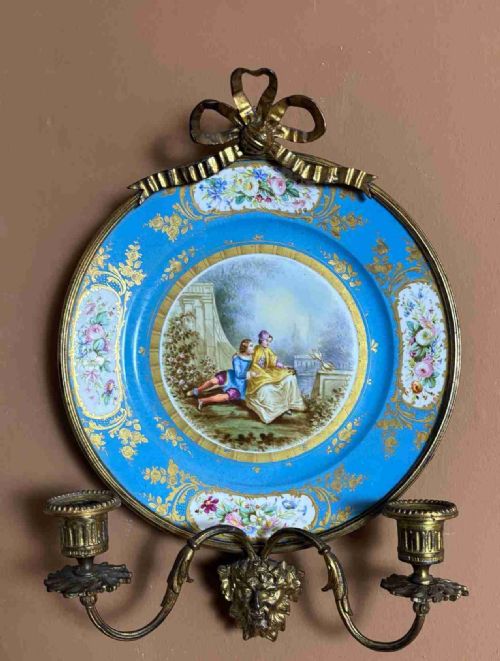
Most items take the form of wall lights or appliques, utilising classical motifs including flaming torches, ram's head masks, cherubs, and scrolling foliage. Alongside pure metal castings, variations incorporate porcelain plaques, Delft components, crystal drops, and glass elements.
How they were made
Makers utilised cast bronze, brass, and metal as the structural foundation for these lighting fixtures, employing foundry techniques to achieve intricate relief work. Molten metal was poured into moulds to create scrolling arms, backplates, and figural components, which were subsequently chased and finished by hand.
The characteristic golden surface finish was achieved through mercury gilding or modern electroplating, imparting the distinctive ormolu and gilt appearance associated with these decorative styles. Components were then assembled mechanically, integrating glass drops, porcelain portraits, or ceramic inserts where specified by the design.
Ormolu Style Wall Sconces Retail Price Guide 2026
Typical asking prices for ormolu style wall sconces among the pieces listed under this phrase on Sellingantiques today, from the lower quarter to the upper quarter. They describe what is for sale here now, not the wider market.
Several sconces manage to incorporate plump cherubs and fierce flaming torches into the exact same lighting fixture.
What varies in quality
Quality also rests in the cohesion of the design and the preservation of the original gilding. Pieces that retain their rich tonal variation without excessive rubbing or clumsy modern restoration represent the upper echelon of surviving manufacturing.
Casier·Villeroy & Boch
The Ormolu Style Wall Sconces Glossary
- Ormolu
- A gilded bronze surface finish applied to metal objects, creating a bright golden appearance through traditional mercury amalgamation or subsequent gilding methods. This technique defined luxury French metalwork across multiple decorative periods.
- Applique
- A wall-mounted lighting fixture or sconce designed to hold candles or lamps, directing light outward into a room. The term is frequently used interchangeably with wall light in continental pieces.
- Louis XVI Style
- A neoclassical design aesthetic characterised by straight lines, symmetry, classical urns, ribbons, and restrained geometric forms. It emerged in eighteenth-century France and inspired numerous revivals.
- Empire Style
- A decorative movement drawing on ancient Roman, Greek, and Egyptian motifs, marked by military emblems, sphinxes, laurel wreaths, and solemn dignity. Pieces from this vocabulary project imperial authority and classical rigour.
- Rococo Style
- An ornamental style defined by asymmetrical C-scrolls, shell motifs, naturalistic foliage, and flowing curves. It stands in direct contrast to the geometric strictness of neoclassical design.
Ormolu Style Wall Sconces: Frequently Asked Questions
What is the difference between ormolu and gilt brass?
Ormolu specifically denotes gilded bronze, whereas gilt brass involves a gold-coloured finish applied over a brass base. Both materials achieve a similar golden aesthetic, but bronze generally allows for sharper casting detail.
Historically, true ormolu involved mercury gilding, a hazardous process restricted in later manufacturing periods, leading makers to adopt alternative plating methods on various base metals.
Were these wall sconces originally wired for electricity?
Almost all nineteenth-century and early twentieth-century examples were designed exclusively for candles before being adapted for electricity at a later date. Conversion work typically involves running wiring through the original central channels or arms.
When evaluating older fixtures, buyers should expect modern electrical fittings that have been installed to replace the original candle nozzles.
How do I identify a Louis XVI style wall light?
Louis XVI style fixtures are recognised by their strict symmetry, straight architectural lines, and classical motifs such as flaming torches, ribbons, and acanthus leaves. They reject the flowing asymmetry of earlier rococo designs in favour of proportion and balance.
Many pieces featuring ram's head masks or urns belong to this neoclassical tradition, reflecting an eighteenth-century design revival that continued well into the nineteenth and twentieth centuries.
Can I install antique wall sconces in a modern room?
These decorative fixtures function effectively in contemporary interiors by introducing textural contrast, historical depth, and warm metallic tones against plain walls. Their sculptural forms allow them to act as wall art even when unlit.
Proper installation requires mounting directly onto wall studs or securing with appropriate fixings to support the weight of solid bronze or brass construction.