
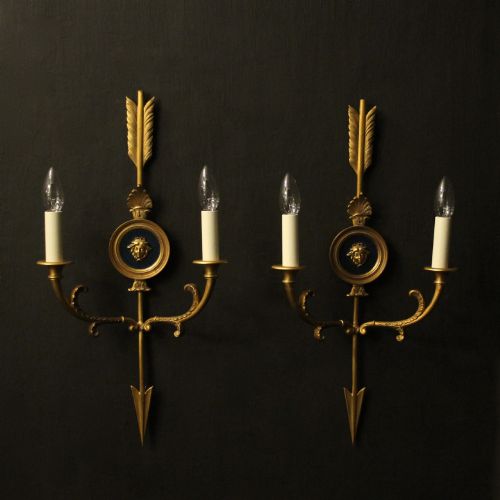
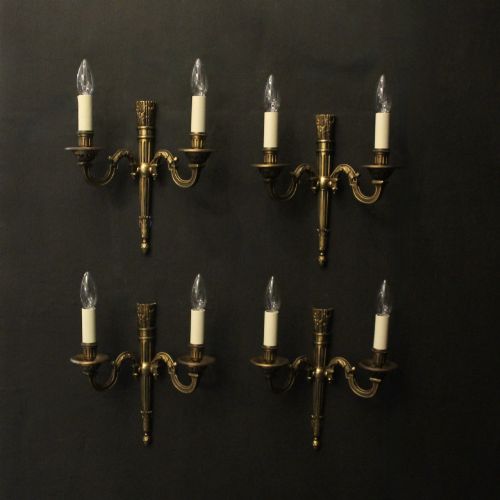
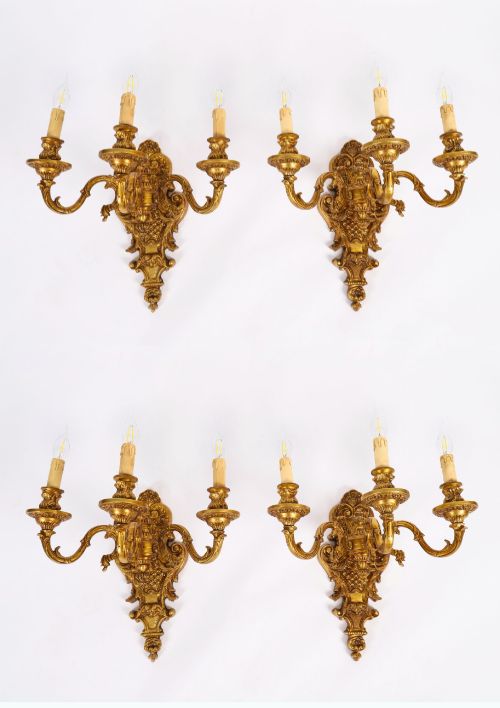
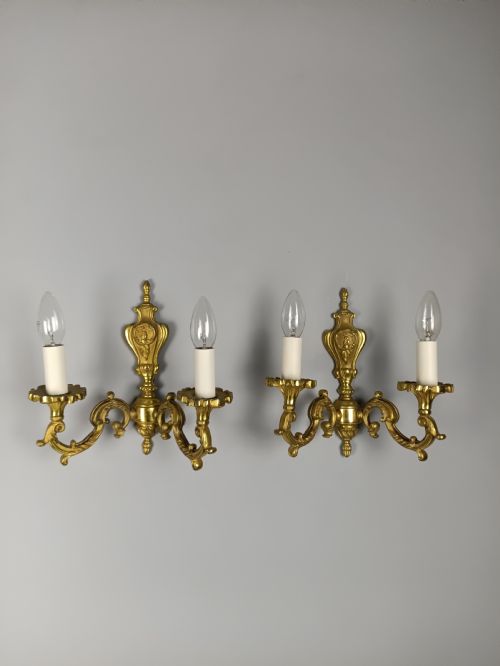
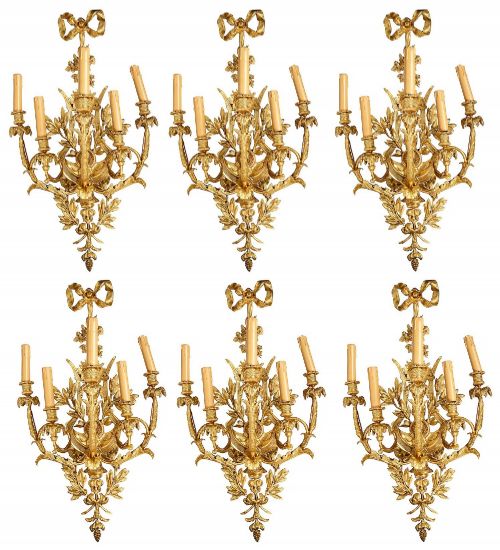

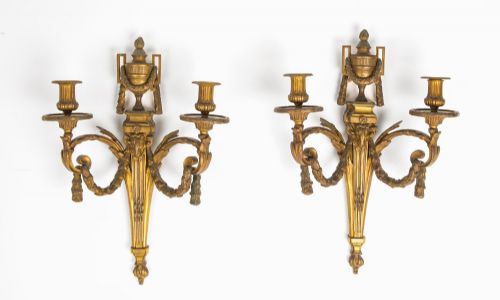

Ormolu Style Wall Appliques
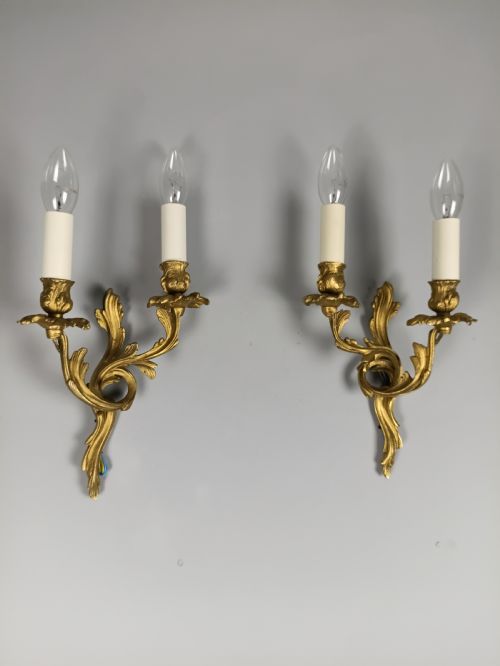
These ormolu style wall appliques bring warmth and decorative illumination to a room, cast in gilded bronze and brass.
Ormolu Style Wall Appliques
When searching for ormolu style wall appliques, buyers find decorative lighting fixtures designed to mount directly onto vertical surfaces. Most examples appearing here take the form of wall lights or wall sconces originating from French workshops during the nineteenth and early twentieth centuries.
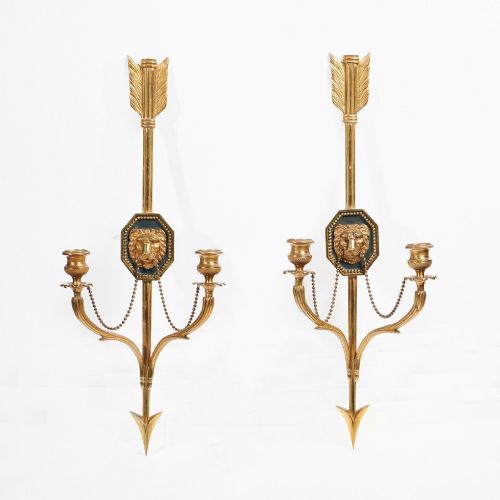
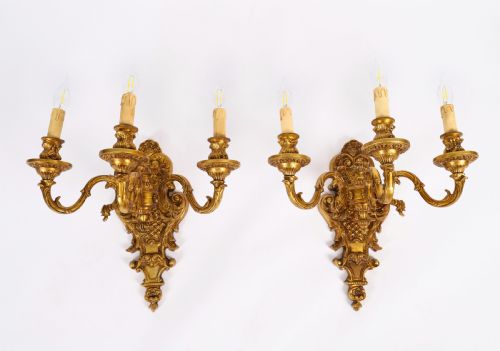
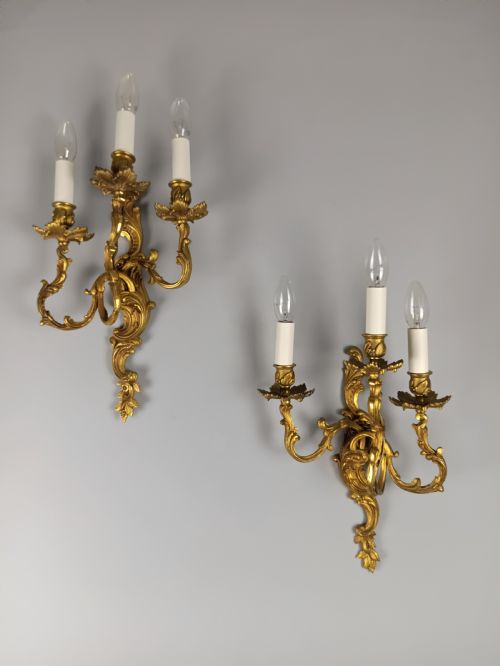
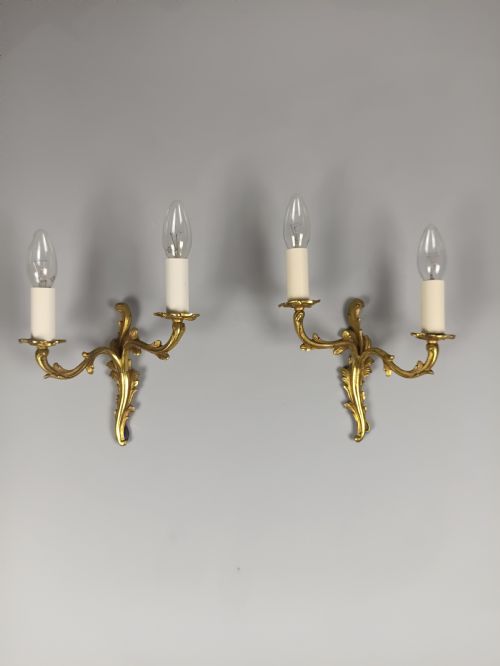
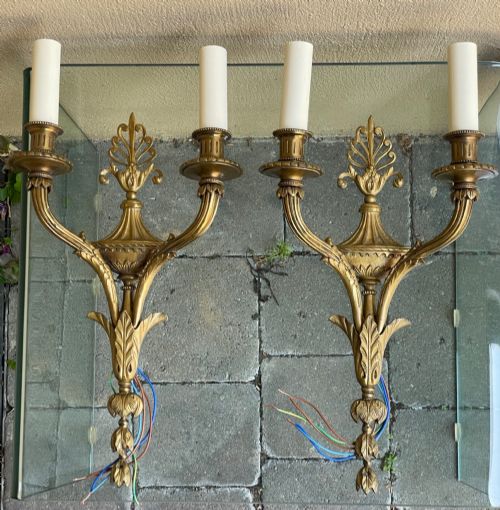
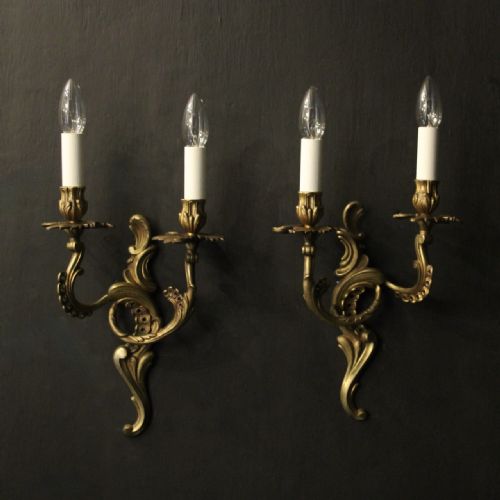
The selection ranges from simple twin arm configurations to larger sets featuring three or four branches. Stylistic influences span from French Rococo and Empire to Louis XVI and Neo-Classical designs, reflecting historical revival periods.
Originating predominantly from France alongside occasional English and Italian interpretations, these pieces function both as sources of illumination and as sculptural wall ornaments. Pairs and larger sets dominate the selection, making them suitable for balanced interior schemes.
Materials and construction methods
The construction relies heavily on cast metals such as bronze, brass and copper alloys, finished with mercury gilding or modern electroplating to achieve the characteristic ormolu surface. Artisans chased the cast metal components by hand to sharpen details like acanthus leaves, cherubs and mask motifs before applying the gold finish.
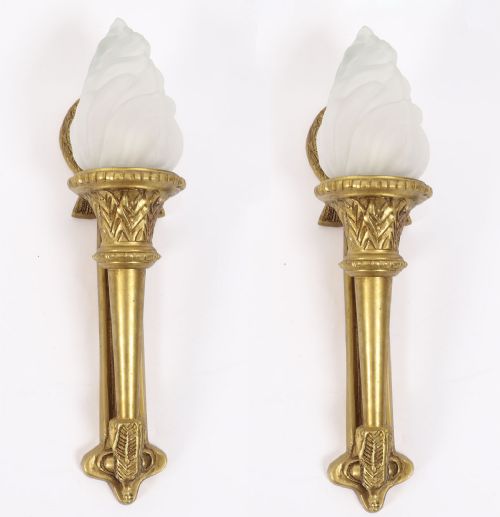
Selected pieces incorporate additional elements such as cut crystal drops, glass torches or patinated bronze sections to contrast with the bright gilded surfaces. Metal arms and drip pans were assembled mechanically, often designed to support multiple candle-style light branches.
Several pairs feature cherubs clinging tightly to the arms, bravely holding up the weight of history and evening illumination.
Judging the quality of wall appliques
Heavier gauge metal castings and sturdy backplates indicate better structural integrity, ensuring the arms support the weight of multiple branches securely. The refinement of the backplate mounting and the articulation of the casting details distinguish standard production from exceptional decorative work.
The Ormolu Style Wall Appliques Glossary
- Ormolu
- A gold-coloured alloy of copper, zinc and sometimes nickel, or the technique of applying finely ground gold mercury to bronze. It creates a rich, durable metallic sheen characteristic of decorative lighting from the eighteenth and nineteenth centuries.
- Applique
- A wall-mounted decorative fixture or sconce designed to hold candles or electric bulbs. The term is frequently used interchangeably with wall light in continental European pieces.
- Gilt Bronze
- Bronze metal that has received a thin layer of gold applied through fire gilding or electroplating. This finish protects the underlying metal from tarnishing while providing a bright golden appearance.
- Rococo
- An ornate design style from the eighteenth century characterised by asymmetrical scrolls, shell motifs and natural curves. Revival versions from the nineteenth century emulate these flowing, organic forms.
- Louis XVI Style
- A neoclassical design aesthetic defined by straight lines, symmetry, classical urns, ribbons and architectural motifs. Pieces in this style often display restrained geometry compared to earlier rococo designs.
Ormolu Style Wall Appliques: Frequently Asked Questions
How do I wire antique wall sconces?
Most antique wall sconces were originally designed for candles and require professional conversion to accommodate modern electrical wiring. Electrician-installed internal channels or concealed cords allow these fixtures to function safely on household circuits.
Qualified electricians can adapt the internal fittings while preserving the external ormolu and bronze components. Local regulations dictate the specific mounting and earthing requirements for historical metal light fittings.
What is the difference between ormolu and gilt brass?
Ormolu strictly refers to gilded bronze, utilising a mercury amalgamation process on cast bronze to achieve a deep golden lustre. Gilt brass uses a similar gold finish applied to a different alloy base, which tends to be lighter in weight.
Visual inspection of the metal density and the warmth of the gilding helps differentiate between the two materials. Both finishes require gentle cleaning to preserve the protective gold layer.
How should I clean gilded bronze wall lights?
Dusting gently with a soft, dry microfibre cloth removes surface particles without risking the delicate metallic finish. Avoid using chemical polishes, abrasive cloths or water, as these can strip away thin layers of historical gilding.
Professional conservators should handle stubborn tarnish or deep cleaning to prevent irreversible damage to the bronze substrate. Regular, careful maintenance keeps the original surface stable and bright.
How do I identify a Louis XVI style wall light?
Louis XVI style wall lights feature straight vertical lines, symmetrical arrangements, and classical motifs such as ribbons, urns and floral garlands. This aesthetic contrasts with the more flowing and asymmetrical curves typical of earlier Rococo designs.
Architectural rigour and restrained ornamentation guide the design of these nineteenth-century revival pieces. The presence of ram's head masks or flaming torches also points towards this neoclassical vocabulary.