



Ormolu Pendulum Table Clock
An ormolu pendulum table clock brings nineteenth-century French precision and golden warmth to a mantelpiece.
Ormolu Pendulum Table Clock
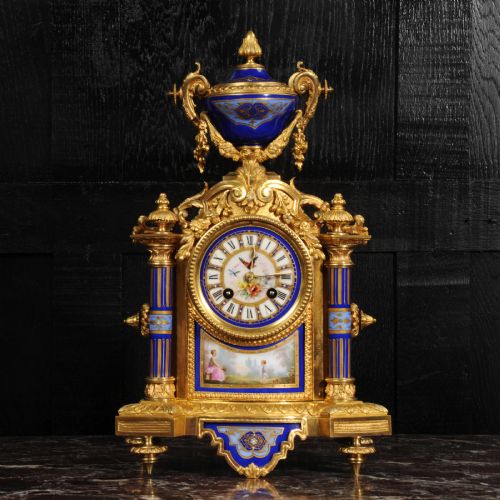
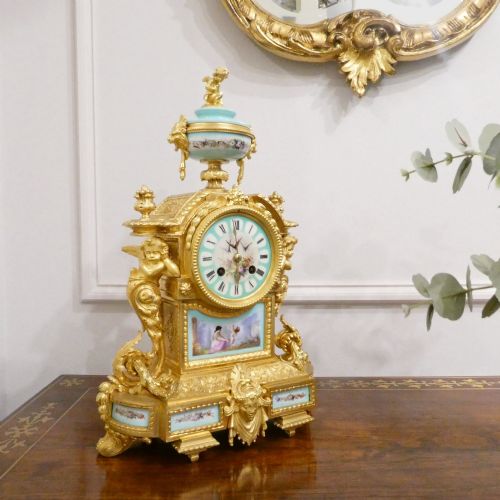
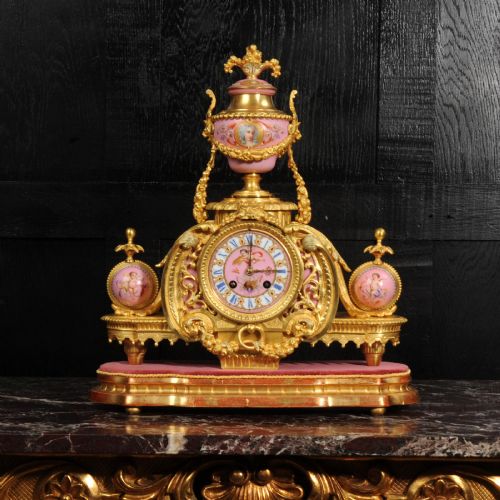
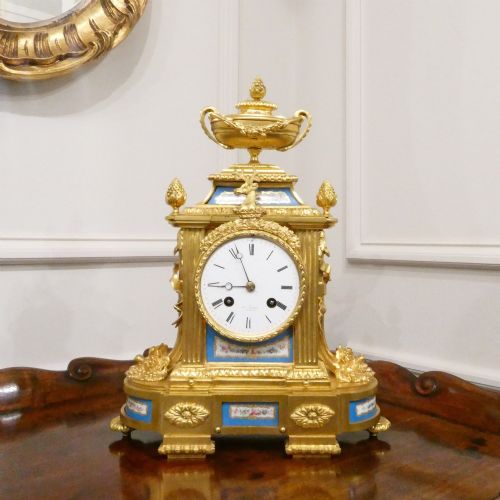
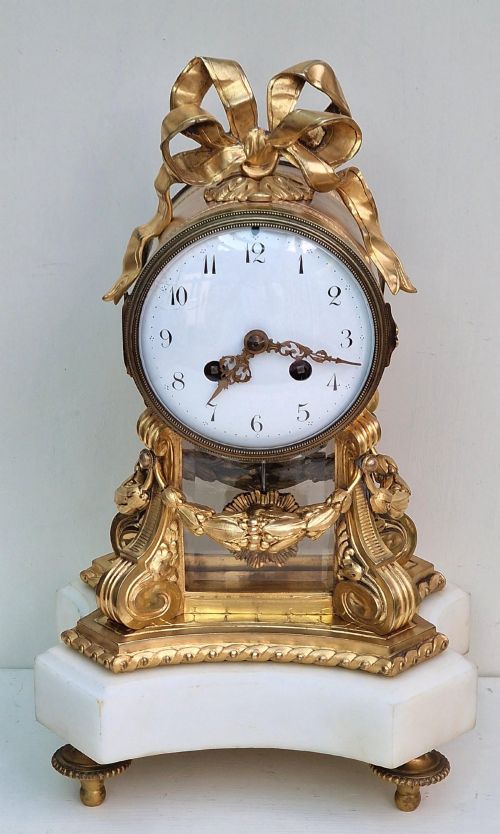
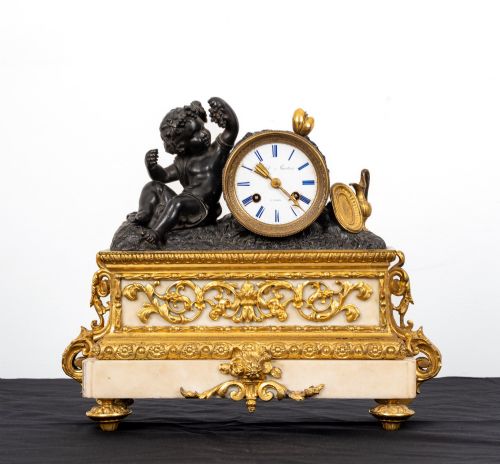
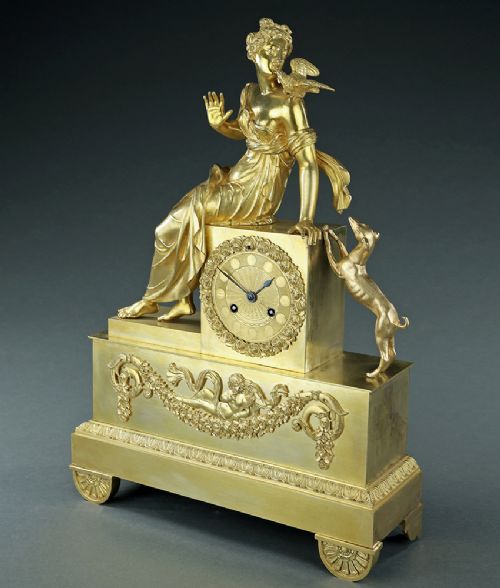
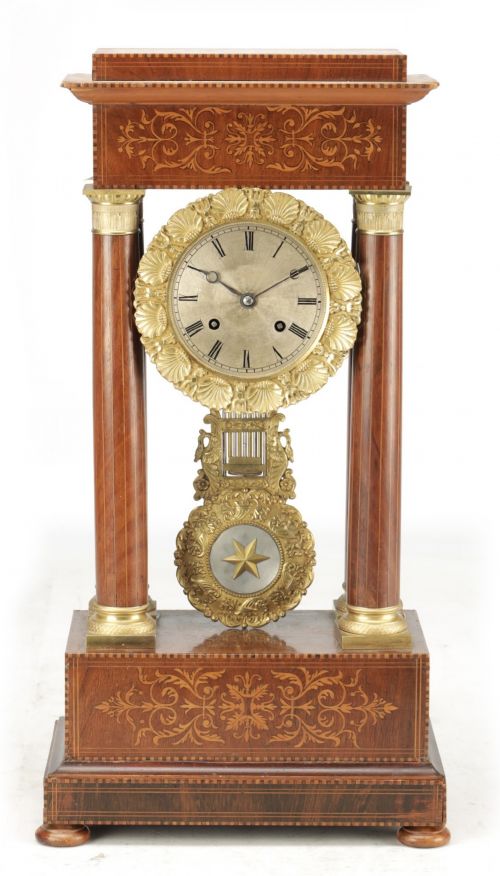
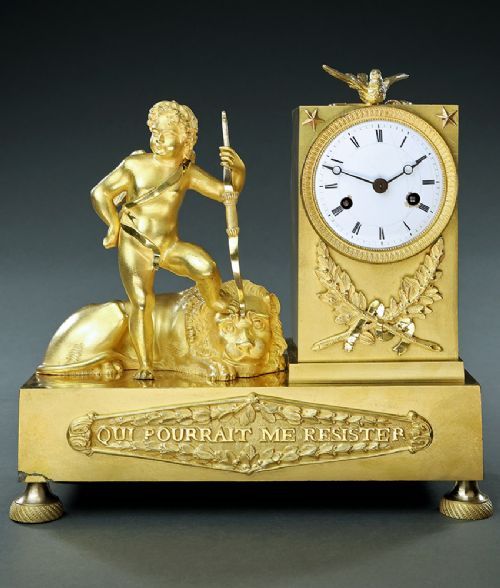
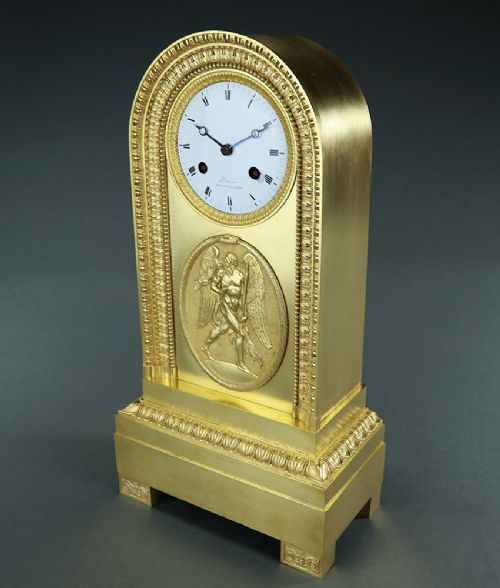
When you search for an ormolu pendulum table clock, you encounter nineteenth-century French mantel clocks housed in cast metal cases with swinging pendulums. These pieces trace origins from the 1860s through the Victorian era, spanning styles such as Louis XVI Revival, French Empire, and Rococo Revival. The forms range from classical portico clocks to elaborate figural mantel pieces and porcelain-mounted drum head designs.
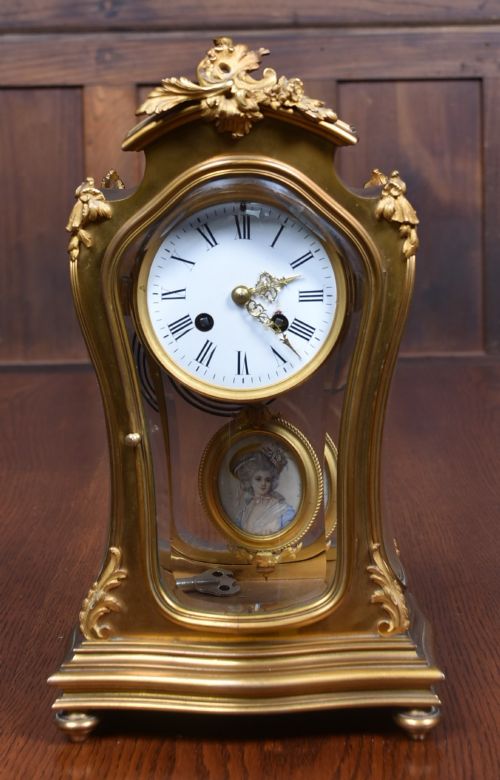
The most common examples on this page are French mantel clocks dating to around 1880, combining gilt bronze mounts with porcelain panels or marble bases. Makers such as Japy Frères and Samuel Marti frequently supply the movements for these Victorian parlor pieces. A buyer chooses these objects to anchor a room with period proportion and mechanical interest.
Materials and construction
The foundation of these clocks relies on bronze or brass cast and subsequently mercury-gilded or electroplated to create the rich ormolu surface. Artisans integrated porcelain plaques, white marble, cut crystal, and tortoiseshell into the metal frameworks to build contrasting textures. Dial faces often utilise painted enamel numerals protected beneath glass bezels.
Clockmakers housed brass gear trains behind these decorative shells, pairing pendulum regulation with striking mechanisms. Cabinetmakers and metalworkers collaborated to mount miniature paintings, cast figural bronzes, and architectural columns together into unified mantel pieces.
The listings span the nineteenth century, utilising materials including ormolu, marble, porcelain, tortoiseshell, and cut crystal across various revival styles.
Distinguishing quality
The depth and crispness of the bronze chasing separate superior castings from softer, later reproductions. Superior dials retain pristine enamel without hairline fractures, while movements bearing recognised maker signatures demonstrate higher mechanical integrity.
The integration of materials dictates the overall balance of the piece. When ormolu mounts align precisely with marble bases and porcelain plaques fit flush within their bezels, the standard of craftsmanship rises significantly above standard production clocks.
Japy Freres·Achille Brocot·Henry Marc·Samuel Marti
The Ormolu Pendulum Table Clock Glossary
- Ormolu
- Gilded bronze, where a layer of gold or gold amalgam is applied to a base of bronze or brass. This technique creates the distinctive golden finish seen on nineteenth-century French clock cases.
- Portico clock
- A clock case constructed in the architectural form of a portico, supported by columns flanking a central suspended pendulum. These pieces often date to the early nineteenth century during the French Empire and Charles X periods.
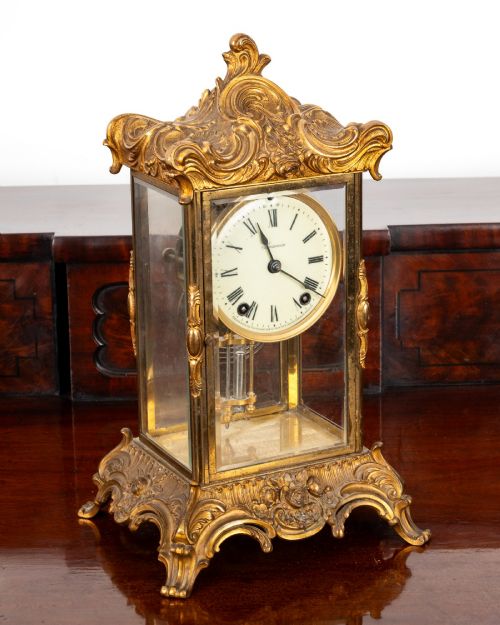
- Crystal regulator
- A mantel clock enclosed entirely by glass panels on four sides, allowing a clear view of the mercury or spring-suspended pendulum within. This style gained popularity during the late Victorian period.
- Chasing
- The process of hand-tooling cast bronze surfaces with small chisels and punches to refine details and textures. Fine chasing distinguishes high-grade ormolu work from unrefined factory castings.
Ormolu Pendulum Table Clock: Frequently Asked Questions
How do I wind the clock?
Most nineteenth-century mechanical clocks require a matching winding key inserted into arbors on the dial face. Turning the key tensions the internal springs that drive the time and strike trains.
Care must be taken not to overwind the mainsprings, which can cause internal damage. Many models feature separate arbors for the going train and the striking mechanism.
Are these clocks suitable for daily use?
These antique timepieces function reliably when professionally restored and placed on a stable, level surface. Many surviving examples maintain operational movements after more than a century.
Regular professional servicing helps maintain the brass gear trains and ensures accurate timekeeping in a modern domestic setting.
How do I identify the period?
Stylistic cues such as neoclassical columns point toward the Empire period, while asymmetrical scrolls and C-volutes indicate Rococo Revival tastes. Maker marks stamped on the movement backplates provide concrete dates.
Materials also offer clues, as heavy use of Sevres-style porcelain and gilt bronze typically aligns with Victorian production around 1880.