


Pink Sevres Porcelain Clock
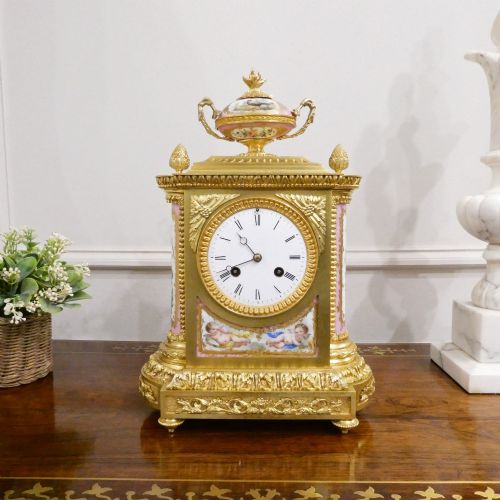
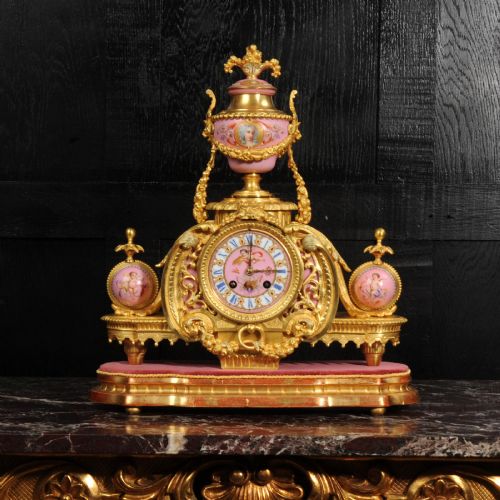
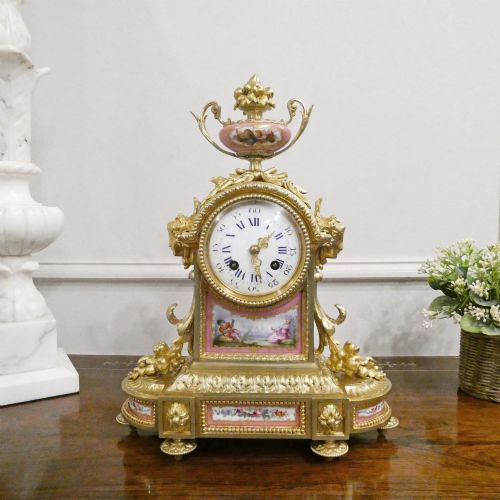
These pink sevres porcelain clock examples combine gilt bronze and delicate painted porcelain, offering a grand statement for a traditional mantelpiece.
Pink Sevres Porcelain Clock
Buyers seeking a pink sevres porcelain clock encounter nineteenth-century French mantel pieces, predominantly dating from the Victorian era and the 1860s through the 1880s. These decorative objects primarily manifest as mantel clocks designed in Louis XVI Revival and French Rococo styles, often paired with matching side ornaments.
The objects combine vibrant ceramic panels with metallic mounts, appearing mostly as substantial mantel clocks or occasionally as crystal regulators featuring pink glass and porcelain elements. Their origins trace back to French workshops and horological firms of the nineteenth century, reflecting historical revivals of earlier French court aesthetics.
Materials and construction
These pieces rely on a combination of porcelain and gilded metals, specifically gilt bronze and ormolu, which frame the central ceramic components. Enamel dials and brass clock movements sit within structures frequently accented with glass, velvet, and gilt metal details.
Craftsmen shaped the metallic mounts through casting and gilding techniques to produce ornate Louis XVI style scrollwork and foliage. The porcelain panels were painted and glazed before being integrated into the heavy bronze or brass chassis.
Makers occasionally tucked tiny winding squares right into the floral bouquets of the dial.
Judging quality and craftsmanship
The refinement of the gilt bronze chasing and the crispness of the ormolu casting distinguish superior examples from simpler ones. Heavier mounts and deeper, more intricate detailing on the bronze elements indicate higher workshop standards during production.
Artistic execution on the porcelain panels also dictates the tier of the piece, with finely rendered painted scenes or delicate ground colours holding greater artistic merit. The integration between the ceramic components and the metal housing reveals the care taken by the maker.
Jean-Baptiste Delettrez·Achille Brocot·Japy Freres
The Pink Sevres Porcelain Clock Glossary
- Ormolu
- Gilded bronze, where a finely ground high-carat gold mercury amalgam is applied to a bronze base. This technique creates a durable, warm metallic golden surface characteristic of fine French decorative objects.
- Sèvres
- A term denoting porcelain produced at the Sèvres manufactory in France or items decorated in that characteristic French aesthetic style. Genuine pieces carry specific factory marks, though the name is also used broadly to describe similar nineteenth-century porcelain.
- Crystal regulator
- A mantel clock featuring bevelled glass panels on all four sides that reveal the internal pendulum and brass movement. This form became popular during the nineteenth century for showcasing mechanical complexity.
Pink Sevres Porcelain Clock: Frequently Asked Questions
What periods do these clocks date from?
The available pieces predominantly date from the nineteenth century, specifically spanning the 1860s through the 1880s during the Victorian period. Some examples align with earlier nineteenth-century French manufacturing traditions.
Stylistic influences point heavily towards Louis XVI Revival and French Rococo aesthetics popular across these decades.
How do I maintain the gilt bronze mounts?
Maintenance requires gentle dusting with a soft, dry cloth to prevent accumulation without disturbing the delicate gold surface. Avoid chemical polishes entirely, as they strip the original gilding from the bronze or ormolu.
Keep the clock away from direct sunlight and moisture to protect both the metal finishes and the painted porcelain panels.
Are these clocks suitable for daily timekeeping?
These mechanical pieces function as working timekeepers, though many owners treat them primarily as decorative mantel objects. They typically require professional setting and occasional mechanical servicing to run accurately.
Handling the pendulum and winding mechanism with care ensures the nineteenth-century brass movements continue to operate smoothly.
How do I distinguish revival styles from original pieces?
Nineteenth-century revival pieces utilise manufacturing techniques, brass alloy compositions, and movement stamps specific to the Victorian era rather than the eighteenth century. Examining the construction of the backplates and the style of the enamel dials clarifies the true date of production.
Most items bearing pink porcelain panels reflect the nineteenth-century passion for reinterpreting earlier French court designs.